
This post may contain affiliate links, from which we earn an income. Click here to read our affiliate policy.
Thinking about trying off-grid motorhome camping but feeling slightly nervous about spending your first night away from campsites? You’re not alone. It’s one of the questions we’re asked most often by aspiring van lifers: how do you actually wild camp in a motorhome?
Off-grid motorhome camping, or wild camping, is all about swapping campsite routines for a little more freedom and self-sufficiency. There are no receptions, no electric hook-ups to connect, no lengthy lists of site rules to read, and best of all, no pitch fees to pay.
That said, a little preparation goes a long way. Knowing how to choose a suitable spot, manage your resources, and camp responsibly will make the experience far more enjoyable. In this guide, we’ll share our best tips, practical advice, and the lessons we’ve learned over years of life on the road, so you can venture off the beaten track with confidence and enjoy the freedom that off-grid motorhome camping brings.
Enjoy The Gap Decaders? Add us as a preferred source on Google.
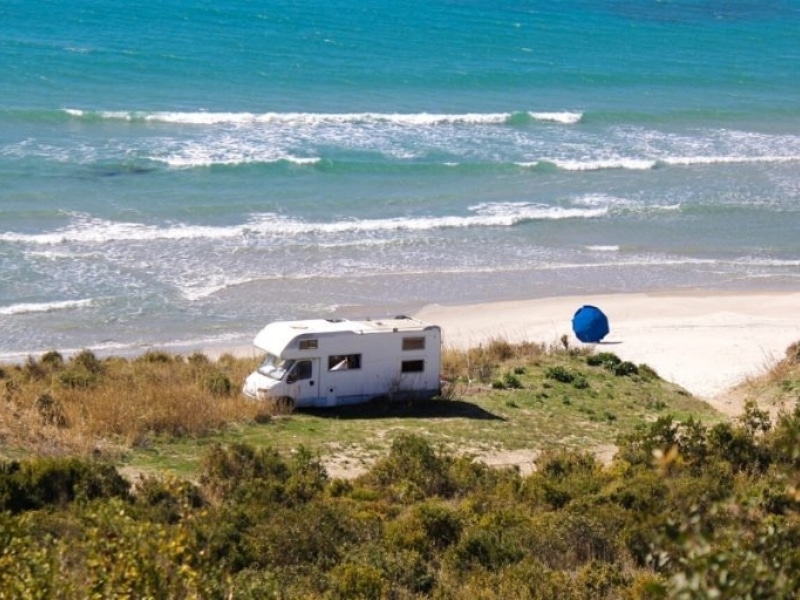
What is Motorhome Wild Camping?
Motorhome off-grid or wild camping means setting up camp and sleeping in your motorhome outside of a campsite or caravan park, or anywhere which doesn’t have facilities like electric hook-up or water. Sometimes called free camping or wilding, in America, it is called boondocking, dry camping or freedom camping.
Wild camping is not really much different from finding a free overnight parking place for your van, which might be in a parking lot, supermarket car park or patch of waste ground somewhere. But for many, wild camping is more about sleeping in your motorhome or campervan in the wilderness, or in a rural area free of traffic, light pollution, noise and other people.
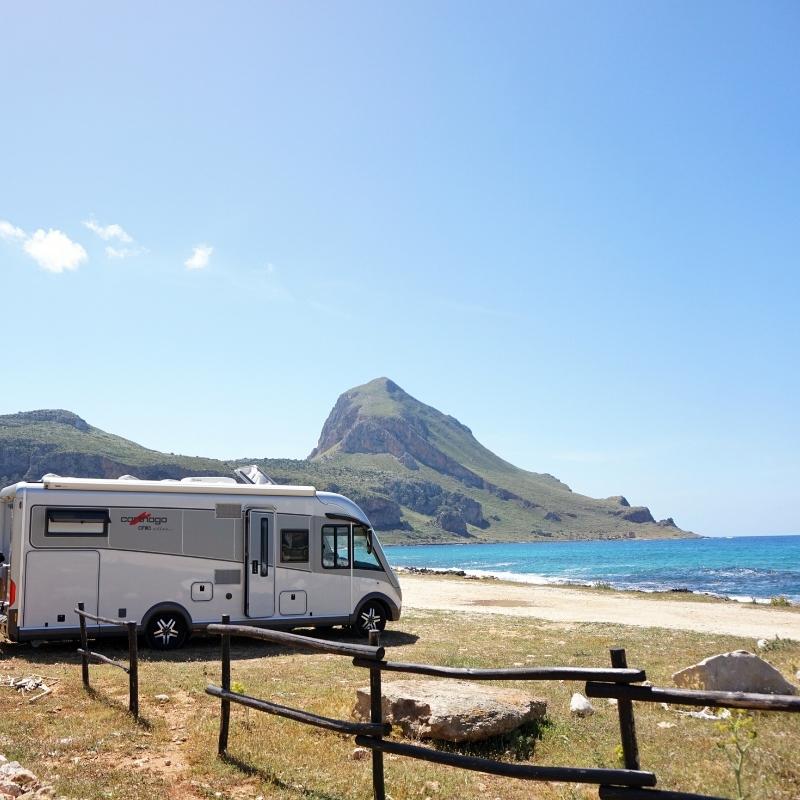
Is Wild Camping in a Motorhome Safe?
So, this question is at the top of the post because it’s the single most asked question about spending time off-grid. I get it …the first time we wild camped, I was super-nervous and convinced it would all go horribly wrong. It didn’t, and actually, I slept like a baby!
Since that first time, we’ve travelled all over Europe for eight years, living in our motorhome, and now in an overland truck, and wild camping for at least 75% of that time. Only once have I had a nervous moment, when a white van slowly drove around our motorhome at our wild camping spot late at night. They left, and we moved on to our second choice, just in case.
In this post we’ll share with you all the tricks you need in your wild camping toolbox to keep you safe, well-equipped and prepared. Follow our guide, and we can promise that you’ll become a confident wild camper in no time.
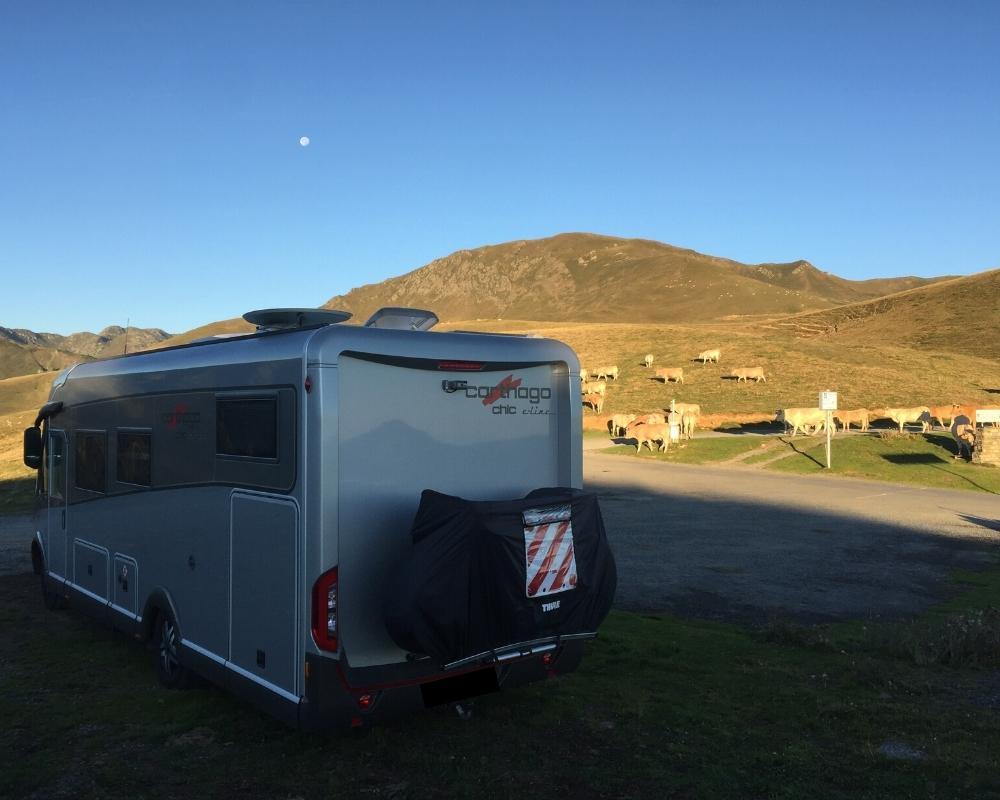
Motorhome & Campervan Wild Camping in the United Kingdom
What are the rules on wild camping trips in the UK in a motorhome?
It is not legal to practice wild camping in the UK on private land without explicit permission from the landowner.
In reality, locating and asking the landholder (potentially a national park or government body) is just not possible. If the land is obviously private, i.e. fenced in or signed as such, then you should not camp there.
Where it is less clear whether the land is private or not, follow our motorhome wild camping tips to stay safe and ensure you don’t cause any damage to the environment.
Where can you wild camp in a motorhome in the UK?
If you stick to remote places, use your common sense and follow the guidance in this post, then the chances are you’ll be fine. You may be asked to move on; if this is the case, you should do so immediately and without fuss.
We have motorhome wild camped in Dartmoor, the Lake District, Snowdonia, the Norfolk Broads and Coast, the Brecon Beacons, Scotland, the Peak District and lots of other out-of-the-way and remote places. We’ve never been asked to move on but we always stick to the unwritten rules.
England, Wales and Northern Ireland (read on for specific info about Scotland) are generally less tolerant than Europe of motorhomes, particularly in more built-up areas or scenic spots. Every week, I read of new parking or height restrictions being implemented in previously welcoming places.
The issue is that motorhome wild camping has increased exponentially across Europe and the UK in the last five years, and some communities are fed up of having motorhomes literally parked nose-to-tail on their doorstep and their landscapes and infrastructure damaged by inconsiderate and uneducated motorhomers.
I’ve heard it’s easy to wild camp in Scotland?
The wild camping Scotland law is no different to the rest of the United Kingdom. Pre-pandemic, Scotland was more tolerant, but that has changed in the past few years, and it is becoming harder to wild camp there, especially along popular motorhoming routes like the North Coast 500.
You may have heard of the Scottish Outdoor Access Code, but this does not apply to motorhomes, only wild campers who are ‘lightweight camping’ with a tent:
RELATED POST: Is It OK to Wild Camp in a Motorhome in Scotland?
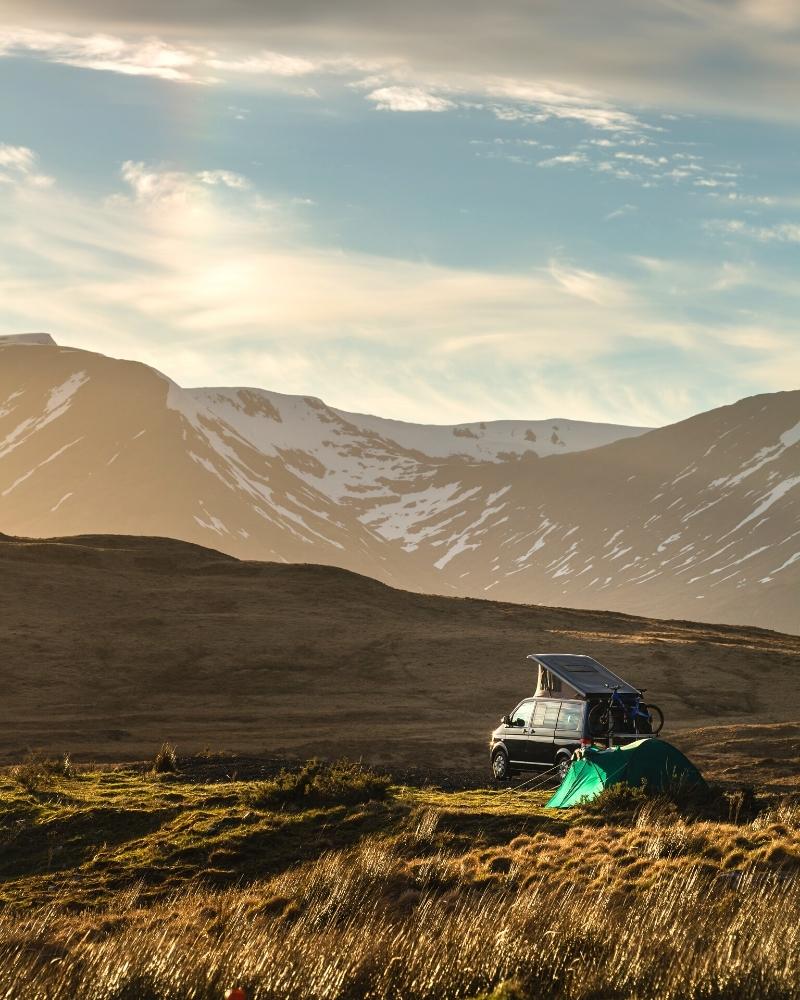
Wild Camping in Europe in a Motorhome
Most European countries have laws regarding wild motorhome camping. Just to confuse matters, some areas of some countries have different laws. As a responsible motorhome wild camper, you must understand these or you risk being moved on or getting a fine.
Having said that, motorhome travel in general, as well as free camping in Europe, is way easier than in the UK. Countries are generally less populated than the UK, and many have vast swathes of unpopulated land where you can find a peaceful and free camping spot.
You can find travel tips and information regarding wild camping laws and rules in our country-specific motorhome touring guides, alongside lots of other information about driving, camping and top destinations.
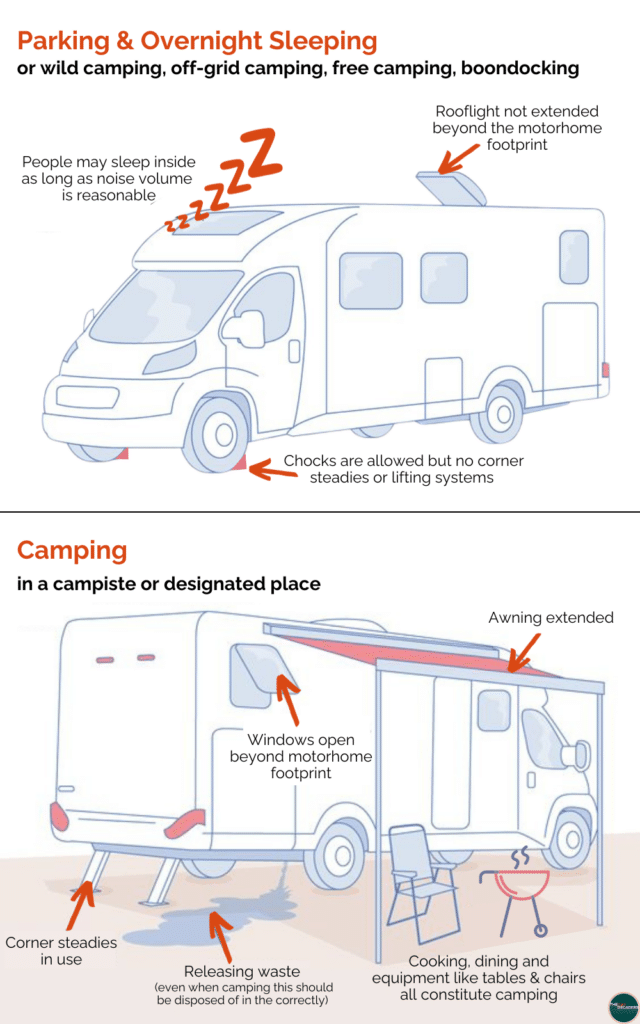
Often, the difference between being moved on or not is whether you’re ‘camping’ or ‘parking’, and the infographic below explains the differences clearly.
Useful Motorhome Resources
Planning to Wild Camp in a Motorhome
How do I find free wild camping spots?
Park4Night, Campercontact, Searchforsites and Camperstop are all popular motorhome overnight parking apps. There are also lots of Facebook groups, but we think Park4Night is the best wild camping database because it always gives the most options, includes motorhome service points in the UK and Europe, and car parks suitable for motorhomes.
RELATED POST: How to Find Free Overnight Motorhome Parking Spots in the UK & Europe
What should I consider when planning my overnight stop?
How to Wild Camp in a Motorhome or Campervan
Assess
Stay Safe
Be Discreet
Leave No Trace
Motorhome Equipment for Wild Camping
The very nature of wild camping in a motorhome means you need to be self-sufficient. Before embarking on wild camping, understand how your motorhome works.
On our very first wild camping expedition in a used motorhome, we spent ages fretting that our fridge was not working on 12v, as the book said it was second in the hierarchy of power options. Doh …eventually we worked out that 12v only works when the engine is running; the fridge runs on gas if you’re not hooked up!
RELATED POST: Motorhoming Made Easy – Your Top 20 Questions Answered
Solar Panels
The right solar panels will trickle feed your leisure batteries and generate enough free electricity from the sun for most people’s needs. If you’re wild camping in southern Europe, you should be able to manage indefinitely without an electric hookup.
RELATED POST: An Easy Guide to Motorhome Electrics
Gas Bottles
Full gas bottles for your heating, hot water and cooking. Get to know your van and how much gas your heating and hot water system uses. We were surprised to run through nearly 20kg of gas in a weekend of wild camping in the mountains of northern Spain one winter!
RELATED POST: An Easy Guide to Motorhome Gas & LPG
Fresh Water
Fill your fresh water tank to the brim before heading out for a few nights, and consider taking bottles of drinking water if you can. Fresh water is the one thing that brings us back to civilisation!
RELATED POST: An Easy Guide to Motorhome Water Systems
An Empty Toilet Cassette!
It definitely helps to have emptied your loo fairly recently! If you find yourself with a full toilet cassette too often, consider the following;
If you don’t use chemicals in your loo (like a SOG toilet, for example), you can empty your waste into any toilet, but you should make sure that you can keep the area properly clean after you have emptied which can be difficult, as public WCs are not designed for toilet cassette disposal. This can also be awkward as non-motorhomers won’t understand what you’re doing.
Get a Kildwick dry composting toilet that separates solids and liquids. You won’t need water or chemicals, as no flushing is required. It’s a completely natural system, which gives you plenty of time to relax in the wild. One of the dry camping toilets they offer even folds up when not in use!
Or, take a fold-up shovel, dig a hole and do it the old-fashioned way. Make sure you’re as far away from buildings, watercourses and wildlife as possible. If you can’t dig a hole, bag your water to take away with you.
Remember not to leave soiled loo paper for others to find or animals to dig up. Use a nappy sack or dog waste bag until you can dispose of it properly.
Avoid long grass and make sure you know how to stay safe from tick bites. If in doubt, always check afterwards.
If you have the space, we recommend carrying a spare cassette; this will give you twice as long out in the wilds!
RELATED POST: An Easy Guide to Motorhome Toilets
Alternatives to Wild Camping
Aires
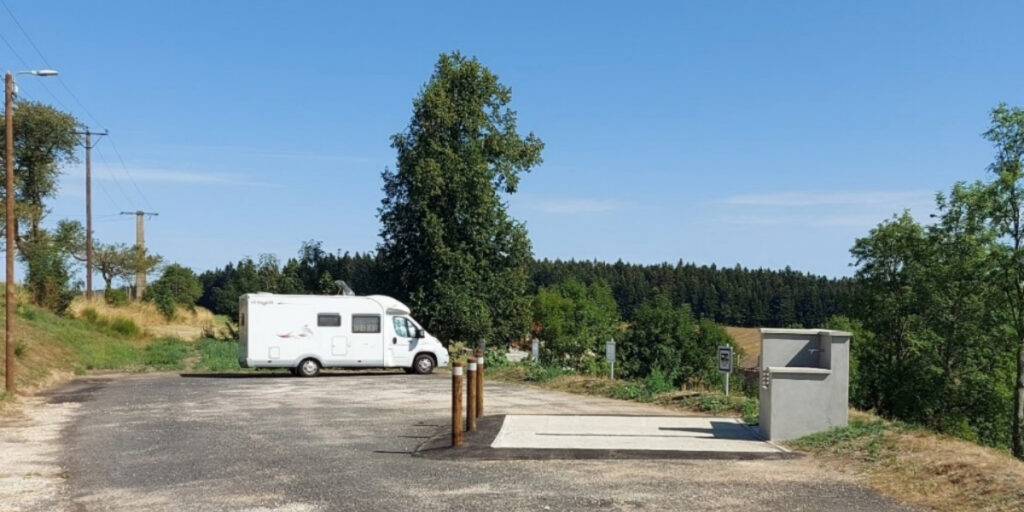
In France, the response to wild camping is to create motorhome aires (areas specifically designated for motorhomes and campervans but not caravans), which give motorhomers a pleasant place to stay with services for (sometimes) a small fee.
These camper stops also help to bring income to the town or village and provide a great alternative to wild camping in France. Sadly, there are few such free campsites or aire-type facilities in the UK.
Many other European countries have adopted this idea, leading to a network of thousands of convenient places for motorhomes and campervans to stop overnight. In Italy, they’re called area di sosta, in Germany it’s stellplatz, in Portugal and Spain they are area de servicio para autocaravanas, and in Norway, look out for bobils.
It’s not quite wild camping, but if you’re looking for a cheap or free place to spend the night, it’s a great option.
Gastronomic Stays
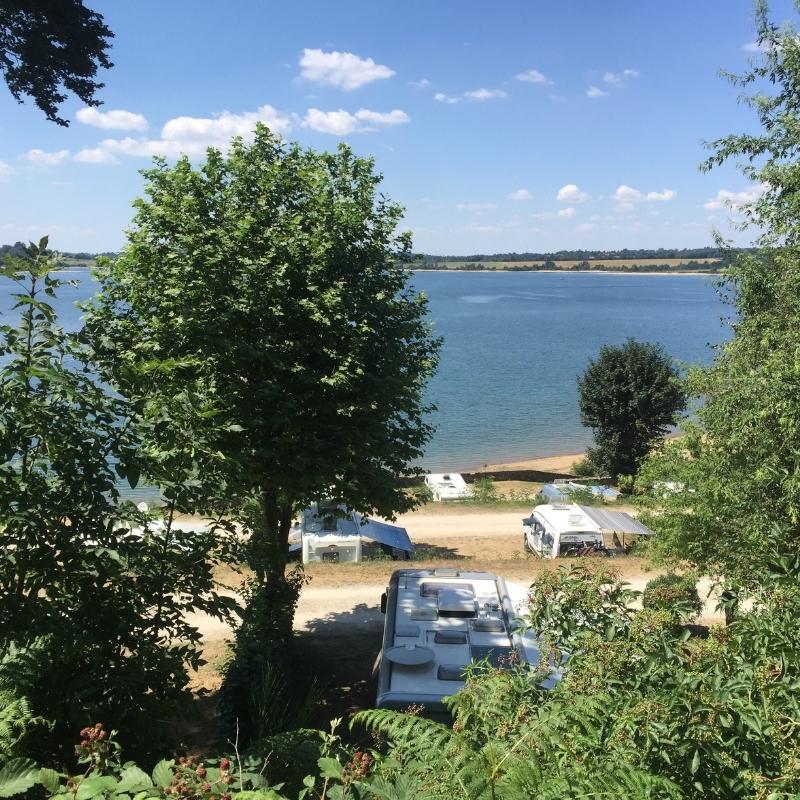
There are a number of schemes across Europe which enable you to stay in vineyards, wineries and farms for the night. Many don’t offer services, so you need to be self-sufficient, just like wild camping. Each scheme differs in how it operates, and all offer a great way to get back to nature, meet the locals and stay in amazing off-the-beaten-path places.
Brit Stops
You could also try Brit Stops (UK pubs that allow motorhomes) for free overnight motorhome parking in the UK, a great alternative to UK wild camping. The basic premise is to provide free overnight stops for motorhomes at no charge, although many people take advantage and have a drink or meal. It’s unlikely you will find services at many Brit Stops, but you will find a warm welcome.
More Motorhome Tips to Explore
Motorhoming Tips for Beginners: Essential Know How for Motorhome Life
Motorhome Habitation Check: What It Is, What’s Checked & What It Costs
Motorhome Cleaning: The Best Methods & Products

Preventing Condensation in Your Campervan: Top Tips & Tricks
How to Plan a Road Trip – Your Complete Guide
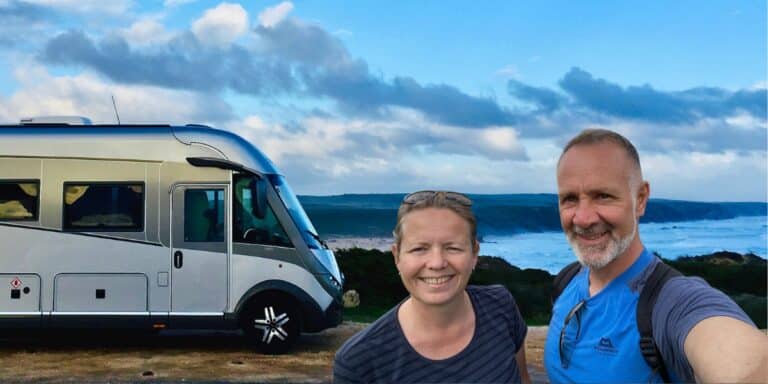
Motorhome Life: Should You Sell Up to Travel Like We Did?
Love it? Pin it!

Hi Liz Thanks for your feedback. Your plans sound really exciting. Lots of people do travel with dogs, but its definitely a personal choice! I hope you enjouy your time in Ireland, it’s a beautiful country wherever you go 🙂
I’m considering buying a first motorhome to winter for a month or so in Spain or Portugal. I’d be a solo traveller , with possibly 2 dogs, a golden retriever and springer. not sure about doggies yet !
I’m renting a MH in ireland later in the month for a 4 nights trial.
your site here is very helpful and I feel I could just do it!
looking forward to reading more.
warm regards
liz