
This post may contain affiliate links, from which we earn an income. Click here to read our affiliate policy.
Europe was made for motorhome travel. Not deliberately, obviously. Medieval villages and Alpine passes were not designed with a 7-metre van and a slightly nervous driver in mind, but the continent still delivers some of the best motorhome routes in the world.
You can wake up beside a Scottish sea loch, drive through vineyards in Tuscany, follow fjords in Norway, park near a Portuguese surf beach, or crawl around Sicily with Mount Etna smoking in the background. A motorhome gives you the freedom to slow down, detour, change your mind, and stay an extra night when somewhere turns out to be better than expected.
This guide covers 15 of the most scenic motorhome routes in Europe, from famous bucket-list drives to coastal routes, mountain roads, and countryside journeys that are perfect for a campervan adventure.
Enjoy The Gap Decaders? Add us as a preferred source on Google.

1. North Coast 500, Scotland
Best for: wild landscapes, beaches, mountains, castles, and remote Scotland
Distance: around 516 miles
Best time to go: May, June, September, and early October
Motorhome tip: avoid oversized vans on the Bealach na Bà unless you are very confident with steep, narrow mountain roads.
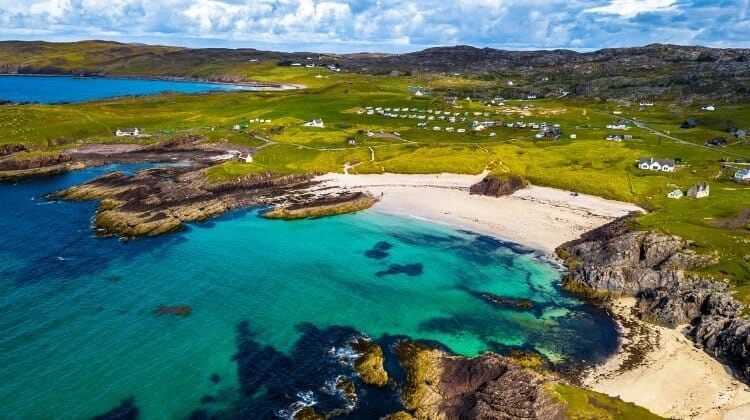
The North Coast 500 is one of the most iconic motorhome routes in Europe, and for good reason. This 516-mile circular route starts and ends in Inverness, looping around the far north of Scotland through wild coastlines, mountain passes, fishing villages, castles, beaches, and some of the most dramatic landscapes in the UK.
This is a route of big skies and small roads. Expect single-track sections, sheep with no sense of urgency, sudden sea views, and weather that changes its mind every twenty minutes. It is not a route to rush, especially in a motorhome. Give yourself at least a week, preferably longer, so you can explore places like Applecross, Torridon, Durness, John o’ Groats, and the beaches around Achmelvich and Clachtoll.
The NC500 is incredibly scenic, but it is also popular, so responsible motorhome travel really matters here. Use campsites, book ahead in summer, avoid unsuitable single-track roads in large vehicles, and take your time on passing places.
RELATED POST: How to Take a North Coast 500 Motorhome Trip
2. Iceland Ring Road, Route 1
Best for: glaciers, waterfalls, volcanic landscapes, and otherworldly scenery
Distance: around 1,332 kilometres
Best time to go: June to September
Motorhome tip: stick to campsites; wild camping rules are strict, and never ignore weather warnings.
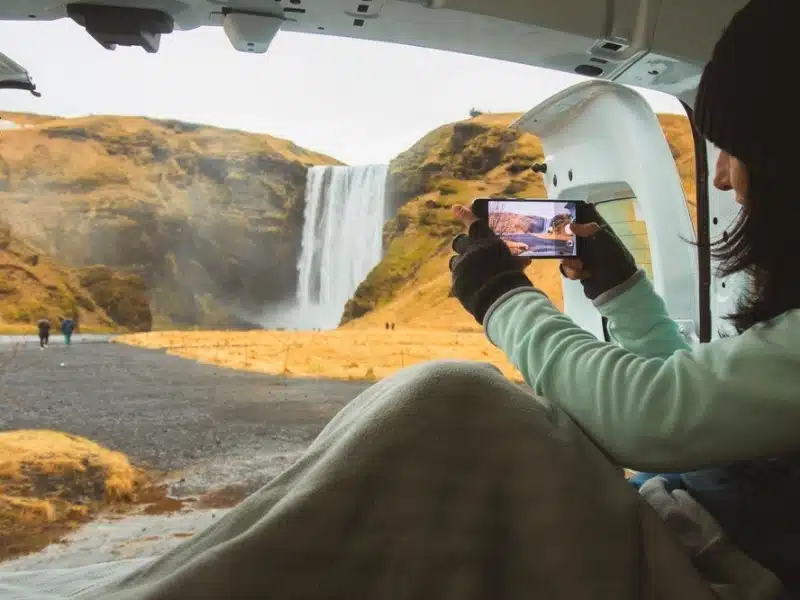
Iceland’s Route 1 is one of the most spectacular road trips on the planet. The Ring Road loops around the island for around 1,332 kilometres, linking waterfalls, glaciers, volcanoes, lava fields, black-sand beaches, geothermal areas, fishing towns, and wide-open landscapes that make every driving day feel memorable.
For motorhome travellers, Iceland is wonderfully straightforward in some ways and unforgiving in others. The route itself is mostly paved, and campsites are well set up for campervans, but the weather can be brutal, fuel stops need planning, and wind is a genuine consideration. This is not the place to park casually beside a cliff edge and hope for the best.
Highlights include Seljalandsfoss, Skógafoss, Reynisfjara black beach, Jökulsárlón glacier lagoon, the Eastfjords, Lake Mývatn, Akureyri, and the Snæfellsnes Peninsula if you have extra time. Two weeks gives you a much better experience than trying to hammer around the island in a few days.
RELATED POST: Iceland Road Trip: 27 Epic Things to See & Do
3. Val d’Orcia, Tuscany, Italy
Best for: countryside, wine, food, hill towns, and slow travel
Distance: flexible, but around 100 to 150 kilometres for a relaxed loop
Best time to go: April to June or September to October
Motorhome tip: use agriturismo and agricampeggio stops for a more atmospheric stay.
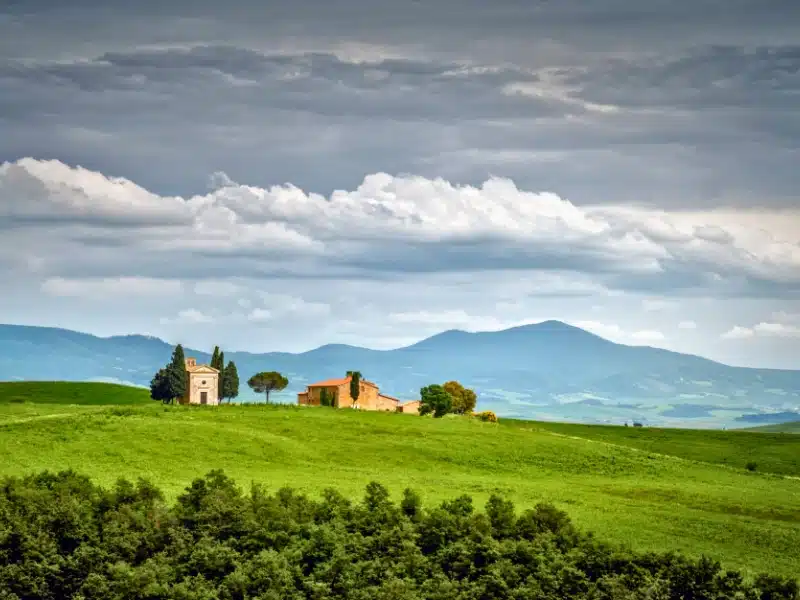
Val d’Orcia is Tuscany at its most cinematic, all rolling hills, cypress-lined lanes, golden fields, vineyards, stone farmhouses, and hilltop towns that appear just when the road bends in the right direction. It is not a long road trip, but it is one of the most beautiful motorhome routes in Italy.
This route works best as a slow loop between towns such as Pienza, Montepulciano, Montalcino, San Quirico d’Orcia, and Bagno Vignoni. The joy is not in covering distance, it is in lingering over views, stopping for coffee in small piazzas, buying pecorino, and finding an agricampeggio where you can park among vines and olive trees.
Roads can be narrow in historic centres, so park outside towns and walk in. Tuscany rewards patience. A smaller campervan will make life easier, especially if you want to explore the quieter backroads.
RELATED POST: Motorhoming in Italy: Your Complete Guide
4. Causeway Coastal Route, Northern Ireland
Best for: coastal drama, castles, beaches, and short motorhome trips
Distance: around 120 miles
Best time to go: May to September
Motorhome tip: book campsites early in peak summer, especially near the Giant’s Causeway and Portrush.
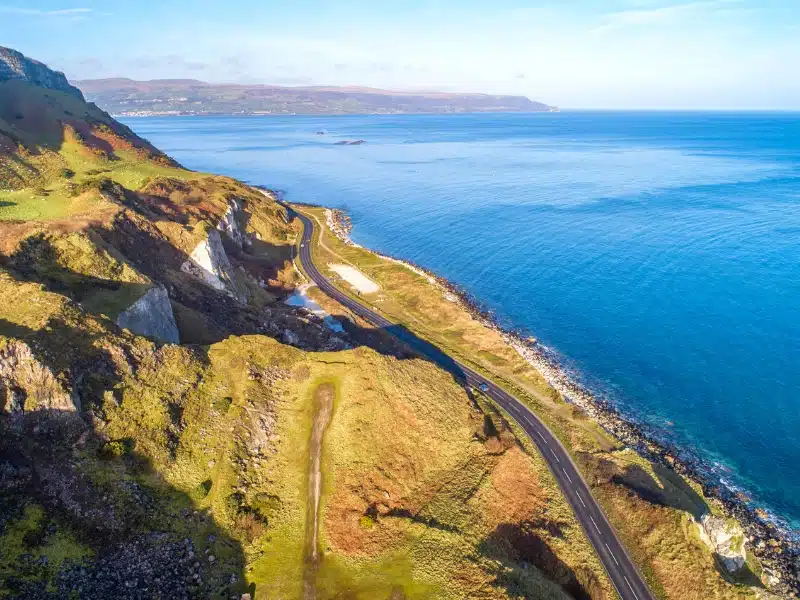
The Causeway Coastal Route is one of the most scenic drives in the UK and Ireland, linking Belfast with Derry/Londonderry along Northern Ireland’s rugged north coast. It is a brilliant motorhome route for dramatic sea views, castle ruins, beaches, harbour villages, and big-name sights without needing weeks on the road.
The headline stop is the Giant’s Causeway, but the whole route deserves time. Carrickfergus Castle, the Glens of Antrim, Cushendun, Ballycastle, Carrick-a-Rede, Ballintoy Harbour, Dunluce Castle, and Portstewart Strand all make this a varied and rewarding drive.
This is a great option if you want a shorter motorhome holiday with plenty of impact. Roads are generally manageable, distances are short, and there are good places to stay along the coast.
RELATED POST: Causeway Coastal Route: The Ultimate Northern Ireland Road Trip

Complete Guide to Motorhoming in Europe
Planning a motorhome tour of Europe? We’ve put everything we’ve learned from years on the road into one practical guide.
From planning routes and understanding tolls and low emission zones to finding places to stay, managing costs and everyday life on the road, it’s packed with practical advice to help you tour Europe with confidence.
5. Wild Atlantic Way, Ireland
Best for: wild coastlines, Irish culture, beaches, music, and long road trips
Distance: around 2,500 kilometres
Best time to go: May, June, September, and early October
Motorhome tip: use official campsites and motorhome stopovers, especially in busy coastal areas.
The Wild Atlantic Way is one of Europe’s great coastal adventures. Running for around 2,500 kilometres along Ireland’s west coast, from the Inishowen Peninsula in Donegal to Kinsale in County Cork, it is the kind of route that can take two weeks or two months, depending on how easily distracted you are by cliffs, beaches, pubs, and weather rolling in from the Atlantic.
For motorhome travel, it is superb. The scenery is huge, the towns are welcoming, and the route has endless variety. You can explore Donegal’s wild headlands, Mayo’s empty beaches, Connemara’s mountains, the limestone landscapes of the Burren, the Cliffs of Moher, Dingle, the Ring of Kerry, and the peninsulas of West Cork.
The Wild Atlantic Way is not a route to complete for the sake of completion. Pick sections if you are short on time, slow down, and expect narrow lanes in places. The rewards are enormous.
RELATED POST: Motorhoming in Ireland: Your Complete Guide
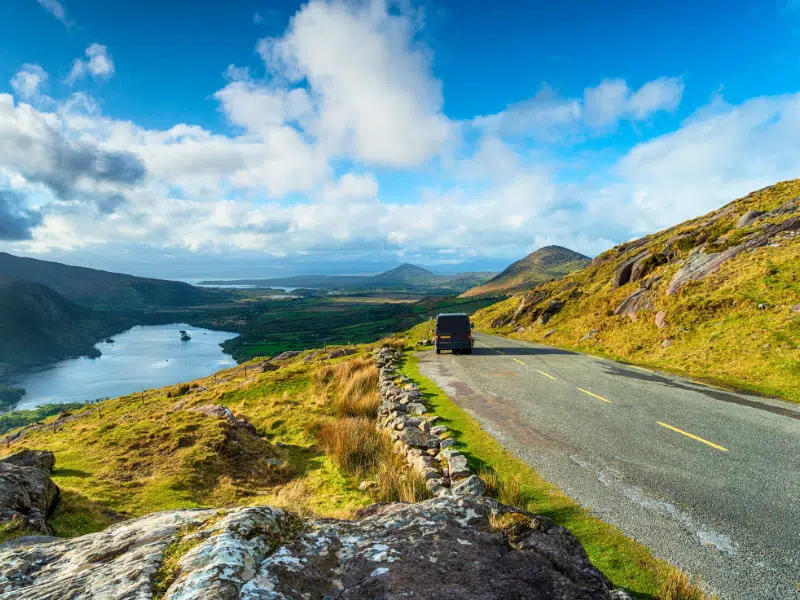
6. Route Napoléon, France
Best for: mountains, history, Provence, and dramatic inland driving
Distance: around 325 kilometres
Best time to go: May to June or September
Motorhome tip: check mountain road conditions outside summer and avoid arriving late at small Aires in peak season.
Route Napoléon follows the path taken by Napoleon in 1815 after his escape from Elba, but you do not need to be especially interested in history to enjoy it. This is one of France’s most scenic inland drives, running from the Côte d’Azur towards Grenoble through Provence, gorges, forests, and Alpine landscapes.
The route begins near Golfe-Juan and passes through Grasse, Castellane, Digne-les-Bains, Sisteron, Gap, and La Mure before reaching Grenoble. It is a brilliant journey for motorhome travellers who want something more varied than a coastal holiday, with lavender country, mountain views, historic towns, and access to the French Alps.
Some sections are twisty and steep, but the main route is manageable with care. Take your time, avoid peak heat if your van struggles on climbs, and allow extra days for detours into the Verdon Gorge or Écrins National Park.
RELATED POST: Route Napoléon: Following Napoleon Through the French Alps
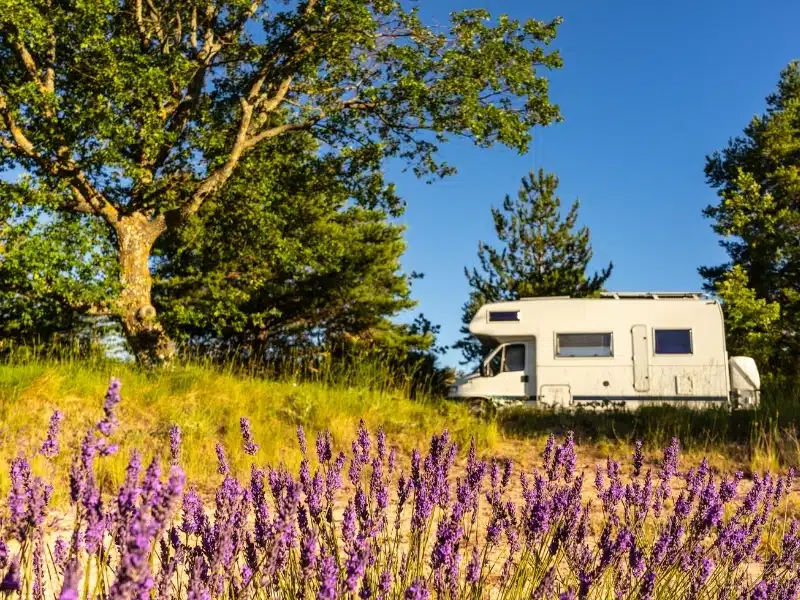
7. Deutsche Alpenstrasse, Germany
Best for: Alpine scenery, castles, lakes, and easy motorhome infrastructure
Distance: around 450 kilometres
Best time to go: May to October
Motorhome tip: use stellplätze on the edge of towns, then walk or cycle in.
The Deutsche Alpenstrasse, or German Alpine Road, is Germany’s oldest scenic touring route and one of the best motorhome routes in the Bavarian Alps. It runs for around 450 kilometres from Lindau on Lake Constance to Schönau am Königssee, close to the Austrian border.
This route is all Alpine lakes, painted villages, onion-domed churches, mountain views, castles, meadows, and tidy Bavarian towns that look almost suspiciously well-kept. Highlights include Füssen, Neuschwanstein Castle, Oberammergau, Garmisch-Partenkirchen, Tegernsee, Chiemsee, Berchtesgaden, and Königssee.
For motorhome travellers, Germany is wonderfully practical. Aires, stellplätze, campsites, and well-maintained roads make this one of the easier scenic routes in Europe, although you will still need to watch for height and parking restrictions in historic towns.
RELATED POST: Deutsche Alpenstrasse: Route, Map & Highlights
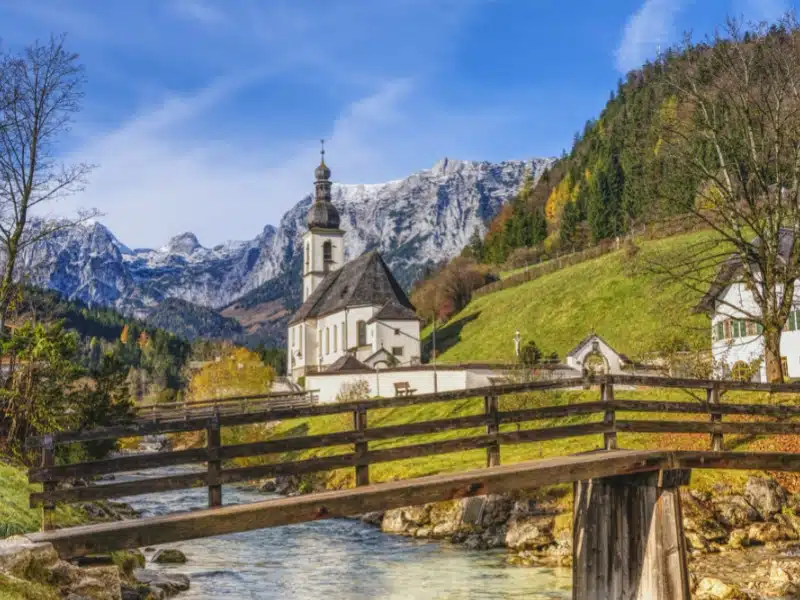
8. Flåm to Molde, Norway
Best For: Fjords, waterfalls, mountain roads, and iconic Norwegian scenery
Route Length: Around 450 to 550 kilometres, depending on detours
Best Time to Go: June to September
Motorhome Tip: Check seasonal road openings before travelling, especially for Trollstigen and other high mountain routes.
The drive from Flåm to Molde is one of the most scenic motorhome routes in Norway. It brings together deep fjords, waterfalls, mountain roads, ferry crossings, tunnels, viewpoints, and villages tucked into landscapes that make you keep pulling over.
A good route links Flåm, Aurlandsvangen, the Stegastein viewpoint, Lærdal, Sogndal, Loen, Olden, Stryn, Geiranger, Valldal, Åndalsnes, and Molde. Along the way, you can add the Aurlandsfjellet scenic road, the Lærdal Tunnel, the Loen Skylift, the Briksdal Glacier, and the famous views above Geirangerfjord.
The real showstopper comes after Geiranger. The climb up Ørnesvingen offers one final look over the fjord before the route continues towards Valldal and the legendary Trollstigen. With its dramatic hairpin bends carved into the mountainside, waterfalls tumbling beside the road, and panoramic viewpoints at the summit, it is one of Europe’s greatest driving experiences.
Continue through Åndalsnes before finishing in Molde, where fjord views and island-dotted coastlines provide a fitting finale to an unforgettable Norwegian adventure.
RELATED POST: Campervanning & Motorhoming in Norway: Top Tips, Routes & Destinations
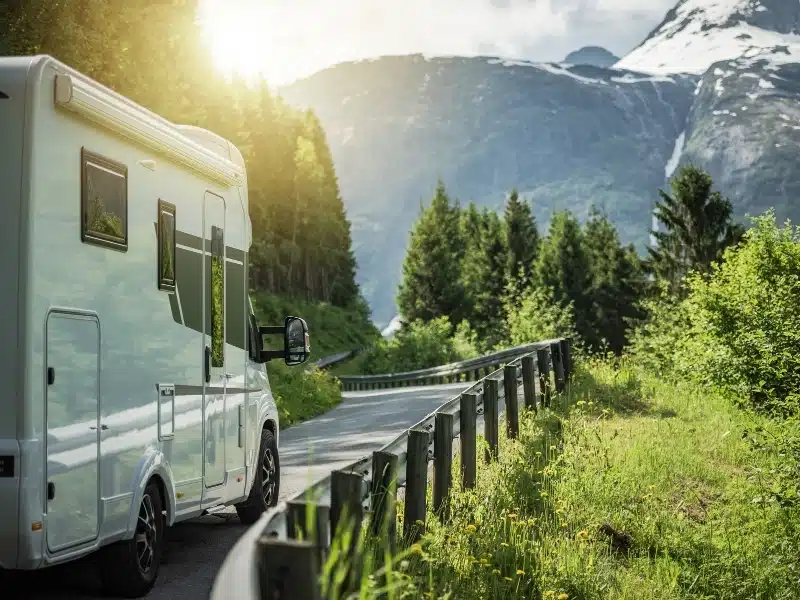
9. Sicily Coastal Route, Italy
Best for: beaches, ruins, food, volcanoes, and Mediterranean culture
Distance: around 900 to 1,100 kilometres for a full loop
Best time to go: April to June or September to October
Motorhome tip: avoid July and August if you dislike heat, crowds, and frantic coastal parking.
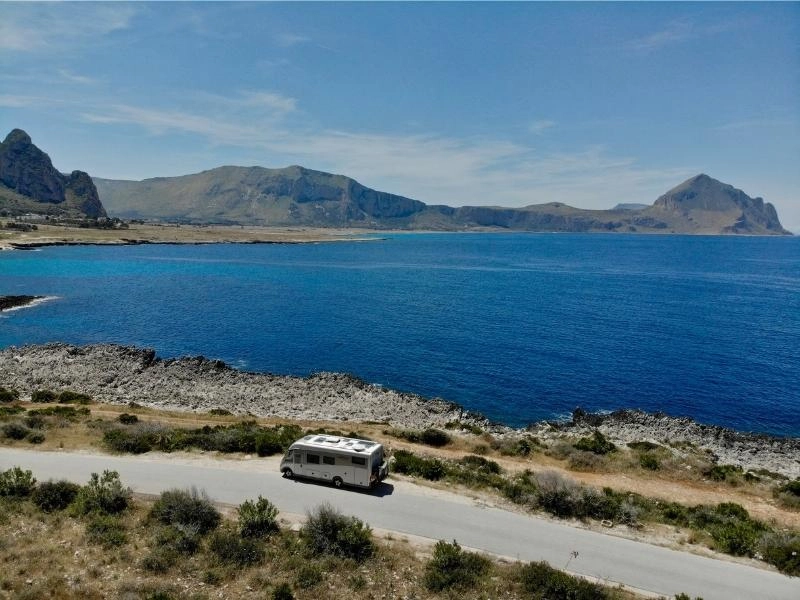
A Sicily coastal road trip is one of the best motorhome routes in southern Europe, especially if you want sea views, ancient ruins, chaotic cities, beaches, volcanoes, and food that makes every supermarket stop dangerous. You can loop the island from Palermo, travelling via Cefalù, Taormina, Catania, Syracuse, Noto, Ragusa, Agrigento, Marsala, Trapani, and back to Palermo.
Sicily is not always the easiest place to drive a motorhome. Roads can be rough, town centres are tight, and traffic has its own rhythm. That said, the rewards are huge. You get Greek temples, Baroque towns, fishing harbours, coastal reserves, Mount Etna, and some of Italy’s most distinctive regional food.
This route is best suited to confident drivers or those in a smaller campervan. Stay outside cities, use campsites and sostas, and avoid trying to squeeze into historic centres.
RELATED POST: Sicily Road Trip Itinerary: Ultimate 14 Day Route, Map & Travel Tips
10. San Sebastián to Santiago de Compostela, Spain
Best for: food, surf, coastal towns, green landscapes, and culture
Distance: around 750 to 900 kilometres, depending on detours
Best time to go: May to October
Motorhome tip: book ahead near popular beach towns in August, especially in Asturias and Cantabria.
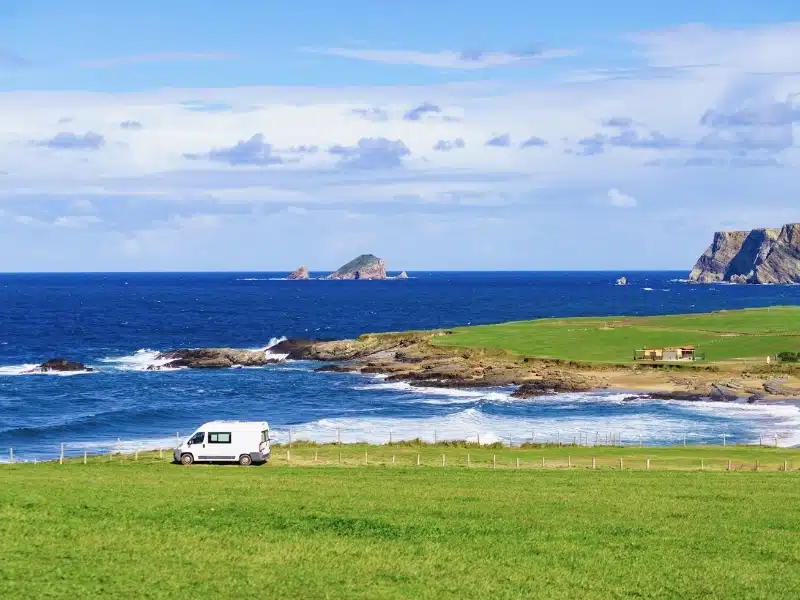
The drive from San Sebastián to Santiago de Compostela follows Spain’s lush northern coast through the Basque Country, Cantabria, Asturias, and Galicia. It is a brilliant alternative to Spain’s busier Mediterranean routes, with green hills, surf beaches, fishing towns, cliffs, cider houses, and some of the best food in Europe.
Start in San Sebastián, then follow the coast west through Bilbao, Santander, Santillana del Mar, Llanes, Ribadesella, Gijón, Luarca, Ribadeo, A Coruña, and finally Santiago de Compostela. There are endless detours, including the Picos de Europa, Playa de las Catedrales, and the wild Galician coast.
This is a fantastic motorhome route because northern Spain is well set up for touring, and the climate is generally more comfortable than the south in summer. Expect rain, though. The north is green for a reason.
RELATED POST: Motorhoming in Spain: Your Complete Guide
11. Lisbon to Porto, Portugal
Best for: beaches, surf towns, historic cities, seafood, and easy touring
Distance: around 350 to 500 kilometres, depending on detours
Best time to go: April to June or September to October
Motorhome tip: avoid overnighting illegally near beaches, especially in protected natural parks.
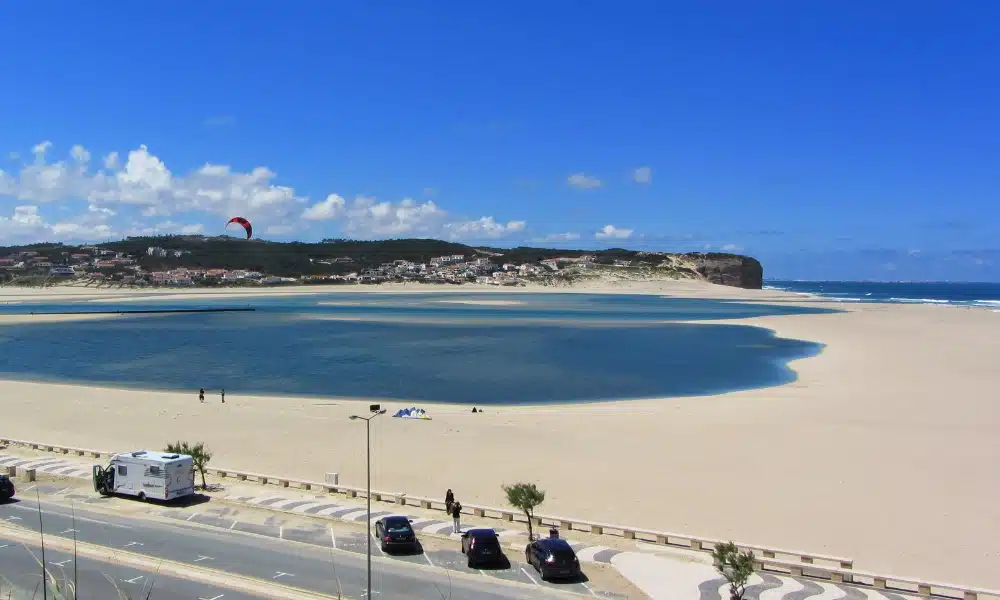
The drive from Lisbon to Porto is a relaxed and scenic motorhome route through central Portugal, combining Atlantic beaches, fishing towns, historic cities, surf spots, monasteries, lagoons, and wine country. It is not a difficult route, which makes it ideal for a first motorhome trip in Europe.
You can follow the coast from Lisbon to Ericeira, Peniche, Nazaré, São Martinho do Porto, Figueira da Foz, Aveiro, and Porto, with inland detours to Óbidos, Batalha, Alcobaça, Coimbra, and the Douro Valley. The mix of seaside stops and historic towns gives the journey real variety.
Portugal is popular with motorhomers, but wild camping rules have tightened in recent years, especially in protected coastal areas. Use campsites, Aires, and official motorhome service areas to avoid problems.
RELATED POST: Motorhoming in Portugal: Your Complete Guide
12. Romantic Road, Germany
Best for: medieval towns, castles, easy driving, and culture
Distance: around 460 kilometres
Best time to go: May to October or December for Christmas markets
Motorhome tip: park outside old towns, many centres have narrow streets and access restrictions.
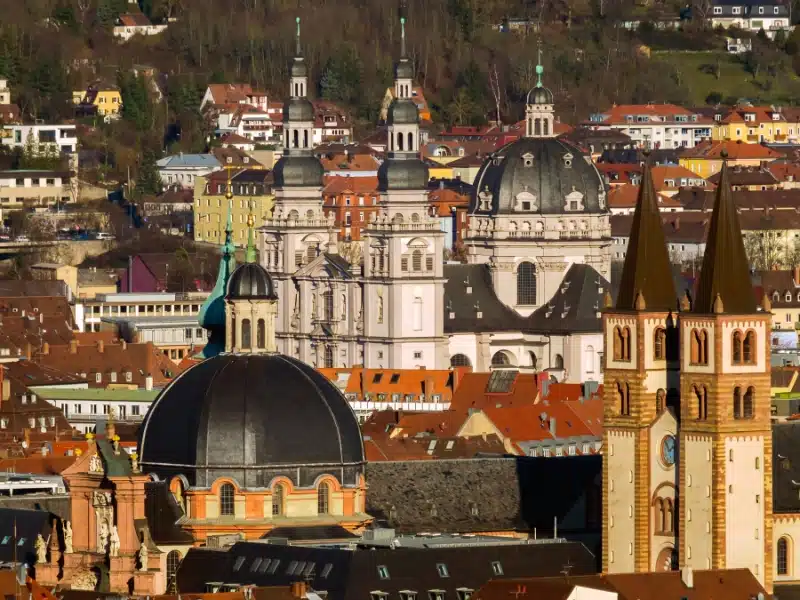
Germany’s Romantic Road is a classic scenic route running from Würzburg to Füssen through medieval towns, vineyards, countryside, and fairytale Bavarian scenery. It is one of the best motorhome routes in Europe if you want pretty towns, gentle driving, and plenty of culture without tackling major mountain passes.
The route includes Würzburg, Rothenburg ob der Tauber, Dinkelsbühl, Nördlingen, Augsburg, Landsberg am Lech, and Füssen, with Neuschwanstein Castle waiting near the end. It is popular, but it still works beautifully as a motorhome itinerary because distances are manageable and overnight stops are easy to find.
This is not the wildest road trip in Europe, but it is one of the most charming. It is especially good for travellers who enjoy historic centres, local food, castles, and slow wandering.
RELATED POST: Romantic Road Germany: Itinerary, Map & Tips
13. Grossglockner High Alpine Road, Austria
Best for: Alpine drama, glaciers, mountain driving, and viewpoints
Distance: around 48 kilometres for the high road itself
Best time to go: June to September
Motorhome tip: check opening dates, toll costs, and weather before you commit to the climb.
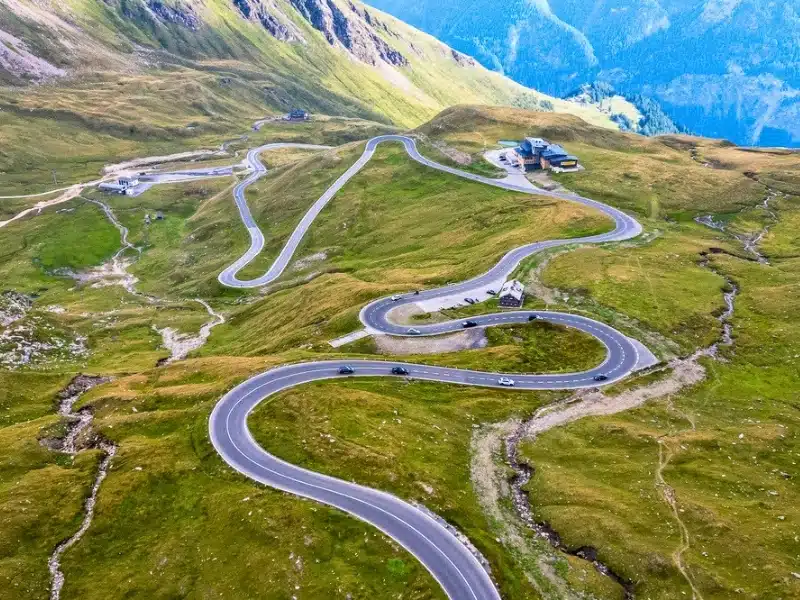
The Grossglockner High Alpine Road is one of Europe’s most spectacular mountain drives. It climbs through Austria’s Hohe Tauern National Park, with hairpin bends, glacier views, high passes, marmots, waterfalls, and viewpoints over Austria’s highest mountain.
This is not a long road trip on its own, but it makes a brilliant highlight on a larger Austria or Alps motorhome itinerary. You can link it with Zell am See, Kaprun, Lienz, Heiligenblut, and the Austrian Lakes. The road is a toll road and is usually open from late spring to autumn, depending on snow conditions.
Motorhomes are allowed, but this is a proper mountain road. Make sure your brakes are in good condition, use low gears on descents, and do not rush. The views deserve time anyway.
14. Dalmatian Coast, Croatia
Best for: Adriatic views, historic towns, beaches, islands, and warm weather
Distance: around 350 kilometres from Zadar to Dubrovnik
Best time to go: May, June, September, and early October
Motorhome tip: avoid driving into Dubrovnik with a large motorhome, stay outside and use public transport or taxis.
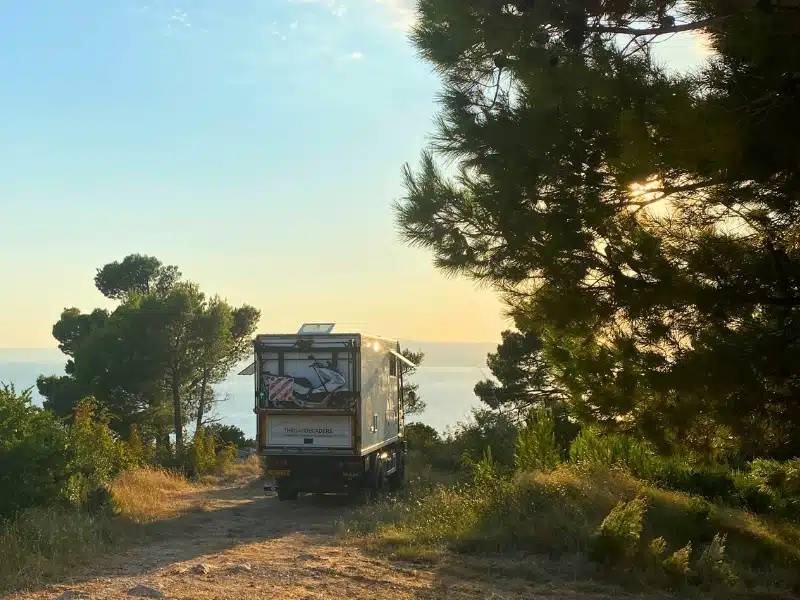
Croatia’s Dalmatian Coast is one of the most scenic coastal motorhome routes in Europe, running between Zadar, Šibenik, Split, Makarska, and Dubrovnik, with mountains on one side and the Adriatic on the other. It is a route of clear water, old stone towns, islands, harbours, beaches, and sunset views that make slow travel feel like the only sensible option.
The coastal road is beautiful, but it can be busy in summer. Give yourself time for Krka National Park, Trogir, Split, the Makarska Riviera, Ston, and Dubrovnik. You can also add ferry trips to islands such as Brač, Hvar, or Korčula if your itinerary allows.
Motorhome travel in Croatia is straightforward if you use campsites, many of which sit in excellent coastal locations. Wild camping is not allowed, and enforcement can be strict, so this is not a place to wing it.
RELATED POST: Croatia Road Trips: Five Incredible Routes
15. Lofoten Scenic Route, Norway
Best for: Arctic scenery, fishing villages, beaches, photography, and hiking
Distance: around 230 kilometres along the main route
Best time to go: June to September
Motorhome tip: use designated overnight areas and campsites; pressure on local parking is a real issue in peak season.
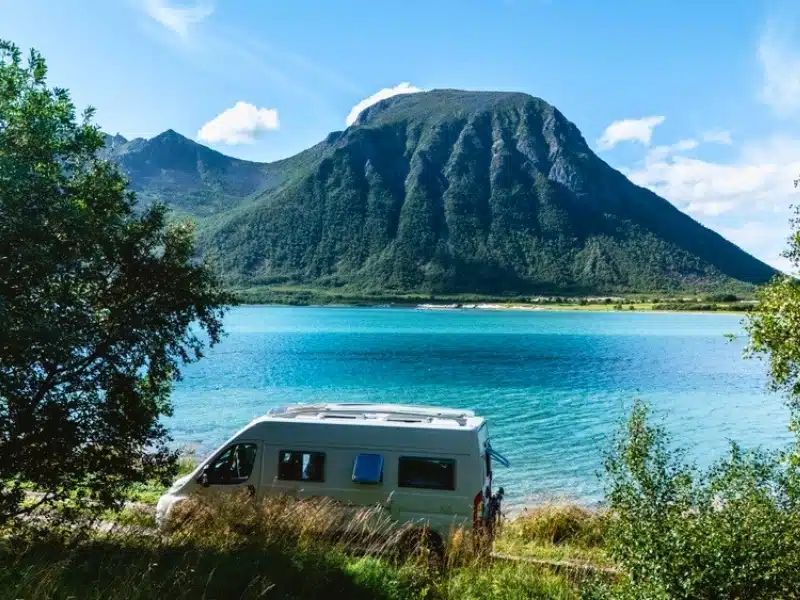
The Lofoten Islands deliver one of Europe’s most unforgettable motorhome road trips. This Arctic route follows roads and bridges through jagged mountains, fishing villages, white-sand beaches, turquoise water, and landscapes that feel far more dramatic than the distances suggest.
The main route runs through the islands towards Å, passing places such as Svolvær, Henningsvær, Nusfjord, Reine, Hamnøy, and Ramberg. It is not a long drive, but every few miles brings another viewpoint, beach, harbour, or hiking trail.
Lofoten is best explored slowly. Summer brings long daylight hours and easier driving, while autumn can be quieter and atmospheric. Roads are generally manageable, but parking can be limited in popular spots, and the weather can be fierce even in summer.
Tips for Planning a Motorhome Route in Europe
The best motorhome routes in Europe are not always the longest or most famous. Some of the most memorable trips come from choosing a region and exploring it properly instead of trying to cover five countries in ten days.
Think carefully about the size of your motorhome: A large van gives you more comfort, but it can make narrow villages, mountain roads, ferry crossings, and city parking more stressful. If your route includes Sicily, Tuscany, the NC500, or Norwegian fjords, smaller is often easier.
Always check local overnight parking rules: Wild camping varies massively across Europe, and what is tolerated in one country can be illegal in another. Scotland, Norway, Portugal, Croatia, Iceland, and Italy all have different rules, and some areas have become much stricter because of irresponsible camping.
Book ahead in peak season: This is especially important for Iceland, the NC500, the Wild Atlantic Way, Croatia, Norway, and popular Alpine areas. Outside July and August, you will usually have more flexibility, better prices, quieter roads, and a much more enjoyable trip.
Best Time of Year for Motorhome Travel in Europe
For most scenic motorhome routes in Europe, the best months are May, June, September, and early October. You usually get decent weather, manageable crowds, open campsites, and better driving conditions.
July and August can work well in Scandinavia, the Alps, Scotland, and Ireland, although these routes will be busier. Southern Europe can be very hot in high summer, especially in Sicily, Portugal, Croatia, and inland Italy, so spring and autumn are often much more comfortable.
Winter motorhome travel in Europe can be magical, but it needs more planning. Alpine routes may be closed, campsites can be limited, and you will need proper heating, tyres, and cold-weather preparation.
Final Thoughts on Europe’s Most Scenic Motorhome Routes
Europe is packed with scenic motorhome routes, but the best ones all have one thing in common: they reward slow travel. The joy is not just the famous viewpoint or the big-name road, it is the small harbour you did not plan to stop at, the campsite with a mountain view, the bakery you found by accident, or the detour that became the best bit of the trip.
The NC500, Iceland’s Ring Road, the Wild Atlantic Way, Norway’s fjords, Tuscany, Sicily, Portugal, Croatia, and the Alps all offer completely different versions of the same freedom. Pack well, drive considerately, book the important stops, and leave enough space in your itinerary for the unexpected.
That is where the best motorhome memories usually happen.
More Motorhome Travel to Explore

The 21 Best Motorhome Routes in the UK for an Amazing Adventure!

Motorhome Travel in France: What Do You Really Need? (+ Checklist)

Touring Europe in a Motorhome: The Best & Only Guide You Need!

The Best Motorhome Holidays in Europe

Planning Your Morocco Motorhome Adventure
Love it? Pin it!


