
This post may contain affiliate links, from which we earn an income. Click here to read our affiliate policy.
Ultimate Portugal road trip planner
Portugal packs an extraordinary amount into a relatively small country, making it perfect for a road trip. In ten days, you can explore two of Europe’s most engaging cities, drive through the vineyard-covered Douro Valley, discover medieval towns and magnificent monasteries, and follow Portugal’s story from the Knights Templar to the Age of Discoveries.
Our 10-day Portugal road trip starts in Porto and finishes in Lisbon, travelling south through the Douro Valley, Coimbra, Tomar, Óbidos and Sintra, with stops at Lamego, Fátima, Batalha and Alcobaça along the way.
We’ve designed the route to give Porto and Lisbon the time they deserve, with manageable driving days and plenty to see between them. Along the way, you’ll find our recommended stops, the sights worth making time for and places to stay at every overnight destination.
If you’re planning your first Portugal road trip and want to experience much more than the two big cities, this itinerary is a great place to start.
Portugal Road Trip: Key Facts
Route: This 10-day Portugal road trip travels from Porto to Lisbon through the Douro Valley and central Portugal, with overnight stops in Pinhão, Coimbra, Tomar, Óbidos and Sintra.
Highlights: Explore Porto and Lisbon, drive the N222 through the Douro Valley, visit the historic university city of Coimbra, discover Tomar’s Knights Templar heritage and see the UNESCO-listed monasteries of Batalha and Alcobaça.
Journey: The route includes two nights in Porto, one night each in the Douro Valley, Coimbra, Tomar, Óbidos and Sintra, followed by three days exploring Lisbon.
First-hand experience: The Gap Decaders’ recommendations are based on months spent road tripping through Portugal, including extensive travel by motorhome.
Enjoy The Gap Decaders? Add us as a preferred source on Google.
Planning tools we actually use for Portuguese road trips
Is this your first time visiting Portugal? Get all the information you need in our Portugal Travel Guide, including what to pack, the best time of year to go, getting there, and practical tips to help you have the best trip!
A Historic Portuguese Road Trip Itinerary
This route takes you through some of Portugal’s most important historic cities, religious sites and cultural landmarks, from Porto and the Douro Valley to Lisbon and the centre of the country.
Over ten days, you’ll follow Portugal’s story through medieval towns, grand monasteries, university cities and places closely connected with the Age of Discoveries, with plenty of excellent food, wine and scenic driving along the way.
It’s a great itinerary if you want to see more than the coast and get a real sense of how Portugal developed into the country it is today.
Route: Porto – Douro Valley – Lamego – Coimbra – Tomar – Fátima – Batalha – Alcobaça – Óbidos – Sintra – Lisbon
Distance: ~720 km
Duration: 10 days
Best time to go: April to June and September to October for comfortable temperatures, fewer crowds and good driving conditions
Best for: History, architecture, wine, UNESCO World Heritage Sites, scenic drives and first-time visitors wanting to experience Portugal beyond Porto and Lisbon
Days 1–2: Porto
Start your Portugal road trip in Porto, a wonderfully compact city built across steep hills on the banks of the Douro. Give yourself two days here before picking up the road east into the Douro Valley.
Porto’s historic centre is a UNESCO World Heritage Site, and much of the pleasure comes from exploring on foot. Start around the grand Avenida dos Aliados before making your way towards São Bento station, where the entrance hall is covered with thousands of blue and white azulejo tiles depicting scenes from Portuguese history.
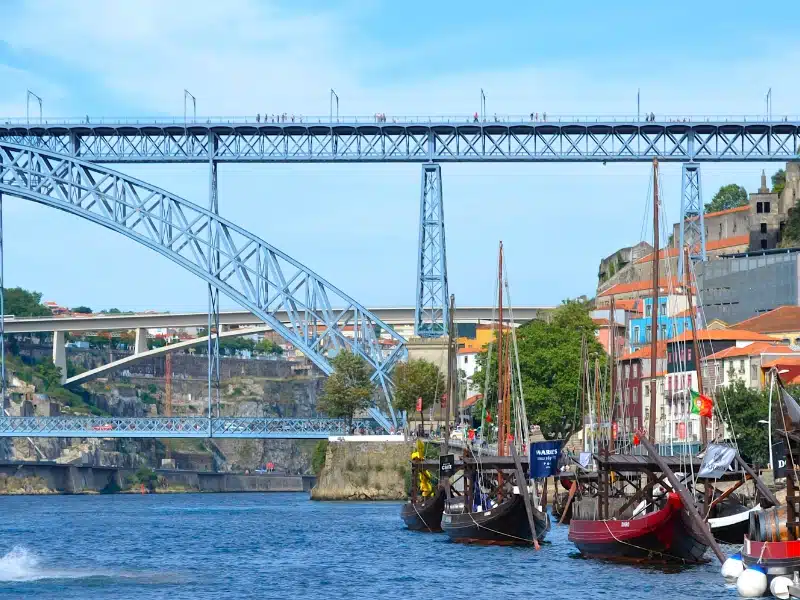
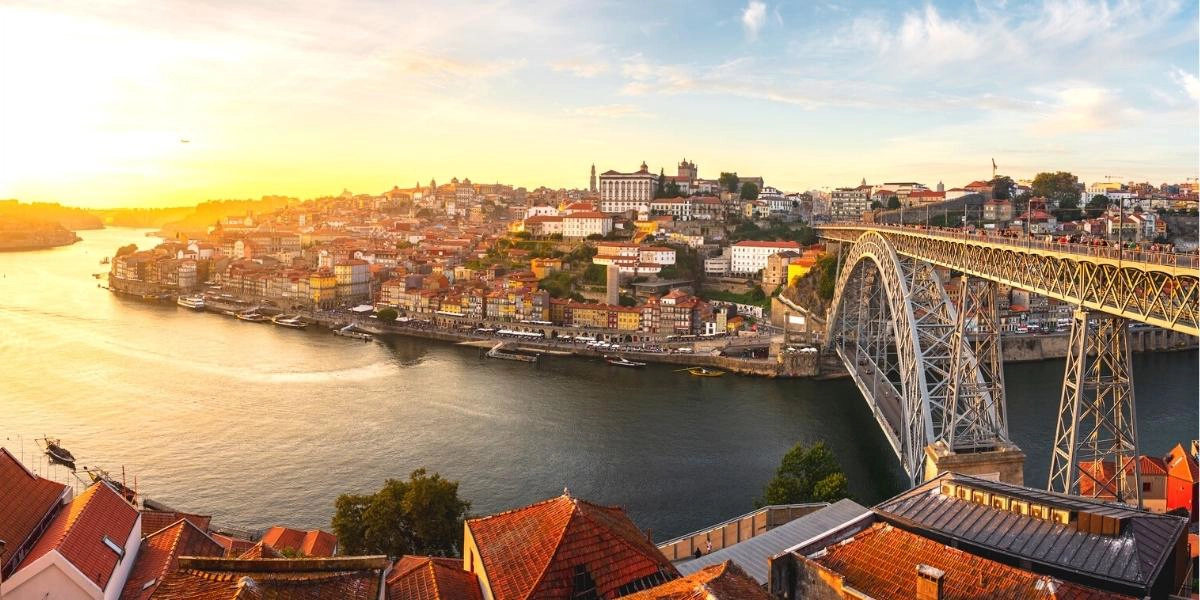
From here, wander through the narrow streets of the old city towards the Ribeira waterfront. This is one of Porto’s busiest areas, but it’s also an essential stop, with tall colourful houses lining the river and the great double-deck Dom Luís I Bridge stretching across the Douro to Vila Nova de Gaia.
Cross the bridge to Gaia, where the historic port wine lodges occupy the hillside above the river. This is the place to learn about the wine that made Porto famous, with tours and tastings available at many of the best-known port houses. For one of the classic Porto views, walk back across the upper deck of the Dom Luís I Bridge, which brings you out close to the cathedral.
On your second day, explore more of the city centre. Visit the striking Igreja do Carmo and Igreja dos Carmelitas, two churches standing side by side, before heading towards the Clérigos Tower and Livraria Lello. The bookshop has become one of Porto’s most popular attractions, so book ahead if you want to go inside.
Spend the afternoon seeing a different side of Porto. Ride one of the city’s historic trams towards Foz do Douro, where the river meets the Atlantic, and walk along the seafront before heading back into the centre for your final evening.
Porto is also a city to eat your way around. Look out for the famously substantial francesinha, fresh seafood and petiscos, Portugal’s small sharing dishes, and make time for a pastel de nata or two along the way.
Where to Stay in Porto
Upmarket: Maison Albar Hotels Le Monumental Palace is a luxurious five-star hotel in a restored 1920s building on Avenida dos Aliados, putting you right in the heart of Porto. Expect elegant rooms, a spa and indoor pool, and an excellent location for exploring the historic centre on foot.
Mid-Range: PortoBay Flores has a superb central location on Rua das Flores, close to São Bento station and an easy walk from the Ribeira. Its characterful rooms, garden and spa make it a particularly good choice if you want to stay in the old city without paying five-star prices.
Budget: Hotel Jaguar-Oporto offers modern rooms and good value a little outside the busiest part of the historic centre. Free private parking makes it especially useful for a road trip if you’ve already collected your hire car.
Next, leave Porto and follow the Douro east into one of Portugal’s most spectacular wine regions.
Day 3: Porto to the Douro Valley
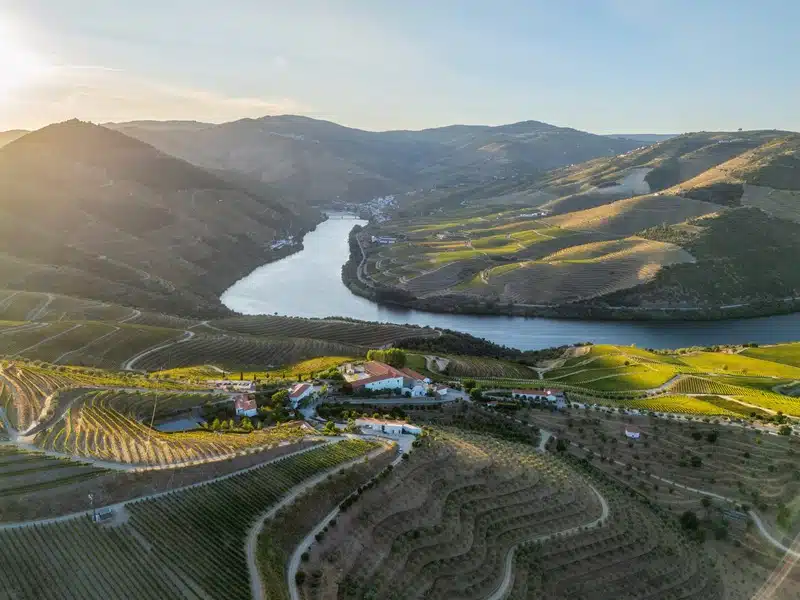
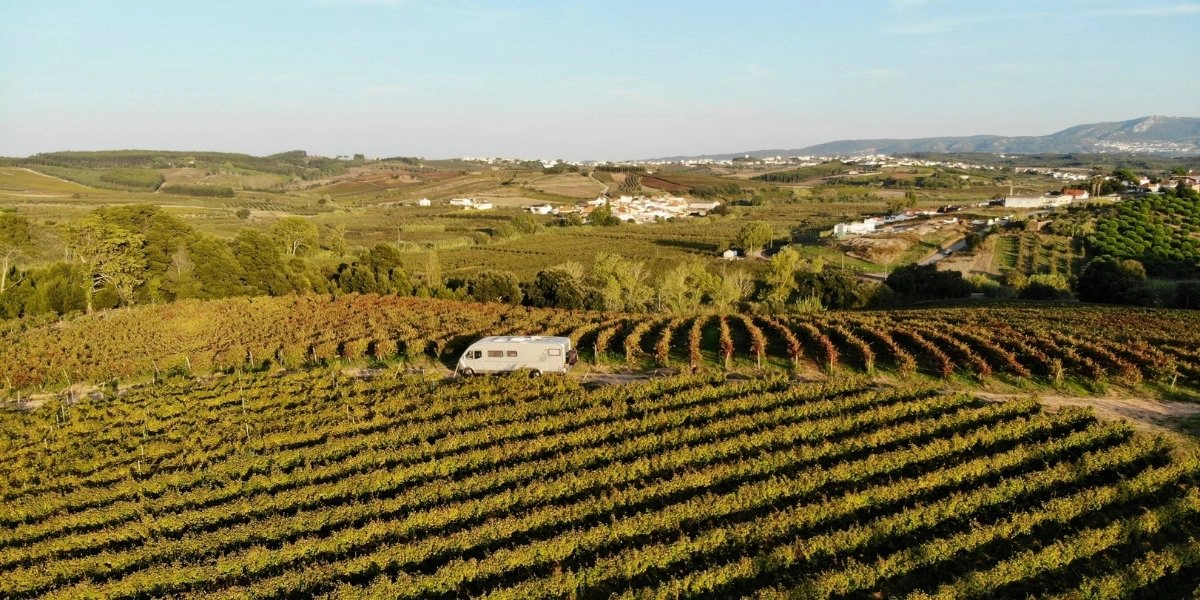
Leave Porto behind this morning and follow the Douro east into one of Portugal’s most spectacular landscapes. The Alto Douro Wine Region is a UNESCO World Heritage Site, where generations of wine growers have carved terraces into the steep hillsides above the river.
Your destination is Pinhão, at the heart of the Douro wine region, but today is as much about the drive as where you end up.
Head first for Peso da Régua, historically one of the most important centres of the Port wine trade. From here, cross to the south side of the Douro and pick up the N222 towards Pinhão. This is the stretch to take slowly, with the road following the river beneath steep slopes covered in vineyards.
There are plenty of places to stop along the way, but don’t try to cram too much into the day. The Douro is best enjoyed at a slower pace, leaving time to stop at viewpoints and take a detour to one of the wine estates, or quintas, that dot the valley.
Once you reach Pinhão, take a look inside the small railway station, where beautiful azulejo panels depict traditional scenes from the Douro wine harvest. If you have time, take a short boat trip from the waterfront for a completely different view of the terraced vineyards rising from the river.
Wine tasting is an essential part of a day in the Douro, and many of the surrounding quintas offer tours and tastings. It’s worth booking ahead, particularly during the busy summer months and the autumn grape harvest.
For one last view before dinner, head up to the Miradouro de Casal de Loivos above Pinhão. From here, you can look down over the village and the great sweep of the Douro as it winds between the vineyards.
Where to Stay in the Douro Valley
Upmarket: Quinta Nova Winery House Relais & Châteaux sits within a 120-hectare wine estate overlooking the Douro. With vineyard and river views, an outdoor pool, walking trails and wine experiences on the estate, this is somewhere to stay for the whole Douro experience rather than simply a bed for the night.
Mid-Range: Quinta de la Rosa is a family-owned working vineyard on the banks of the Douro, around 2km from Pinhão. There are wonderful river and vineyard views, an outdoor pool, wine tastings and an excellent on-site restaurant, making it an easy place to settle in for the evening.
Budget: Hostel Douro Backpackers is a highly rated, friendly option right in Pinhão, with both private rooms and dorms. Its central location is ideal for exploring the village, visiting nearby quintas and enjoying the Douro without having to drive again at the end of the day.
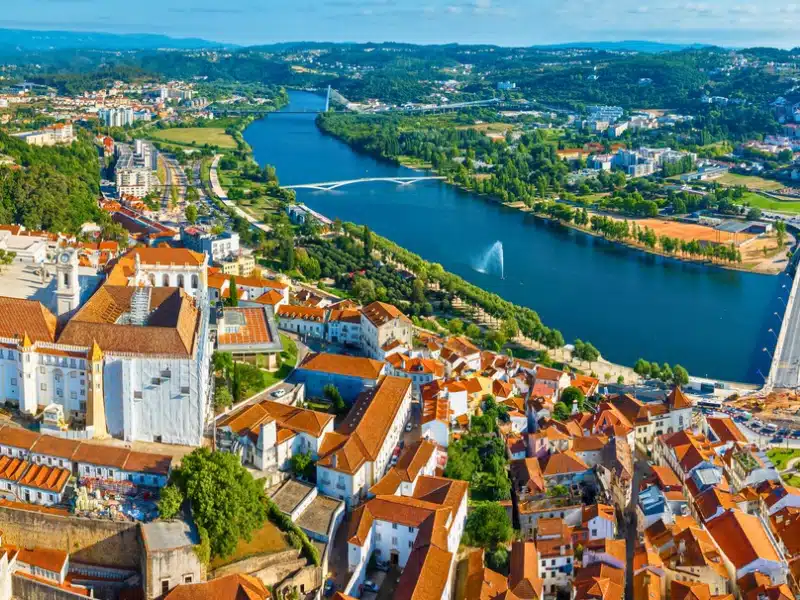
Next, leave the vineyards of the Douro behind and head south to Coimbra, home to one of Europe’s oldest universities.
Make sure you have travel insurance you can trust when visiting Portugal. We recommend True Traveller for their 5-star TrustPilot reviews, variety of cover options, best activities cover as standard, great prices, and excellent service.
Day 4: Douro Valley to Coimbra via Lamego
Leave Pinhão after breakfast and head south towards Coimbra, stopping first in Lamego, around 40 minutes from Pinhão.
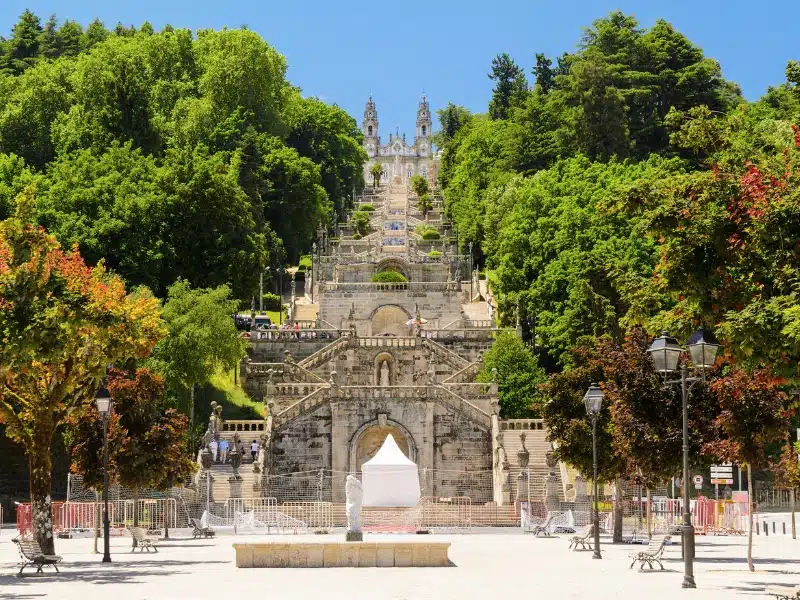
The main reason to visit is the Santuário de Nossa Senhora dos Remédios, dramatically positioned above the town at the top of an enormous Baroque staircase decorated with statues, fountains and traditional blue and white azulejo tiles. You can tackle the steps from the centre of Lamego or drive to the sanctuary and enjoy the views without the climb.
If you have time, take a wander through the compact historic centre and see Lamego Cathedral before continuing south towards Coimbra.
Allow around two hours for Lamego before getting back on the road. You should reach Coimbra in time for lunch or early afternoon, leaving the rest of the day to explore one of Portugal’s most historic cities.
Coimbra is best known for its university, founded in 1290 and one of the oldest universities in Europe. The historic university buildings occupy the former Royal Palace high above the city and form part of the UNESCO-listed University of Coimbra, Alta and Sofia.
The highlight is the magnificent Biblioteca Joanina, an extravagant Baroque library built in the early 18th century. Visitor numbers are controlled and entry is timed, so book your university visit in advance and plan the rest of your afternoon around it.
Afterwards, make your way downhill through Coimbra’s steep lanes and stairways into the old city. Stop at the Sé Velha, the city’s fortress-like Romanesque cathedral, before continuing through the medieval Arco de Almedina towards the pedestrianised streets around Praça do Comércio.
Coimbra has its own distinctive style of fado, traditionally associated with the university and usually performed by male singers wearing the black academic cape. If you’re staying overnight, catching a Coimbra fado performance is a fitting way to finish the day.
Where to Stay in Coimbra
Upmarket: Sapientia Boutique Hotel occupies a collection of historic buildings close to the university, with stylish rooms and a rooftop terrace overlooking Coimbra. Its location at the top of the old city is hard to beat if you want to explore the university quarter on foot.
Mid-Range: Hotel Oslo Coimbra is a comfortable, centrally located hotel close to Coimbra-A railway station and the lower old town. The rooftop terrace has excellent views towards the university, and its location makes it easy to explore the city without moving the car.
Budget: Hotel Domus is a simple, friendly hotel in the centre of Coimbra, within walking distance of the main sights. It’s a good choice if location matters more than facilities and you want an affordable base for a single night.
Next, continue south to Tomar, where Portugal’s Knights Templar left behind one of the country’s most extraordinary historic sites.
Day 5: Coimbra to Tomar
Leave Coimbra this morning and head south to Tomar, around an hour away. With such a short drive, you’ll have most of the day to explore one of the most fascinating stops on this Portugal road trip.
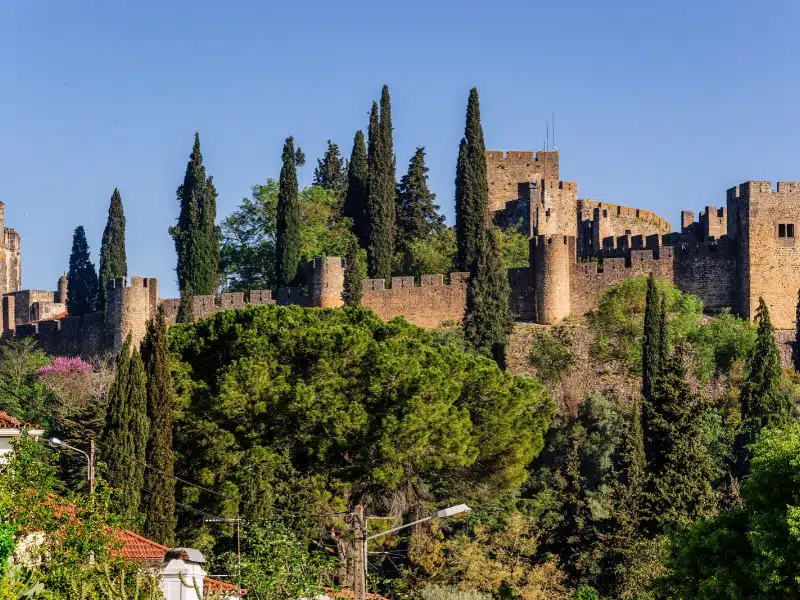
Tomar’s story is closely tied to the Knights Templar, who established their headquarters here in the 12th century. High above the town stands the magnificent Convent of Christ, originally founded as a Templar stronghold and later expanded into an enormous complex of cloisters, chapels and monastic buildings.
Allow at least two hours to explore properly. At its heart is the extraordinary Charola, the circular Templar church inspired by the Church of the Holy Sepulchre in Jerusalem. Look out too for the richly decorated Manueline Window, one of the finest examples of the elaborate architectural style that flourished in Portugal during the Age of Discoveries.
Back in the centre of Tomar, wander through the cobbled streets around Praça da República and visit the Church of São João Baptista before following the river through the pretty Mouchão gardens.
It’s also worth seeking out the Synagogue of Tomar, one of the best-preserved medieval synagogues in Portugal and now home to the Abraham Zacuto Portuguese Jewish Museum.
If you’re visiting in July during a Festa dos Tabuleiros year, you’ll see Tomar at its most colourful. Held every four years, the Festival of the Trays fills the streets with flowers and processions in one of Portugal’s most distinctive traditional celebrations.
Where to Stay in Tomar
Upmarket: Hotel República sits directly on Praça da República in the historic centre, with elegant rooms and a superb location for exploring Tomar on foot. The Convent of Christ is within walking distance and there are plenty of restaurants and cafés immediately outside.
Mid-Range: Thomar Boutique Hotel is a stylish contemporary hotel close to the Nabão River and just a few minutes’ walk from the historic centre. Its rooftop terrace has lovely views across Tomar towards the Convent of Christ.
Budget: Thomar Story Guest House is a characterful and affordable option in the centre of Tomar, with individually decorated rooms inspired by the town’s history. Its central location makes it particularly convenient for a one-night stop.
Next, continue to two of Portugal’s great UNESCO-listed monasteries at Batalha and Alcobaça before spending the night within the medieval walls of Óbidos.
Day 6: Tomar to Óbidos via Fátima, Batalha and Alcobaça
Today is one of the fullest days of this Portugal road trip, but the distances between stops are short. Leave Tomar after breakfast and head first to Fátima, around 35 minutes away.
Fátima
Fátima is one of the most important Catholic pilgrimage destinations in the world. Its significance dates from 1917, when three young shepherd children reported seeing a series of apparitions of the Virgin Mary.
At the heart of the enormous Sanctuary of Fátima is the small Chapel of the Apparitions, built on the spot where the children said the apparitions took place. The sanctuary also includes the Basilica of Our Lady of the Rosary, where the three children are buried, and the modern Basilica of the Holy Trinity.
Even if you’re not religious, Fátima is an interesting stop for the sheer scale of the sanctuary and its importance in modern Portuguese life. Allow around an hour to 90 minutes for your visit before continuing to Batalha.
Batalha
Around 25 minutes from Fátima, the magnificent Monastery of Batalha was built to commemorate Portugal’s victory over Castile at the Battle of Aljubarrota in 1385, which secured Portuguese independence and brought João I to the throne.
Inside, visit the Founder’s Chapel, where João I and his English wife Philippa of Lancaster are buried alongside several of their children, including Henry the Navigator.
Don’t miss the Unfinished Chapels at the rear of the monastery. Open to the sky and covered with intricate Gothic and Manueline stonework, they’re one of the most memorable parts of the complex.
Allow around 90 minutes before continuing to Alcobaça, approximately
Alcobaça
The UNESCO-listed Monastery of Alcobaça was founded in the 12th century and became one of Portugal’s most important religious buildings.
Its most famous residents are King Pedro I and Inês de Castro, whose extraordinary and gruesome love story has become part of Portuguese legend. Their elaborately carved Gothic tombs stand opposite one another in the church, traditionally said to have been positioned so they would face each other when they rose on Judgement Day.
Allow around an hour for Alcobaça before making the final drive to Óbidos, approximately 35 minutes to the south.
Óbidos
Aim to reach Óbidos in the late afternoon, when many of the day visitors are starting to leave.
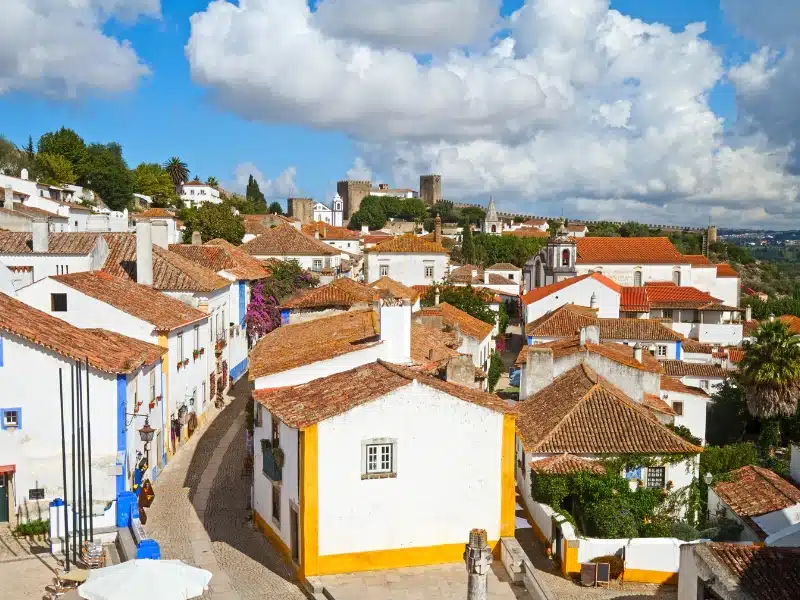
Enter the medieval town through the Porta da Vila, with its beautiful blue and white azulejo tiles, and explore the cobbled streets and whitewashed houses enclosed within the old walls.
If you have a head for heights, you can walk along sections of the medieval walls for views across the rooftops and surrounding countryside. Afterwards, try a glass of ginjinha, the local sour cherry liqueur often served in a small chocolate cup.
Staying overnight is one of the best ways to experience Óbidos. Once the day-trippers have gone, the little streets become considerably quieter, and you’ll have another chance to explore early the following morning.
Where to Stay in Óbidos
Upmarket: Pousada Castelo de Óbidos offers the rare chance to sleep inside Óbidos Castle itself. Rooms are spread through the historic castle and adjoining buildings within the medieval walls, making this the standout choice for a special night in Óbidos.
Mid-Range: Casa Senhoras Rainhas is a characterful hotel inside the old town walls, overlooking the castle and close to the main sights. Its central location means you can enjoy Óbidos in the evening and early morning without needing to drive.
Budget: Casa de S. Thiago do Castelo is a traditional guesthouse tucked beneath the castle walls in the heart of the old town. It’s a simple, atmospheric choice that puts you right among Óbidos’s medieval streets without the price tag of the castle hotel.
Next, leave Óbidos and head south for the palaces and wooded hills of Sintra.
Day 7: Óbidos to Sintra
Leave Óbidos early this morning for the drive south to Sintra, around an hour away. Today is deliberately devoted to Sintra because trying to squeeze its palaces and gardens into half a day simply doesn’t do the place justice.
Set among the wooded hills of the Serra de Sintra, the town became a favourite summer retreat of Portuguese royalty and aristocracy, who created an extraordinary collection of palaces, villas and gardens. The Cultural Landscape of Sintra is now a UNESCO World Heritage Site.
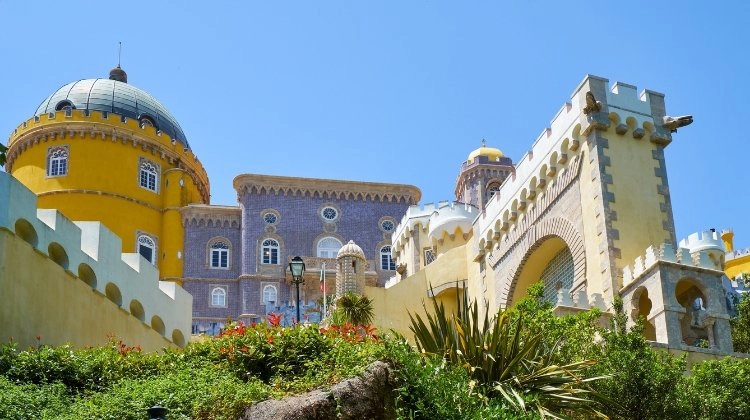
Start with the spectacular Palácio Nacional da Pena, the colourful 19th century Romantic palace perched high above the town. Built by King Ferdinand II around the remains of an old monastery, it’s an exuberant mix of architectural styles, bright colours, tiled courtyards and extravagant interiors.
Pena is Sintra’s headline attraction and gets extremely busy, so book a timed ticket in advance and aim for an early slot. Don’t try to drive right up to the palace. Parking and traffic around Sintra can be difficult, and using the local buses or a taxi is generally a much easier way to reach the major sights.
After Pena, head back towards the historic centre for lunch before visiting Quinta da Regaleira. This wonderfully eccentric estate is very different from Pena, with gardens filled with tunnels, grottoes, towers and hidden passages.
Its most famous feature is the Initiation Well, a deep spiral staircase that descends underground before connecting with a network of tunnels beneath the gardens. Give yourself plenty of time here, as exploring the grounds is half the fun.
If you still have time and energy, visit the Palácio Nacional de Sintra in the centre of town, instantly recognisable by the two enormous conical chimneys rising above its kitchens. Otherwise, save the remaining afternoon for wandering Sintra’s steep streets and enjoying the town at a slower pace.
Before you leave the centre, try a travesseiro, Sintra’s famous puff-pastry sweet filled with almond cream, or a traditional queijada.
Driving and Parking in Sintra: Sintra is not a place to try to visit by car. Traffic is restricted in the historic centre, and private vehicles are not permitted on the access roads to Pena Palace or the Moorish Castle. If you’re arriving by car on this road trip, the easiest option is to park on the outskirts and use public transport to get around. The large Lourel car park has around 540 free spaces and is served by the 434 and 435 buses, which connect with Sintra’s main attractions. The 434 is particularly useful for Pena Palace and the Moorish Castle. Allow plenty of time to reach Pena if you have a timed palace ticket, as traffic and queues for buses can make the journey slower than expected. If your hotel provides private parking, even better. Leave the car there and explore Sintra without it.
Where to Stay in Sintra
Upmarket: Valverde Sintra Palácio de Seteais is an elegant 18th century palace hotel surrounded by gardens, with views towards Pena Palace and the Moorish Castle. Its period interiors and peaceful setting make it a memorable place to stay after the crowds have left Sintra.
Mid-Range: Sintra Boutique Hotel has an excellent position in the historic centre, close to the National Palace and restaurants. Contemporary rooms and the central location make it particularly convenient if you’re exploring Sintra without using your car.
Budget: Casa da Pendoa offers comfortable apartments and rooms in the historic centre, within easy walking distance of the National Palace and Sintra’s old streets. Having extra space and basic self-catering facilities makes it a useful value option for an overnight stay.
Next, head into Lisbon for the final three days of your historic Portugal road trip.
Days 8–10: Lisbon
Leave Sintra this morning and make the short drive to Lisbon, where you’ll spend the final three days of your Portugal road trip.
Portugal’s capital needs time. Its historic neighbourhoods spread across seven hills, and some of Lisbon’s biggest sights lie outside the centre in Belém, so trying to cover everything in a day means spending more time rushing between attractions than enjoying the city.
Once you’ve arrived, park the car and leave it there. Lisbon is much easier to explore on foot and by tram, metro and funicular.
Baixa, Chiado and Alfama
Start your first day in the grand Praça do Comércio on the banks of the Tagus, once the ceremonial entrance to Lisbon for anyone arriving by sea. Walk beneath the Arco da Rua Augusta into Baixa, the elegant downtown district rebuilt after the devastating earthquake of 1755.
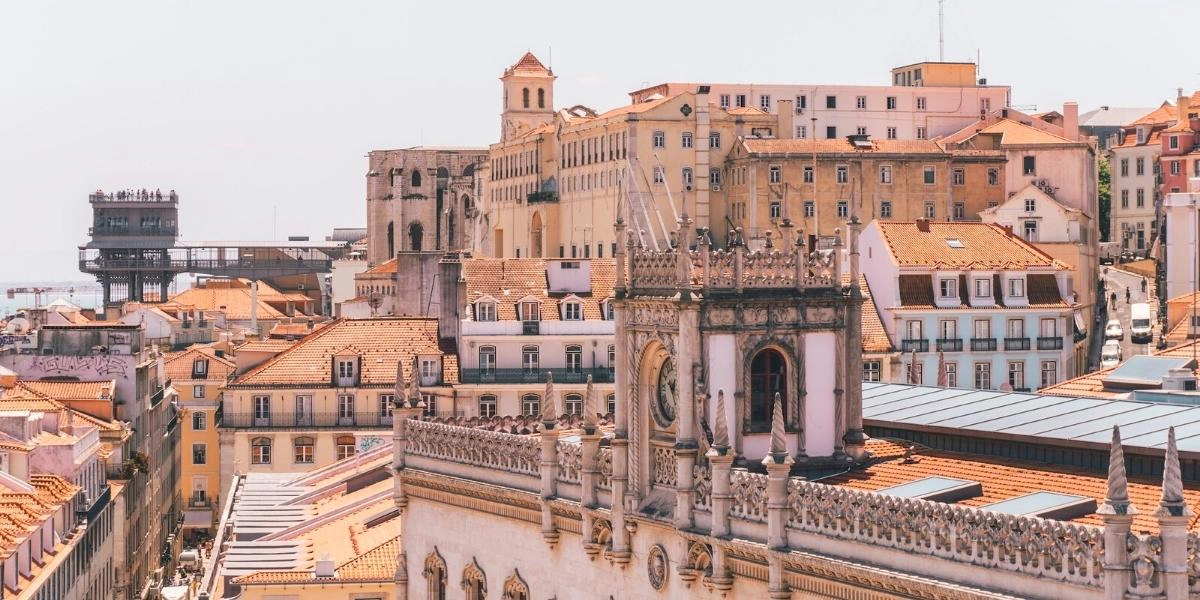
Continue into Chiado before climbing towards the viewpoints above the centre. Lisbon’s miradouros are some of the best places to appreciate just how hilly the city is, with terracotta rooftops tumbling towards the river.
Spend the afternoon exploring Alfama, Lisbon’s oldest neighbourhood. Its maze of steep lanes and stairways climbs from the Tagus towards the Castelo de São Jorge, with small squares, tiled houses and glimpses of the river appearing between the buildings.
This is also the part of Lisbon most closely associated with fado. Stay for dinner and catch a performance in one of Alfama’s traditional fado houses if you didn’t experience Coimbra’s very different version earlier in the trip.
Belém
Spend your second day in Belém, around 6km west of central Lisbon and closely connected with Portugal’s Age of Discoveries.
Visit the magnificent Mosteiro dos Jerónimos, commissioned by King Manuel I in the early 16th century and partly financed by the wealth flowing into Portugal from its expanding maritime trade. The monastery and nearby Belém Tower together form a UNESCO World Heritage Site.
Walk along the waterfront to the Padrão dos Descobrimentos, the huge Monument to the Discoveries overlooking the Tagus, before continuing towards Belém Tower.
And don’t leave without stopping at Pastéis de Belém. The bakery has been making its famous custard tarts here since 1837, using a recipe said to have originated in the nearby monastery.
Back in central Lisbon, spend the evening around Bairro Alto, Chiado or Cais do Sodré.
Lisbon at Your Own Pace
Use your final day to pick up anything you’ve missed rather than trying to cram in another long list of sights.
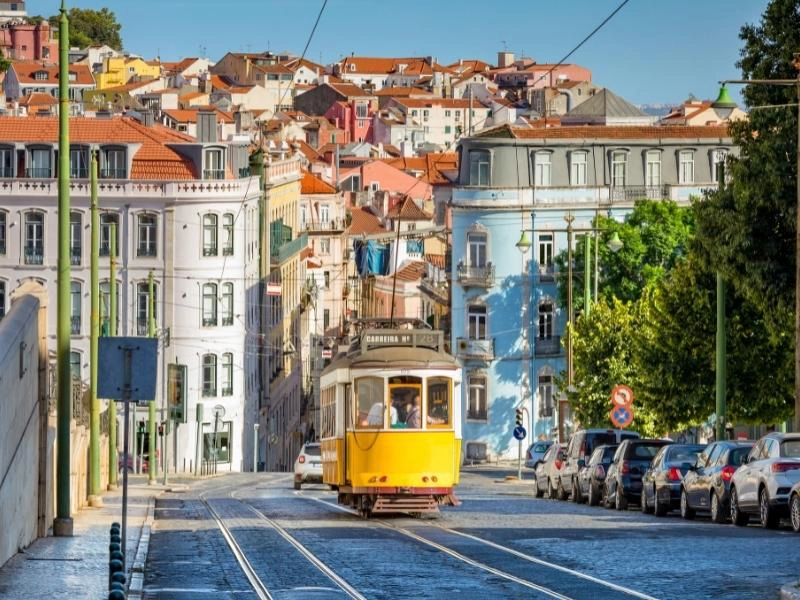
Ride historic Tram 28 through some of Lisbon’s oldest neighbourhoods, visit the National Tile Museum, browse the shops and cafés of Chiado or head to one of the city’s markets.
You could also cross the Tagus to Cacilhas for lunch and views back towards Lisbon, or simply spend a few hours wandering without an itinerary. After ten days on the road, this is a good city in which to slow down.
Finish your Portugal road trip with sunset from one of Lisbon’s miradouros, a final plate of petiscos and, perhaps, one last pastel de nata.
Where to Stay in Lisbon
Upmarket: Santiago de Alfama Boutique Hotel occupies a beautifully restored historic building in the heart of Alfama, close to Lisbon Cathedral and the viewpoints above the Tagus. Individually designed rooms and an excellent location make it ideal if you want to stay in Lisbon’s atmospheric old quarter.
Mid-Range: Lisboa Pessoa Hotel is a stylish central hotel close to Chiado, with comfortable rooms, a spa and rooftop views across Lisbon. Its location is particularly convenient for exploring Baixa, Bairro Alto and the riverfront on foot.
Budget: Hotel Gat Rossio is a modern, good-value hotel just off Rossio Square. Rooms are compact, but the central location and excellent public transport connections make it a practical base for several days of sightseeing.
This brings your ten-day historic Portugal road trip to an end in Lisbon, with easy connections from Lisbon Airport or onwards to the second of our Portugal road trip itineraries along the Atlantic coast.
Other Portuguese Travel Ideas










Getting to Portugal
Portugal is easy to reach from the UK and elsewhere in Europe, with good flight connections and straightforward road routes through Spain. Where you start your road trip will depend on which of our two itineraries you’re following.
Flying to Portugal
Lisbon, Porto and Faro are Portugal’s main international airports, and all three are well connected to the UK and destinations across Europe. Lisbon has the widest choice of flights, Porto is the obvious starting point for a road trip through northern Portugal, and Faro works well if you’re starting or finishing in the Algarve.
If you’re flying in and hiring a car, choosing different arrival and departure airports can save a lot of backtracking on a one-way Portugal road trip. Check any one-way fee before booking, as these vary between rental companies.
Sail from the UK to Spain
If you’re taking your own car, campervan or motorhome from the UK, sailing directly to northern Spain cuts out the long drive through France.
Brittany Ferries operates routes from Portsmouth to Santander and Bilbao, as well as a seasonal Plymouth to Santander service. The Plymouth crossing is the quickest, taking around 20 to 22 hours, while crossings from Portsmouth generally take considerably longer.
From Santander or Bilbao, you’ll have a full day’s drive before reaching northern Portugal, but this is still a good option if you want to arrive fresh and avoid driving the length of France. If you’re travelling with a dog, pet-friendly cabins and kennels are available on selected sailings and ships, but they tend to book up quickly.
The Bay of Biscay can be lively, particularly outside the summer months, so bear this in mind if you’re not a good sailor.
Drive Through France and Spain
Driving all the way to Portugal gives you much more flexibility and makes it easy to turn the journey into a road trip of its own.
From the UK, one of the most direct routes heads through western France towards Tours and Bordeaux before crossing into northern Spain near the Atlantic coast and continuing across Spain to Portugal. It’s a route we’ve driven many times and there are plenty of good places to stop along the way.
If time isn’t an issue, you can easily slow the journey down and spend a few days exploring France and northern Spain before crossing the Portuguese border.
Our driving to Portugal guide covers the different routes from the UK and Europe, along with tolls, costs, overnight stops and everything you need to know before setting off.
Best Time to Take a Portuguese Road Trip
Portugal is a year-round road trip destination, but the weather varies considerably between the cooler, wetter north and the warmer south. For most road trips, we think spring and autumn offer the best balance of good weather, quieter roads and fewer crowds.
December to February
Winter is a great time to explore southern Portugal, particularly the Algarve, where you’ll often get mild days and plenty of sunshine. Evenings can be cool and rain is always possible, but it’s a lovely time for walking, sightseeing and exploring the coast without the summer crowds.
Further north, winter is cooler and considerably wetter. Snow is possible in the mountains, particularly around Serra da Estrela, so conditions need a little more planning if your route takes you inland or into higher ground.
March to May
Spring is one of our favourite times to road trip Portugal. Temperatures are warming up, the countryside is green and full of wildflowers, and vineyards are coming back to life.
You’ll also find fewer visitors than in summer, making popular cities and coastal destinations much easier to explore. By late spring, temperatures in the south can already feel distinctly summery.
June to August
Summer brings long, hot and dry days across much of Portugal, but it’s also the busiest time of year.
July and August can be extremely hot inland and in the south, making sightseeing and hiking uncomfortable in the middle of the day. Coastal areas benefit from the Atlantic breeze but beaches, resorts and popular destinations become much busier, particularly during August.
If you’re road tripping in summer, book accommodation well ahead and plan outdoor activities for early morning or later in the day.
September to November
Autumn is another excellent time for a Portugal road trip. September often brings warm, settled weather without the peak summer crowds, and the Atlantic and Algarve coasts remain particularly appealing.
It’s also harvest season in Portugal’s wine regions, including the Douro Valley, giving you another good reason to head north. As autumn progresses, temperatures start to fall and rain becomes more likely, particularly in northern Portugal, but the south can remain pleasantly warm well into the season.
Driving in Portugal
Portugal is a straightforward country for a road trip, with a good motorway network and generally well-maintained main roads. Once you get into rural areas, particularly in the mountains and smaller villages, roads can become narrower and surfaces more variable.
Portuguese driving can feel fast and assertive at times, especially around Lisbon and Porto, so leave plenty of space and take extra care at motorway junctions and roundabouts.
Our Driving in Europe guide covers the general rules and documents you’ll need for a European road trip, but these are the important things to know when driving in Portugal:
Toll Roads in Portugal
Portugal has an extensive network of toll motorways, with both conventional and electronic toll systems.
If you’re driving a hire car, check how tolls are handled when you collect it. Many Portuguese rental cars are fitted with an electronic toll device, with charges subsequently added to your rental account.
If you’re travelling in your own vehicle, make sure you understand how you’ll pay electronic tolls before using the motorway network. The official Portugal Tolls website explains the payment options available to vehicles with foreign registration plates.
For regular motorway use, Via Verde is one of the simplest options. Its electronic transponder can be used across the Portuguese motorway network, including electronic toll roads and Via Verde lanes at conventional toll plazas.
For this particular Portugal road trip, don’t automatically choose the motorway just because it’s faster. Some of the most enjoyable driving is on Portugal’s ordinary roads, including the N222 through the Douro Valley, where the journey is very much part of the experience.
RELATED POST: Driving in Europe: Everything You Need to Know
More European Road Trip to Explore

France Road Trip: 13 Amazing Itineraries

Europe Road Trip: 28 Epic Routes You Can Actually Drive

Spain Road Trip: 10 of the Best Routes, Regions, and Island Drives
Best UK Road Trips: 18 Scenic Routes to Explore
Germany Road Trip: 12 Unmissable Routes
The Ultimate Bucket List Italy Road Trip
Love it? Pin it!

Amazing! I know nothing about traveling all over the country, what a wonderful looking place to explore.