
This post may contain affiliate links, from which we earn an income. Click here to read our affiliate policy.
Ultimate France road trip itinerary planner
France is made for road trips. From high mountain passes and vineyard-lined back roads to long Atlantic beaches and compact historic cities, it’s a country where the journey really is part of the experience. Driving gives you the freedom to stop for markets, viewpoints, village lunches, and the kinds of places you miss completely when you stick to trains and cities.
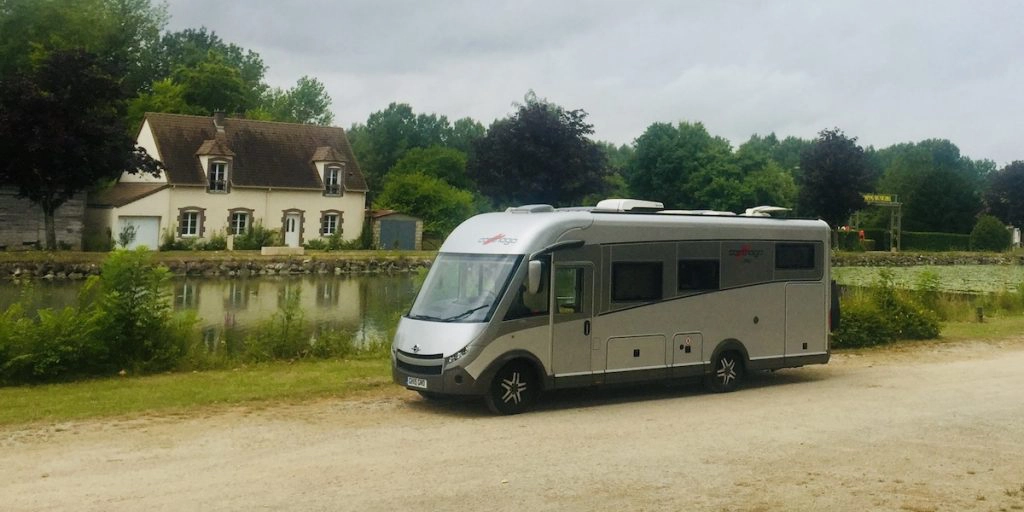
My first France road trip was as a five-year-old, and I still remember the smells of Provence and the beaches where I learned to swim. Since then, we’ve explored the country in every possible way: family holidays on the west coast, grown-up wine routes, city breaks, mountain drives, and slow campervan trips. Over the years, we’ve road-tripped through all thirteen regions of France, and each one offers something completely different.
France Road Trip: Key Facts
Itineraries: The Gap Decaders features 13 France road trip itineraries covering mainland France and Corsica, from the Alps and Provence to the Atlantic coast and Mediterranean.
Choose your route: Each itinerary includes distance, driving time, the best time to go and what the route is best suited to, making it easy to compare your options.
Best for: Independent road trips by car, campervan or motorhome, with routes for different trip lengths, seasons and travel styles.
First-hand experience: We’ve road-tripped through all 13 regions of France, with experience ranging from mountain drives and wine routes to coastal and campervan trips.
This guide brings together 13 of the best France road trip itineraries, organized by region, to help you choose the route that fits your time, travel style, and season, and sits within our wider Europe road trip series. Each itinerary includes distances, driving times, the best time to go, and the kind of trip it’s best suited to, so you can quickly narrow down your options and start planning with confidence.
France Road Trip Map by Region
Enjoy The Gap Decaders? Add us as a preferred source on Google.
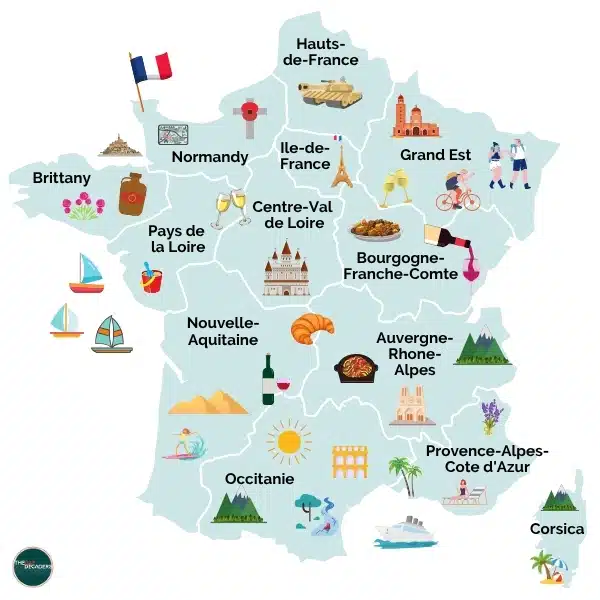
Find your Perfect France Road Trip
If you want the fastest way to choose a route, start here. These road trips are grouped by travel style, so you can quickly find the one that fits how you like to travel, whether that’s mountains, food and wine, coastlines, or history. Pick the option that sounds most like you, then scroll on for the full itineraries by region.
If you like mountains and epic scenery
Auvergne–Rhône-Alpes: Lyon to Le Puy-en-Velay UNESCO Road Trip
Occitanie: Road Trip Around the Languedoc
Provence-Alpes-Cote d’Azur: The Route Napoleon
Corsica: Corsica Circular Road Trip
If you like beaches and coastal drives
Brittany: Brittany Coast to Coast Road Trip
Pays de la Loire: Coast of the Vendee Road Trip
Hauts-de-France: The Opal Coast Route
Corsica: Corsica Circular Road Trip
If you like food and wine
Grand-Est: Route Touristique du Champagne
Nouvelle-Aquitaine: Best of the Dordogne Road Trip
Centre–Val de Loire: Chateaux of the Loire Route
If you like history and UNESCO sites
Ile-de-France: A Road Trip Around Paris
Normandy: World War II Sites of Normandy Road Trip
Auvergne–Rhone-Alpes: Lyon to Le Puy-en-Velay UNESCO Road Trip
If you like quiet routes and slow travel
Bourgogne-Franche-Comté: The Jura Route des Lacs
Nouvelle-Aquitaine: Best of the Dordogne Road Trip
Auvergne–Rhône-Alpes: Lyon to Le Puy-en-Velay UNESCO Road Trip
Corsica: Corsica Circular Road Trip
If you like iconic France moments
Normandy: World War II Sites of Normandy Road Trip
Centre–Val de Loire: Chateaux of the Loire Route
Provence-Alpes-Cote d’Azur: The Route Napoleon
Some of these itineraries have full standalone guides with day-by-day planning, where to stay, and extra stops. I’ve linked them under the relevant region below.
Planning tools we actually use for France
1. Auvergne-Rhone-Alpes
Also useful: Our Routes des Grandes Alpes guide if you want to extend into higher Alpine passes.
This is one of the most varied regions in France, with Lyon at the center and big landscapes in every direction. In the west, you get volcanic plateaus and wide-open Massif Central scenery, while the east delivers full-on Alpine drama.
The further south you drive, the more the countryside shifts toward a Mediterranean look and feel, with lighter air, warmer evenings, and that unmistakable “let’s sit outside for dinner” energy.
Lyon to Le Puy-en-Velay Road Trip: UNESCO Stops in Auvergne-Rhône-Alpes
Route: Lyon – Clermont-Ferrand – Le-Puy-en-Valey – Saint-Etienne
Duration: 7 days
Distance: 370km
When: May-October
Best For: Cities with character, big landscapes, architecture and UNESCO sites
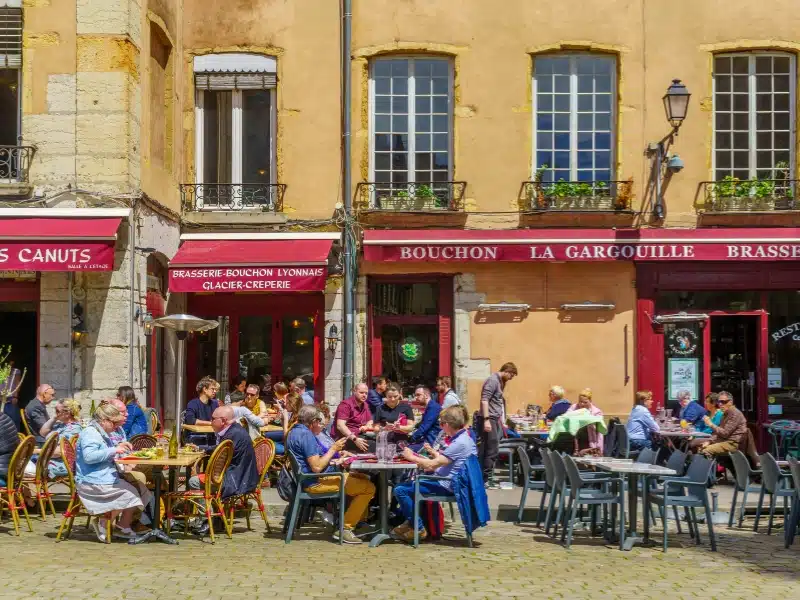
Start in Lyon, which is one of those cities that rewards you for doing it properly. Base yourself near Vieux Lyon so you can walk the old streets, dip in and out of traboules, and eat your way through the bouchon scene without overplanning it. If you only book one thing, make it a free walking tour early in the trip so you get your bearings and a short list of places to return to later.
Next, Clermont-Ferrand brings a totally different vibe, with its black lava-stone architecture and that chain of volcanoes sitting just outside the city. The Puy de Dôme and the Chaîne des Puys are the headline, but don’t skip the city itself. Notre-Dame-du-Port Basilica is a small but beautiful surprise, and the cathedral is instantly recognizable.
Le Puy-en-Velay is your atmospheric stop, the kind of place that makes you slow down without trying. The cathedral complex and its cloisters are the main draw, and the town’s position on the slopes of Mount Anis gives it a silhouette that feels properly ancient.
Finish around Saint-Étienne, a UNESCO Design City with a modern edge. If you have time, detour to Firminy to see Le Corbusier’s work in a setting where the scale and ambition really make sense.
Road trip here if you like…
Lyon to Le Puy-en-Velay Road Trip: Mid-Range Hotel Picks
Lyon: Hôtel des Artistes is a well-located, comfortable hotel near Place Bellecour, ideal for exploring Vieux Lyon and the traboules on foot without needing a car once parked.
Clermont-Ferrand: Hôtel Littéraire Alexandre Vialatte combines modern comfort with a central location, making it an easy base for both the historic centre and trips out to the Chaîne des Puys.
Le Puy-en-Velay: Hôtel Bristol sits close to the old town and cathedral complex, offering a practical, comfortable stay within walking distance of the main UNESCO sights.
Is this your first time visiting Spain? Get all the information you need in our France Travel Guide, including what to pack, the best time of year to go, getting there, and practical tips to help you have the best trip!
2. Bourgogne–Franche-Comté
Bourgogne–Franche-Comté is a quietly rewarding region for a France road trip, especially if you like food, wine, and scenery without the crowds. Easily reached from Paris or the Channel ports, it works well for shorter trips but still feels distinctly off the main tourist trail once you leave the bigger towns.
This region includes historic Burgundy, once one of the most powerful parts of France and still world-famous for its wines, from Chablis to Beaujolais. Outside the vineyards, the landscape opens up into rolling farmland before rising into the wooded hills, lakes, and waterfalls of the Jura.
Sparsely populated and refreshingly low-key, Bourgogne–Franche-Comté (or BFC as it’s known locally) is ideal for slow travel, quiet roads, and detours that lead to lakeside picnic spots, small museums, and villages that don’t feel curated for visitors.
The Jura Route des Lacs Road Trip
Route: Dijon – Marigny – Thoirette
Duration: 3-5 days
Distance: 350km
When: May-October
Best For: Food and wine, lakes, countryside driving, low-key France
Start in Dijon, a city that rewards wandering without a rigid plan. The historic center is compact and easy to explore on foot, with half-timbered medieval houses, elegant Renaissance buildings, and plenty of opportunities to stop for a glass of Burgundy. It’s also the place to lean into the region’s food culture, from classic dishes to the city’s most famous export, Dijon mustard.
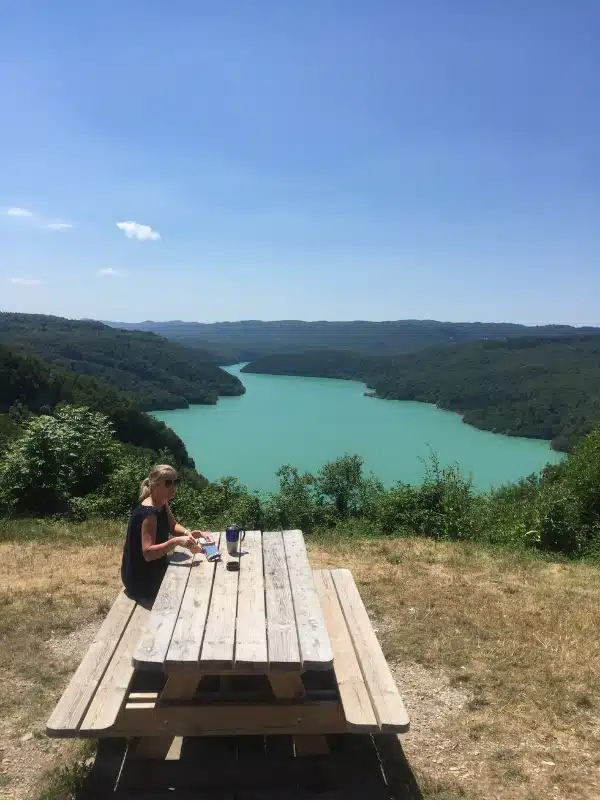
From Dijon, head south toward Marigny and the Jura Massif, where the landscape shifts dramatically. This part of the route is all about lakes, forests, and water, with deep navy and turquoise pools surrounded by wooded hills. There are museums, craft workshops, and local food producers dotted around the area, but the real pleasure is slowing the pace and enjoying the natural scenery.
With around twenty lakes to choose from, it’s easy to build your days around swimming, short walks, and long lunches. This is a road trip that works best without overplanning, pick a couple of lakes you really want to see, then let the rest of the route unfold naturally.
Road trip here if you like…
The Jura Route des Lacs Road Trip: Mid-Range Hotel Picks
Dijon: Hôtel Philippe le Bon is a well-located historic hotel in the old town, ideal for exploring Dijon on foot with comfortable rooms and easy access to restaurants and wine bars.
Marigny (Lake District base): Le Relais Nordique in Marigny is a simple, well-rated countryside hotel close to several Jura lakes, making it a practical base for swimming, walking, and slow days outdoors.
Thoirette (Haut-Jura): Hôtel Restaurant Au Moulin du Pont is a popular option in nearby Samognat with on-site dining and a welcoming setting, good for exploring the Jura countryside.
3. Brittany
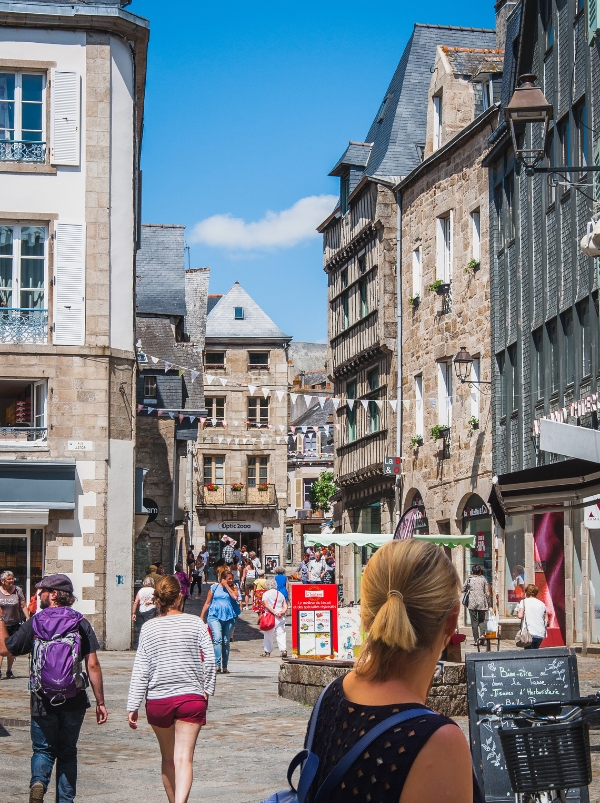
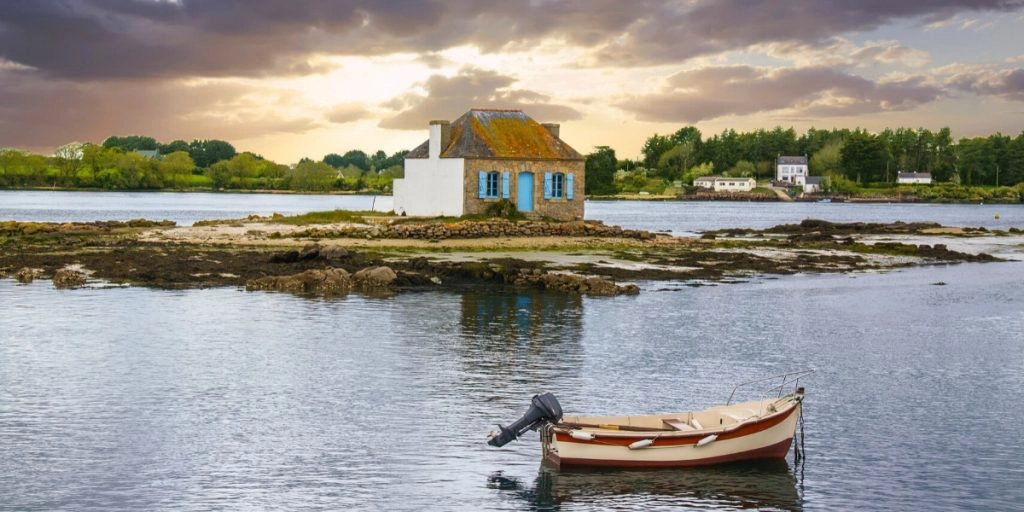
Brittany, or Bretagne, is a rugged peninsula in western France and one of the best regions for a northern France road trip. With a long, varied coastline and a strong sense of identity, it’s a place that rewards slow travel and curiosity, especially once you move beyond the headline destinations.
Easily reached from the UK, with Rennes just an hour from Saint-Malo, Brittany works well for both shorter trips and longer, meandering routes. The landscape is shaped by the sea, with dramatic cliffs, wide sandy beaches, rocky headlands, and small fishing ports, all tied together by a shared Celtic heritage that still feels very much alive.
Away from the busier tourist spots, Brittany has a slightly untamed feel. You’ll notice it in the language, the food, the festivals, and the way the coastline constantly changes character as you drive, making it ideal for a road trip where the journey matters as much as the stops.
Brittany Coast to Coast Road Trip
Want the full version? Read our detailed Brittany road trip guide.
Route: Saint-Malo – Perros-Guirec – Morlaix – Brest – Crozon Peninsula – Quimper
Distance: 550 km
Duration: 7-10 days
Best time to go: Year-round
Best for: Coastal scenery, slow travel, culture, food by the sea
Brittany lends itself perfectly to a coastal road trip, where days are shaped by seafood lunches, short walks along headlands, and frequent detours to beaches that catch your eye. Starting in the historic walled city of Saint-Malo, you’ll quickly find yourself slipping into a relaxed rhythm as the coast begins to unfold.
The peninsula’s 1,600 km coastline offers enormous variety. Some days bring long white beaches and easy seaside towns, others dramatic cliffs, wind-battered headlands, and quiet coves. Around Perros-Guirec, the Côte de Granit Rose stands out for its pink-hued rock formations and unusual shoreline, while further west the Finistère coast feels wilder, with vast beaches and small fishing villages that still work to the rhythm of the tides.
This is a route that rewards time and patience. If you want to explore every peninsula, walk coastal paths, and linger in towns like Quimper and Vannes, two weeks won’t feel excessive. Brittany isn’t about ticking sights off a list, it’s about letting the road and the sea set the pace.
Road trip here if you like…
Brittany Coast to Coast Road Trip: Mid-Range Hotel Picks
Saint-Malo: Hôtel des Marins is a well-located hotel inside the old walled city, ideal for exploring Saint-Malo on foot while still being practical for a road trip start or finish.
Perros-Guirec: Best Western Les Bains Hotel & Spa sits right on the seafront near the Côte de Granit Rose, making it an easy, comfortable base for coastal walks and short drives along the pink granite coast.
Quimper: Hôtel Ginkgo SPA Biloba is a characterful choice in the historic centre, well placed for wandering Quimper’s old streets while still offering straightforward access when arriving or leaving by car.
4. Centre-Val de Loire
Centre–Val de Loire sits just southwest of Paris and is defined by one thing above all else: the Loire River. Easily reached from both Paris and the Channel ports, it’s one of the most accessible regions in France for a road trip and works equally well as a standalone itinerary or as part of a longer journey.
This is classic, storybook France. Elegant cities and small historic towns line the riverbanks, Renaissance architecture dominates the skylines, and the countryside is dotted with some of the most extravagant châteaux in Europe. It’s a region that delivers on first-time expectations while still offering quieter corners if you slow the pace.
Driving here is relaxed and scenic, with short distances between major stops, making it ideal if you want to combine cultural sightseeing with long lunches, riverside walks, and easy days on the road.
Châteaux of the Loire Road Trip
Want the full version? Read our detailed Loire Valley road trip guide.
Route: Orléans – Blois – Tours – Angers – Nantes
Distance: 350 km
Duration: 7-10 days
Best time to go: Year-round
Best for: castles, historic cities, wine, classic France
The Loire Valley is perfectly suited to a road trip, with a steady rhythm of cities, countryside, and château visits that never feels rushed. Starting in Orléans, you’ll follow the river west through a succession of towns that each add a different chapter to the region’s history.
Along the way, you’ll visit some of the Loire’s most famous châteaux, including Château de Chambord and Château de Villandry, where elaborate architecture and formal gardens take center stage. Between stops, the route passes vineyards, riverside paths, and small villages that invite unplanned detours.
Historic cities anchor the journey. Orléans is inseparable from the story of Joan of Arc, Blois and Tours combine grand buildings with lively old quarters, and Angers adds a more imposing medieval feel. The route finishes in Nantes, where you can see the Loire from a different angle and experience the city’s playful side, including its famous mechanical creations along the river.
This is a road trip that rewards balance. Spread château visits out, mix them with city time, quieter river stretches and nature at La Brenne Natural Park, the hidden gem of Centre-Val de Loire, and the Loire Valley quickly becomes about atmosphere as much as landmarks.
Road trip here if you like…
Châteaux of the Loire Road Trip: Mid-Range Hotel Highlights
Orléans: Hôtel de l’Abeille is a characterful, independently run hotel just outside the busiest streets, offering easy parking access and a relaxed start to the Loire Valley drive.
Tours: Hôtel du Cygne Tours sits in the historic centre near Place Plumereau, making it ideal for evening walks and dining while still being practical for a one-night road trip stop.
Angers: Hôtel Saint-Julien is a well-rated, no-fuss option close to the château and old town, working well for a short stay before continuing west toward Nantes.
5. Grand Est
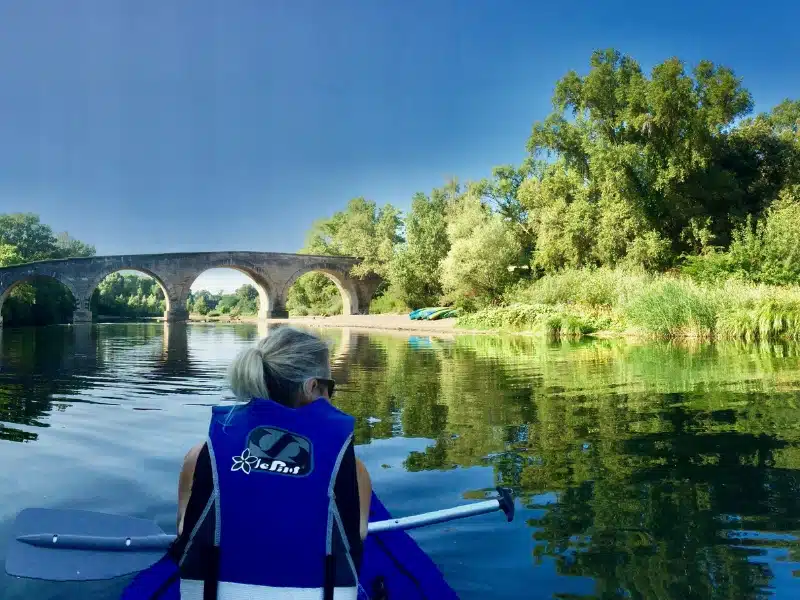
Grand Est sits at the crossroads of France and its northern neighbors, bordering Germany, Luxembourg, Belgium, and Switzerland. That position gives the region a distinctive character, with shifting architecture, food traditions, and landscapes that feel subtly different from one area to the next.
It’s also one of the most accessible regions if you’re road-tripping from Calais. In around four hours you can reach the rolling countryside of Aube, and in six hours you’ll be in Strasbourg, the regional capital and one of France’s most atmospheric cities, particularly in winter.
Formerly known as Alsace–Champagne–Ardenne–Lorraine, Grand Est combines vineyards, low mountain ranges, and some of the prettiest small towns in eastern France. The Vosges mountains add a quieter, more natural dimension, with dense forests and a level of biodiversity that feels surprising so close to major transport routes.
Route Touristique du Champagne Road Trip
Route: Reims – Trigny – Épernay – Cumières – Essoyes
Distance: 285 km
Duration: 7 days
Best time to go: Year-round
Best for: Champagne houses, vineyard scenery, historic towns, gentle driving
The Champagne Route is one of France’s most famous themed road trips, stretching for around 700 km across the departments of Marne, Aube, and Aisne. This section focuses on one of the most rewarding parts of the route, combining prestigious champagne houses with smaller villages and sweeping vineyard views.
Starting in Reims, you’ll find some of the best-known champagne producers in the world, alongside a city with deep historical significance. From here, the route climbs into the Saint-Thierry massif, where Trigny offers panoramic views across the vineyards and a glimpse of Champagne’s quieter side.
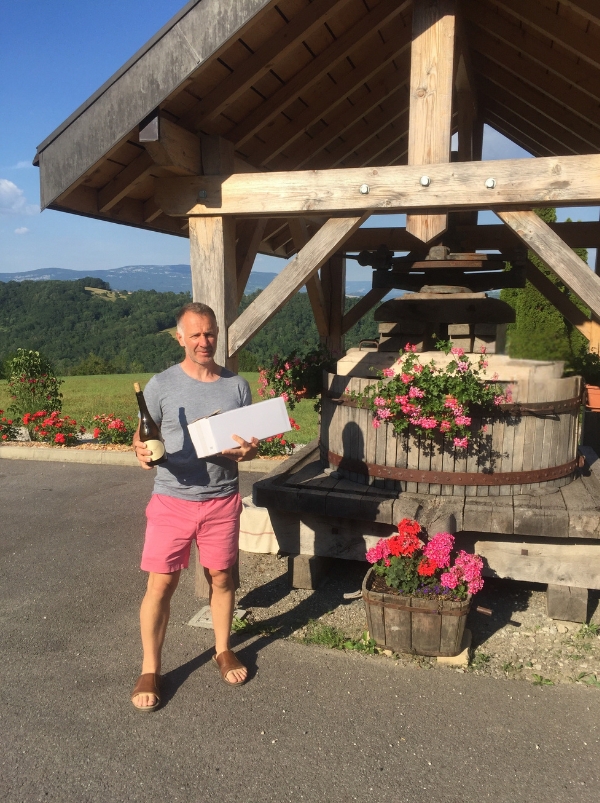
Along the way, stop at the Verzenay lighthouse, which overlooks a rolling sea of vines and houses the Musée de la Vigne, offering useful context before continuing to Épernay. The grand avenues here are lined with historic champagne houses, while nearby Cumières provides a more relaxed base and the chance to see the vineyards from the water on a Champagne Vallée boat trip along the Marne.
Further south, the Côte des Blancs delivers some of the region’s most photogenic vineyard scenery. Views from Mont Aimé stretch across neat rows of vines, and villages like Oger offer a slower pace and a more local feel. The route finishes around Essoyes, where you can explore half-timbered streets, visit champagne cellars, and learn about the years Impressionist painter Auguste Renoir spent living in the village.
This is a road trip best enjoyed without rushing. Short driving days leave plenty of time for tastings, walks through vineyard villages, and lingering lunches.
Road trip here if you like…
Route Touristique du Champagne Road Trip: Mid-Range Hotel Highlights
Reims: Hôtel Azur is a well-located, comfortable base close to the cathedral and champagne houses, making it ideal for exploring Reims on foot without paying luxury prices.
Épernay: Hôtel Jean Moët sits just off Avenue de Champagne, offering modern rooms and easy access to tastings while avoiding the traffic and noise of the main strip.
Essoyes: Hostellerie la Montagne is a charming countryside hotel with a traditional feel, well placed for the southern Champagne villages and a quieter end to the route.
6. Hauts-de-France
Hauts-de-France is the northernmost region of the country and home to the port city of Calais, placing it right on the doorstep of the United Kingdom. That easy access makes it a strong option for a short France road trip from the UK, a long weekend escape, or a coastal add-on to time spent in Paris.
The region is often associated with its World War I history, particularly the Somme and Ypres battlefields, where memorials and cemeteries mark one of the deadliest campaigns of the war. These sites remain a powerful draw and form an important part of the region’s identity.
Less immediately obvious, but just as defining, is the region’s industrial past. Much of Hauts-de-France was shaped by mining, an industry that influenced its towns, transport links, and civic architecture. You’ll see this legacy in former pit villages and in the tall belfries that rise above many town centers, symbols of local pride that are now protected as UNESCO World Heritage Sites.
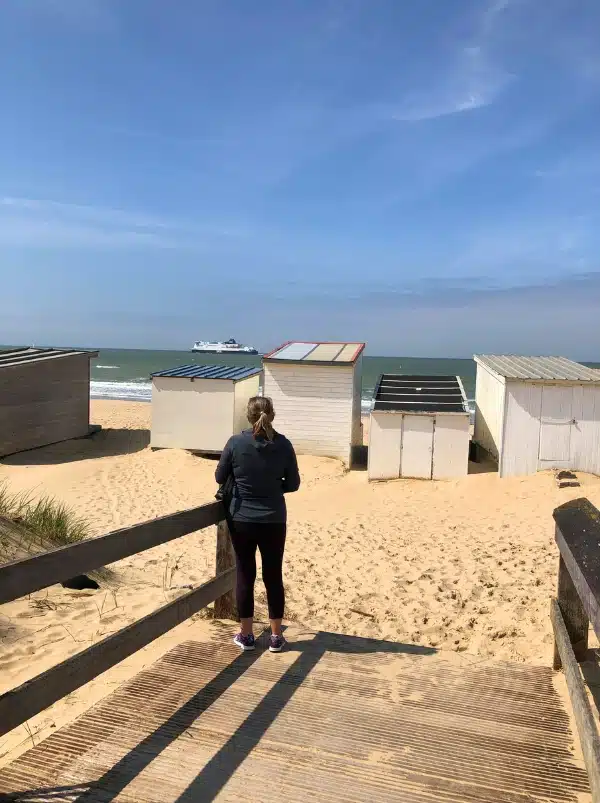
Along the coast, the landscape softens into something very different. The Côte d’Opale offers wide beaches, chalk cliffs, elegant resort towns, and small fishing villages, creating a coastal road trip that contrasts sharply with the region’s inland history.
Opal Coast Road Trip
Route: Calais – Boulogne-sur-Mer – Le Touquet – Etaples – Montreuil – Abbeville
Distance: 144 km
Duration: 3 days
Best time to go: Spring to early autumn
Best for: Short road trips, coastal scenery, history, easy walking
From Calais, follow the coast south to Cap Blanc-Nez and Cap Gris-Nez, two dramatic headlands with open views across the English Channel. On clear days, you can see the white cliffs of Dover, and the clifftop paths here offer some of the best coastal walking in the region.
Boulogne-sur-Mer is the next major stop and the largest fishing port in France. The old town sits above the harbor behind medieval walls, while Nausicaá Aquarium provides a modern and engaging look at marine life, making this a good balance of culture and family-friendly attractions.
Le Touquet, long nicknamed Paris-Plage, brings a more polished resort feel to the route. Traditionally a summer escape for Parisians, it’s now known for its wide sandy beach, water sports, and lively town center. Nearby, the Phare de la Canche lighthouse rewards those willing to climb its steps with expansive views over dunes and coastline.
Before reaching Abbeville, pause at the Baie de Canche nature reserve near Étaples, a protected wetland area rich in birdlife and well suited to a slower pace. The road trip ends in Abbeville, a historic town with strong maritime roots and notable architecture, including the flamboyant Gothic Saint-Vulfran collegiate church.
This is a compact route with minimal driving time, making it ideal if you want variety without committing to a long journey.
Road trip here if you like…
Opal Coast Road Trip: Mid-Range Hotel Highlights
Calais: Holiday Inn Calais Coquelles is a reliable, car-friendly option close to the port and Channel Tunnel, ideal for an easy first or last night without city-centre hassle.
Boulogne-sur-Mer: Hôtel de la Matelote is a well-regarded central hotel near the old town and harbour, offering comfort and character within walking distance of the historic walls.
Le Touquet: Hôtel Red Fox is a solid mid-range choice right in the town centre, practical for the beach, restaurants, and evening strolls without resort-level pricing.
7. Ile-de-France
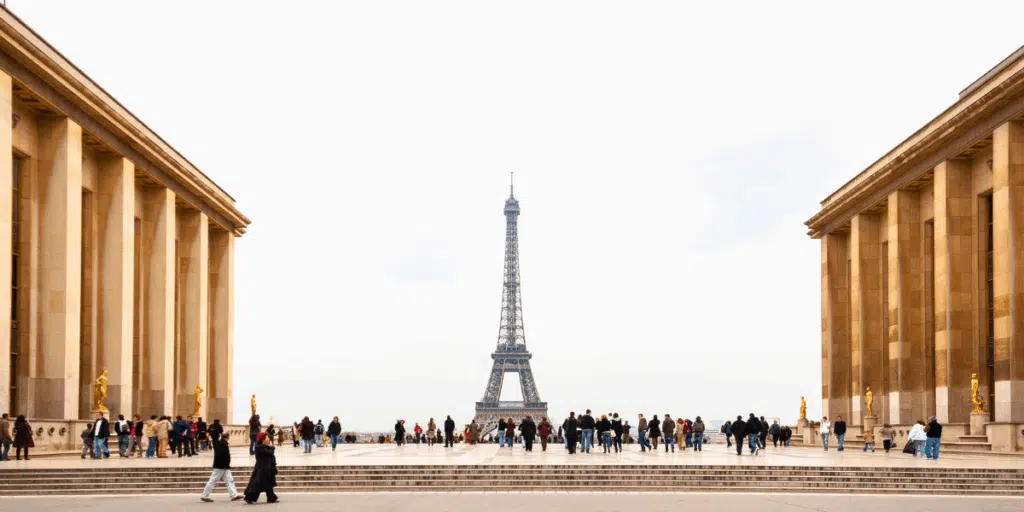
Île-de-France is the compact region that surrounds Paris, shaped for centuries by royal power, wealth, and ambition. Forests, palace towns, and historic cities grew under the patronage of French kings, leaving behind an unusually dense concentration of grand architecture, formal landscapes, and medieval centers.
Easily reached from Calais and ideal for those flying into Paris, this region is often overlooked by road trippers. That’s a mistake. When approached strategically, Île-de-France offers an excellent way to combine time in Paris with a short road trip that explores the quieter, greener, and more historic edges of the capital.
Driving here works best when Paris itself is treated as a base rather than a destination behind the wheel. Stay outside the city, use trains for central Paris, and use the car to reach the places public transport doesn’t connect well.
A Road Trip Around Paris
Route: Chantilly – Provins – Fontainebleau – Versailles – Saint-Denis
Distance: 275 km
Duration: 5 days
Best time to go: Year-round
Best for: Royal history, forests, medieval towns, short cultural road trips
Start in Chantilly, a town closely tied to horses and aristocratic leisure. The château and grounds set the tone, but the nearby racetrack adds a very local dimension, especially on race days when Parisians arrive in force.
From here, head to Fontainebleau Forest, once the royal hunting ground and now one of the most versatile outdoor areas near Paris. The forest offers hundreds of kilometers of marked trails for walking and hiking, while its distinctive boulders attract climbers from across Europe. If you want a different perspective, hot air balloon flights over the forest are a popular way to take in the scale of the landscape.
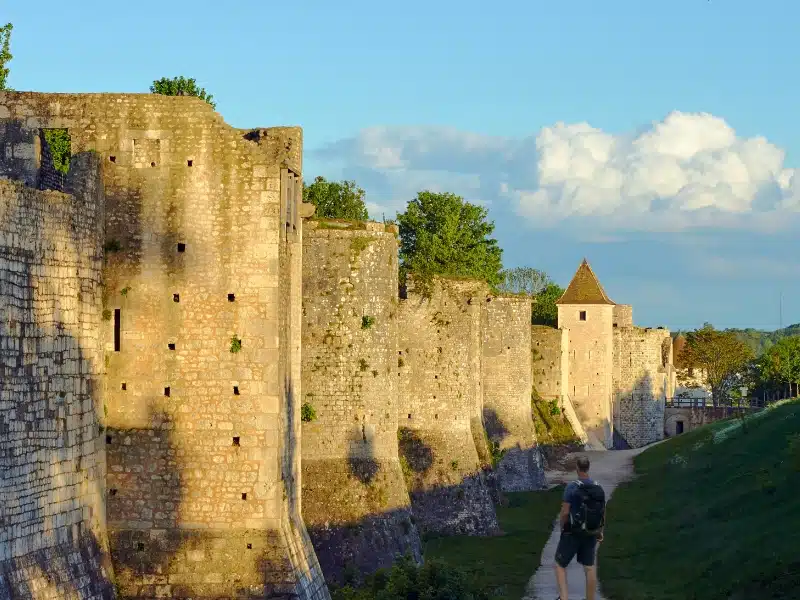
Next, drive to Provins, a remarkably well-preserved medieval town and UNESCO World Heritage Site. Encircled by ramparts, its half-timbered houses and cobbled streets reflect its past as a major trading center linking northern Europe with the Mediterranean. It’s one of the most atmospheric medieval towns within easy reach of Paris.
Versailles is the most famous stop on the route and requires planning. Book tickets in advance to avoid long queues, especially in summer. The palace interiors are unapologetically opulent, while the vast formal gardens offer space to slow the pace, wander, and take a break from the crowds.
Finish at the Basilica of Saint-Denis, one of the most important religious buildings in France and the burial place of French kings. As the birthplace of Gothic architecture, it adds historical depth to the route and provides a fitting final stop before returning toward Paris.
This is a short road trip that works best when you balance palace visits with time outdoors and avoid driving into central Paris wherever possible.
Road trip here if you like…
A Road Trip Around Paris: Mid-Range Hotel Highlights
Chantilly: Hôtel l’Aunette Cottage is a small, characterful hotel close to the château, offering a quiet setting with easy access to Chantilly’s historic centre and grounds.
Fontainebleau: Hôtel & Spa Napoléon is a comfortable and well-located option near the château and forest, ideal for combining palace visits with time outdoors.
Versailles: Hôtel Le Home Saint Louis is a reliable mid-range stay within walking distance of the palace, practical for an early start and evening walks once the day-trippers leave.
8. Normandy
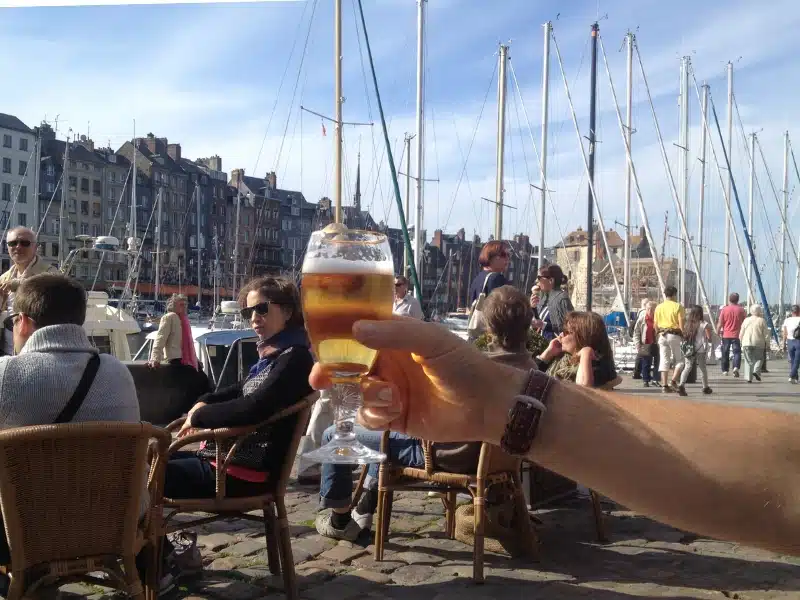
Normandy stretches along the English Channel and is one of the most accessible regions of France for road trippers arriving from the UK. Channel ports sit all along the coast, with Le Havre inside the region itself, making it a natural entry point and a useful base for exploring nearby towns like Honfleur.
The region’s history runs deep. In the Middle Ages, Normandy was a powerful duchy that controlled much of England and Wales, leaving behind a legacy of cathedrals, abbeys, and fortified towns. That layered past sits alongside some of the most significant World War II sites in Europe, giving Normandy a unique historical weight.
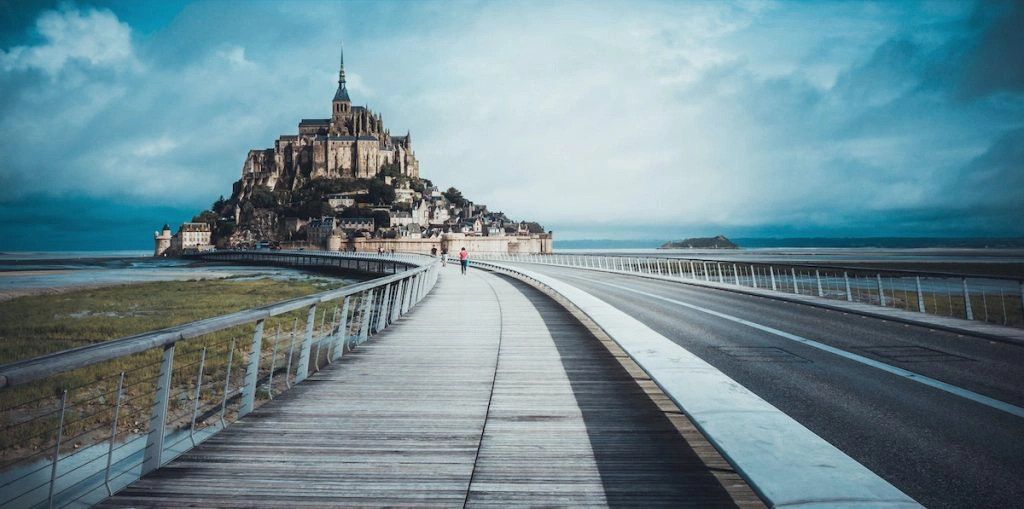
Big-name sights such as Rouen Cathedral, the Bayeux Tapestry, and Mont Saint-Michel dominate most itineraries, but Normandy also rewards slower exploration. Fishing ports, market towns, orchards, and long beaches make it one of the most rounded road trip destinations in France.
The World War II Sites of Normandy Road Trip
Want the full version? Our Normandy road trip guide covers where to stay, must-see stops, and a realistic day-by-day plan.
Route: Bénouville – Ouistreham – Arromanches – Colleville-sur-Mer – Bayeux
Distance: 180 km
Duration: 5-7 days
Best time to go: April-October
Best for: World War II history, coastal driving, reflective travel
Although the key sites can technically be visited in a single long day, this is a route that benefits from time and space. Allowing several days gives you the chance to absorb the history properly and visit the memorials without rushing.
Begin at Bénouville, just north of Caen, where Pegasus Bridge marks the site of a daring airborne landing by the British 6th Airborne Division in the early hours of D-Day. The nearby museum provides essential context before you continue west along the coast.
From here, head to Ouistreham to explore Le Grand Bunker, part of the Atlantic Wall defenses, before reaching the landing beaches themselves. Sword, Juno, Gold, Omaha, and Utah beaches stretch along this coastline, each with museums, memorials, and interpretation centers that tell the story from different national perspectives.
At Arromanches, stop at the clifftop 360-degree cinema before visiting the landing museum in town. This was the site of the Mulberry Harbours, an extraordinary feat of wartime engineering that allowed Allied forces to land supplies after the invasion.
Continuing west, the German gun battery at Longues-sur-Mer offers a sobering reminder of the scale of coastal defenses. Nearby, the American Cemetery at Colleville-sur-Mer is one of the most moving stops on the route, with rows of white crosses overlooking Omaha Beach and a daily Last Post ceremony in the late afternoon.
The route finishes in Bayeux, home to the British and Commonwealth Cemetery and the Battle of Normandy Museum. It’s also where you’ll find the Bayeux Tapestry, which provides a powerful link between Normandy’s medieval and modern history.
This is a road trip that asks for reflection as much as sightseeing, and it’s best approached at a measured pace.
Road trip here if you like…
The World War II Sites of Normandy Road Trip: Mid-Range Hotel Highlights
Caen: Hôtel La Fontaine Caen Centre is a well-located, good-value hotel close to the castle and old town, making it a practical base for exploring Caen and heading out to the D-Day beaches.
Bayeux: Domaine de Bayeux offers classic Normandy character just outside the centre, with spacious rooms, on-site parking, and easy access to the tapestry, museums, and surrounding countryside.
Arromanches-les-Bains: Les Villas d’Arromanches is a well-placed 19th-century hotel within walking distance of the Mulberry Harbour remains, ideal for early starts and reflective evening walks along the shore.
More French Travel Inspiration
9. Nouvelle-Aquitaine
Nouvelle-Aquitaine is the largest region in France and one of the most rewarding for a longer road trip. From the Channel ports, Bordeaux sits a good seven to eight hours’ drive south, which makes this region best suited to a two or three week itinerary rather than a quick escape.
What makes Nouvelle-Aquitaine special is its sheer variety. The landscape stretches from the Pyrenees in the south to the gentle curves of the Dordogne Valley and the long, sandy Atlantic coastline of the Landes, perfect for surfers.
Add to that one of France’s most important wine regions and a food culture built around exceptional local produce, and you have a region that offers something new every few days on the road.
Pine forests, vineyards, elegant coastal resorts, and stone-built villages shape the journey here. It’s a region that encourages slow travel, long lunches, and frequent detours, and it consistently delivers some of the most enjoyable driving in southwest France.
The Best of the Dordogne Road Trip
Want the full version? Read our detailed Dordogne road trip guide.
Route: Bordeaux – Bergerac – La Roque-Gageac – Sarlat-la-Canéda – Rocamadour – Périgueux
Distance: 380 km
Duration: 5-7 days
Best time to go: Spring to autumn
Best for: Historic villages, food and wine, gentle countryside driving
Start in Bordeaux, often described as the wine capital of the world, before heading east into the Dordogne Valley. Bergerac is a natural first stop, with a compact historic center, handsome old buildings, and a lively riverside atmosphere. The town’s connection to Cyrano de Bergerac adds a playful note, and the surrounding countryside sets the tone for what’s to come.
From Bergerac, drive toward La Roque-Gageac, one of the most striking villages in the Dordogne. Pressed between cliffs and the river, it sits at the entrance to the Valley of the Five Châteaux, where castles such as Beynac and Castelnaud dominate the landscape. Just above the village, the Gardens of Marqueyssac offer sweeping views across the valley from their cliff-top paths.
Continue to Sarlat-la-Canéda, a highlight of the region and an excellent base for a couple of nights. Its cobbled streets and grand stone houses create a strong sense of place, and the town is known for its food culture, from local markets to traditional Dordogne dishes.
A short detour south takes you into Occitanie and the dramatic pilgrimage site of Rocamadour. Built into a sheer rock face, it’s also close to the Gouffre de Padirac, an extraordinary underground cave system that makes a memorable side trip if time allows.
Finish in Périgueux, where Roman and medieval history sit side by side. Spend time exploring the Saint-Front Cathedral, walking along the river quays, and visiting the Vesunna Gallo-Roman Museum to round out the journey.
This route works best when you resist the urge to rush. Distances are short, but the rewards come from lingering in villages and letting the landscape set the pace.
Road trip here if you like…
The Best of the Dordogne Road Trip: Mid-Range Hotel Highlights
Bergerac: Hôtel de Bordeaux is a comfortable, centrally located hotel near the old town and river, making it an easy base for exploring Bergerac and the surrounding vineyards.
Sarlat-la-Canéda: Hôtel Montaigne Sarlat sits just outside the medieval centre with parking available, offering a practical and well-reviewed base for exploring Sarlat and the Dordogne Valley villages.
Périgueux: Hôtel Bristol Périgueux provides a convenient central location near the cathedral and river, with easy access for drivers and a good balance of comfort and value.
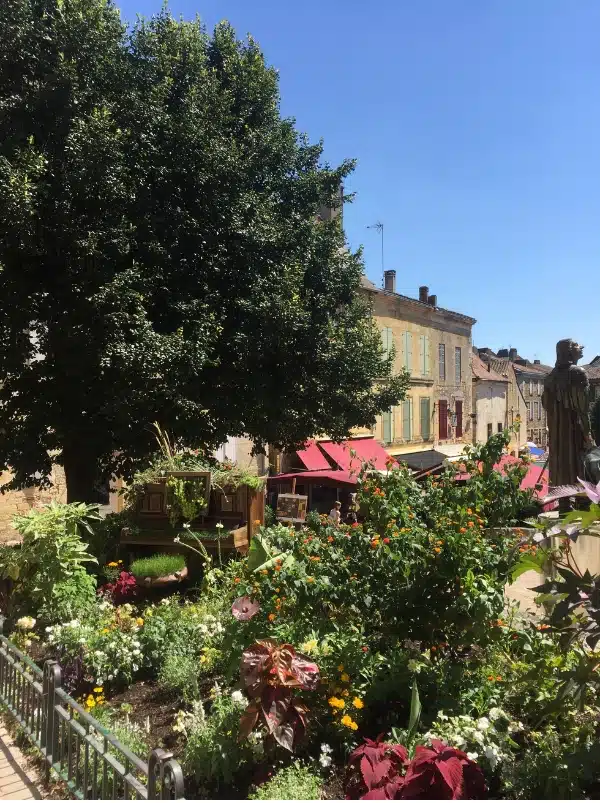
10. Occitanie
Occitanie covers a vast sweep of southern France and is one of the country’s most contrasting regions. A long drive from northern France, it’s best suited to travelers with time, either as a standalone trip of a couple of weeks or as part of a longer journey through the south.
What makes Occitanie so compelling is the way landscapes and atmospheres shift as you drive. The Mediterranean coast around Hérault feels bright and relaxed, while inland areas like the Cévennes and Montagne Noire become wilder and more rugged. Further south, the Pyrenees add scale and drama, creating a region where no two days on the road feel the same.
This is also one of France’s busiest tourist regions, home to headline sights such as Carcassonne, Lourdes, and the Pont du Gard. These places are worth seeing, but timing matters, and they’re far more enjoyable outside the peak summer months of July and August.
Beaches and Mountains of the Languedoc Road Trip
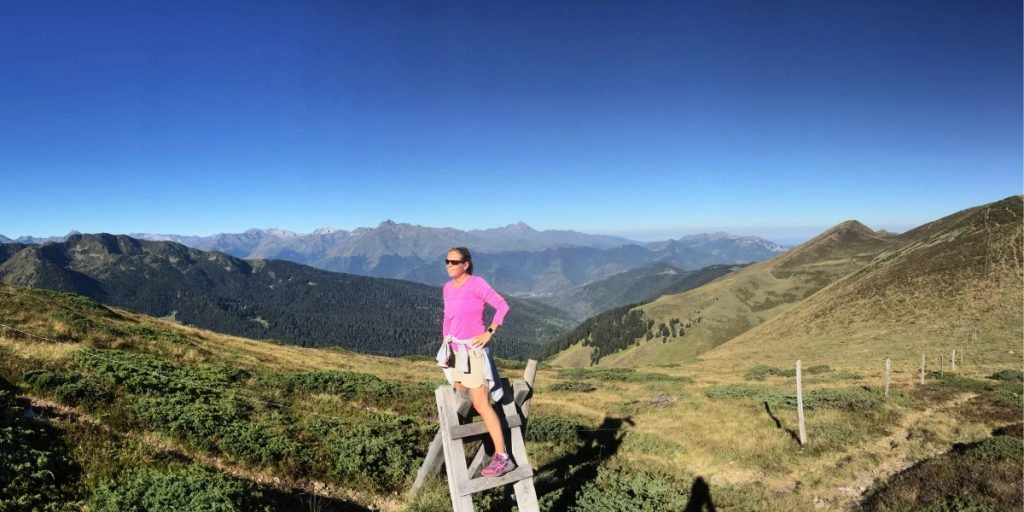
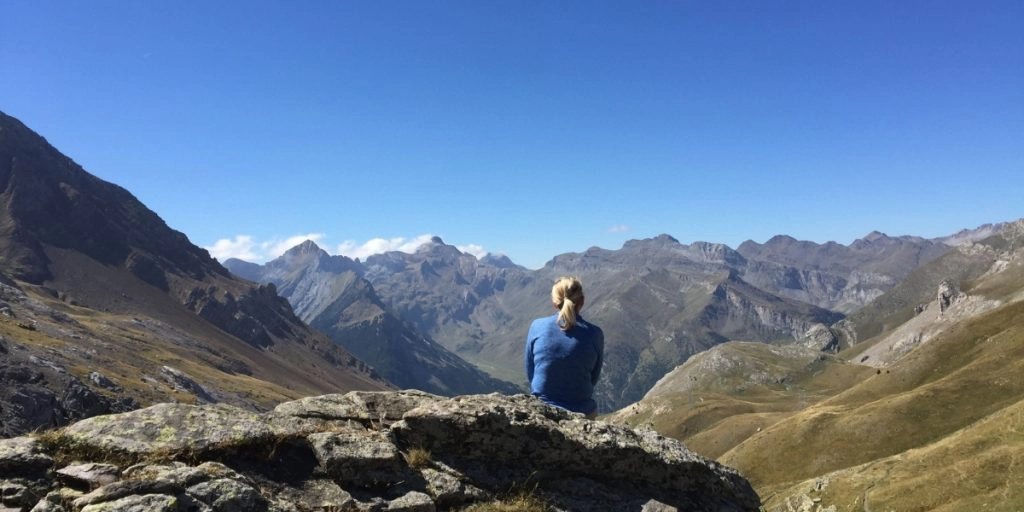
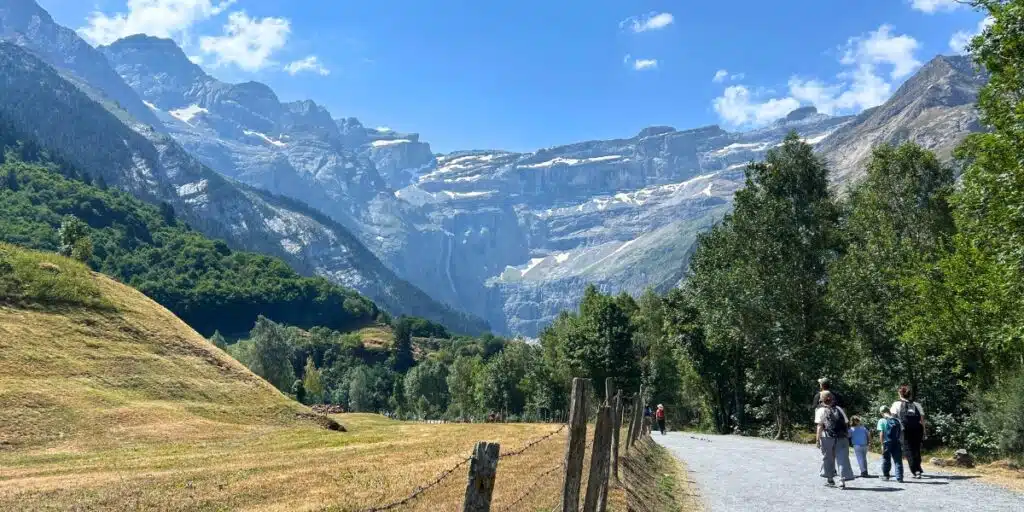
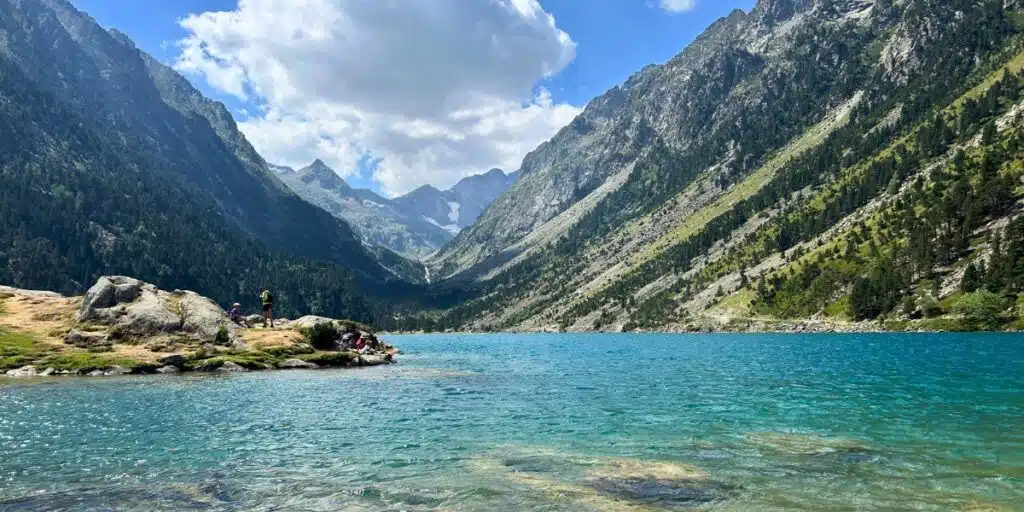
Also useful: Our Pyrenees road trip guide for mountain scenery, hikes, and higher passes.
Route: Montpellier – Sete – Agde – Beziers – Carcassonne – Gorge d’Heric – Pezenas – Saint-Guilhem-le-Désert
Distance: 370 km
Duration: 10 days
Best time to go: Spring and autumn
Best for: Varied landscapes, outdoor activities, historic towns, warm-weather travel
This road trip begins in Montpellier, a lively and growing city, before heading south toward the coast. Sète is one of the highlights of the Mediterranean stretch, set between the sea and the Étang de Thau lagoon. Its canals are lined with bars and restaurants, and the local food scene leans heavily on seafood. Trying a tielle, the city’s octopus-filled pastry specialty, is almost obligatory.
The Étang de Thau sits between vineyards and scrubland and is famous for shellfish farming, particularly oysters. Several producers welcome visitors, offering a chance to learn about the process and sample the results before continuing along the coast.
Agde introduces a geological twist, with black volcanic sand beaches that are unique to this part of France. La Grande Conque, a small crescent-shaped bay, is an easy place to stop for a swim or a slow afternoon by the sea.
In Béziers, the route turns inland. The Fonserannes Locks on the Canal du Midi form a striking staircase of nine locks, and the towpaths make for an easy cycle or walk alongside the water. From here, the landscape begins to change as vineyards give way to hills and gorges.
Carcassonne is the most dramatic stop on the route. The fortified citadel rises above the surrounding countryside and is visually impressive, even if the interior can feel busy and overtly touristic. It’s best approached with realistic expectations and timed outside peak hours if possible.
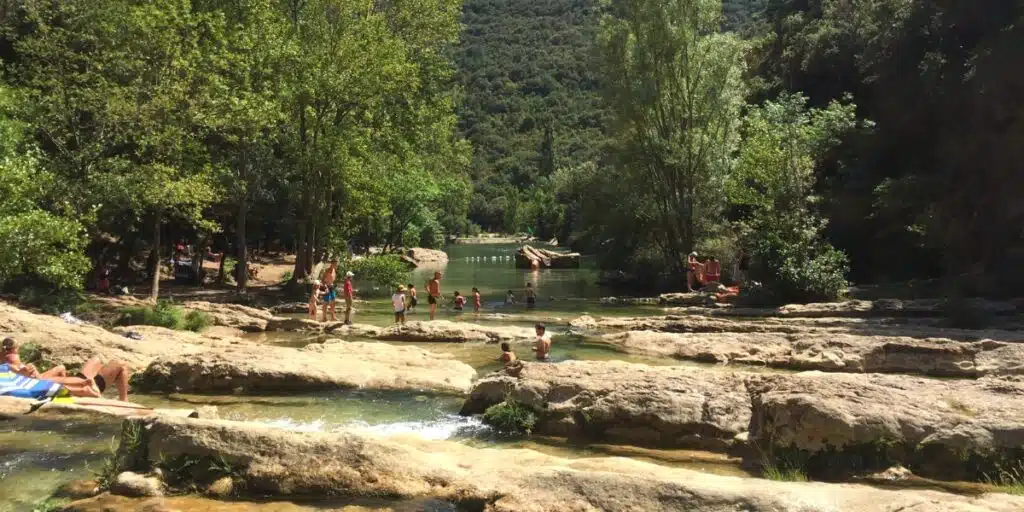
Beyond Carcassonne, the route becomes more flexible. With extra time, detours into the Pyrenees offer opportunities for hiking, kayaking, and exploring hilltop castles tied to the region’s Cathar past. Otherwise, continue north toward the Gorge d’Héric, a dramatic canyon carved by the River Héric in the Haut-Languedoc. Here, walking trails follow the gorge, and clear pools between boulders invite wild swimming on hot days.
Pézenas is a natural place to slow down. Known for its markets, craft shops, and summer wine festivals, it makes a relaxed base before the final stretch. Nearby, the Pont du Diable offers opportunities for swimming, paddle boarding, and simply enjoying the river landscape.
The route finishes at Saint-Guilhem-le-Désert, one of the most atmospheric villages in southern France. Set within the Hérault Gorges, it’s a long-standing pilgrimage stop on the route to Santiago de Compostela, and its Gellone Abbey, a UNESCO World Heritage Site, anchors the village with quiet gravitas.
This is a road trip that works best when you embrace its contrasts and give yourself time to move between coast, countryside, and mountains without rushing.
Road trip here if you like…
Beaches and Mountains of the Languedoc Road Trip: Mid-Range Hotel Highlights
Montpellier: Hôtel Oceania Le Métropole is centrally located near the historic centre and train station, with comfortable rooms and on-site parking options that work well for a road trip start.
Carcassonne: Hôtel Le Donjon sits inside the medieval citadel, allowing you to explore La Cité early and late without crowds while still offering practical access for drivers.
Pézenas: Garrigae Distillerie de Pézenas Hôtellerie et Spa offers comfortable rooms and a relaxed atmosphere in a converted distillery just a short walk from the historic centre, making it a good base for exploring the village and surrounding countryside.
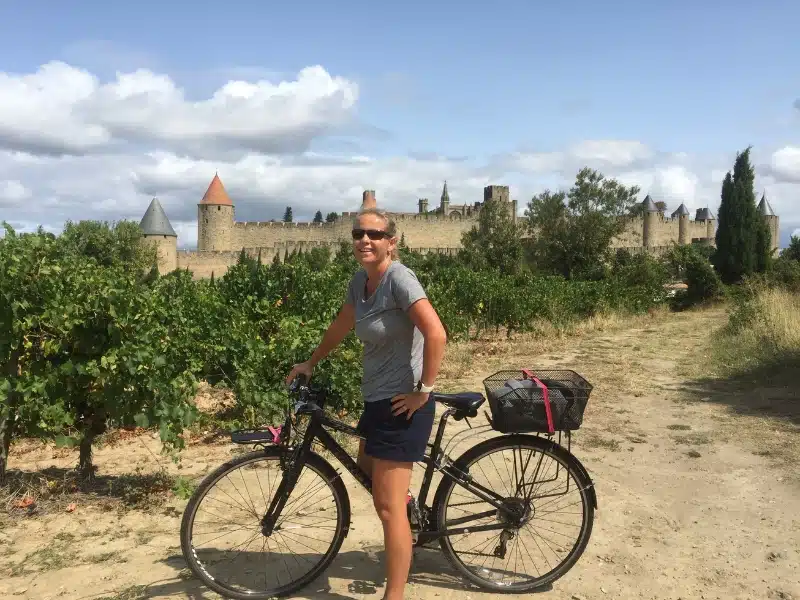
11. Pays de la Loire
Pays de la Loire sits in north-western France alongside Centre-Val de Loire, and the two regions share a strong Loire Valley identity, with historic towns and an abundance of châteaux. Where Pays de la Loire differs is in its long Atlantic coastline, which adds a distinctly seaside dimension to any road trip here.
The Vendée coast is particularly popular with UK travelers thanks to its easy access from Channel ports. Gentle waves, long sandy beaches, and classic seaside resorts make it a reliable choice for relaxed coastal travel, especially for families.
With Nantes just three to four hours’ drive from Caen, this region is easy to reach. From there, you can move between Loire Valley landscapes inland and Atlantic beaches to the west without long driving days.
The Vendée Coast Road Trip
Route: Nantes – Saint-Gilles-Croix-de-Vie – Les Sables-d’Olonne – La Tranche-sur-Mer – La Rochelle
Distance: 275 km
Duration: 10 days
Best time to go: Year-round
Best for: Family travel, beaches, easy coastal driving
Begin in Nantes, a city that continues to reinvent itself while keeping a strong cultural edge. Attractions like Les Machines de l’Île add a playful start to the route, but this road trip is really about slowing down once you reach the coast.
Head toward Saint-Gilles-Croix-de-Vie, with a worthwhile stop at Sallertaine to paddle through the quiet canals of the Marais Breton in an open canoe. Saint-Gilles itself combines a lively harbor atmosphere with excellent local seafood, particularly sardines landed and served on the same day.
Along the Côte de Lumière, or Coast of Light, sunshine is a defining feature. With around 2,400 hours of sun each year, this stretch of coast lends itself to unhurried beach days and easy seaside living.
Les Sables-d’Olonne adds a more established resort feel. Known as the starting point of the Vendée Globe round-the-world sailing race, it pairs a wide sandy beach with a long promenade, marina, and enough attractions to fill several relaxed days.
Further south, La Tranche-sur-Mer earns its nickname “Little California” thanks to its sunshine and long stretches of sand. The atmosphere here is friendly and informal, with plenty of water sports and summer evening events that make it particularly appealing for families with teenagers.
Finish in La Rochelle, one of the most attractive historic ports on the Atlantic coast. Its old harbor, seafood-focused dining scene, maritime museum, and aquarium make it an easy place to spend a final day wandering without an agenda.
This is a low-stress road trip with short distances and plenty of downtime built in, making it ideal if you want a coastal break without constant packing and unpacking.
Road trip here if you like…
The Vendée Coast Road Trip: Mid-Range Hotel Highlights
Nantes: Hôtel Voltaire Opéra Nantes Centre is a well-located, comfortable hotel close to the historic centre, ideal for exploring Nantes on foot before heading to the coast.
Les Sables-d’Olonne: Hôtel Calme des Pins offers a relaxed stay near the beach with easy parking and good access to both the seafront and town centre, making it a practical coastal base.
La Rochelle: Hôtel La Monnaie Art & Spa Hotel is set inside the old town walls, combining character with comfort and walkable access to the harbour, restaurants, and waterfront.
12. Provence-Alpes-Cote d’Azur
Want the full version? Read our detailed Route Napoléon road trip guide.
Also useful: Our Provence road trip guide for classic French landscapes, historic cities and lavender fields.
Often shortened to PACA, Provence-Alpes-Côte d’Azur is one of France’s most diverse regions, stretching from the Mediterranean coast to the high Alps and from the Rhône Valley to the Italian border. It’s also the furthest region from the UK, which means getting here is a commitment in itself.
Driving times are long, with around eight hours from Paris and up to thirteen from Calais, but that distance is part of the appeal. This is a region that rewards time and intention, and it works best as a dedicated road trip rather than a quick add-on.
The payoff is variety on a grand scale. Glamorous Riviera resorts like St Tropez sit within reach of lavender fields, hilltop villages, deep gorges, and wild wetland landscapes in the Camargue. Add in strong local food traditions, busy markets, and a climate built for long days outdoors, and it’s easy to see why this region remains a favorite.
The Route Napoléon Road Trip
Route: Grenoble – Corps – Col Bayard – Gap – Sisteron – Digne – Castellane – Grasse – Antibes
Distance: 314 km
Duration: 7 days
Best time to go: Year-round
Best for: Mountain scenery, iconic drives, varied landscapes
The Route Napoléon is one of the most scenic road trips in France and a fitting way to approach the south. Although the historic route runs from the coast inland, driving it north to south builds anticipation, with landscapes gradually opening out toward the Mediterranean.
Starting in Grenoble, the road traces Napoleon’s return from exile in Elba in 1815. Along what is now largely the N85, Imperial Eagle markers line the route, guiding you through mountain terrain that feels purpose-built for driving.
The road itself is the star. Long switchbacks, sweeping bends, and high passes make this a genuinely engaging drive. At Col Bayard, the route reaches over 1,200 meters before descending toward Provence, passing through towns such as Sisteron and Digne, where the scenery softens and the light changes.
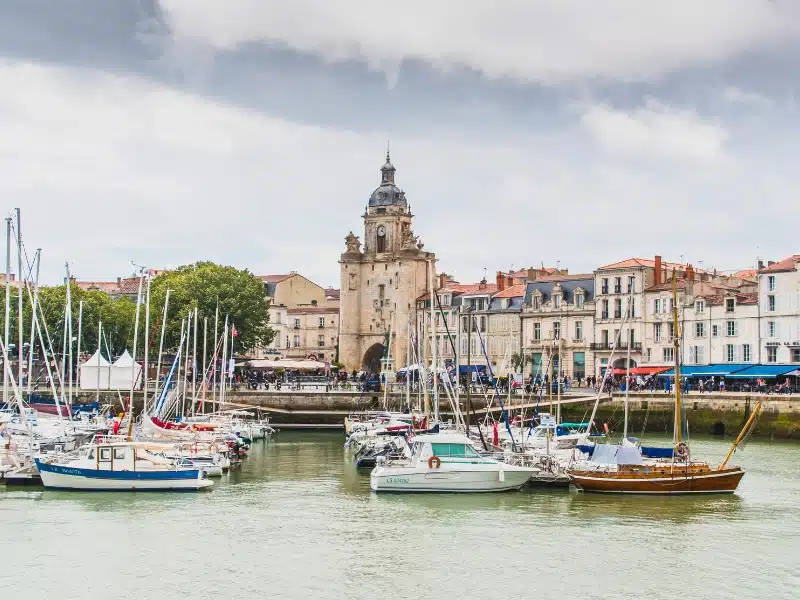
Further south, the landscapes become more recognizably Provençal. Lavender fields spread across the Valensole plateau in early summer, and detours bring you close to the dramatic Gorge du Verdon. From Castellane onward, the road begins to hint at the coast, with views opening across green hills dotted with villas and pine forests.
The final stretch toward Grasse and Antibes delivers a satisfying contrast, ending the journey with the deep blues of the Mediterranean. It’s a route that engages all the senses, from the feel of the road to the scent of warm pine and herbs carried on the air.
This is a drive to savor rather than rush, with frequent stops and short daily distances making the experience as memorable as the destination.
Road trip here if you like…
The Route Napoléon Road Trip: Mid-Range Hotel Highlights
Grenoble: Hôtel Mercure Grenoble Centre Président is a reliable mid-range base with parking, easy road access, and a comfortable location for starting the Route Napoléon without city-centre driving stress.
Sisteron: Hôtel Le Tivoli sits just outside the old town with on-site parking and direct access to the N85, making it a practical and atmospheric stop beneath the citadel.
Castellane: Nouvel Hôtel du Commerce is centrally located, car-friendly, and ideal for breaking the journey before or after the Verdon Gorge, with restaurants and services within walking distance.
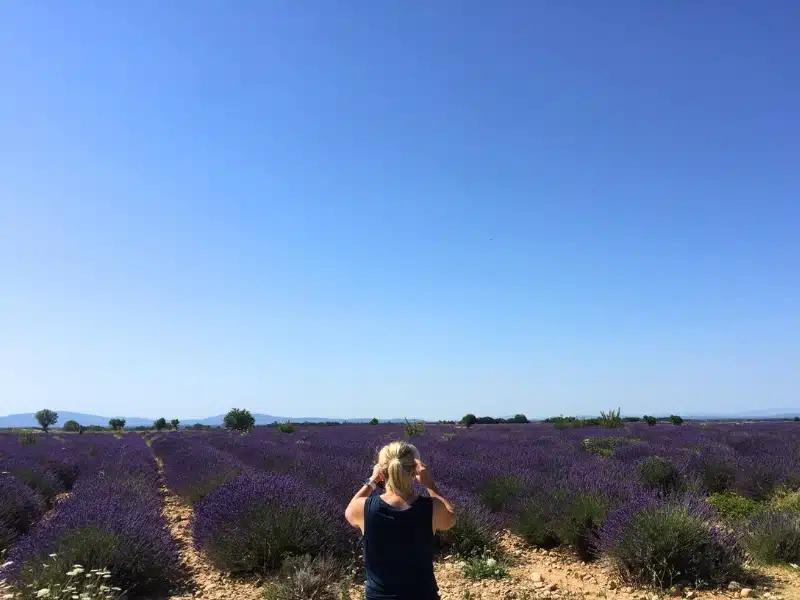
13. Corsica
Corsica feels quite different from mainland France. Sitting in the Mediterranean between France and Italy, the island combines rugged mountains, dramatic coastal roads, beautiful beaches and historic towns in a surprisingly compact area.
Getting there requires a little more planning, with ferries connecting Corsica with mainland France and Italy, but taking your own vehicle means you can start exploring as soon as you arrive. The island is made for a road trip, with the best places scattered around the coast and deep into the mountainous interior.
Distances can be deceptive here. Roads are often narrow and winding, particularly through the mountains and along the west coast, so journeys take considerably longer than the mileage suggests. That slower pace is part of the experience, with plenty of viewpoints, beaches and small villages tempting you to stop along the way.
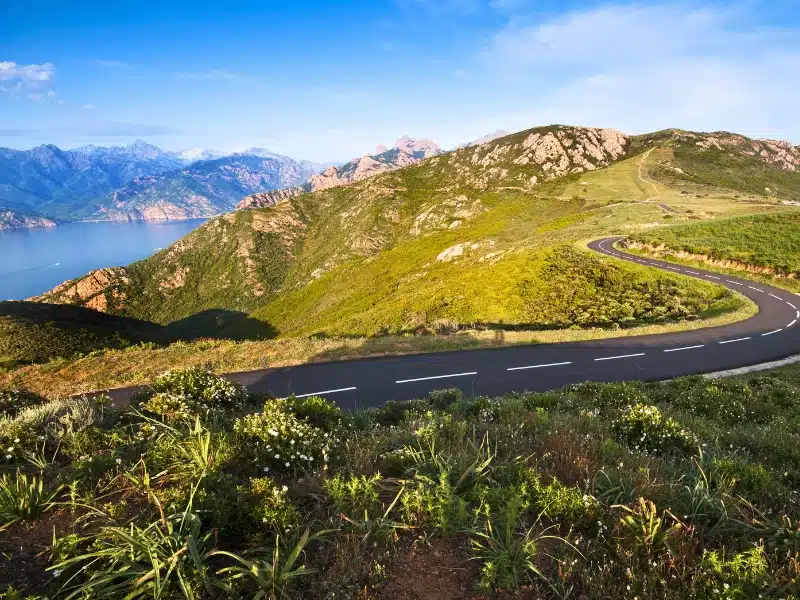
The west coast delivers some of Corsica’s most dramatic driving, with roads carved into cliffs above the Mediterranean and spectacular scenery around the Calanques de Piana and Gulf of Porto. Inland, mountain passes, forests and river valleys offer a completely different landscape.
Further south, Bonifacio sits dramatically above white limestone cliffs, while the beaches around Porto-Vecchio provide some of the clearest turquoise water on the island. Add Ajaccio, traditional mountain villages and plenty of opportunities for hiking, swimming and boat trips, and Corsica packs an enormous amount into one road trip.
Corsica Circular Road Trip
Route: Bastia – Saint-Florent – Calvi – Porto – Ajaccio – Bonifacio – Porto-Vecchio – Corte – Bastia
Distance: Around 650 km
Duration: 10-14 days
Best time to go: May to June and September to October
Best for: Coastal driving, beaches, mountains, hiking and dramatic Mediterranean scenery
This circular Corsica road trip starts and finishes in Bastia, making it particularly convenient if you’re arriving by ferry. From here, the route heads around Cap Corse and into the wild landscapes of the Désert des Agriates before continuing towards Calvi and the spectacular west coast.
The drive south from Calvi is one of the highlights. The roads become increasingly dramatic around Porto and the UNESCO-listed Gulf of Porto, where red granite cliffs plunge towards intensely blue Mediterranean water. This is not a road to hurry, and you’ll want plenty of time for stops along the way.
Continuing south brings you to Ajaccio before the route reaches Bonifacio, one of Corsica’s most memorable towns. Its medieval old town sits high above the sea on limestone cliffs, with Sardinia visible across the Strait of Bonifacio on a clear day.
From here, follow the east coast towards Porto-Vecchio before turning inland. This final section reveals another side of Corsica as the beaches give way to forests, gorges and mountains on the journey through the island’s interior towards Corte.
The return to Bastia completes a road trip that manages to combine Mediterranean beaches with some genuinely challenging mountain driving. Give yourself at least ten days, and preferably two weeks, because Corsica rewards slow travel.
Road trip here if you like…
The Corsica Road Trip: Mid-Range Hotel Highlights
Calvi: Hôtel Revellata & Spa is a practical base just 450 metres from the harbour, with two pools, a spa and free secure private parking, making it particularly convenient for a Corsica road trip.
Bonifacio: Santateresa Hotel sits on the cliffs above the sea, just a five-minute walk from Bonifacio’s old town, with panoramic Mediterranean views and free private parking so you can leave the car behind while you explore.
Corte: Hotel du Nord is a characterful three-star hotel on Cours Paoli in the centre of Corte, within easy reach of the citadel and Corsica Museum. There’s a drop-off point outside and inexpensive video-monitored public parking nearby.
France Road Trip Resources
Once you’ve chosen your route, these practical tips will help you plan your France road trip with confidence, from getting there to understanding the rules of the road.
Getting to France
Flying
Flying in and opting to rent a car in France is a great choice, especially as France has so many easily accessible international airports, the perfect starting point for many of our road trip itineraries.
You can fly in to Paris, Lyon, Marseille, Nice, Toulouse, Bordeaux and many other French cities to start your trip. We recommend booking your flights through Skyscanner for live deals and the best prices.
Driving to France from the UK
If you’re planning to drive from the UK to France, then you’ll find everything you need to know, including the best, fastest and cheapest routes, as well as driving tips, in our driving to France from UK guide.
Best Time to Take a French Road Trip
December to February
The winter months can be very cold throughout France, even in the south of the country and rain is quite common at this time of year. But, the roads and cities will be quiet and less crowded, although not all attractions will be open.
March to May
Spring is a wonderful time to visit France, with temperatures warming up across the country. Markets increase in size, restaurants start preparing different dishes and the countryside is glorious. You’ll still find the roads and cities less crowded, and most attractions will be open.
June to August
June and July are busier months to roadtrip France, with perfect temperatures for camping and outdoor activities. June is probably the best month, as schools have yet to break up across Europe and the family rush to the coasts has not yet started.
August brings the French annual holiday when many businesses close for the duration. If you’re planning on road-tripping in tourist areas, then this won’t affect you too much, and you’ll have perfect holiday weather.
September to November
Autumn is a fantastic time for French road trips, especially in the south of France. The coast will be quieter but if you’re lucky, you’ll enjoy an Indian summer amongst the grape harvest and changing fall colors of the countryside.
Information About Driving in France
Road trips in France are usually pleasurable, thanks to their extensive and well-maintained autoroute network, and generally good local roads. French drivers can be impatient and are dreadful tailgaters and really, really dislike being overtaken, but, c’est la vie, this is France!
Whether you road tripping France in a campervan, car, or motorbike, follow these tips for driving safely and legally:
More Europe Road Trip Ideas to Explore Next
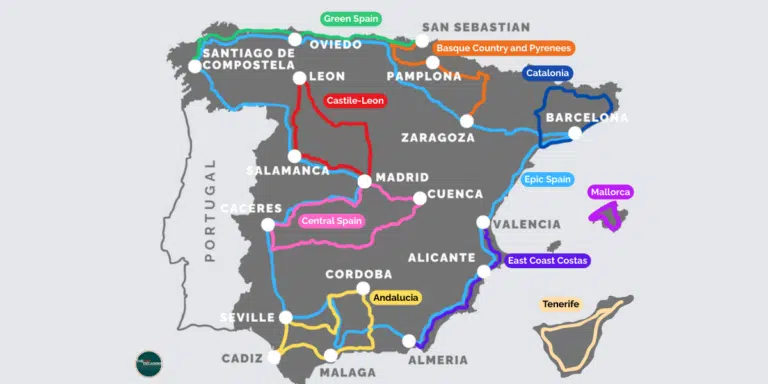
Spain Road Trip: 10 of the Best Routes, Regions, and Island Drives
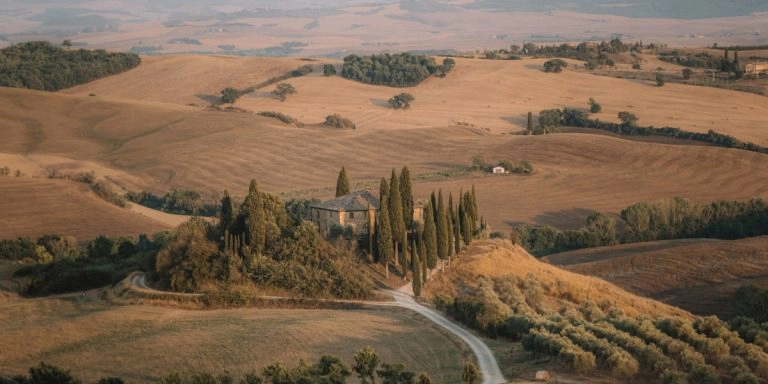
The Ultimate Bucket List Italy Road Trip
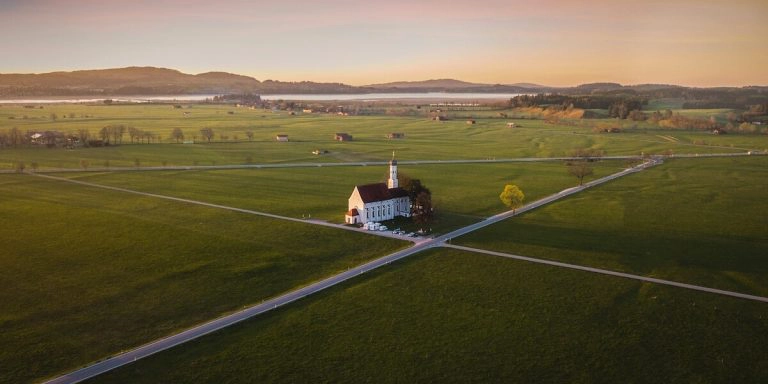
Germany Road Trip: 12 Unmissable Routes

Portugal Road Trip: The Ultimate 10 Day Itinerary

Best Norway Road Trips: 4 Unmissable Itineraries for First-Time Visitors
Greece Road Trip: Best Routes for Mainland Greece and the Peloponnese
Love it? Pin it!

Thank you for the beneficial information; I appreciate your efforts!