
This post may contain affiliate links, from which we earn an income. Click here to read our affiliate policy.
Denmark is one of Europe’s easiest and most rewarding countries to explore by car, with scenic coastal roads, colourful harbour towns, Viking history, rolling countryside, and stylish cities all packed into a surprisingly compact space. One day you can be wandering through Copenhagen’s buzzing waterfront neighbourhoods, and the next hiking along towering white cliffs or driving through windswept dunes in northern Jutland.
This Denmark road trip itinerary takes you through some of the country’s best places to visit, including UNESCO World Heritage Sites, medieval towns, royal palaces, modern art museums, sandy beaches, and some seriously impressive bridges. Along the way, you will discover Viking fortresses, fairy tale streets linked to Hans Christian Andersen, cosy seaside cafés, and landscapes that feel very different from the Denmark most people imagine.
Whether you are planning a full Denmark road trip or combining it with a wider Scandinavian adventure, this guide covers the best route, must-see stops, practical driving tips, and places genuinely worth pulling over for.
Enjoy The Gap Decaders? Add us as a preferred source on Google.
Road Trip Denmark Map & Route
This ten day road trip from Copenhagen hits all the highlights, with charming towns and cities, Viking history, modern art, UNESCO sites, and natural wonders on the itinerary.
This Danish itinerary will easily stretch to two weeks if you prefer to slow travel and take in more sights as you go. Why not spend longer in your favorite places, and check the interactive map for attractions and landmarks nearby?
Planning tools we actually use for Danish road trips
Denmark Road Trip Map
This map shows the main destinations and driving route. You can save it to Google Maps for planning or offline use while driving.
Denmark Road Trip Itinerary
Route: Copenhagen – Fredensborg – Møns Klint – Faaborg – Odense – Esbjerg – Aarhus – Aalborg – Copenhagen
Distance: ~1072 km
Duration: 10 days
Best time to go: May to September for mild weather, long daylight hours, coastal scenery, and outdoor sightseeing across Denmark
Best for: Coastal drives, Viking history, colourful towns, castles, beaches, and relaxed Scandinavian road trip scenery
Day 1 and 2: Copenhagen
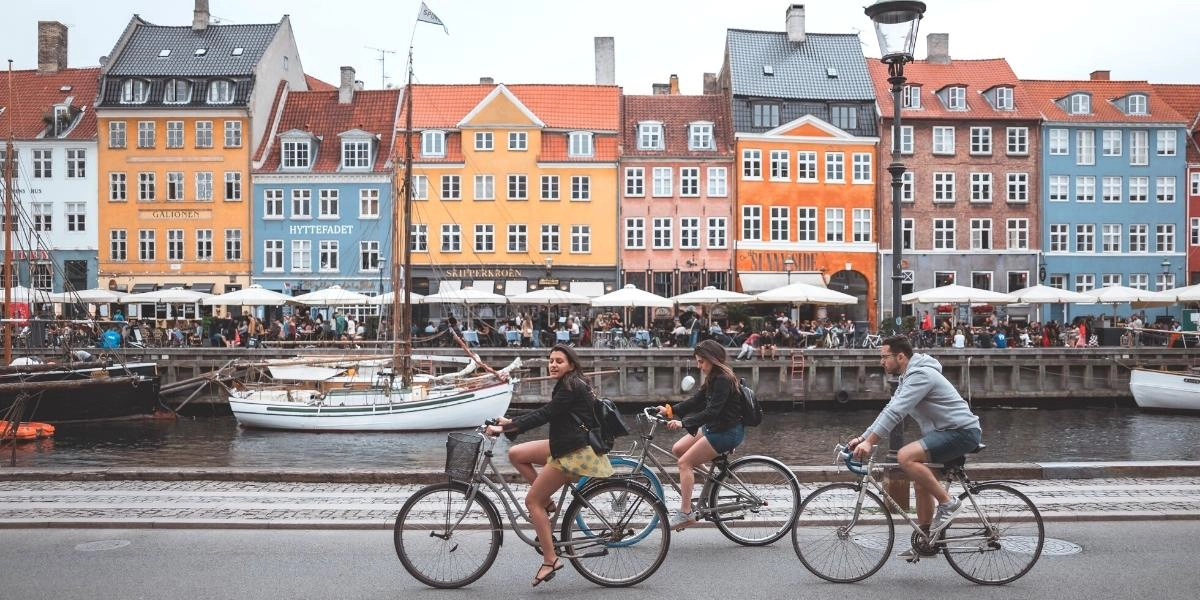
Denmark’s stylish capital is the kind of city that easily fills a couple of days, so don’t rush your time in Copenhagen. Start with a stroll through colourful Nyhavn, where rows of bright 17th century buildings line the canal and outdoor cafés spill onto the waterfront. From here, walk along the harbour to see Copenhagen’s most famous landmark, the Little Mermaid statue, inspired by the fairy tale by Hans Christian Andersen.
Spend the morning exploring Copenhagen’s royal side at Christiansborg Palace and Amalienborg Palace, home to the Danish royal family. If you time it right, you can watch the Changing of the Guard ceremony at noon, complete with marching soldiers, brass bands, and plenty of royal pageantry.
Afterwards, wander through the elegant gardens surrounding Rosenborg Castle before stopping for lunch at Pizzeria Mamemi or grabbing coffee and pastries from the ever-popular Juno The Bakery.
No visit to Copenhagen feels complete without Tivoli Gardens, one of the oldest amusement parks in the world. Open since 1843, it mixes vintage charm with thrilling rides, live performances, twinkling lights, and beautifully landscaped gardens. Even if you are not into rollercoasters, the atmosphere alone makes it worth visiting.
Later in the day, dive into Danish culture at the National Museum of Denmark, where Viking treasures, ancient artefacts, and centuries of Danish history are brought to life. Design lovers should also make time for the Design Museum Denmark, which showcases the sleek Scandinavian style the country is famous for, from furniture and fashion to ceramics and industrial design.
If you are travelling with family, the Guinness World Records Museum adds something more playful to the day, with interactive exhibits and quirky displays. Before dinner, head to Freetown Christiania, Copenhagen’s famously alternative neighbourhood filled with street art, independent cafés, live music, and its own distinct atmosphere that feels completely different from the polished city centre.
RELATED POST: One Day in Copenhagen: Itinerary, Map, Tips & Guide
Where to Stay in Copenhagen
Upmarket: 71 Nyhavn Hotel occupies two converted waterfront warehouses right on Copenhagen’s famous harbourfront, blending historic character with sleek Scandinavian interiors. Expect exposed wooden beams, cosy rooms, and one of the best locations in the city for evening walks, canal views, and easy access to Nyhavn’s restaurants and bars.
Mid-Range: Copenhagen Admiral Hotel sits in a former 18th century warehouse overlooking the waterfront between Nyhavn and the Opera House. The hotel mixes rustic Nordic design with modern comfort, featuring huge timber beams, spacious rooms, and a relaxed atmosphere that feels stylish without trying too hard.
Budget: citizenM Copenhagen Radhuspladsen is a smart, modern option near City Hall Square, perfect if you want a central location without Copenhagen’s high hotel prices. Rooms are compact but cleverly designed, with mood lighting, huge windows, and high-tech controls, while the lively communal spaces make it feel far more social than a typical budget stay.
Day 3: Copenhagen to Fredensborg
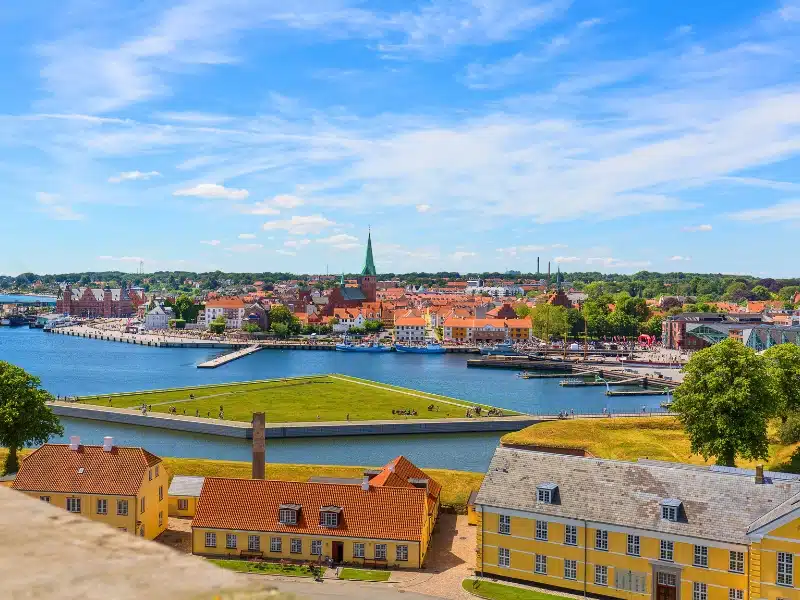
Helsingør
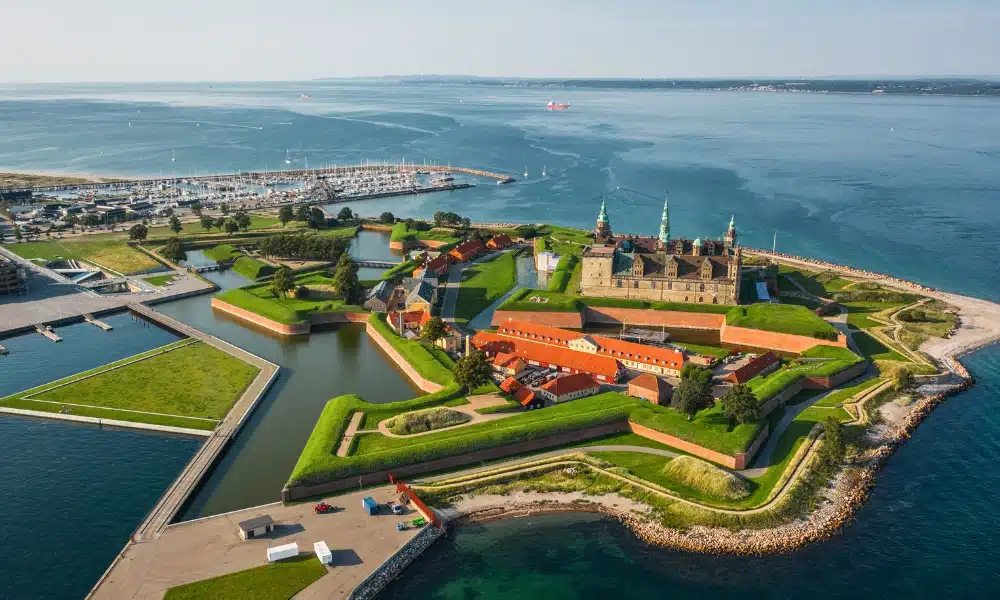
Around 40 minutes north of Copenhagen, Helsingør is one of Denmark’s most historic and atmospheric coastal towns. Known as Elsinore in English, it is best known for Kronborg Castle, the dramatic Renaissance fortress made famous as the setting of Shakespeare’s Hamlet. Sitting right on the edge of the Øresund Strait, the UNESCO-listed castle feels every bit as impressive in person, with grand halls, underground casemates, and sweeping sea views. Just note that the castle is closed on Mondays.
A short walk away, the Maritime Museum of Denmark offers a completely different experience. Built into a former dry dock, the museum combines striking modern architecture with exhibitions exploring Denmark’s long relationship with the sea, from Viking ships to global shipping routes.
Back in the old town, visit Helsingør Cathedral, also known as St. Olaf’s Church, a beautiful Gothic church filled with intricate wood carvings and historic details. Climb the tower for views across the rooftops and out toward Sweden on a clear day.
Helsingør itself is wonderfully easy to explore on foot. Wander through cobbled streets lined with colourful half-timbered houses, browse independent shops and cafés, or head toward the waterfront for a walk along the harbour. If the weather is warm, nearby beaches like Gummistranden, Hornbæk Beach, and Snekkersten Beach are ideal for a swim or relaxed seaside stroll.
Fredensborg
Just 9 miles (14.5 km) inland from Helsingør, Fredensborg offers a quieter, more elegant side of Denmark. The small town is best known for Fredensborg Palace, the summer residence of the Danish royal family, which sits beside the shores of Lake Esrum surrounded by immaculate Baroque gardens.
The palace gardens are one of the highlights here, with sweeping lawns, tree-lined avenues, peaceful lakes, and rose gardens that burst into colour during summer. It feels far less formal than many European royal estates, making it a lovely place for a slow afternoon walk.
Lake Esrum, Denmark’s second-largest lake, adds to the calm atmosphere of the area. Boat trips and kayak rentals are popular in warmer months, while the lakeside walking trails offer plenty of scenic spots to stop and take in the views.
Another worthwhile stop is the Fredensborg Arboretum, a peaceful botanical garden filled with rare trees and woodland paths. Combined with the palace and lake, Fredensborg makes a relaxing contrast to Copenhagen and Helsingør, with a slower pace and plenty of natural scenery.
Where to Stay in Fredensborg
Upmarket: Rungstedgaard in Rungsted is a stylish seaside hotel set in a former manor house overlooking the Øresund coast. Surrounded by woodland and gardens, it combines classic Danish elegance with modern Scandinavian interiors, while the peaceful location makes it ideal for a relaxing stop between Copenhagen and North Zealand.
Mid-Range: Hotel Fredensborg Store Kro sits right beside Fredensborg Palace and feels perfectly placed for exploring the royal gardens and Lake Esrum. The hotel has a cosy, traditional atmosphere with bright rooms, excellent dining, and a classic Danish inn feel that suits the town’s relaxed pace.
Budget: Fredensborg Vandrerhjem is a simple, affordable stay close to the lake and palace grounds, ideal for road trippers wanting a practical overnight stop. The setting is peaceful and green, with easy access to walking trails, cycling routes, and the town centre.
Day 4: Fredensborg to Møns Klint
Roskilde
Less than an hour southwest of Fredensborg, Roskilde blends Viking history, royal heritage, and a relaxed waterfront setting. If you are into classic cars, consider making a stop at the Haaning Collection in Bagsværd on the way, where vintage cars, motorcycles, and rare automotive treasures are displayed in a beautifully curated private collection.
Roskilde’s biggest landmark is the UNESCO-listed Roskilde Cathedral, one of the most important churches in Denmark and the burial site of Danish kings and queens for centuries. Its architecture reflects a fascinating mix of Gothic, Romanesque, and Baroque styles, while the elaborate royal tombs and chapels inside make it feel more like a living piece of Danish history than a traditional cathedral.
The city is also home to the excellent Viking Ship Museum, which sits right on the fjord. Here you can see five original Viking ships recovered from the nearby waters, alongside interactive exhibits, reconstructed longboats, and demonstrations showing traditional boat-building techniques. During summer, visitors can even sail on replica Viking ships out on the fjord.
For a deeper look into local history, the Roskilde Museum covers everything from archaeology and medieval trade to the city’s modern cultural scene. Afterwards, slow things down with a stroll through Byparken, a scenic green space beside the fjord that is especially beautiful on sunny afternoons.
Møns Klint
The drive south toward Møns Klint takes you through some of Denmark’s most scenic countryside, but before reaching Møn, make time for a stop at Stevns Klint. This UNESCO-listed stretch of dramatic coastal cliffs holds global geological importance, containing evidence of the asteroid impact that wiped out the dinosaurs around 65 million years ago. Even if geology is not usually your thing, the white cliffs and sea views are seriously impressive.
Another worthwhile stop nearby is Camp Adventure, home to the striking Forest Tower. Rising high above the treetops, the spiralling wooden tower offers panoramic views across forests and farmland, and has quickly become one of Denmark’s most photographed attractions.
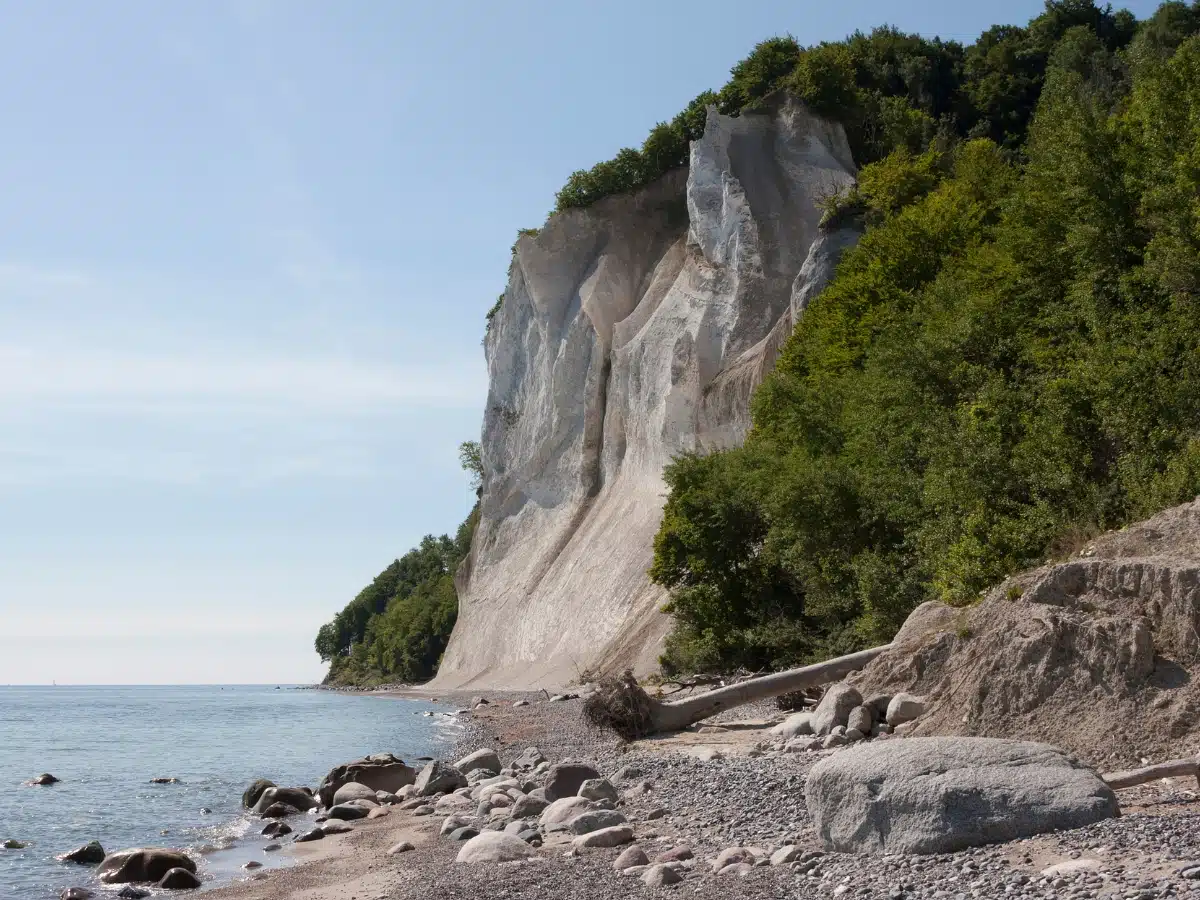
Møns Klint itself is one of the country’s most spectacular natural landmarks. Stretching for around 6 km along the Baltic coast, these towering white chalk cliffs rise dramatically above turquoise water, with some reaching heights of 120 metres. Dronningestolen is the highest viewpoint and delivers some of the best coastal scenery in Denmark.
The area is crisscrossed with hiking trails through beech forests and along the cliff edge, making it ideal for long walks and photography stops. The GeoCenter Møns Klint adds extra context to the landscape, with interactive exhibits explaining the region’s geology, fossils, and natural history in a way that is genuinely engaging rather than overly academic.
Down below the cliffs, the beaches are known for their crystal-clear water and peaceful atmosphere, especially outside peak summer weekends. A short drive away, Liselund Slotspark offers a completely different landscape, with romantic gardens, ornamental lakes, and elegant 18th century buildings hidden among the trees.
RELATED POST: Beautiful Denmark: 11 Best Hidden Gems
Where to Stay in Møns Klint
Upmarket: Villa Huno in Borre is a peaceful boutique stay surrounded by countryside near Møns Klint, offering stylish Scandinavian interiors, spacious rooms, and a calm retreat feel. Its quiet location makes it perfect after a day hiking the cliffs or exploring the island’s coastline.
Mid-Range: Hotel Residens Møen sits in the heart of Stege, a charming historic town filled with cobbled streets and colourful houses. The hotel combines classic Danish character with modern comfort, while restaurants, cafés, and the harbour are all within easy walking distance.
Budget: Pension Elmehøj in Hjertebjerg is a cosy countryside guesthouse on the island of Møn, popular with travellers looking for a relaxed and affordable base near the cliffs and beaches. Expect simple rooms, friendly hosts, and peaceful rural surroundings far from the crowds.
Day 5: Møns Klint to Faaborg
Slagelse
Around 109 km northwest of Møns Klint, Slagelse is a historic town with strong Viking roots and some of Denmark’s most important archaeological sites. The biggest highlight here is Trelleborg, a remarkably preserved Viking ring fortress dating back to the 10th century and now recognised as a UNESCO World Heritage Site. Originally built during the reign of King Harald Bluetooth, the circular fortress gives a fascinating glimpse into Viking engineering, military strategy, and daily life. The reconstructed longhouses and interactive exhibitions help bring the site to life far beyond a standard museum visit.
Back in town, the Slagelse Museum explores the history of the region through exhibits covering agriculture, trade, local crafts, and Viking artefacts discovered in the area. It is compact but worthwhile if you enjoy smaller regional museums with a more personal feel.
Another stop worth making is Slagelse Church, one of the oldest churches in Denmark, dating back to the 12th century. Inside, you will find beautifully preserved medieval frescoes, traditional Gothic details, and an ornate altarpiece that reflects centuries of Danish religious history.
Faaborg
Set along the southern coast of Funen Island, Faaborg feels worlds away from Denmark’s bigger cities, with its colourful harbourfront, cobbled streets, and relaxed maritime atmosphere. The drive here is part of the experience, especially when crossing the impressive 18 km Great Belt Bridge, or Storebæltsbroen. About halfway across, you can spot Sprogø Island and its historic lighthouse, Sprogø Fyr, sitting alone in the middle of the strait.
Once in Faaborg, start by wandering around the harbour area, where fishing boats and yachts sit alongside brightly painted houses, cafés, and waterfront restaurants. The town has a slower pace than Copenhagen or Aarhus, making it an easy place to spend an afternoon without much of a plan.
Art lovers should not miss the Faaborg Museum, home to an excellent collection of Danish art from the late 19th and early 20th centuries, including works by artists closely connected to Funen and the surrounding islands. Nearby, Naturama offers something completely different, with interactive exhibits and dramatic displays of local wildlife and marine life that are surprisingly modern and engaging.
Faaborg Kirke, dating back to the 13th century, is another highlight, known for its medieval frescoes, carved altarpiece, and unusual blend of architectural styles. Afterwards, explore the old town, where narrow streets, half-timbered houses, the Renaissance-era town hall, and the town’s iconic bell tower give the centre plenty of character.
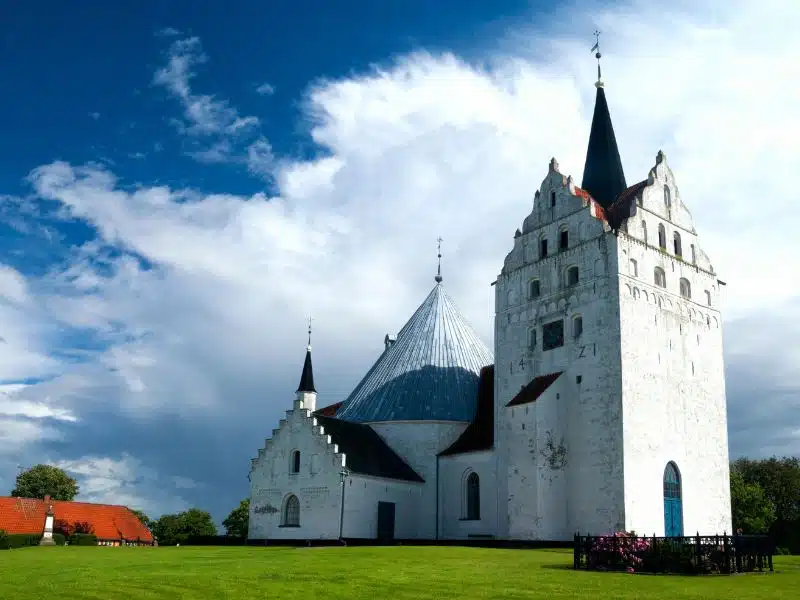
Near Faaborg, make a short detour to Horne Rundkirke, one of Denmark’s few surviving round churches. Dating back to the 12th century, the whitewashed church is known for its unusual circular design, peaceful countryside setting, and panoramic views across the South Funen landscape.
If you visit in July or August, you may also catch Fyn Rundt, Denmark’s traditional wooden boat regatta, which brings sailing boats and lively harbour celebrations to the town each summer.
RELATED POST: Denmark Islands: Best 10 for an Amazing Summer Adventure
Where to Stay in Faaborg
Upmarket: Hvedholm Slotshotel is a romantic castle hotel set in a grand manor house just outside Faaborg, surrounded by parkland and peaceful countryside. Expect antique-filled interiors, elegant dining rooms, and a classic old-world atmosphere that feels far removed from modern city hotels.
Mid-Range: Hotel Faaborg Fjord overlooks the South Funen coastline and offers a relaxed waterfront setting with sea views, bright Scandinavian-style rooms, and easy access to beaches and walking trails. The quiet location makes it a great base for slowing down after days spent road tripping across Denmark.
Budget: Korinth Kro Hostel is a simple and affordable countryside stay surrounded by forests and rolling hills on Funen Island. It has a laid-back atmosphere, practical rooms, and easy access to hiking and cycling routes, making it ideal for travellers focused on exploring the outdoors rather than splashing out on accommodation.
Day 6: Faaborg to Odense
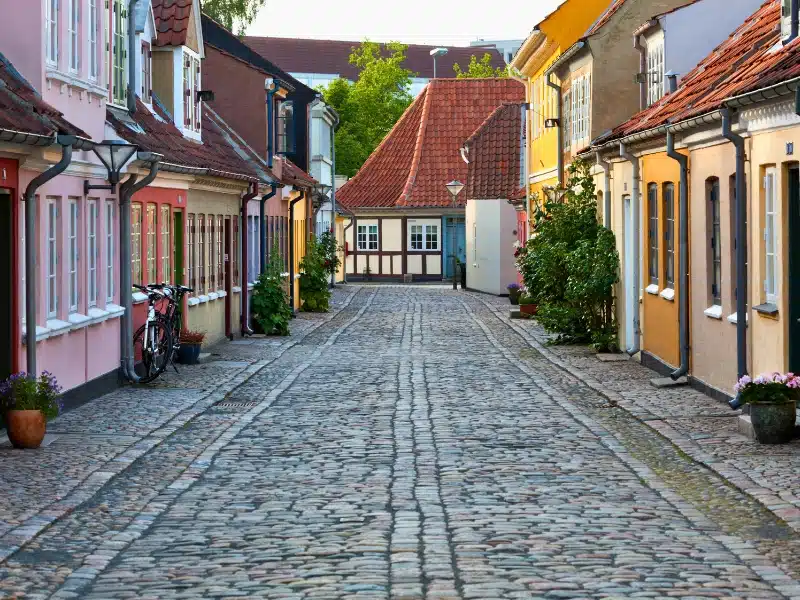
Just 45 minutes northeast of Faaborg, Odense combines historic charm with a creative, youthful atmosphere and plenty of links to Denmark’s most famous storyteller, Hans Christian Andersen. As Denmark’s third-largest city, it feels lively without being overwhelming, with walkable streets, green spaces, and a mix of museums, cafés, and cultural attractions.
The city’s biggest draw is the Hans Christian Andersen Museum, built around the house where the writer was born in 1805. Rather than feeling like a traditional museum, it uses immersive exhibits, sound, light, and storytelling to bring Andersen’s fairy tales and unusual life story to life in a surprisingly modern way. The area surrounding the musuem represents the 19th-century living conditions of the lower class and is known as the City of Beggars.
Another standout attraction is the The Danish Railway Museum, home to historic steam trains, royal carriages, and interactive exhibits that make it enjoyable even if you are not normally interested in railways. Families especially tend to love this stop.
In the centre of town, St. Knud’s Cathedral dominates the skyline. Dating back to the 11th century, the cathedral is one of Denmark’s most important churches, known for its Gothic architecture, stained-glass windows, and the tomb of King Canute IV, Denmark’s patron saint.
After lunch, take a stroll through the gardens surrounding Odense Castle before heading to the Brandts Museum of Art and Visual Culture, which showcases everything from classic Danish art to photography and contemporary exhibitions.
Just outside the city centre, Funen Village offers a completely different experience. This open-air museum recreates rural life in the 18th and 19th centuries with traditional farmhouses, old workshops, animals, and costumed staff demonstrating daily life from centuries past.
Where to Stay in Odense
Upmarket: Hotel Odeon is a sleek, modern hotel in the heart of Odense, just a short walk from the Hans Christian Andersen Museum and the old town. The interiors are stylish and minimalist with a strong Scandinavian feel, while the central location makes it ideal for exploring the city on foot.
Mid-Range: First Hotel Grand is a historic city hotel that has been welcoming guests since the late 1800s, combining classic elegance with modern comfort. Its grand façade, traditional interiors, and central location give it plenty of old-world charm while still feeling lively and convenient.
Budget: Amalie B&B Apartments offers simple, self-catering accommodation in a quiet residential area close to central Odense. The apartments are practical and comfortable, making them a good option for travellers wanting extra space and flexibility without spending too much.
Other Nearby Road Trips




Day 7: Odense to Esbjerg
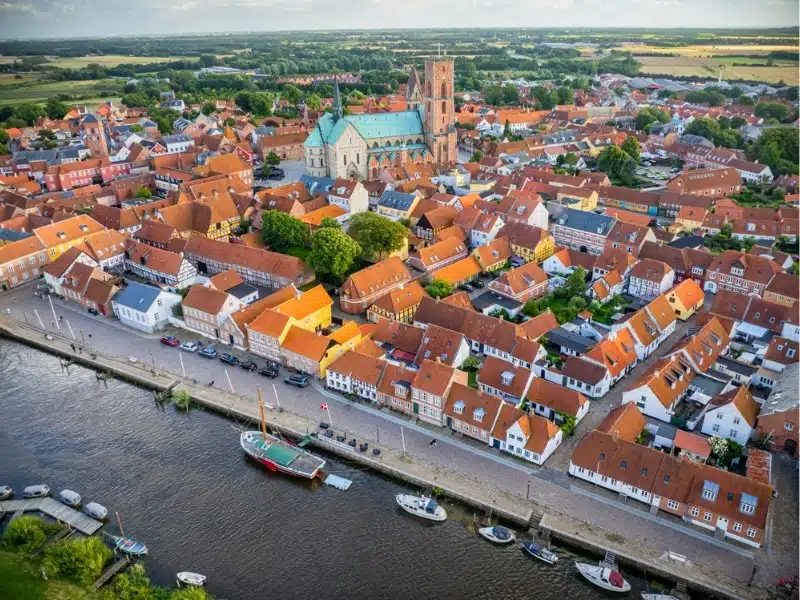
Ribe
Set on Denmark’s west coast, Ribe is the country’s oldest town and one of its most atmospheric stops. The drive here from Odense is scenic in itself, especially if you break up the journey with a stop in Middelfart to visit the CLAY Keramikmuseum or walk part of the Lillebælt Bridge for views across the strait. If you have extra time, a slight detour to Egeskov Castle is well worth it. Surrounded by a moat and perfectly preserved, it is often described as Europe’s finest Renaissance water castle.
Once in Ribe, it feels like stepping into another century. The cobbled streets, crooked half-timbered houses, and hidden courtyards have changed surprisingly little over the centuries, giving the town a genuinely medieval atmosphere rather than a polished tourist feel. Walking through the old town is the main attraction here, especially around the cathedral square and riverside lanes.
Ribe Cathedral, also known as Our Lady Maria Cathedral, is Denmark’s oldest cathedral and dominates the skyline with its Romanesque towers and historic interiors. Climb the tower if you want sweeping views across the marshlands surrounding the town.
For Viking history, the Ribe Viking Center is one of the best experiences in Denmark. More than just a museum, it recreates Viking life with reconstructed settlements, costumed interpreters, traditional crafts, and hands-on demonstrations that make the era feel surprisingly real.
The town also has several smaller museums worth exploring, including the Ribe Art Museum, the Ribe Viking Museum, and the unusual HEX Museum of Witch Hunt, which explores the dark history of witch trials in Denmark and Europe.
If you prefer a slower pace, canal boat tours offer a peaceful way to see Ribe from the water while learning about the town’s history from local guides.
Esbjerg
Just 32 km north of Ribe, Esbjerg feels completely different, with a more modern atmosphere shaped by its busy harbour and North Sea setting. While Ribe is medieval and compact, Esbjerg is open, coastal, and distinctly maritime.
One of the city’s best attractions is the Fisheries and Maritime Museum, which explores Denmark’s fishing heritage, offshore industries, and marine wildlife through interactive exhibits and aquariums. From here, walk along Sædding Strand, a long sandy beach leading toward the city’s most famous landmark, Man Meets the Sea. These enormous white sculptures of four seated figures staring out toward the ocean have become an iconic symbol of western Denmark.
Back in the city centre, the Esbjerg Museum covers the history of the region, from prehistoric settlements to the growth of the harbour city, while the Esbjerg Kunstmuseum focuses on contemporary art and modern exhibitions.
History lovers should also visit the Tarp Bunker Museum, where a preserved World War II bunker has been turned into a museum exploring the German occupation of Denmark and the Atlantic Wall defences along the coast.
Where to Stay in Esbjerg
Upmarket: A Place To Hotel Esbjerg is a modern high-rise hotel with stylish Scandinavian interiors and sweeping views across the harbour and North Sea. The rooftop restaurant and sleek design give it a far more contemporary feel than many hotels in western Denmark, while the apartment-style rooms work well for longer road trip stays.
Mid-Range: Hotel Britannia is a classic city-centre hotel that blends traditional elegance with modern comfort, placing you within easy walking distance of Esbjerg’s shops, museums, and restaurants. The atmosphere feels refined without being overly formal, and the on-site dining is particularly well regarded.
Budget: Sweethome Guesthouse offers affordable, homely accommodation in a quiet residential area of Esbjerg. The rooms are simple but comfortable, and the relaxed atmosphere makes it a good option for travellers wanting a low-key base near the coast without spending a fortune.
Day 8: Esbjerg to Aarhus
Silkeborg
Located in the heart of the Jutland peninsula, Silkeborg is one of Denmark’s best destinations for outdoor scenery and slow-paced exploring. Surrounded by forests, lakes, and rolling hills, the city feels completely different from the coastal towns further west and is often considered Denmark’s outdoor capital.
One of the city’s most famous attractions is the Silkeborg Museum, home to the remarkably preserved Tollund Man. Discovered in a nearby peat bog in 1950, this naturally mummified Iron Age man dates back more than 2,000 years and remains one of Denmark’s most fascinating archaeological discoveries. The museum also explores the wider history and culture of the Silkeborg region.
Art lovers should visit Museum Jorn, dedicated to Danish artist Asger Jorn, one of the founders of the avant-garde COBRA movement. The museum combines modern art with a peaceful lakeside setting and holds an impressive collection of Jorn’s expressive and colourful works.
The real highlight of Silkeborg, though, is the surrounding nature. The Silkeborg lakes, including Lake Silkeborg, Lake Ørnsø, and Lake Almind Sø, are perfect for kayaking, paddleboarding, swimming, or simply relaxing by the water. The calm scenery feels surprisingly untouched for such a central part of Denmark.
Cycling and hiking are especially popular here. Rent a bike and follow trails along the Gudenå River, Denmark’s longest river, or head into the Silkeborg forests where walking trails lead to viewpoints like Himmelbjerget, one of the highest natural points in Denmark with panoramic views across lakes and woodland.
Aarhus
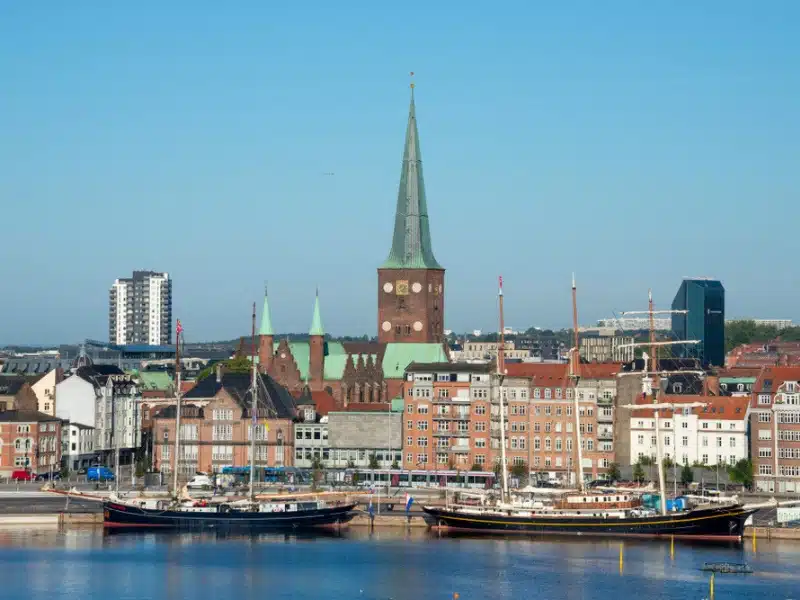
Just 40 minutes east of Silkeborg, Aarhus combines youthful energy, historic neighbourhoods, and modern Scandinavian design better than almost anywhere else in Denmark. Often called “The City of Smiles,” Denmark’s second-largest city has a lively student atmosphere mixed with world-class museums, waterfront development, and excellent food.
One of the city’s standout attractions is ARoS Aarhus Art Museum, famous for its rainbow-coloured rooftop walkway, Your Rainbow Panorama, which offers sweeping views across the city through vivid coloured glass. Inside, the museum features a huge collection of modern and contemporary art spread across striking minimalist galleries.
A short walk away is Den Gamle By, one of Denmark’s best open-air museums. Historic buildings relocated from across the country recreate Danish life from the 17th to the 20th centuries, complete with cobbled streets, costumed staff, old bakeries, and traditional workshops.
Aarhus Cathedral dominates the city centre and is the largest church in Denmark. Inside, you will find Gothic architecture, medieval frescoes, and beautifully detailed stained-glass windows that contrast with the city’s otherwise modern atmosphere.
Later in the day, wander through the Latin Quarter, Aarhus’ oldest neighbourhood, where colourful houses, independent boutiques, cafés, and narrow alleyways give the area a relaxed and creative feel.
Before ending the evening, take a walk around Aarhus Ø, the city’s redeveloped waterfront district filled with modern architecture, canals, rooftop bars, and harbourside cafés. It is one of the best places in Denmark to see how contemporary Scandinavian design and urban living come together.
Where to Stay in Aarhus
Upmarket: Villa Provence is a charming boutique hotel in central Aarhus inspired by southern France, with cosy courtyards, individually designed rooms, and a warm, intimate atmosphere that feels far removed from a standard city hotel. Its quiet location near the river and Latin Quarter makes it perfect for exploring Aarhus on foot.
Mid-Range: Helnan Marselis Hotel sits just outside the city centre overlooking the coast, offering sea views, spacious rooms, and direct access to the beach and surrounding forest trails. The peaceful waterfront setting makes it a relaxing base while still being close to Aarhus’ main attractions.
Budget: Roberta’s Society Aarhus is a stylish and social budget stay set inside a converted library near the centre of Aarhus. Expect minimalist Scandinavian design, lively communal spaces, and compact but modern rooms that suit travellers looking for something more characterful than a standard hostel or budget hotel.
Day 9: Aarhus to Aalborg
Randers
Around 39 km north of Aarhus, Randers is one of Denmark’s oldest towns and combines historic streets with green spaces, museums, and a laid-back atmosphere. While it is often overlooked by international visitors, it makes a pleasant stop for breaking up the drive through eastern Jutland.
Art lovers have a couple of worthwhile museums to explore here. Museum Østjylland Randers focuses on regional history and art, while the Gaia Museum showcases outsider art created by artists with disabilities, offering something a little more unusual and personal than a traditional gallery.
If you are travelling with children, or simply want something more active, Klatreparken sits just outside the town and offers outdoor climbing courses, rope bridges, and zip lines through the forest. It is a fun change of pace after several museum-heavy stops along the route.
For something more relaxing, Doktorparken is a lovely green space near the centre with lakeside paths, flower gardens, and shaded walking trails that feel especially peaceful in summer. The city centre itself is easy to explore on foot, with a mix of old merchant buildings, pedestrian shopping streets, and cosy cafés.
Aalborg
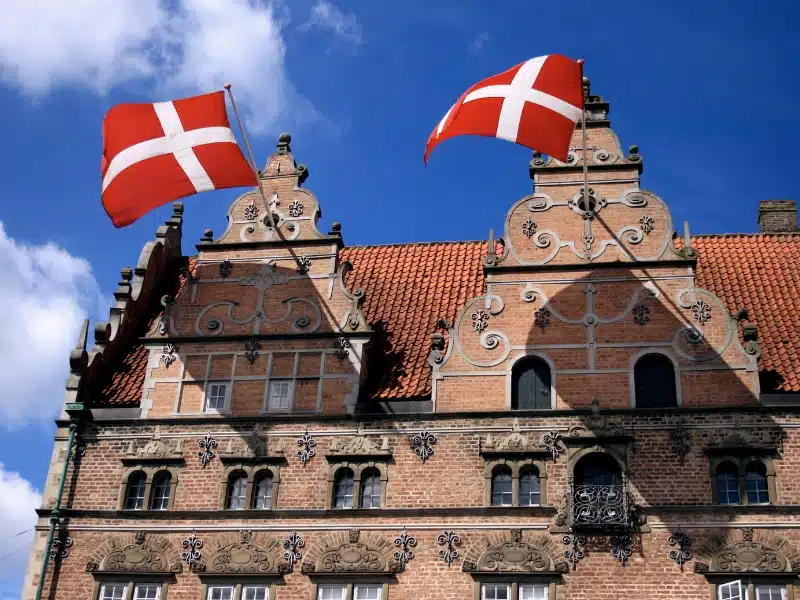
Roughly 80 km north of Randers, Aalborg is one of Denmark’s liveliest northern cities, combining waterfront regeneration, modern architecture, and a surprisingly strong cultural scene. Sitting beside the Limfjord, the city has transformed itself from an industrial harbour town into a creative hub filled with museums, cafés, and modern public spaces.
The Aalborg Historical Museum is a good place to begin, with exhibits covering everything from Viking settlements and medieval life to local folklore and the city’s industrial past. It gives useful context to the wider North Jutland region without feeling overly heavy.
For panoramic views across the city and fjord, head up Aalborg Tower, which rises nearly 55 metres above the surrounding landscape. On clear days, you can see far across the Limfjord and surrounding countryside.
Architecture and design fans should not miss the Utzon Center, dedicated to Danish architect Jørn Utzon, best known for designing the Sydney Opera House. The sleek waterfront building hosts exhibitions on architecture, design, and creative culture while also serving as one of Aalborg’s modern landmarks.
Another highlight is the Kunsten Museum of Modern Art, considered one of the leading modern art museums in Northern Europe. Its minimalist design and impressive Danish and international collections make it worth visiting even if contemporary art is not usually your thing.
Later in the day, stroll along Aalborg’s redeveloped waterfront, where promenades, cafés, and modern apartment buildings line the Limfjord.
Where to Stay in Aalborg
Upmarket: Pier 5 Hotel is a stylish waterfront hotel in the heart of Aalborg, combining modern Scandinavian interiors with views across the Limfjord. The sleek design, excellent location, and relaxed atmosphere make it a great base for exploring the city’s museums, restaurants, and harbourside promenades.
Mid-Range: KOMPAS Hotel Aalborg offers comfortable modern rooms in a quiet location close to the waterfront and Utzon Center. The hotel has a bright Scandinavian feel, friendly service, and easy walking access to Aalborg’s main attractions without being directly in the busiest part of the centre.
Budget: Four Point Flex by Sheraton is a practical and affordable option with minimalist Danish design and a convenient central location. The rooms are simple but comfortable, making it a solid choice for road trippers wanting an easy overnight stay before continuing north through Jutland or toward the ferry ports.
Day 10: Onward Travel
From Aalborg, you can continue north through the rugged landscapes of North Jutland, where wide beaches, shifting sand dunes, and windswept coastlines give this part of Denmark a completely different feel from the south of the country.
Many travellers head toward Hirtshals for ferries to Norway and the Faroe Islands and Iceland, or Frederikshavn for crossings to Sweden, making Aalborg a natural final stop before continuing a wider Scandinavian road trip.
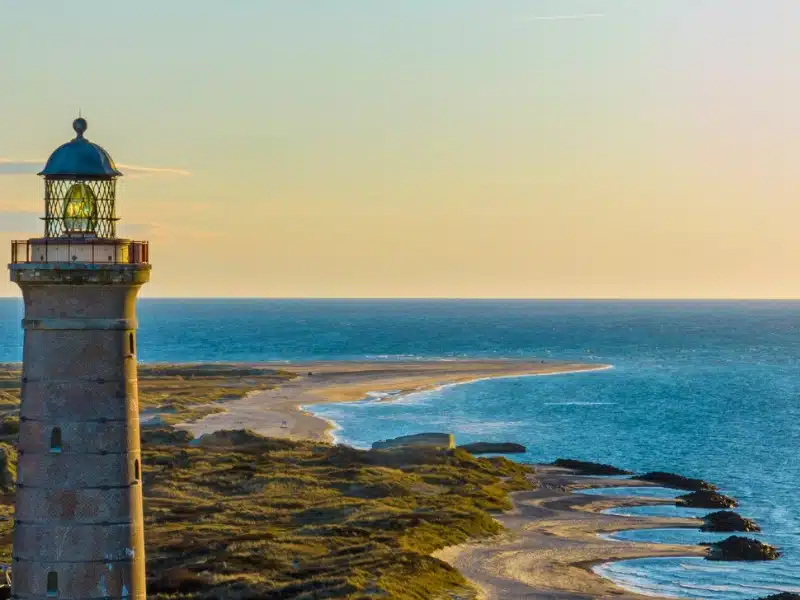
If you have extra time, explore some of northern Jutland’s most dramatic scenery. Near Løkken, Rubjerg Knude Lighthouse stands partially surrounded by enormous migrating sand dunes and has become one of Denmark’s most photographed landmarks.
Further north, Skagen is famous for its wild beaches, distinctive yellow houses, fresh seafood, and the meeting point of the North Sea and Baltic Sea at Grenen, where two different seas collide. The light here has long attracted artists, and even today the town feels remote, windswept, and unlike anywhere else in Denmark.
Denmark Road Trip Resources
Getting to Denmark
Whether you’re traveling to Denmark in a car, motorcycle, or campervan from Europe, or picking up a hire car, self-driving is absolutely the best way to explore this cosmopolitan Scandinavian country.
You can stop whenever you want, try new activities, visit places you see along the route, and have the freedom to change plans at the last minute.
Fly and Drive
Fly into one of Denmark’s Copenhagen International Airport. With direct flights from America, Canada, the Middle East, Europe, and the UK, we recommend booking through Skyscanner for live deals and the best prices.
Are you planning to rent a car in Denmark? As one of the largest car hire aggregator companies in the world, we recommend Rentalcars.com because they have massive purchasing power which enables them to secure the best car rental prices, which benefits you when you’re planning a road trip.
For a real adventure, hire a motorhome or campervan in Denmark. We recommend Motorhome Republic, an aggregate booking site who pull together all the best deals from a number of rental agencies, to offer you a wide choice of options alongside an excellent English speaking expert motorhome Concierge Team. Use the Park4Night app to find overnight spots and campsites along the route.
Driving to Denmark
Driving to Denmark is straightforward from both the UK and mainland Europe, and the roads are among the easiest to navigate in Northern Europe.
From the UK, most travellers drive through France, Belgium, the Netherlands, and Germany before crossing into Denmark via the Danish-German border in Jutland.
If you are already travelling through Europe, Denmark is well connected by major motorways and bridges, including the impressive Øresund Bridge linking Copenhagen with Sweden.
Best Time for Visiting Denmark
Spring
Whilst it can be quite cool in spring, Denmark is slowly beginning to come back to life in April after the long winter, with average temperatures in May reaching a pleasant 16°C / 61°F. Attractions, cafés, and restaurants start to open, but you’ll still need to bring cold-weather clothing and boots.
Summer
The temperatures are lovely in Denmark in the summer, with July being the hottest month at 22ºC / 72ºF, although it cools quickly in the evening and you will need something warm for the evenings. The days are long and by mid-summer, the sun rises at 3.30am in the morning and sets at 10pm.
Summer is the liveliest time of year, especially at the weekends when locals go sailing, hiking, and visit local nature reserves with their families. You can make the most of the long days and enjoy al fresco dining.
Fall
The color of the trees in autumn brings a different feel to the country. The days being to get cooler in late September and you’ll notice an increase in rainy days. Day-to-day life starts to move inside, with log fires and candles in restaurants and bars so you can enjoy a cozy evening full of hygge – that ubiquitous Danish word that describes a mood of coziness, contentment and conviviality.
Winter
Winter in Denmark is very cold with high levels of rain, snow and squally westerly winds. When there is no rain the sky is usually covered with dense grey clouds and the days are dark by 4.30pm. The average Danish winter temperature ranges from minus 5 to +4°C / 23 to 39°F.
Driving in Denmark
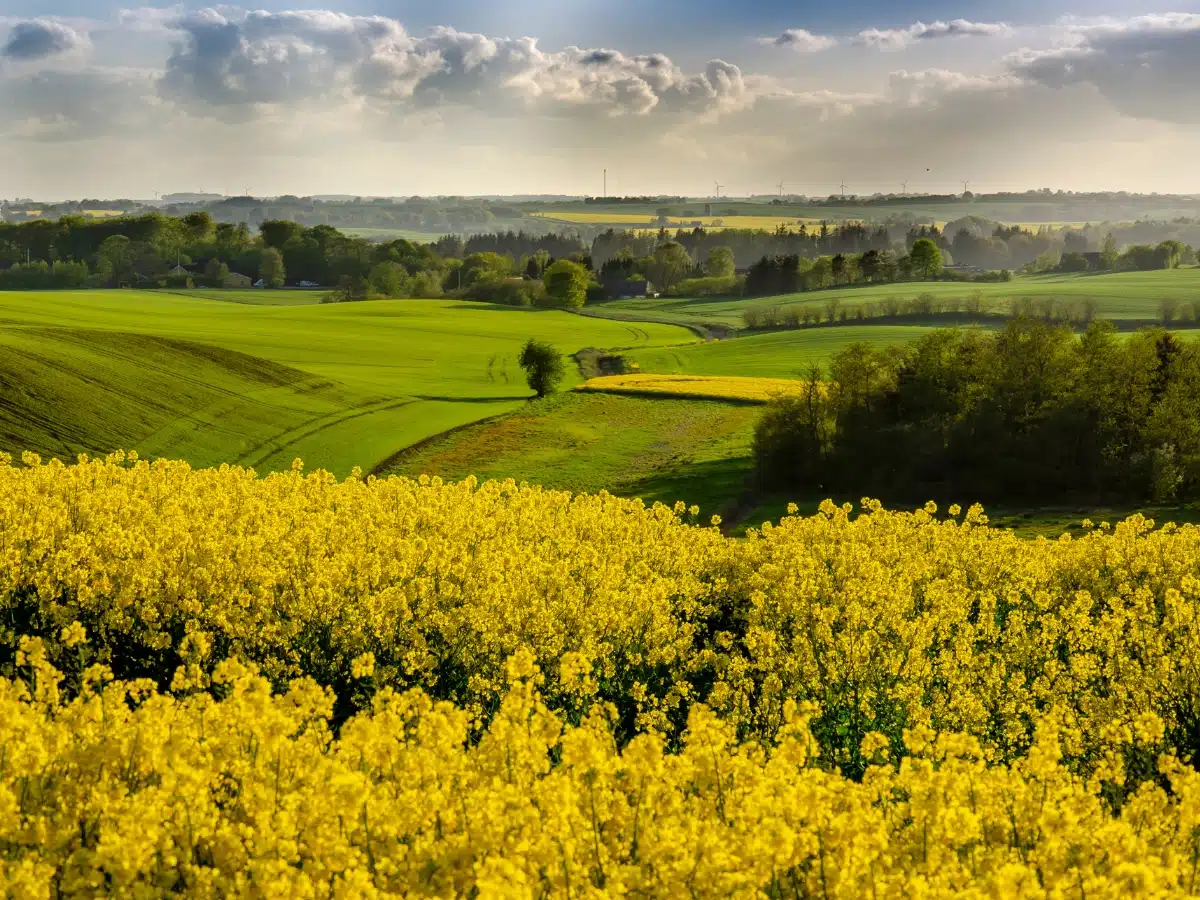
Road trips in Denmark are usually pleasurable, thanks to the extensive and well-maintained road network, generally good local roads, and courteous drivers.
Whether you’re traveling in your own car, touring Denmark in a motorhome, or flying in and picking up a rental car, you need to follow these rules when you’re driving in Denmark.
Documents
Rules of the Road
Tolls in Denmark
Denmark does not have motorway tolls, but there are some bridges where a charge is levied, including the Storebælt or Great Belt Bridge. You can find out more about Storebælt bridge tolls here.
Low Emission Zones in Denmark
There are four LEZ in Denmark, in Aalborg, Aarhus, København (Copenhagen) & Frederiksberg, and Odense. You can find out more about charges and what you need to do to ensure compliance here.
RELATED POST: Driving in Europe: Everything You Need to Know
More Road Trips to Explore
Best UK Road Trips: 18 Scenic Routes to Explore

Portugal Road Trip: The Ultimate 10 Day Itinerary

Europe Road Trip: 28 Epic Routes You Can Actually Drive

European Road Trip: Six Countries in 90 Days
Germany Road Trip: 12 Unmissable Routes

France Road Trip: 13 Amazing Itineraries
Love it? Pin it!


