This post may contain affiliate links, from which we earn an income. Click here to read our affiliate policy.
Europe is made for road trips. In a single journey you can follow river valleys, cross Alpine passes, explore medieval towns and historic cities, and drive some of the continent’s most spectacular coastlines.
This 6,300km European road trip is based on a route we travelled ourselves in our motorhome, taking us through France, Germany, Austria, Slovenia, Croatia and Italy over 87 days. Along the way, we explored the Black Forest, crossed the Alps, followed Slovenia’s Soča Valley, travelled the Croatian coast and looped through Italy before returning to France.
You can follow our complete route as a ready-made European Grand Tour, or use individual sections to build a shorter road trip of your own.
European Road Trip: Key Facts
Route: The Gap Decaders’ European road trip is a 6,300km loop from Paris through France, Germany, Austria, Slovenia, Croatia and Italy before returning through southern France to Paris.
Duration: The complete itinerary takes 87 days, making it suitable for travellers planning an extended European road trip.
Countries: France, Germany, Austria, Slovenia, Croatia and Italy.
Motorhome-friendly: The Gap Decaders have included a recommended campsite, aire or stellplatz at every overnight stop, alongside hotel recommendations for those travelling by car.
Best for: Alpine driving, historic cities, national parks, Mediterranean coastlines, lakes and scenic road trips.
First-hand experience: The Gap Decaders travelled this route themselves, and the itinerary is based on that journey.
Enjoy The Gap Decaders? Add us as a preferred source on Google.
Planning tools we actually use for European road trips
Europe Road Trip Map
Europe Road Trip Route (in brief)
Over 87 days, this route loops through six countries, travelling from Paris through eastern France, southern Germany and Austria before crossing Slovenia and following the Croatian coast. From Dubrovnik, the route crosses the Adriatic to Italy, travels north through Tuscany and the Italian Lakes, then returns to Paris through Provence and southern France.
The itinerary is designed for slow travel, with stays of between one and five days in each destination. If you’re travelling on a British passport and subject to the Schengen 90/180-day rule, remember that this 87-day itinerary leaves very little margin, so check your available Schengen days carefully before setting off.
France
Germany
Austria
Slovenia
Croatia
Italy
France
How to Start This European Road Trip
Starting Your European Road Trip in Paris
Paris is the start and finish point for this European road trip, making it a convenient gateway if you’re flying in and hiring a car. Charles de Gaulle (CDG) and Orly (ORY) airports both offer good transport links into central Paris and a wide choice of car hire companies.
We recommend exploring Paris before collecting your hire car. Driving and parking in the central arrondissements can be stressful and expensive, and the city is much easier to explore on foot and by Métro. When you’re ready to leave, collect your car from an airport or a rental depot close to the périphérique for an easier escape from the city.
We use Discovercars.com because it allows you to compare rental companies, prices and policies in one place. If you need an automatic car, book early as availability can be more limited than in the UK.
Before leaving Paris, check that your hire car has any emissions stickers required for the countries and cities on your route, and make sure you understand the different toll, vignette and low-emission zone requirements you’ll encounter as you travel across Europe.
Starting This European Road Trip from the UK
If you’re driving from the UK in your own car, campervan or motorhome, you can easily adapt this itinerary by crossing the Channel to France and joining the route in Paris or further east.
The quickest crossings are the LeShuttle service from Folkestone to Calais and the Dover to Calais ferry. There are also ferry routes from southern England to Normandy and Brittany, which can work well if you want to add more of France to the beginning or end of your trip.
From Calais, you can drive to Paris in around three hours, or skip Paris altogether and head east towards Nancy to join the itinerary there. If you’ve already spent time in Paris, this is the option we’d choose as it avoids driving into the capital and makes the route more efficient.
Before travelling, make sure your vehicle and documents meet the requirements for driving in Europe, and check how many Schengen days you have available if you’re travelling on a British passport.
Doing This European Road Trip by Motorhome
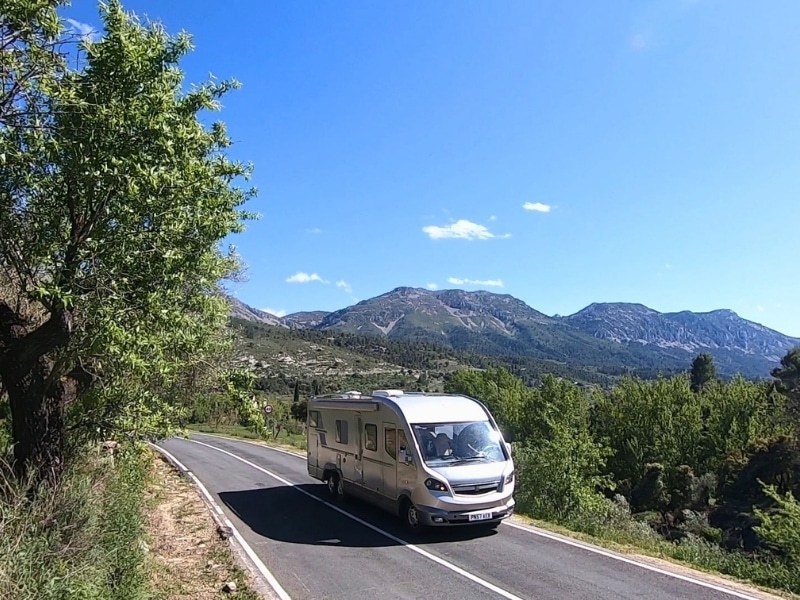
This route works particularly well by motorhome or campervan, and we’ve included a recommended campsite, aire or stellplatz at every overnight stop. We’ve prioritised places that make sightseeing easy, including city campsites with public transport connections, convenient motorhome aires and more scenic stops beside lakes, rivers and in the mountains.
How to Use this Europe Trip Itinerary
Europe Road Trip Itinerary (in detail)
Paris: 2 Days
Paris is worth allowing two full days before you collect your hire car and start the road trip. Explore the Tuileries and Le Marais, climb the Arc de Triomphe for views across the city, visit the Musée d’Orsay and finish with an evening cruise along the Seine. The Métro makes it easy to get around without a car, which is exactly why we recommend leaving your hire-car collection until you’re ready to depart.
Where to stay: Hôtel Le Relais Saint-Honoré is a small, stylish hotel between the Tuileries and Palais-Royal, within easy walking distance of many of the main sights and well connected by public transport.
Where to camp: Camping de Paris in the Bois de Boulogne has spacious motorhome pitches on the banks of the Seine and a shuttle to Porte Maillot for easy Metro access into central Paris. You’ll need a Crit’Air sticker to stay here.
Nancy: 1 Day
A two-hour glide along the A4 delivers you to Nancy, whose rococo-gilded Place Stanislas shimmers like a champagne flute under Baroque lamplight; wander nearby Art-Nouveau façades on Rue Foch, browse bergamot-scented treats in the covered market, then toast with a glass of crisp Lorraine white at a terrace on leafy Place Carrière before a night stroll when the square’s fountains dance with light projections.
Where to stay: Grand Hôtel de la Reine is a chandeliered, Louis-XV palace right on Place Stanislas, with secure parking 200 metres away.
Where to camp: Nancy Port de Plaisance motorhome aire has 19 serviced pitches with water, electricity and waste disposal, just a few minutes’ walk from the city centre and Place Stanislas.
Colmar: 2 Days
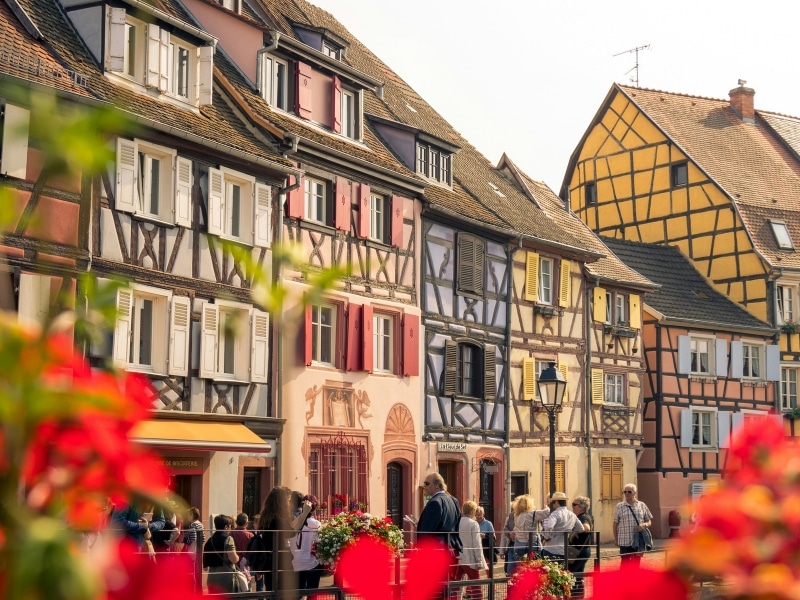
Story-book Alsace unfolds in Colmar’s Petite Venise district where pastel timber houses lean over narrow canals fringed with geraniums; pedal vineyard lanes to Eguisheim or Riquewihr, sip a chilled gewürztraminer beneath vine-draped arcades, and let the Isenheim Altarpiece’s vibrant Gothic panels dazzle you in the Unterlinden Museum before a tarte flambée supper.
Where to stay: Hotel Le Colombier Suites are rooms in a 16th-century building close to Petite Venise, with private courtyard parking.
Where to camp: Camping de l’Ill is a riverside campsite just 2km from central Colmar, with motorhome pitches and easy access into the old town by bus or cycle path.
Black Forest: 3 Days
Cross the Rhine into Germany and spend three days exploring the Black Forest. Drive the B500 Schwarzwaldhochstraße for some of the region’s best scenery, visit Triberg and its waterfalls, and make time for a few forest walks along the way. This is also a great place to slow the pace after the city stops at the beginning of the trip.
Where to stay: Hotel Schloss Hornberg is a historic hilltop hotel with far-reaching Black Forest views, a restaurant serving regional food and free on-site parking.
Where to camp: daheim Triberg has dedicated motorhome pitches with electricity, fresh water and sanitary facilities right in the centre of Triberg, an excellent base for exploring the Black Forest.
Lake Constance (Bodensee): 2 Days
Continue south to Lake Constance, where two days gives you time to explore both the lake and some of the towns along its shores. Visit medieval Meersburg, take a ferry across the lake, explore the gardens of Mainau or hire bikes and ride a section of the Bodensee cycle route. Lindau is also worth a stop for its lovely old town and harbour.
Where to stay: Boutiquehotel zur Winzerstube in Hagnau is an adults-only hotel overlooking Lake Constance, with lake-view rooms and a location close to the waterfront and ferry connections.
Where to camp: Campingplatz Alpenblick is right on the shores of Lake Constance in Hagnau, with motorhome pitches and easy access to the village, lake ferries and cycle routes.
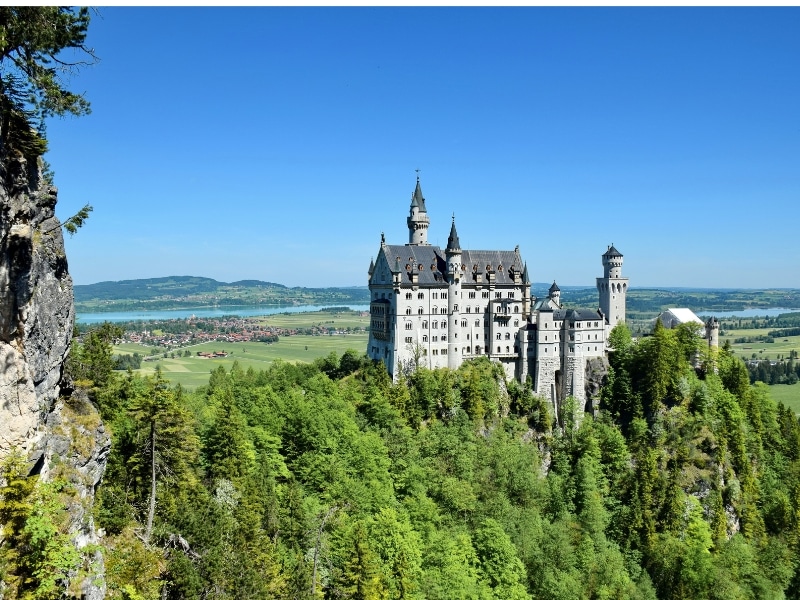
Füssen & Neuschwanstein: 2 Days
From Lake Constance, head east towards Füssen and the Bavarian Alps. Allow two days to explore Füssen, visit Neuschwanstein and Hohenschwangau castles and walk around nearby Alpsee. Book your castle tickets in advance, particularly during the summer months, and arrive early if you want to avoid the busiest part of the day.
Where to stay: Hotel Sonne is centrally located in Füssen, with individually designed rooms, an excellent breakfast and an on-site garage, making it a particularly convenient stop on a road trip.
Where to camp: Füssen Mobil is a well-equipped motorhome stellplatz just a 15-minute walk from Füssen, with easy bus connections to Neuschwanstein and Hohenschwangau and a Füssen Card included with your stay.
Garmisch-Partenkirchen & Zugspitze: 2 Days
The drive towards Garmisch-Partenkirchen takes you deeper into the Bavarian Alps. Spend one day heading up the Zugspitze, Germany’s highest mountain at 2,962 metres, and another exploring Eibsee, where you can walk around the lake or get out on the water. Keep some flexibility in your plans for the Zugspitze so you can choose the day with the clearest weather.
Where to stay: Hotel Rheinischer Hof offers comfortable rooms with mountain views, a small spa and parking, with easy access to Garmisch-Partenkirchen and the surrounding Alps.
Where to camp: Camp am Wank is a well-equipped motorhome stellplatz at the foot of the Wank, with mountain views and easy bus access into Garmisch-Partenkirchen.
Innsbruck: 3 Days
Cross into Austria and continue to Innsbruck, where three days gives you time to explore the city and get into the surrounding mountains. Wander the historic centre and see the famous Golden Roof, then take the Hungerburg funicular and Nordkette cable cars high above the city. Innsbruck is also a good place to slow down for a day before tackling the next mountain section of the route.
Where to stay: Hotel Innsbruck has a central riverside location close to the old town, with a pool, spa and garage parking that make it a convenient base for a road trip.
Where to camp: Camping Kranebitterhof has spacious, fully serviced pitches on the outskirts of Innsbruck, with a bus stop just 100m away for easy access into the city centre.
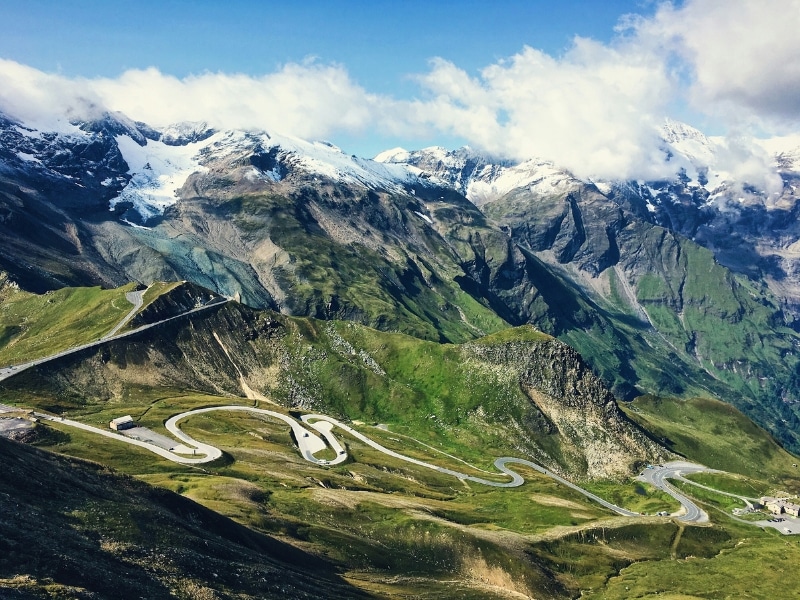
Grossglockner High-Alpine Road: 1 Day
From Innsbruck, head east towards one of the great driving highlights of this European road trip. The Grossglockner High-Alpine Road climbs through 36 bends into the Hohe Tauern National Park, reaching 2,504 metres at its highest point. Allow a full day for the drive so you can stop at the viewpoints and visit Kaiser-Franz-Josefs-Höhe, which overlooks the Pasterze Glacier.
The Grossglockner is a seasonal toll road and normally closes during winter, so check the road status before travelling and try to choose a clear day for the best mountain views.
Where to stay: Berggasthof Wallackhaus sits high in the mountains on the Grossglockner route, with free parking and a location that allows you to make the most of your day on the pass.
Where to camp: Nationalpark Camping Grossglockner in Heiligenblut has spacious motorhome pitches and spectacular mountain views, making it a convenient base at the southern end of the Grossglockner High-Alpine Road.
Zell am See: 3 Days
After the Grossglockner, continue to Zell am See for three days beside Lake Zell. Walk or cycle around the lake, hire a boat or paddleboard, and take the cable car up Schmittenhöhe for views across the surrounding mountains. You can also make the short trip to nearby Kaprun and the Kitzsteinhorn for another day in the high Alps.
Where to stay: Hotel Grüner Baum is in the pedestrianised centre of Zell am See, close to the lake, restaurants and shops, with parking available for guests.
Where to camp: Seecamp Zell am See is right on the shores of Lake Zell, with spacious motorhome pitches and an easy lakeside walk or cycle into the centre of Zell am See.
Vršič Pass & Soča Valley: 3 Days
Cross from Austria into Slovenia and head towards the Julian Alps for three days exploring the Vršič Pass and Soča Valley. The Vršič Pass climbs through 50 hairpin bends before dropping into the valley, where the brilliant turquoise Soča River runs between steep mountain slopes. Spend your time hiking, rafting or kayaking, and explore some of the First World War sites scattered throughout the valley.
Where to stay: Hotel Hvala in Kobarid is a comfortable base for exploring the Soča Valley, with an excellent restaurant known for its local and seafood dishes and free private parking.
Where to camp: Camp Triglav is in the heart of the Trenta Valley beside the Soča River, with motorhome pitches and a superb location for exploring the Vršič Pass and upper Soča Valley.
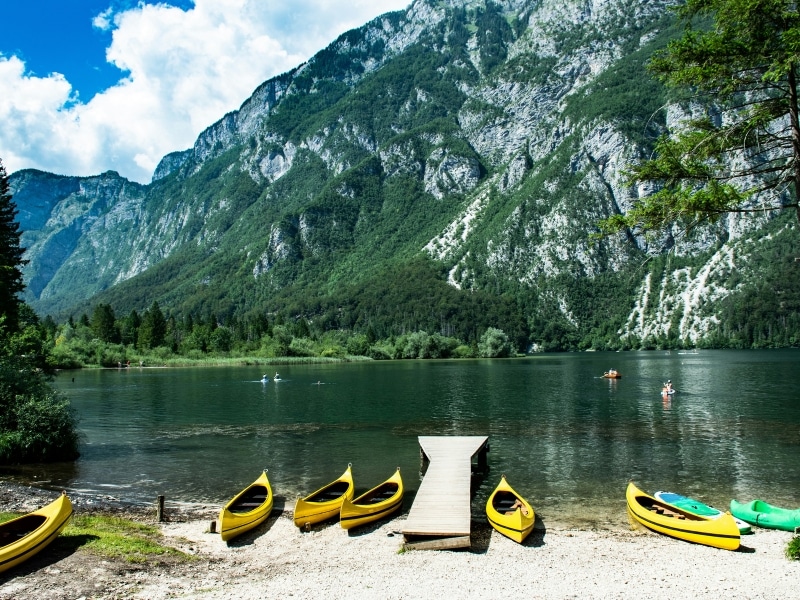
Triglav National Park & Lake Bohinj: 4 Days
Continue through the Julian Alps to Triglav National Park, allowing four days to explore Lake Bohinj and the surrounding mountains. Walk or cycle around the lake, visit Savica Waterfall, take the Vogel cable car for views across the Julian Alps or spend a day hiking. Lake Bohinj is quieter than nearby Lake Bled and makes a great base for enjoying this part of Slovenia at a slower pace.
Where to stay: Bohinj Eco Hotel in Bohinjska Bistrica has spacious rooms, a pool and wellness facilities, EV charging and parking, and is around a ten-minute drive from Lake Bohinj.
Where to camp: Camp Bohinj is right on the shore of Lake Bohinj in Triglav National Park, with lakeside motorhome pitches and direct access to the lake, hiking trails and surrounding mountains.
Ljubljana: 2 Days
Leave the mountains behind and head to Ljubljana for two days in Slovenia’s compact capital. Explore the pedestrianised old town and riverside, cross the city’s famous bridges and take the funicular up to Ljubljana Castle for views across the rooftops towards the Alps. With most of the main sights within walking distance, you can park the car and forget about driving while you’re here.
Where to stay: B&B Hotel Ljubljana Park is within walking distance of the historic centre and main sights, making it easy to leave the car behind while you explore the city.
Where to camp: Ljubljana Resort has well-equipped motorhome pitches beside the River Sava, with a bus stop next to the campsite for easy access into Ljubljana city centre.
Zagreb: 2 Days
From Ljubljana, cross into Croatia and continue to Zagreb for two days in the capital. Explore the historic Upper Town, browse Dolac Market and wander the streets around Tkalčićeva, where cafés and restaurants spill onto the pavements. The compact centre is easy to explore on foot, so once you’ve arrived you shouldn’t need the car again until you leave.
Where to stay: Canopy by Hilton Zagreb City Centre is a stylish hotel close to the main railway station and within walking distance of the centre, with secure underground parking and bike hire available.
Where to camp: Camp Zagreb is a lakeside campsite just outside Zagreb, with serviced motorhome pitches and a free shuttle to nearby public transport for easy access into the city centre.
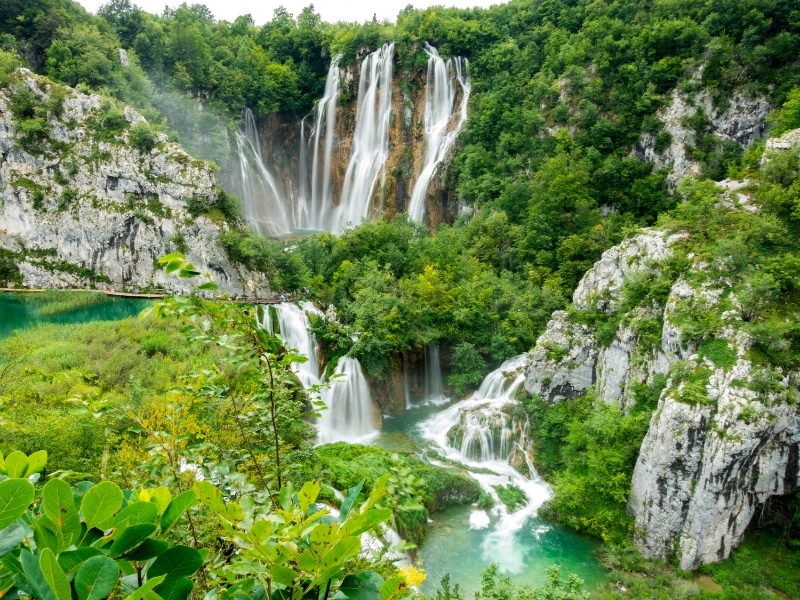
Plitvice Lakes National Park: 2 Days
Head south from Zagreb to Plitvice Lakes National Park, one of Croatia’s most spectacular natural sights. Sixteen lakes are connected by waterfalls and wooden boardwalks, with a network of walking routes allowing you to explore different parts of the park. Two days gives you time to arrive without rushing, spend a full day exploring and start early before the busiest day visitors arrive.
Where to stay: Hotel Jezero is inside Plitvice Lakes National Park close to Entrance 2, with guest parking and an excellent location for getting an early start in the park.
Where to camp: Plitvice Holiday Resort in Grabovac has spacious serviced motorhome pitches just 8km from Plitvice Lakes National Park, with a seasonal shuttle to the park.
Zadar: 3 Days
Continue towards the Adriatic coast and spend three days in and around Zadar. Explore the Roman and Venetian old town, watch the sunset beside the Sea Organ and Greeting to the Sun, and use your extra time for a day trip to the Kornati Islands, Krka National Park or the beaches around Nin.
Where to stay: Bastion Heritage Hotel is a boutique hotel built into Zadar’s historic fortifications, with a spa and an excellent location for exploring the old town on foot.
Where to camp: Falkensteiner Premium Camping Zadar is an upmarket beachfront campsite with fully serviced motorhome pitches, around 5km from Zadar’s historic centre.
Split: 3 Days
Follow the Adriatic coast south to Split, where the historic centre has grown around the remains of Diocletian’s Palace. Allow three days to explore the old town, spend some time on the coast and take a day trip to one of the nearby islands or along the Makarska Riviera. Brač and Hvar are both accessible by ferry from Split.
Where to stay: Hotel Milenij in Makarska has sea-view rooms directly opposite the beach and works well if you want to combine exploring Split with time on the Makarska Riviera.
Where to camp: Camping Stobreč Split is a beachfront campsite just outside Split, with spacious motorhome pitches and easy access into the historic city centre.
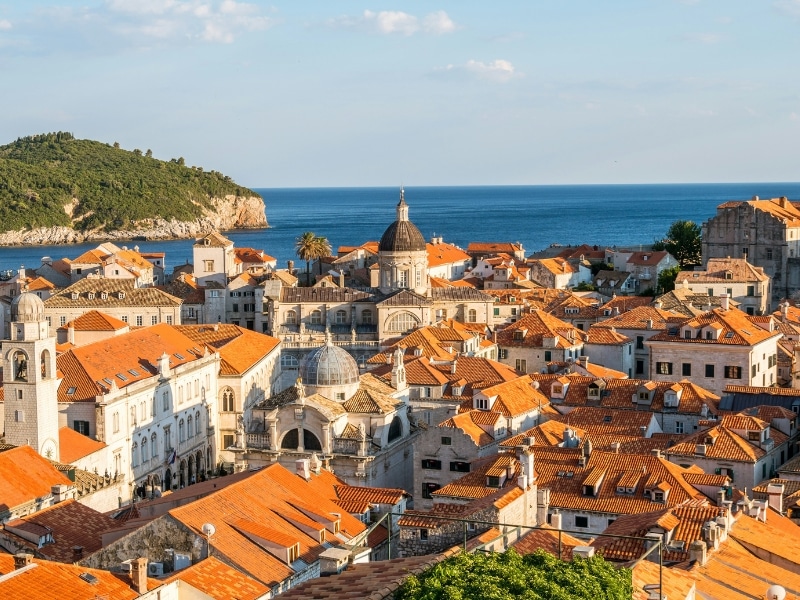
Dubrovnik: 4 Days
Continue south along the spectacular Croatian coast to Dubrovnik. Four days gives you time to walk the city walls, explore the old town, take the cable car up Mount Srđ and get out onto the Adriatic by boat or kayak. Dubrovnik can become extremely busy when several cruise ships are in port, so check the cruise schedule and explore the old town early or later in the day when possible.
Where to stay: Hotel Lero is outside Dubrovnik’s busiest historic centre but within easy reach of the old town, with a swimming pool and parking, making it a practical choice when you’re travelling by car.
Where to camp: Camping Solitudo on the Babin Kuk peninsula has spacious motorhome pitches close to the beach, with easy bus access to Dubrovnik’s Old Town.
Bari: 1 Day
From Dubrovnik, take the overnight ferry across the Adriatic to Bari and begin the Italian section of the road trip. One day is enough to explore Bari Vecchia, visit the Basilica di San Nicola and walk along the seafront. Don’t miss the streets where local women still make orecchiette, a local pasta speciality, by hand outside their homes before you continue west from Puglia towards Pompeii.
Where to stay: Hotel Boston is in Bari’s central Murat district, within walking distance of Bari Vecchia and the seafront, with public parking options nearby.
Where to camp: Camper Stop Bari is a secure, year-round motorhome aire with electricity, water and waste disposal, with public transport connections into central Bari.
Pompeii & Vesuvius: 3 Days
Continue across southern Italy towards the Bay of Naples and allow three days for Pompeii and Mount Vesuvius. Spend a full day exploring Pompeii, visit nearby Herculaneum and use another day to hike to the crater of Vesuvius. Book ahead for the major archaeological sites and Vesuvius, particularly during the busiest months.
Where to stay: Hotel Forum is directly opposite the entrance to the Pompeii archaeological site, with a garden and an excellent location for exploring the ruins without needing to drive.
Where to camp: Camping Zeus is right beside the Pompeii archaeological site, with shaded motorhome pitches and excellent transport connections for visiting Pompeii, Vesuvius and Naples.
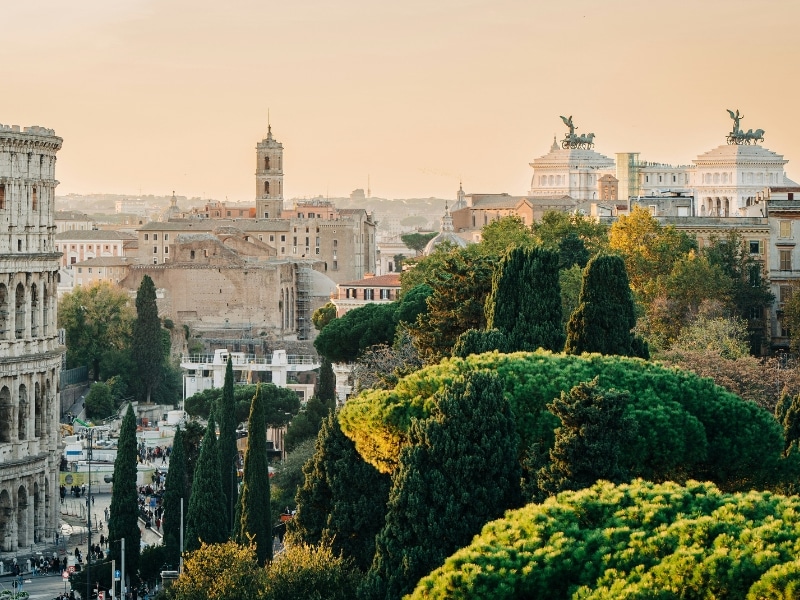
Rome: 3 Days
Head north to Rome and park the car for the duration of your stay. Three days gives you enough time to see the Colosseum and Roman Forum, visit Vatican City and explore the historic centre around the Pantheon, Piazza Navona and Trevi Fountain. Rome rewards walking, so choose a central hotel and use public transport for the longer journeys.
Where to stay: Hotel Artemide is centrally located on Via Nazionale, within walking distance of many of Rome’s major sights, with stylish rooms, a rooftop restaurant and spa.
Where to camp: hu Roma Camping in Town has dedicated motorhome pitches just 5km from the Vatican, with a shuttle and public transport connections for easy access to central Rome.
Tuscany: 5 Days
Leave Rome and head north into Tuscany, using Siena as a base for five days exploring the region. Spend time discovering Siena itself, then head into the surrounding countryside to explore some of Tuscany’s beautiful hill towns and villages.
Drive through the Val d’Orcia along the SP146, stopping at Pienza, Montepulciano and Montalcino, and visit Bagno Vignoni, with its unusual thermal-water piazza. San Quirico d’Orcia is another easy stop along this route, while the ancient hill village of San Gimignano makes a great day trip north of Siena.
This is a section where having your own car really pays off, giving you the freedom to explore the smaller towns, vineyards and countryside at your own pace.
Where to stay: Hotel Athena is close to Siena’s historic centre and has free private parking, making it particularly convenient when you’re exploring Tuscany by car.
Where to camp: Camping Siena Colleverde has dedicated motorhome pitches just 2.5km from Siena’s historic centre, with regular buses making it easy to explore the city without moving your motorhome.
Florence: 2 Days
From Siena, head north to Florence for two days exploring the birthplace of the Renaissance. Visit the Duomo, Uffizi Gallery and Accademia, cross the Ponte Vecchio and wander through the Oltrarno neighbourhood on the opposite side of the Arno. For one of the best views across Florence, head up to Piazzale Michelangelo around sunset.
Where to stay: Hotel L’Orologio is a stylish hotel on Piazza Santa Maria Novella, within easy walking distance of the Duomo, Ponte Vecchio and Florence’s other main sights.
Where to camp: hu Firenze camping in town has dedicated motorhome pitches just 3km from central Florence, with easy bus and cycle access to the historic centre.
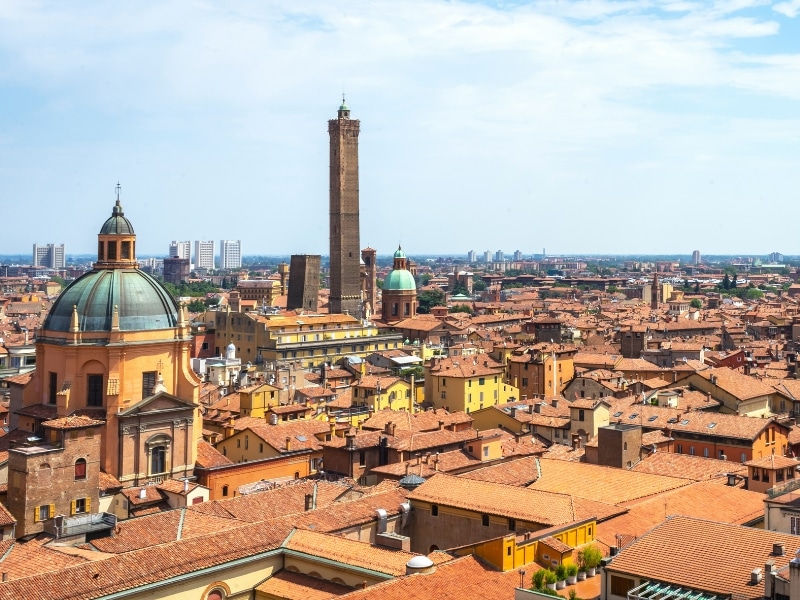
Bologna: 1 Day
Continue north to Bologna, where one day is enough to get a taste of one of Italy’s great food cities. Take a self-guide food tour and explore Piazza Maggiore, wander beneath the city’s famous porticoes and spend plenty of time sampling the food Bologna and Emilia-Romagna are known for, including tortellini, mortadella and Parmigiano Reggiano.
Where to stay: Hotel Metropolitan is a contemporary hotel in the historic centre, close to Piazza Maggiore and the main sights, with a rooftop terrace overlooking Bologna.
Where to camp: Bologna Easy Camping Village has serviced motorhome pitches in a green setting close to Bologna, with easy bus access to the historic centre.
Venice: 2 Days
Leave the car behind again for two days in Venice. Explore St Mark’s Square and the Doge’s Palace, cross the Grand Canal and spend some time wandering away from the busiest streets into quieter neighbourhoods such as Cannaregio and Dorsoduro. On your second day, take the vaporetto out to Murano and colourful Burano, or simply spend more time exploring Venice itself.
Where to stay: Hotel Antiche Figure overlooks the Grand Canal opposite Santa Lucia station, making it particularly convenient if you park outside the historic centre and arrive in Venice by train.
Lake Garda: 3 Days
After Venice, head west to Lake Garda for three days beside Italy’s largest lake. Explore Sirmione and its castle in the south, visit the wine town of Bardolino and follow the lakeshore north towards Malcesine and Riva del Garda, where the scenery becomes increasingly mountainous. Ferries are a useful way to explore different parts of the lake without spending all day driving on the busy lakeside roads.
Where to stay: Hotel Du Lac et Bellevue in Bardolino has a lakeside location, swimming pools and parking, and makes a good base for exploring the eastern and southern shores of Lake Garda.
Where to camp: Camping Fusina has motorhome pitches overlooking the Venetian Lagoon and a regular ferry service that takes you into the historic centre of Venice in around 15 minutes.
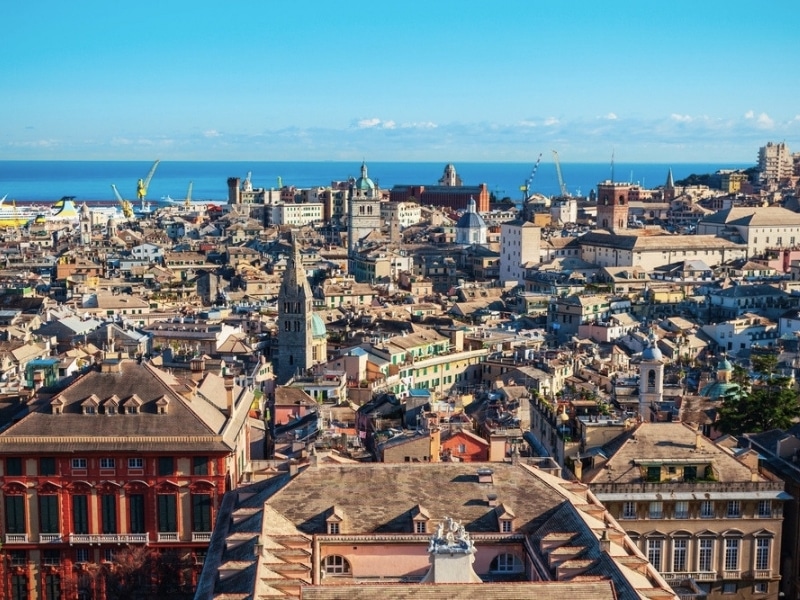
Genoa: 2 Days
From Lake Garda, head southwest to Genoa for the final Italian stop on this road trip. Allow two days to explore the maze of narrow caruggi in the historic centre, the grand palaces of the UNESCO-listed Strade Nuove and the revitalised Old Port. Genoa is also the place to eat pesto Genovese and focaccia before crossing back into France for the final section of the route.
Where to stay: NH Collection Genova Marina is on the waterfront in Genoa’s Old Port, within walking distance of the historic centre and with parking available nearby.
Where to camp: Camping San Nicolò is a lakeside campsite with spacious motorhome pitches just a short walk from the centre of Bardolino.
Gorges du Verdon: 3 Days
Cross back into France and head into Provence for three days at the Gorges du Verdon. Drive the spectacular roads around the gorge, stopping at the viewpoints along the way, and spend some time on the turquoise water by kayak, canoe or pedalo. Visit Moustiers-Sainte-Marie and, if you’re travelling when the lavender is in bloom, add a drive across the nearby Valensole Plateau.
Where to stay: Hôtel Le Colombier in Moustiers-Sainte-Marie has a swimming pool, hot tub and private parking, and is well placed for exploring both the gorge and the village.
Where to camp: Camping Le Vieux Colombier is just 300 metres from Moustiers-Sainte-Marie, with motorhome pitches and an excellent location for exploring Lake Sainte-Croix and the Gorges du Verdon.
Cassis: 3 Days
Continue south to the Mediterranean and spend three days in Cassis. Explore the harbour and old town, then get out into Calanques National Park by boat, kayak or on foot. The drive along the Route des Crêtes towards La Ciotat is another highlight, with spectacular viewpoints from Cap Canaille across the Mediterranean and coastline.
Where to stay: Hôtel Les Volets Rouges is in a peaceful setting close to the Calanques, with free private parking and easy access to the walking trails.
Where to camp: Camping Les Cigales has serviced motorhome pitches just a 10-minute walk from Cassis port and beach, with easy access to the Calanques National Park.
Aix-en-Provence: 3 Days
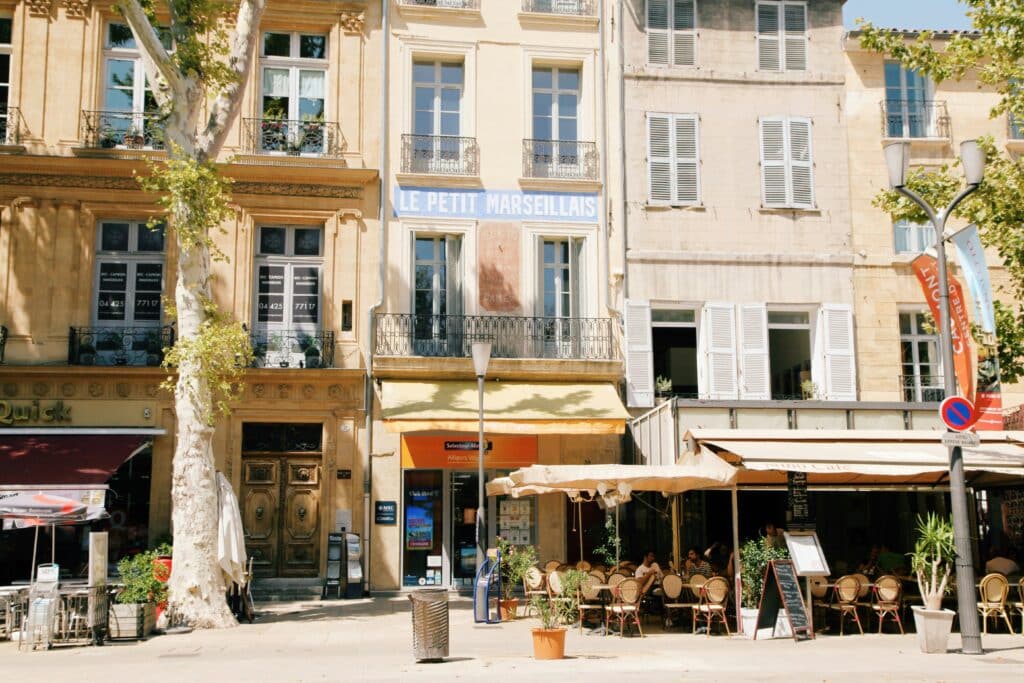
From the coast, head inland to Aix-en-Provence for three days. Wander the old town, explore the markets and cafés around Cours Mirabeau and visit Cézanne’s studio. Having a little longer here also gives you time to explore the surrounding Provençal countryside or simply enjoy a slower few days after the coast.
Where to stay: Hôtel Cézanne is a stylish boutique hotel close to La Rotonde and Cours Mirabeau, putting the historic centre within easy walking distance.
Where to camp: Camping Chantecler has spacious, shaded motorhome pitches on the outskirts of Aix-en-Provence, with regular buses providing easy access to the historic centre.
Fontaine-de-Vaucluse: 3 Days
Continue north into the Luberon to Fontaine-de-Vaucluse, where the River Sorgue emerges from beneath a towering limestone cliff. Visit the spring and explore the village, then use your remaining time to discover more of the Luberon. Gordes, Roussillon and L’Isle-sur-la-Sorgue are all easy additions from here and make this a much more rewarding three-day stop.
Where to stay: Hotel du Poète occupies a former watermill beside the River Sorgue, with riverside gardens, a swimming pool and private parking.
Where to camp: Camping-Car Park Fontaine-de-Vaucluse has motorhome pitches beside the River Sorgue, just 500 metres from the centre of Fontaine-de-Vaucluse.
La Roque-sur-Cèze: 3 Days
Head west to La Roque-sur-Cèze, one of France’s Plus Beaux Villages, set above the Cascades du Sautadet. Explore the village and waterfalls, then use it as a base for discovering this quieter corner of southern France. Nearby Montclus is another beautiful stone village, while the Gorges de l’Ardèche can be reached on a longer day trip.
Where to stay: Camping-Hôtel Les Cascades is close to La Roque-sur-Cèze and offers accommodation within easy reach of the village and Cascades du Sautadet.
Where to camp: Camping-Car Park La Roque-sur-Cèze has 28 shaded and sunny motorhome pitches beside the River Cèze, just across the bridge from the village and close to the Cascades du Sautadet.
Cévennes & Saint-Jean-du-Gard: 3 Days
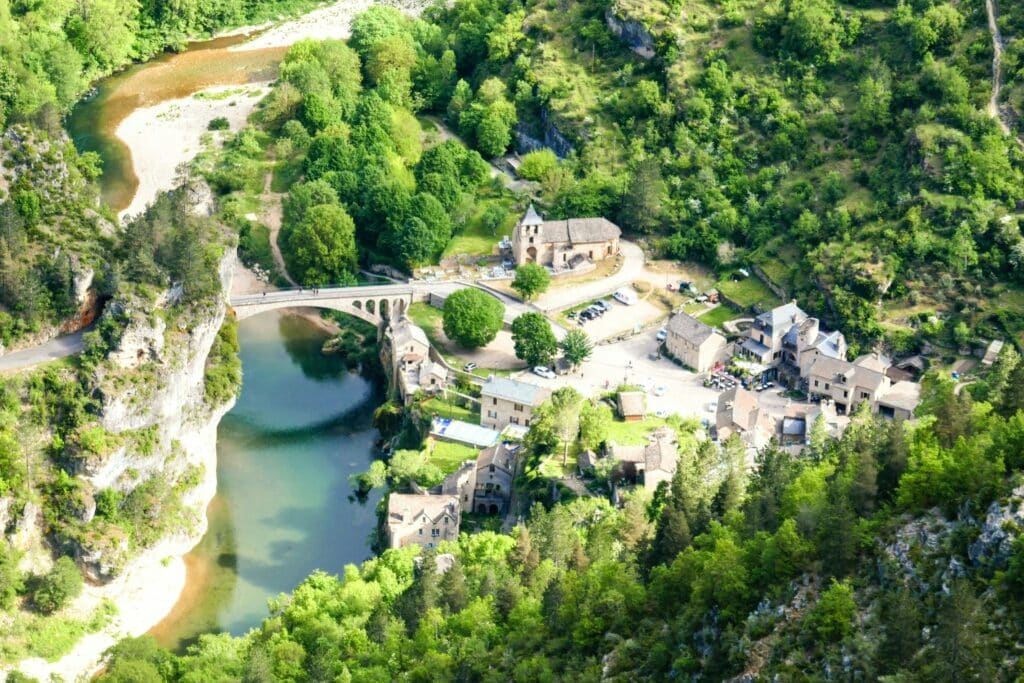
Continue into the Cévennes for three days of mountain roads, walking and small villages. Ride the heritage steam train from Saint-Jean-du-Gard to Anduze, visit La Bambouseraie and explore some of the roads and trails through Cévennes National Park. With much less traffic than Provence and the Mediterranean coast, this is a lovely place to slow down before the final leg north.
Where to stay: La Maisonnée Verte near Anduze offers peaceful accommodation with a swimming pool and a good location for exploring Saint-Jean-du-Gard and the southern Cévennes.
Where to camp: Camping Mas de la Cam has spacious, shaded motorhome pitches beside the River Gardon at Saint-Jean-du-Gard, making it an excellent base for exploring the Cévennes National Park.
Millau: 3 Days
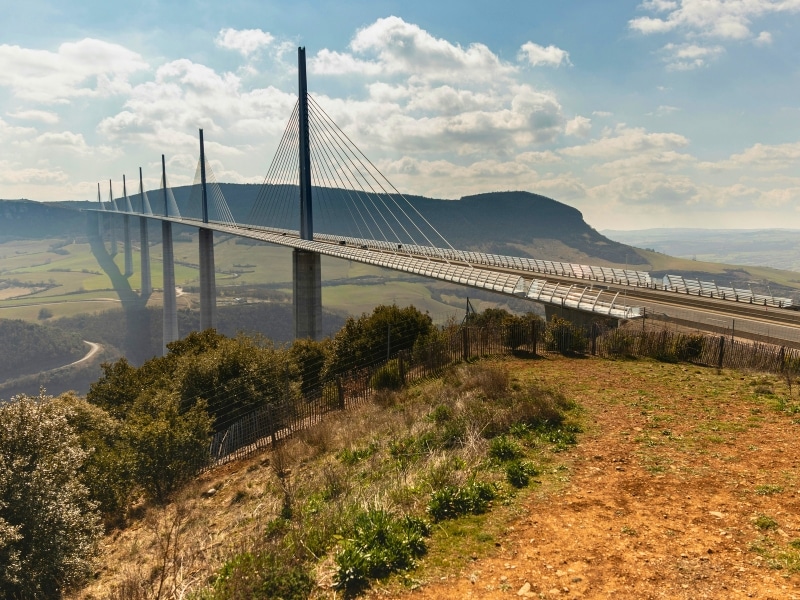
The final major stop is Millau, dominated by the extraordinary Millau Viaduct high above the Tarn Valley. Visit one of the viewpoints for the best views of the bridge, then explore the Tarn and Dourbie gorges by car, on foot or by kayak. You can also visit the nearby Roquefort caves to learn how the famous blue cheese is produced.
From Millau, the A75 and A71 provide a straightforward route north towards Paris, where the 6,300km loop comes to an end.
Where to stay: Cévenol Hôtel is close to central Millau and has a swimming pool and private parking, making it a convenient final overnight base before the drive north.
Where to camp: Camping Millau Plage has spacious motorhome pitches beside the River Tarn, just 3km from central Millau and within easy reach of the Millau Viaduct.
From Millau, the A75 and A71 provide a straightforward route north through France. If you hired your car in Paris, continue to the capital to complete the loop and return your vehicle. If you’re driving your own vehicle from the UK, continue north to Calais for LeShuttle or the Dover ferry, or head to Caen for your return ferry crossing.
Driving in Europe
Driving through six European countries means dealing with different toll systems, speed limits, low-emission zones and requirements for equipment carried in your vehicle. Rules can vary between countries, so check the current requirements for each country before you travel.
If you’re driving a UK-registered vehicle, make sure you have your driving licence, vehicle registration document and appropriate insurance. You may also need a UK identifier on your vehicle, depending on what is displayed on your number plate.
All six countries on this itinerary drive on the right. If your headlights cannot be adjusted for driving on the right, you may also need headlight beam converters.
Tolls and road charges vary considerably along the route. France, Italy and Croatia have extensive toll-road networks, while Austria and Slovenia use motorway vignette systems. You’ll also encounter low-emission zones and other local driving restrictions, particularly around major cities, so these are worth checking before each stage of your journey.
Although all six countries on this itinerary are within the Schengen Area, temporary border controls can still be introduced. Keep your passports readily accessible when crossing international borders.
Requirements for warning triangles, reflective jackets, first-aid kits and other safety equipment also vary by country. If you’re hiring a car, check what is already supplied before leaving the rental depot.
For current country-by-country rules, documents, tolls, vignettes and driving requirements, see our comprehensive Driving in Europe guide.
More Road Trip Posts to Explore
Best UK Road Trips: 18 Scenic Routes to Explore

Portugal Road Trip: The Ultimate 10 Day Itinerary
Europe Road Trip: 28 Epic Routes You Can Actually Drive
Germany Road Trip: 12 Unmissable Routes
France Road Trip: 13 Amazing Itineraries
Driving in the Alps: Top Tips & Best Routes
Love it? Pin it!