
This post may contain affiliate links, from which we earn an income. Click here to read our affiliate policy.
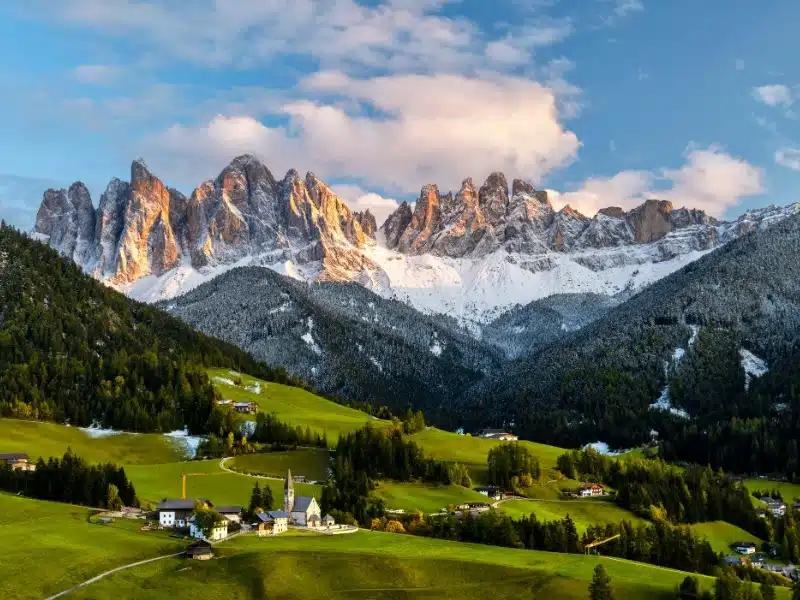
The Dolomites are made for road trips. Towering limestone peaks rise above emerald valleys, winding mountain passes connect small Alpine villages, and turquoise lakes sit beneath some of Italy’s most dramatic mountain scenery. Recognised as a UNESCO World Heritage Site, the region combines exceptional driving with world-class hiking, cycling and skiing.
We spent a month exploring the Dolomites in summer, driving many of the region’s most scenic roads and seeking out its best viewpoints, mountain passes, lakes and Alpine towns. This tried-and-tested 7-day Dolomites road trip brings together the highlights of that trip, along with practical driving advice, the best things to see and do, where to stay and everything you need to plan your route through the Italian Alps.
Dolomites Road Trip: Key Facts
Route: The Gap Decaders’ 7-day Dolomites road trip travels from Bolzano to Canazei, Cortina d’Ampezzo and Carbonin Schluderbach, taking in some of the region’s best mountain passes, Alpine lakes and scenic drives.
Duration: 7 days, with time for sightseeing, hiking and stops along the route.
Best for: Mountain scenery, high passes, Alpine lakes, hiking and scenic driving.
First-hand experience: The Gap Decaders spent a month exploring the Dolomites and drove the roads included in this itinerary.
Enjoy The Gap Decaders? Add us as a preferred source on Google.
Planning tools we actually use for Italian road trips
Dolomites Road Trip Map

Dolomites 7-Day Road Trip Itinerary
We followed this route through the Dolomites, admiring the mirror lakes, alpine meadows and soaring peaks as we drove. Stopping usually involved delicious local foods and the odd glass of Italian wine or beer to wash it all down!
Our route hits all the highlights of this stunning mountain range, and a few lesser known places too. From the small mountain towns typical of the region, to activites like hiking and biking and the fantastic network of cable cars, we fell in love with the Dolomites, and hope you will too!
Route: Bolzano → Canazei → Cortina d’Ampezzo → Carbonin Schluderbach
Optional Side Trip: Val di Funes
Distance: ~142 km (88 miles)
Duration: 7 days (allow 10-14 days if adding hikes and optional detours)
Best time to go: Late June to early October (July and September offer the best combination of open mountain passes, pleasant weather and fewer crowds than August)
Best for: Spectacular mountain scenery, scenic driving, hiking, photography and outdoor adventures
Day 1: Bolzano
Highlights
📍 Walther Square
📍 Via dei Portici
📍 South Tyrol Museum of Archaeology (Ötzi)
📍 Runkelstein Castle
📍 Bolzano’s cafés and restaurants
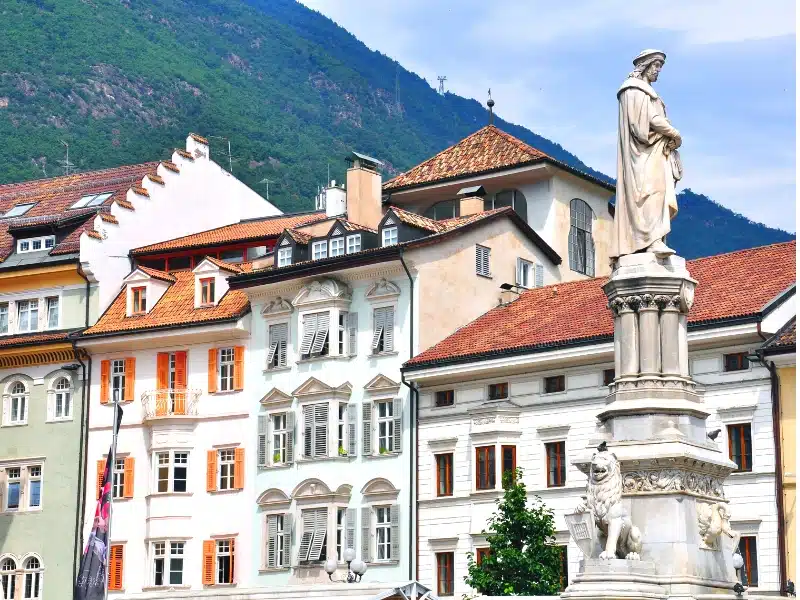
Considered a bridge between northern and southern Europe and known as the gateway to the Dolomites, Bolzano or Bozen in German, is a city in the Trentino-Alto Adige region of northern Italy that has a rich history and a unique blend of Italian and German-Austrian culture.
Bolzano has been an essential location for trade and movement across the Alps for centuries, and its strategic position is evident in its architecture. One of the city’s most impressive landmarks is Runkelstein Castle, which dates back to the 13th century and is a testament to Bolzano’s strategic importance.
Visitors to Bolzano can explore the city’s 12th century architecture by walking along the Via dei Portici, a beautiful street lined with arches and colorful buildings. The Piazza delle Erbe is another must-see destination, with its vibrant market and historic buildings.
Bolzano is also home to the South Tyrol Museum of Archaeology, which houses the famous mummy of Ötzi, the iceman who lived over 5,000 years ago between 3350 and 3105 BCE. Ötzi was discovered in 1991 in the Ötztal Alps at the border between Austria and Italy and is Europe’s oldest known natural human mummy, offering an unprecedented view of Chalcolithic or Copper Age Europeans.
In addition to its history and architecture, Bolzano is surrounded by vineyards and fruit and vegetable farms, and visitors can sample the local cuisine at one of the many restaurants and cafés. Think creamy alpine cheeses, local buckwheat pasta called mezzelune, and Speck Alto Adige, the region’s delicious smoked ham.
Where to Stay in Bolzano (1 night)
Upmarket: Castel Hörtenberg is a beautifully restored historic hotel set within walking distance of Bolzano’s old town. Elegant rooms, a peaceful garden, outdoor pool and luxurious spa make it an excellent choice for travellers looking to unwind before or after exploring the Dolomites.
Mid-Range: Hotel Magdalener Hof is a family-run hotel in a quiet hillside setting overlooking Bolzano. Comfortable rooms, a highly regarded restaurant and panoramic views across the city provide a relaxing base while remaining just a short drive from the centre.
Budget: B&B Hotel Bolzano offers clean, modern rooms with free parking and excellent value for money. Located just outside the city centre, it provides an affordable and convenient base for starting or finishing your Dolomites road trip.
Is this your first time visiting Italy? Get all the information you need in our Italy Travel Guide, including what to pack, the best time of year to go, getting there, and practical tips to help you have the best trip!
Day 2: Bolzano to Canazei
Highlights
📍 Great Dolomites Road (SS241)
📍 Rosengarten (Catinaccio) massif
📍 Lake Carezza
📍 Marmolada views
Distance: 59 km (37 miles)
Drive time: 1 hour 30 minutes (without stops). In reality this is a full day’s sightseeing because you’ll stop at Lago di Carezza and numerous viewpoints.
Pick up the SS 241 heading southeast from Bolzano and be prepared to be blown away!
After a series of tunnels and balconies, you’ll emerge into the Dolomites proper. The first of the pale mountains to come into sight is the Latemar massif and the distinctive Torre di Pisa, both of which make it hard to believe that the Dolomites were once a calm and shallow sea!
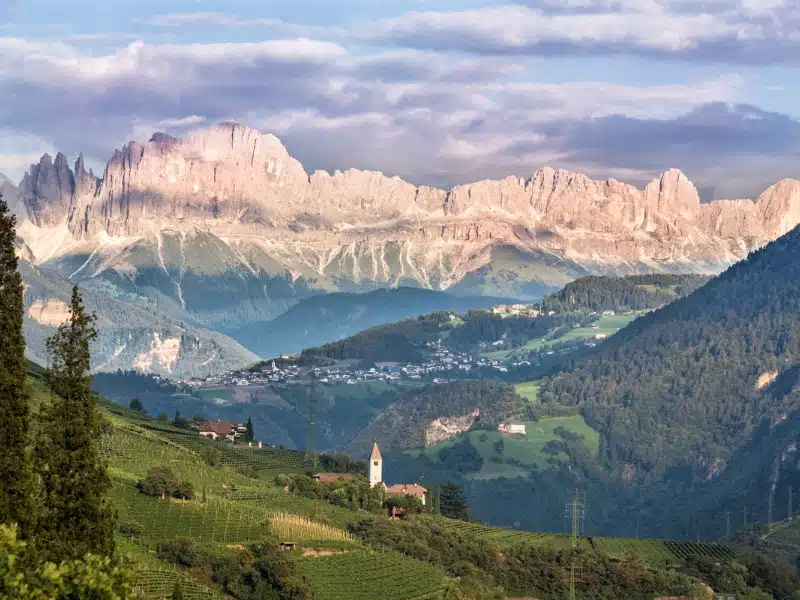
As you twist and turn on the road, the mighty Catinaccio rises to take your breath away. Also known as the Rosengarten group in German, this massif is a particular shade of pink owing to the presence of the mineral dolomite, which absorbs the sunset and glows pink in the evening light.
The name, which means ‘rose garden’ in German, refers to the legend of King Laurin and his rose garden, a traditional story that explains the colorful appearance of the mountain range.
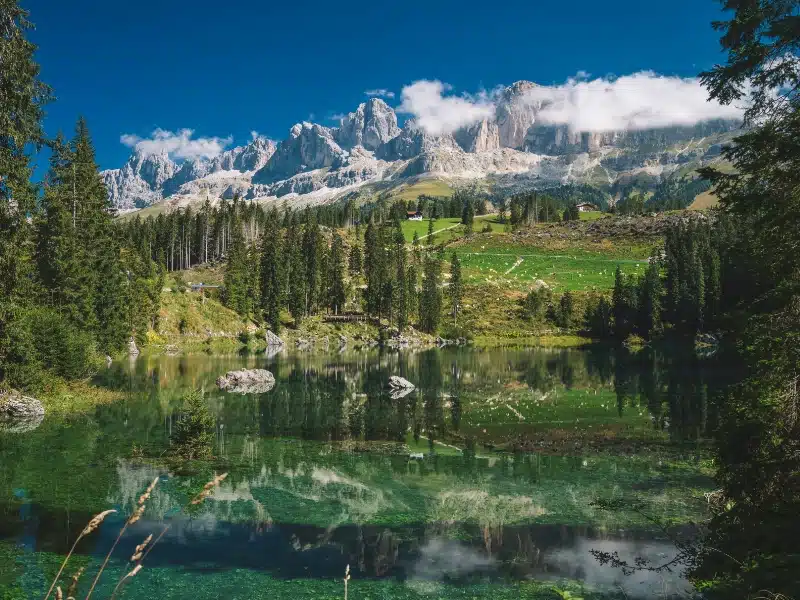
After a series of tight turns along the Val d’Ega, you’ll pass Lago di Carezza, a small but beautiful lake that is impossibly emerald in color. The crystal clear waters which reflect the sunlight give rise to the name ‘Lake of the Rainbow’, but there is also a legend of mermaids, magicians, and wizards attached to the pool.
Carezza Lake has no tributaries but is fed by an underground spring bringing water from the peaks of Latemar. A circular path encloses the small lake, taking around 20 minutes to walk from the large parking lot on the opposite side of the road.
Soon after, you’ll pick up the SS 48 in Vigo di Fassa. The road follows the Val di Fassa through Possi di Fassa to Canezei, sandwiched between Catinaccio to the west and Marmolada to the east. The Dolomite’s highest peak at 10,965ft / 3,342m above sea level, Marmolada is unsurprisingly known as the ‘Queen of the Dolomites’.
You’re now surrounded by dramatic sheer peaks topped by sharp and craggy rock formations, which sit amongst verdant green meadows sloping down to the bubbling River Avisio, which is followed by the Great Dolomites Road.
In front of you as you drive is a real feast for the eyes; the huge Sella massif, topped by Piz Boè at 10,338ft / 3,151m and slightly to the left is Sassalungo, or ‘long rock’ the highest peak of the Langkofel group.
You’ll arrive in Canazei with enough time to explore the lively town before checking into your hotel and planning the next few days.
Where to Stay in Canazei (3 nights)
Upmarket: Locanda degli Artisti Art Hotel is a stylish boutique hotel that combines contemporary design with traditional Alpine charm. Individually decorated rooms, excellent service and an outstanding restaurant make it a memorable place to stay in the heart of Canazei.
Mid-Range: Hotel Dolomiti Schloss is a welcoming family-run hotel with spacious rooms, a wellness area and spectacular mountain views. Its central location makes it an ideal base for exploring the surrounding Dolomite passes, hiking trails and ski areas.
Budget: Chalet Margoni offers comfortable apartments and rooms in a peaceful setting just outside Canazei. With well-equipped accommodation, free parking and easy access to the mountains, it provides excellent value for travellers exploring the Dolomites by car.
Day 3: Canazei Hiking and Biking
Highlights
📍 Col Rodella cable car
📍 Sassolungo views
📍 Hiking or mountain biking
📍 Dòlaondes Spa
📍 Canazei restaurants
Canazei is the central hub of the Val di Fassa and the perfect place to stop and explore for a few days. Surrounded by so many mountains it can be hard to make a choice about where to go and what to do!
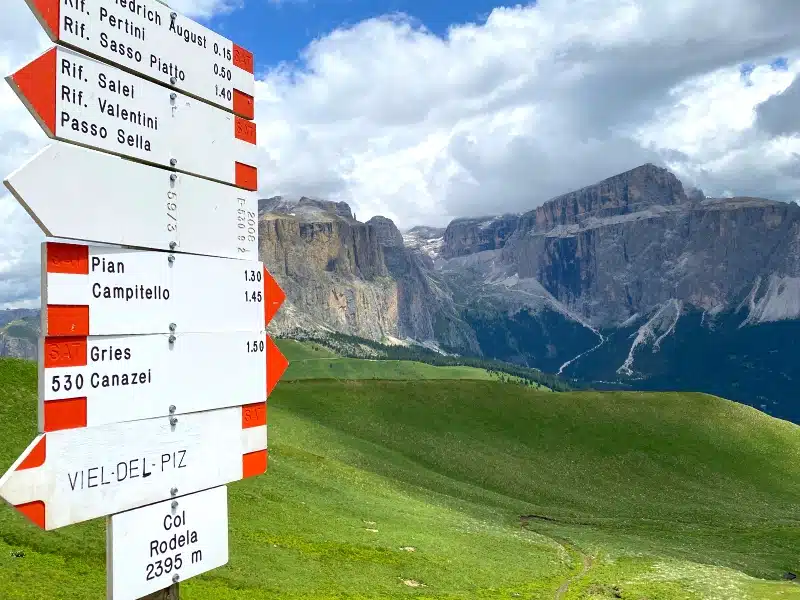
There are lots of cable cars, gondolas, and chairlifts, many of which run in the summer to take hikers and mountain bikers high into the mountains. The network, run by Val di Fassa Lift is extensive and you can take one lift up, hike, or bike to another lift and head down. This means many of the Dolomites hikes have minimal elevation gain, so you can take a hike whatever your level of fitness.
The gondola from Campitello di Fassa to Col Rodella is a great option if you want a taste. With a traditional refugio bar and restaurant at the top and magnificent views of Sassalungo and the Sella group, you can take a gentle walk, a demanding hike, or pick up another cable car across the valley.
There are also bike and electric bike hire outlets, meaning you can cycle the riverside path, the 30 mile / 49km Pista Ciclopedonale, between Canazei and Molina di Fiemme. From Canazei, it’s downhill and there is an 800m elevation gain on the return. Take e-bikes and you’ll be able to do the return ride in a day and not even notice the hills!
After all that exercise we highly recommend visiting Dolaondes, ideal for swimming, pampering, and relaxing.
From there, head into town to one of the many bars and restaurants where you can grab a pizza, or try local dishes. We recommend Osteria La Montanara, a Tripadvisor Travelers Choice serving local food, wine, and beer.
Day 4: Canazei and Sella Ring
Highlights
📍 Passo Pordoi
📍 Sass Pordoi cable car
📍 Passo Campolongo
📍 Passo Gardena
📍 Passo Sella
Distance: 63 km (39 miles)
Drive time: 2 hours (without stops). Realistically this is a full-day drive with cable cars, viewpoints and walks.
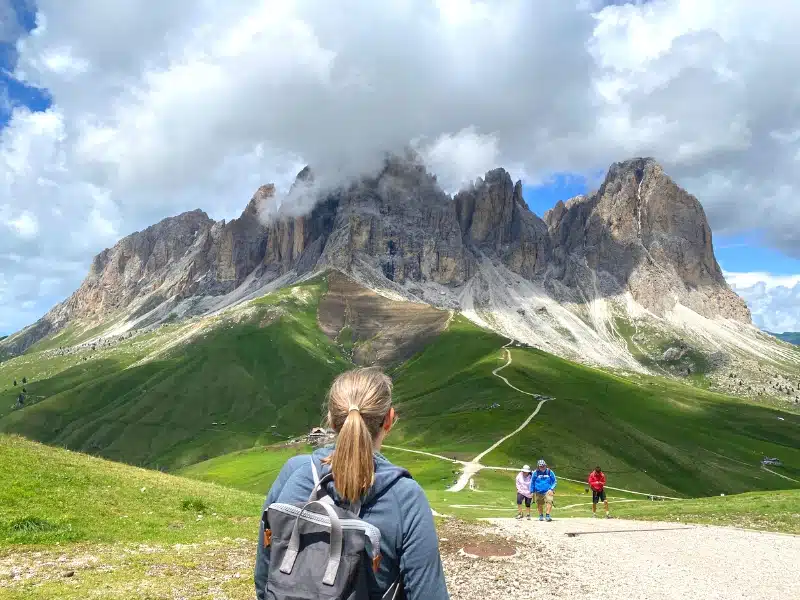
The famous ski loop around the Sella Group in winter known as the Sellaronda becomes the Sella Ring in summer, an incredible loop of four paved mountain passes, which you can easily drive in a day.
The Passo Pordoi, Passo Campolongo, Passo Gardena, and Passo Sella are each different but no less spectacular. Along the route there are plenty of places to stop and enjoy a bite to eat, lots of cable cars for a quick trip higher into the mountains, and plenty to see.
Passo Pordoi
The impressive Pordoi Pass tops out at 7,346ft / 2,239m and is one of two passes on the Great Dolomites Road, the other being the Passo Falzarego, which you’ll be driving in a few days.
As you leave Canazei, you’ll start climbing quickly to a fork in the road. The left fork takes you to the Sella Pass, which you’ll also be driving later today. For now, you’ll be taking the right fork to the Passo Pordoi.
A feat of engineering with 33 tornante, or hairpin bends, the road snakes its way through alpine meadows filled with wildflowers and the ever-present towering Dolomite peaks.
Beloved by cyclists and bikers, the Pordoi Pass is usually busy in summer, and the actual pass itself, between the Sella massif and Sass Becé, is lined with shops, car parks, and cafés, and the Sass Pordoi cable car station.
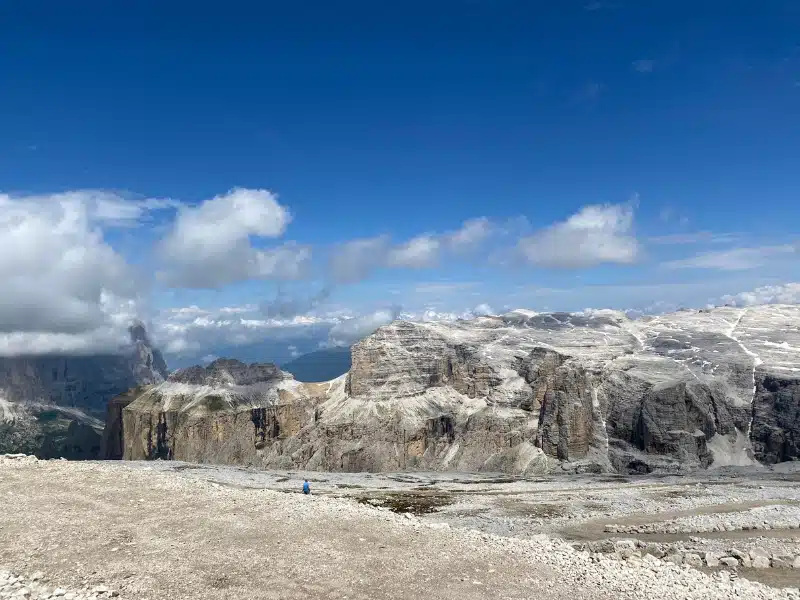
We highly recommend stopping here and taking the Pordoi cableway to the Terrace of the Dolomites on Sass Pordoi, at 9,642ft / 2,939m. The cable car is a technical masterpiece balanced on the edge of a large lump of rock and the five minute journey there is breathtaking in itself, but when you arrive at the top prepare to be even more impressed!
Well above the tree line, the vast lunar-like landscape stretches for over 2.5 miles / 4km to the north and 1.9 miles / 3km to the west. It really does feel like you’re on the moon, with rocky craters and long gorges deep into the massif.
From the cable car station, it’s a fairly challenging hike to Piz Boè with some via Ferrata elements such as steps and rungs to assist you. If you don’t have the four hours or so you’ll need, it’s interesting to wander around the area in the vicinity of Sass Pordoi and enjoy the glorious views.
On the return, you should pop into the Dolomiti Museum 1915-1918 which chronicles the Great War in the Dolomites and the battles on Col di Lana and Marmolada. A little further along the road is the Germanic Memorial of Passo Pordoi built in 1959 to commemorate German-Austrian war dead from both WWI and WWII.
Once you start on the descent from the Pordoi Pass, the landscape softens a little and the road seems blissfully quieter.
Passo Campolongo
The gentlest of today’s mountain passes, the Campolongo Pass is reached by taking the SP 244 from Arabba. Reaching and elevation of 6,151ft / 1,875m, the pass is more of a steady rise than a switchback road.
An area of idyllic gentle slopes and moderate gradients, you can hike or take a cable car higher into the mountains and Cherz’s Plateau for panoramic views of Monte Pelmo and Marmolada and Piz dles Cunturines, or the strange coral-like structures of Bec de Roces.
The views as you come down from Passo Campolongo to Corvara in Badia Kurfar are some of the best along the loop, with Sassongher in the Puez Group to the north and the Sella Group to the west.
Passo Gardena
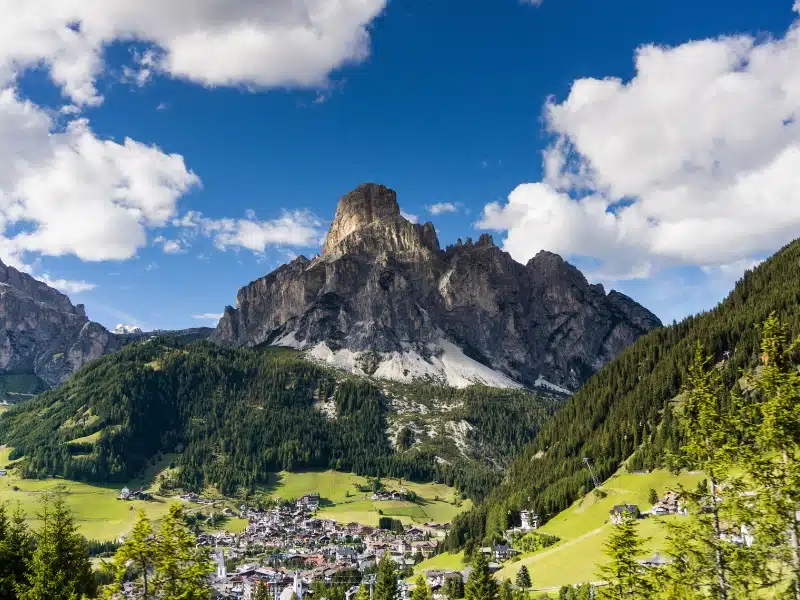
Our favourite of these four passes, the Gardena Pass (the SS 243 as you leave Corvara) dips and swoops its way between the Sella massif and Pizes de Cir, with sheer rock walls, grassy meadows, and epic views as your companion along the way.
Connecting Sëlva in the Val Gardena on the west side with Corvara in the Val Badia on the east, the landscape changes as you pass through gently rolling topography to unforgiving cliffs and stony riverbeds.
Rising to 7,008ft / 2,136m above sea level and encompassing 17 hairpin bends, this pass is a truly breathtaking drive.
There are lots of stopping places for photos and many hiking opportunities – either on foot from the road or by utilizing the seven different cable car stations along the route.
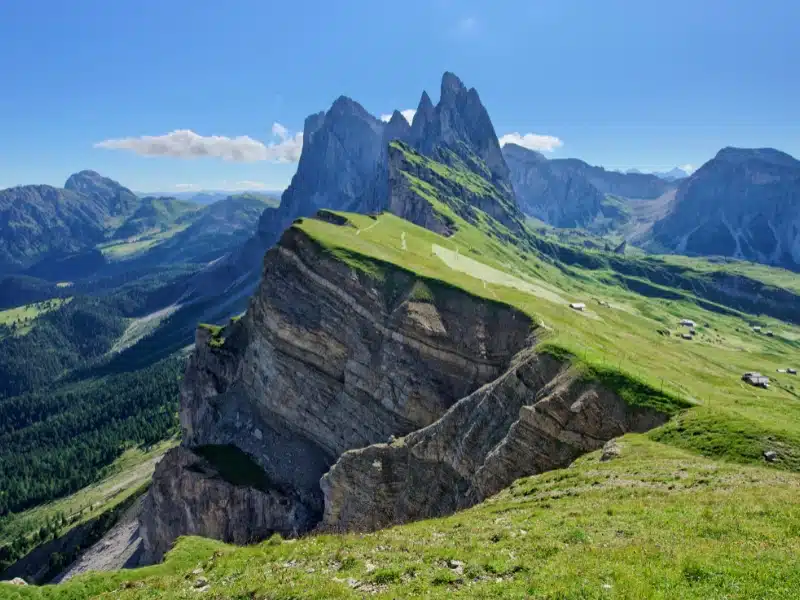
One of our favorite hikes is to the Seceda Ridgeline, a Dolomites icon, which you can access from the Ortisei-Furnes cable car in Ortisei. You can make the Seceda hike anything from 6 miles / 9km to less than a mile, depending on which cable car you take.
Stop for lunch at Hotel Chalet Gerard, where you can enjoy local mountain dishes on the terrace with the most incredible view!
Passo Sella
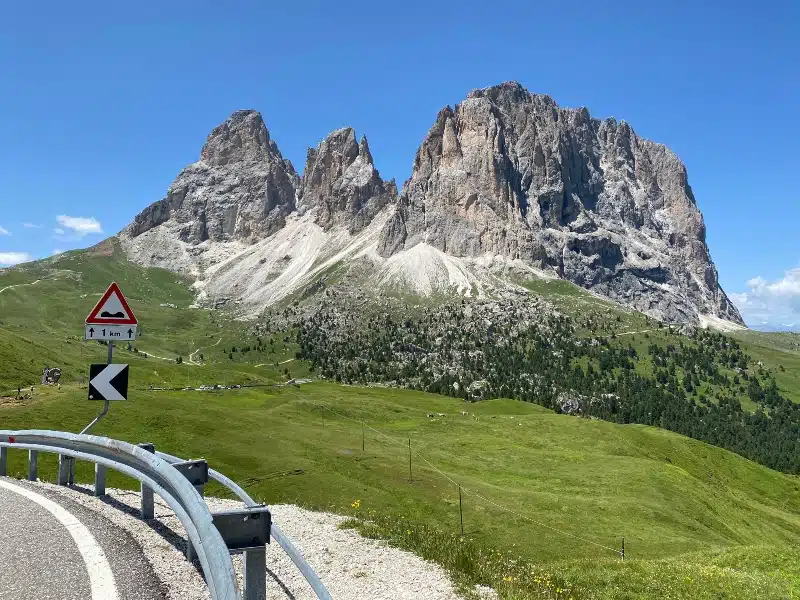
The daddy of this quartet of passes, the Sella Pass, located on a grassy saddle that separates Sassolungo from the Sella Group, hits an impressive 7,369ft / 2,246m of altitude. The pass connects Plan De Gralba with Canazei as it skirts along the edge of Alpe di Siusi, the largest alpine meadow in Europe.
One of the Dolomite’s most famous passes with a whopping 32 hairpin bends, some sections of the SS 242 road have a 12.1% gradient making this a fabulous drive, with fantastic views of the nearby Sassolungo Group and its distinctive towers of rock. Because of its close proximity to this mountain group, the Sella Pass makes the perfect jumping-off spot to explore the area.
Make a stop at Cittá Dei Sassi just before the pass, where there are countless boulders of all shapes and sizes which are great fun for climbing and bouldering. There are plenty of hikes from here, or you can pick up the cable car from the Sasso Pass to the Rifugio Toni Demetz hut at 8,858ft / 2,700m and start your hike from there.
Optional Side Trip: Val di Funes
Additional distance from Canazei: approximately 115 km (71 miles) return
Additional drive time from Canazei: approximately 2 hours 30 minutes return
Highlights
📍 Santa Maddalena Church
📍 Church of St Johann in Ranui
📍 Panoramaweg Trail
📍 Sunnseitenweg Trail
📍 Odle mountain views
One of the most photographed valleys in the Dolomites, Val di Funes sits in the shadow of the mighty Puez-Odle massif and offers a surprisingly slower pace and maybe a more authentic experience than busier parts of the wider Dolomites.
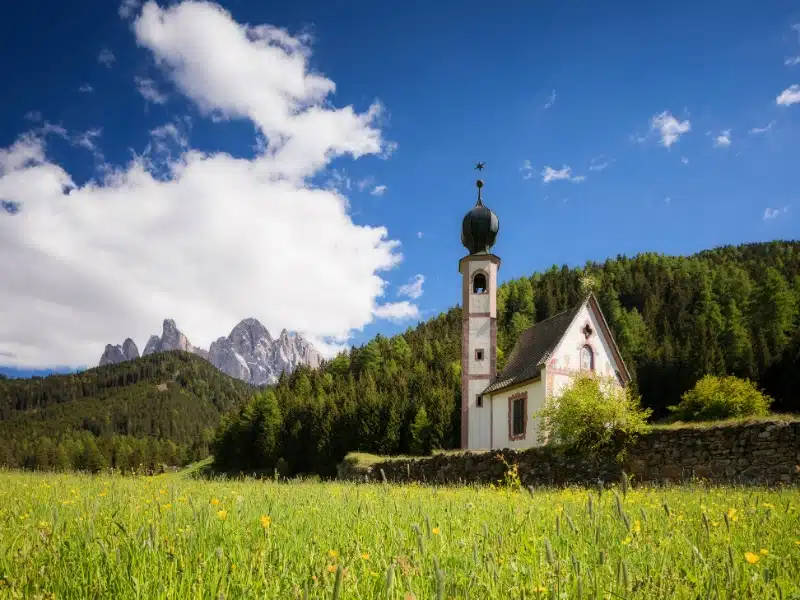
Must-sees include the Insta-worthy Baroque Santa Maddalena Church, also known as the Church of St. Magdalena and the onion-domed Church of St Johann in Ranui, also known as San Giovanni Church. Both of these iconic churches are gloriously positioned, with towering peaks and lush meadows just adding to the gorgeousness!
From a hiking perspective, check out the Panoramaweg and Sunnseitenweg trails which overlook the valley as they meander through the rural landscape. The easy and well signed 7km circular route from Santa Maddalena village will take you a couple of hours, with lots of interest along the way.
Other Italian Road Trips
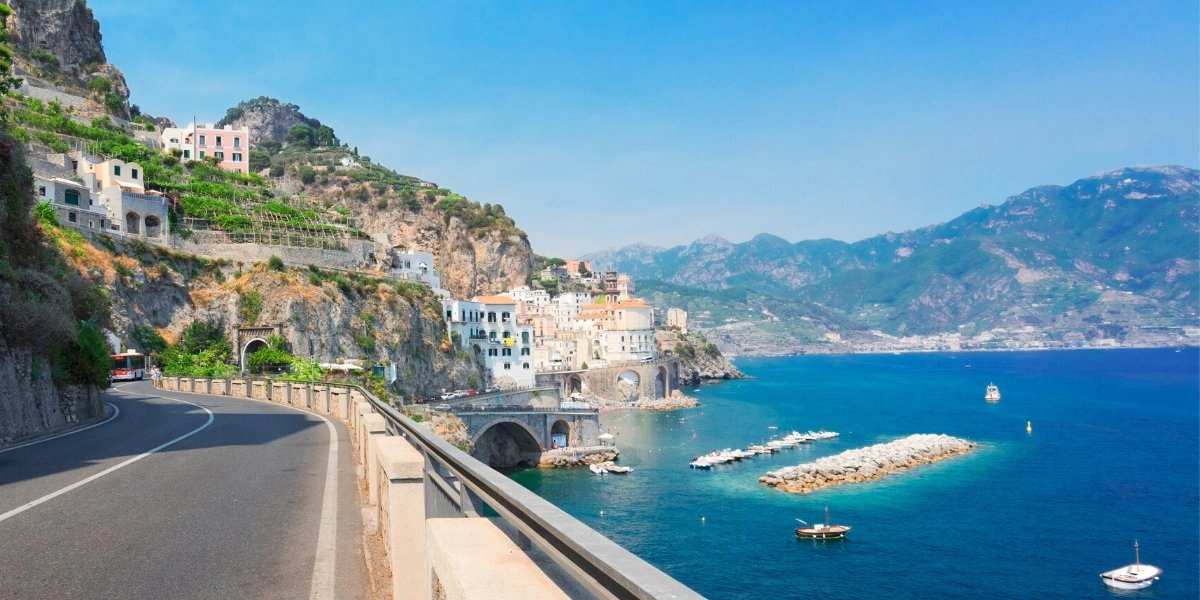


Day 5: Canazei to Cortina d’Ampezzo
Distance: 77 km (48 miles)
Drive time: 1 hour 50 minutes (without stops)
Highlights
📍 Andraz Castle
📍 Passo Falzarego
📍 Lagazuoi cable car
📍 Cinque Torri
📍 Cortina d’Ampezzo
Today’s drive takes you east through some of the most spectacular scenery in the Dolomites. Although the distance is short, allow a full day to enjoy mountain passes, historic sites and panoramic viewpoints before arriving in Cortina d’Ampezzo.
Leaving Canazei, retrace your route over the dramatic Passo Pordoi before continuing towards Arabba. From here, the road skirts beneath Col di Lana before climbing steadily towards Passo Falzarego, one of the most famous mountain passes in the Dolomites.
Just before the climb begins, make a stop at Andraz Castle, a fascinating medieval fortress perched dramatically on a huge boulder above the valley. The restored castle houses a small museum explaining its strategic importance and the history of the Ladin people who have lived in these mountains for centuries.
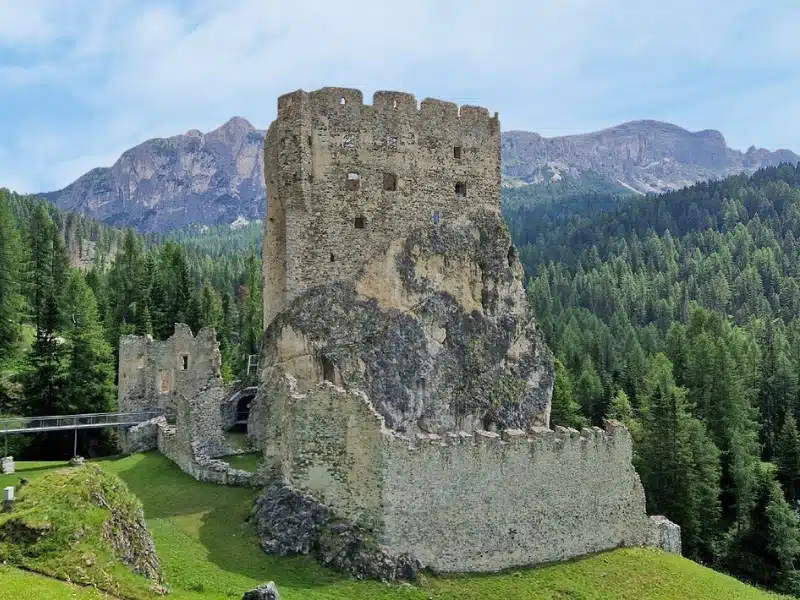
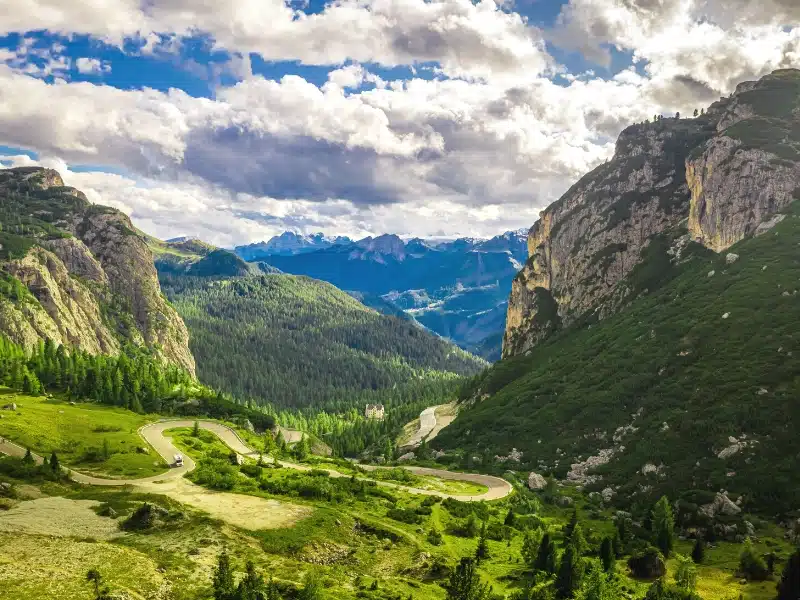
Continuing upwards, the road winds through forests before emerging above the tree line, where sweeping views open across the surrounding peaks. At Passo Falzarego, you can ride the Lagazuoi cable car to one of the finest viewpoints in the Dolomites or, if you’re feeling energetic, tackle the fascinating Lagazuoi Tunnels hike through restored First World War tunnels carved into the mountainside.
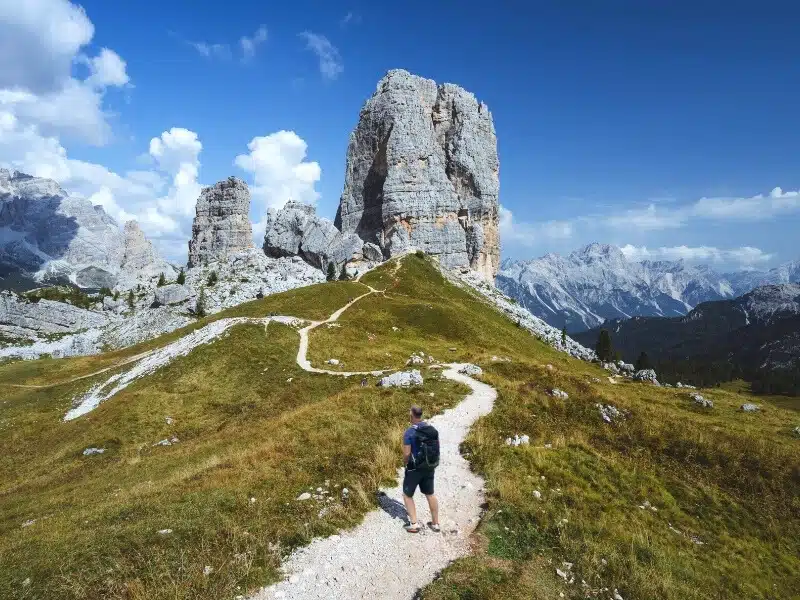
A few minutes further along the road lies one of the Dolomites’ most recognisable landmarks. The distinctive rock towers of Cinque Torri rise dramatically above the surrounding meadows and are easily reached via a gentle walk or by taking the chairlift from Bai de Dones. The area is also home to an excellent open-air museum showcasing preserved First World War trenches and defensive positions.
From Cinque Torri it’s a straightforward drive into Cortina d’Ampezzo, where elegant boutiques, lively cafés and spectacular mountain scenery provide the perfect setting to spend the next two nights.
Where to Stay in Cortina d’Ampezzo (2 nights)
Upmarket: Rosapetra Spa Resort is a luxurious mountain retreat on the edge of Cortina d’Ampezzo, offering elegant rooms, an award-winning spa and exceptional views of the Dolomite peaks. It’s an ideal choice for travellers seeking comfort and relaxation after a day exploring the mountains.
Mid-Range: Franceschi Park Hotel is a charming family-run hotel just a short walk from the centre of Cortina d’Ampezzo. Comfortable rooms, beautiful gardens and attentive service make it a welcoming base for both summer hiking and winter skiing.
Budget: Hotel Des Alpes offers comfortable Alpine-style accommodation with friendly service and easy access to Cortina’s shops, restaurants and outdoor activities. With free parking and excellent value, it’s a great choice for a Dolomites road trip.
Day 6: Cortina d’Ampezzo
Distance: 40 km (25 miles)
Drive time: 35 minutes. Visitors will almost certainly spend the day exploring Lake Misurina and Tre Cime.
Highlights
📍 Lake Pianozes
📍 Cascate di Fanes
📍 Via Ferrata
📍 Freccia nel Cielo cable car
📍 Cortina town centre
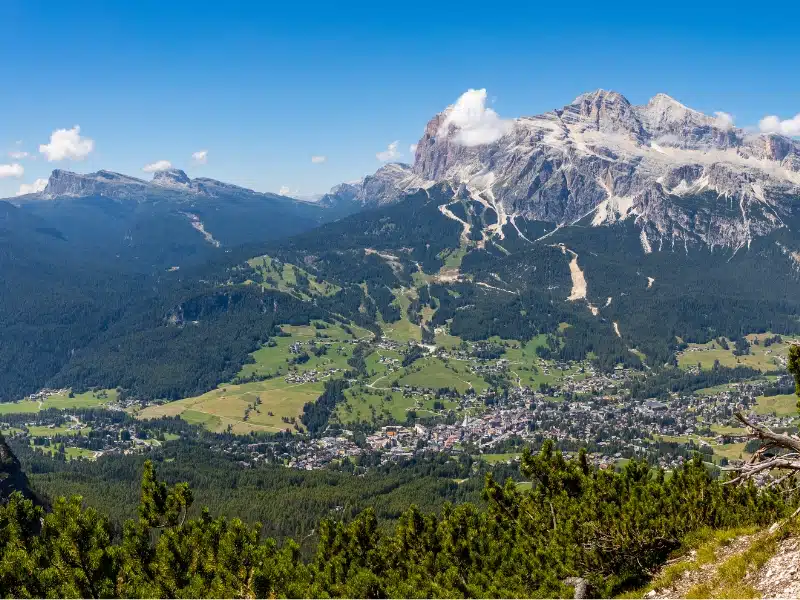
The host town of the Winter Olympic Games Milano Cortina 2026, Cortina is a charming town known for its unique blend of Alpine and Italian cultures and a fantastic base to visit the mountains of the Ampezzo Dolomites.
Located in the center of the Ampezzo Valley, at the top of the Valle del Boite, Cortina straddles the River Boite. The town is ringed by soaring craggy mountains, including Tofane to the west, Pomagagnon to the north, Cristallo to the northeast, Faloria and Sorapiss to the east, and Becco di Mezzodì, Croda da Lago and Cinque Torri to the south.
Monte Antelao, at 10,709ft / 3,264m, is the highest mountain in the Ampezzo Dolomites and the second highest in the Dolomites.
Cortina has some of the best day hikes in the Dolomites, with different levels of difficulty to suit everyone. What they all have in common are fabulous views.
The 3 mile / 5km linear hike from Cortina to Lake Pianozes is a beauty. With minimal elevation, but stunning views and a mirror alpine lake at the end, this 2-3 hour easy hike packs a real punch!
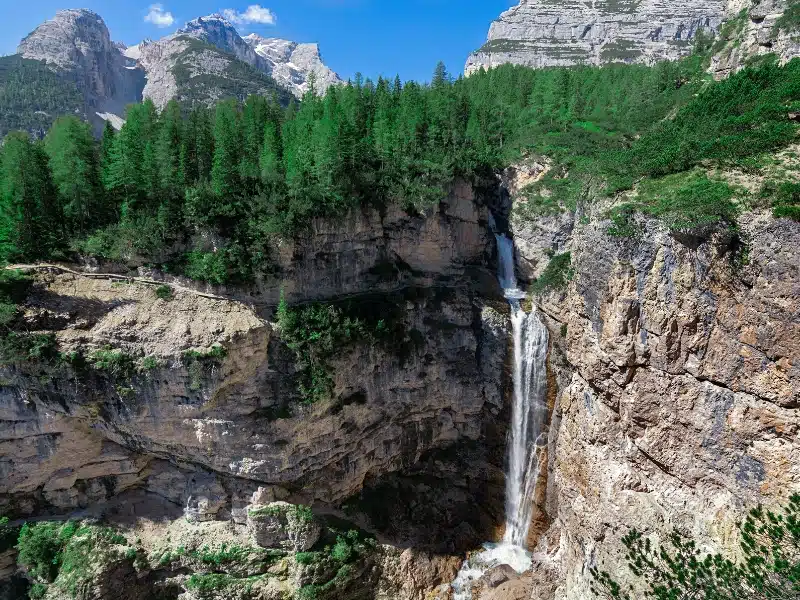
If you like more of a challenge, there is a fantastic via Ferrata to Cascate di Fanes. Italian for ‘iron path’, via Ferrata are climbing routes that utilize steel cables, rungs, and ladders that are fixed to the rock. Climbers affix a harness that allows them to secure themselves to the metal fixture and limit any fall.
The via Ferrata to Fanes Waterfall is suitable for everyone, including beginners and families, and equipment like harnesses and helmets can be rented from Snowservice or Rock and Ice in Cortina.
If hiking isn’t your thing but you still want to enjoy stunning views, take the Tofana-Freccia nel Cielo series of cable cars to Cima Tofana at 10,577ft / 3,244m and visit the Helmut Ullrich Astronomical Observatory at Col Drusciè on the way.
Day 7: Cortina d’Ampezzo to Carbonin Schluderbach
Distance: 40 km (25 miles)
Drive time: 35 minutes (without stops)
Highlights
📍 Lake Misurina
📍 Lake Antorno
📍 Tre Cime di Lavaredo
📍 Rifugio Auronzo
📍 Cappella degli Alpini
Although today’s drive is the shortest of the itinerary, it leads to one of the Dolomites’ most iconic landscapes.
Leave Cortina on the SS51 towards Carbonin Schluderbach before turning towards the beautiful Lake Misurina, whose crystal-clear waters perfectly reflect the surrounding peaks on calm mornings. Continue a little further to peaceful Lake Antorno, the starting point for the famous Tre Cime road.
From here, follow the toll road to Rifugio Auronzo, the gateway to the spectacular Tre Cime di Lavaredo. Vehicle access must be booked online in advance through the Auronzo di Cadore official portal and a parking fee applies. Arriving early in the morning or later in the afternoon usually provides the quietest experience.
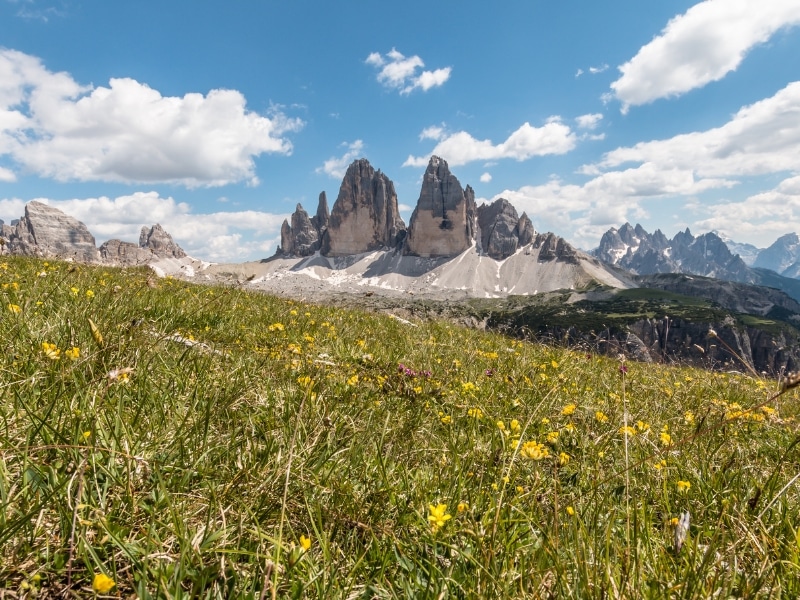
From the car park it’s just a short walk to the tiny Cappella degli Alpini, while those wanting to experience the area’s most famous scenery should continue on the classic Tre Cime circular walk. The full loop covers around 10km and offers constantly changing views of the three iconic peaks, mountain refuges and alpine meadows.
After returning from the hike, spend some time exploring the peaceful surroundings of Carbonin Schluderbach. Once an important centre for early Dolomite mountaineering, the village was home to the historic Beim Schluderbacher Inn, where many pioneering climbers stayed before attempting the surrounding peaks. Today it provides a wonderfully tranquil base from which to enjoy one final evening in the Dolomites.
Where to Stay in Carbonin Schluderbach (1 night)
Upmarket: Hotel Sorapiss Misurina is an elegant lakeside hotel overlooking the beautiful waters of Lake Misurina. Spacious rooms, panoramic mountain views and excellent facilities make it a perfect base for visiting Tre Cime di Lavaredo and the surrounding Dolomite peaks.
Mid-Range: Albergo Chalet Lago Antorno Misurina enjoys a peaceful setting beside Lake Antorno, just minutes from the Tre Cime toll road. Comfortable Alpine-style rooms and an on-site restaurant make it an excellent choice for hikers and outdoor enthusiasts.
Budget: Villaggio Turistico Ploner offers simple apartments and rooms surrounded by spectacular mountain scenery. With self-catering facilities, free parking and easy access to Lake Misurina and Tre Cime di Lavaredo, it provides great value for travellers exploring the eastern Dolomites.
Plan Your Dolomites Road Trip
Getting to the Dolomites
The best way to explore the Dolomites is by car, campervan or motorcycle. Having your own vehicle gives you the freedom to stop at scenic viewpoints, take spontaneous detours and spend as much time as you like exploring mountain villages, hiking trails and crystal-clear alpine lakes.
If you’re flying into Italy, the most convenient airports for this itinerary are Venice Marco Polo Airport, Verona Airport and Milan Malpensa Airport. Bolzano, where this road trip begins, is around 2½ hours from Venice, 2 hours from Verona and 3½ to 4 hours from Milan.
For flights, we recommend using Skyscanner to compare airlines and find the best fares.
If you’re hiring a car, Discovercars.coms is one of the world’s largest comparison sites, searching multiple rental companies to help you find the best price. Before travelling, check whether you’ll need an International Driving Permit to drive in Italy.
For a more adventurous trip, consider hiring a motorhome or campervan. We recommend Motorhome Republic, which compares vehicles from multiple rental companies and offers an excellent English-speaking concierge service to help you choose the right vehicle.
Driving in the Dolomites
Driving in the Dolomites can look intimidating, especially if you’re unfamiliar with mountain roads. In reality, the roads are generally in excellent condition, well signposted and a pleasure to drive.
Expect plenty of hairpin bends, steep climbs and long descents, particularly on the famous mountain passes. Take your time, use lower gears on downhill sections and allow extra time for the many viewpoints you’ll inevitably want to stop at.
If you’re new to driving in Italy, our complete guide covers everything from road rules and tolls to ZTL zones and parking, helping you stay safe and avoid unexpected fines.
Best Time to Visit the Dolomites
The best time for a Dolomites road trip is between late June and early October, when the mountain passes, cable cars and hiking trails are usually fully open.
We think July and September offer the best balance of pleasant weather, long daylight hours and fewer crowds than the busy August holiday period. July is ideal for wildflower meadows, while September often brings crisp mornings, golden light and excellent hiking conditions.
Mountain weather can change quickly at any time of year, so pack layers and waterproof clothing, even if the forecast looks promising. If you’re travelling early or late in the season, check road conditions before setting off, as high mountain passes can occasionally close following late snowfall.
More Road Trips to Explore

Portugal Road Trip: The Ultimate 10 Day Itinerary

Europe Road Trip: 28 Epic Routes You Can Actually Drive

European Road Trip: Six Countries in 90 Days
Germany Road Trip: 12 Unmissable Routes

France Road Trip: 13 Amazing Itineraries

Driving in the Alps: Top Tips & Best Routes
Love it? Pin it!


