This post may contain affiliate links, from which we earn an income. Click here to read our affiliate policy.
Mallorca is one of those places that rewards having your own wheels. Not because public transport is terrible, it’s not, but because the island’s best moments rarely line up with bus timetables. A swim in a half-hidden cala before lunch, a mountain road that makes you pull over just to stare at it, a village that is suddenly quiet once the day-trippers leave, Mallorca does those things very well.
We’ve found the sweet spot is a loop that starts in Palma, runs up through the Serra de Tramuntana, swings across to the north coast for big sea views, then drops into the calmer southeast for coves and easy evenings, before returning to the capital. It’s compact, varied, and it never asks for punishing driving days.
This itinerary is designed as a 7- to 10-day loop. Seven days is brisk but doable if you keep a few stops short. Ten days gives you the space Mallorca deserves, especially in the mountains and along the southeast coast.
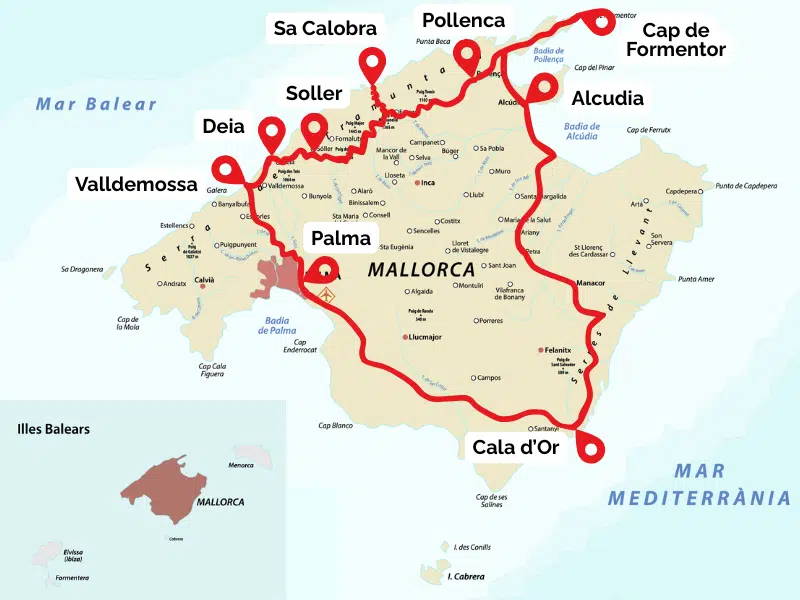
Mallorca Road Trip Map
Mallorca Itinerary
Route: Palma – Valldemossa – Deià – Sóller – Sa Calobra – Pollença – Cap de Formentor – Alcúdia – Cala d’Or – Palma
Distance: ~430 km (not including beach detours)
Duration: 7–10 days
Best time to go: April–June and September–October
Best for: Coastal drives, mountain villages, cliff viewpoints, swimming coves, and a loop that mixes scenery with easy logistics
This map shows the main bases and driving route. You can save it to Google Maps for planning or offline use while driving.
Route and Stays: 7 Nights
Designed for a tighter schedule that keeps the loop intact while focusing on the most distinctive bases.
- Palma: 2 nights
- Sóller or Port de Sóller: 1 night
- Pollença: 2 nights
- Cala d’Or: 2 nights
This version keeps driving days manageable and avoids excessive one-night hopping, but you’ll need to keep some stops focused, especially in the Tramuntana.
Route and Stays: 10 Nights
A slower version that allows time for coastal walks, proper beach mornings, and unhurried evenings in the best bases.
- Palma: 2 nights
- Valldemossa or Deià area: 1 night
- Sóller or Port de Sóller: 2 nights
- Pollença: 2 nights
- Alcúdia: 1 night
- Cala d’Or: 2 nights
This pacing gives the mountains proper breathing room, adds time on the north coast beyond Formentor, and keeps the southeast from feeling like a quick tag-on.
Detailed accommodation guidance for each stop, including recommended night counts and how they fit into the flow of the route, is included after the itinerary.
Planning tools we actually use for road trips in Spain
Day 1–2: Palma – Gothic grandeur and sea air
Start with two nights in Palma so you are not tackling mountain roads straight after landing. Palma works best when you treat it as a real city rather than a staging post.
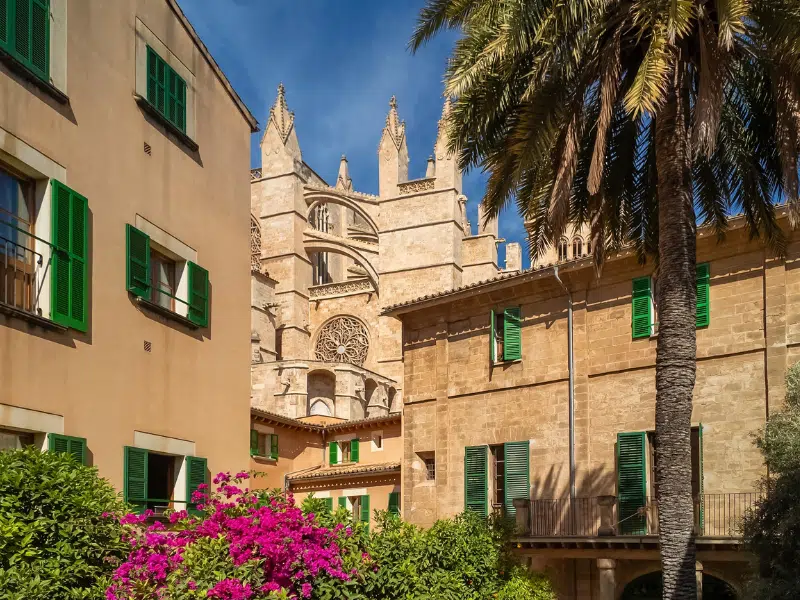
Begin at La Seu Cathedral, rising dramatically above the waterfront. Step inside to see the filtered light through the vast rose window and Gaudí’s modernist touches inside the nave. From here, wander into the old town, where narrow lanes open into quiet courtyards framed by honey-coloured stone.
Look out for the Arab Baths, a rare fragment of the island’s Moorish past, and explore the old Jewish quarter where carved doorways and shaded squares hint at centuries of layered history. Many buildings in Palma conceal beautiful internal patios, so step through open archways whenever you can.
In the afternoon, head up to Bellver Castle for wide views over the bay and marina. Its unusual circular design makes it one of Europe’s more distinctive fortresses.
Evenings are best spent wandering without much of a plan. The Santa Catalina neighbourhood feels modern and lively, while the old town suits a slower, candlelit pace.
Day 3: Palma to Valldemossa to Deià – Into the Serra de Tramuntana
Distance: 45 km
Driving time: Around 1 hour 20 minutes total driving, plus stops
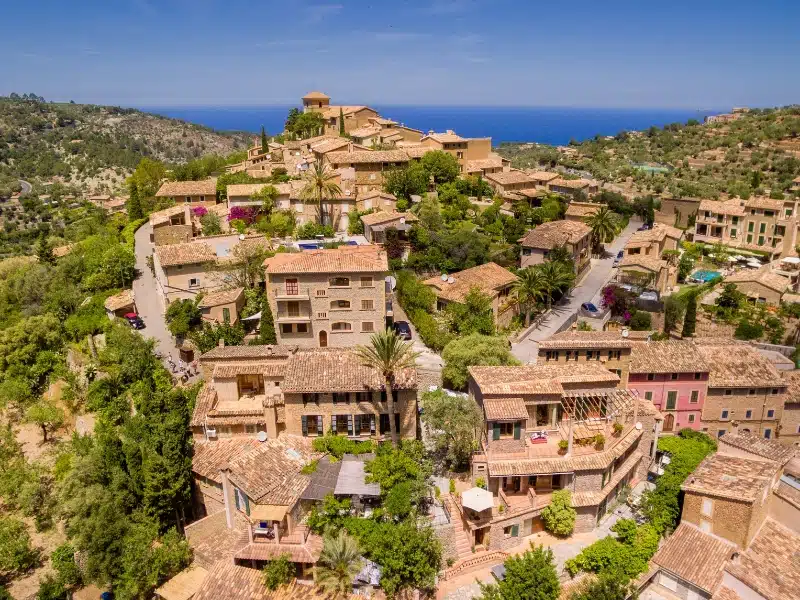
Leave Palma and climb into the Serra de Tramuntana, where the island shifts almost immediately from urban coastline to terraced hills and olive groves.
Valldemossa is the classic first stop. Visit the Royal Carthusian Monastery, where Chopin spent a winter, and walk the cobbled lanes before the tour buses peak. The views from the edges of town give you your first real sense of how steep and green the mountains are.
Continue along the Ma-10, one of Mallorca’s most scenic roads, toward Deià. The drive itself is part of the experience, with sweeping curves and sudden sea glimpses. In Deià, wander through the small centre and, if you have time, take the short walk down to Cala Deià, a rocky cove backed by cliffs and pine trees.
If you are following the 10-day version, this area makes a beautiful overnight base. If not, continue toward Sóller later in the day.
Day 4: Deià to Sóller – Citrus valley and coastal walks
Distance: 25 km
Driving time: 50–60 minutes on narrow, winding mountain roads
This is a short driving day by design. The Tramuntana is about atmosphere, not mileage.
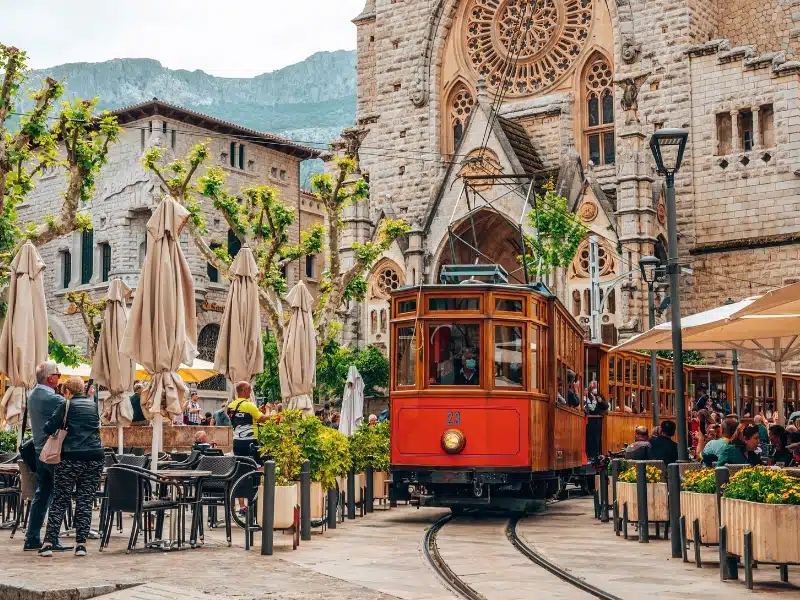
Arrive in Sóller mid-morning and explore the town square, where the modernist church and surrounding cafés create a relaxed focal point. If you want a different perspective, take the vintage tram down to Port de Sóller, which curves around a sheltered bay.
For something active, follow part of the coastal path toward Far del Cap Gros lighthouse for elevated views across the bay, or explore the orange groves that surround the valley. Sóller has long been connected to citrus farming, and the fertile setting explains why.
Spend the evening enjoying the cooler mountain air before the more dramatic drive tomorrow.
Optional Side Trip: Fornalutx
Distance: 18 km from Sóller
Driving time: 30 minutes via Ma-2120
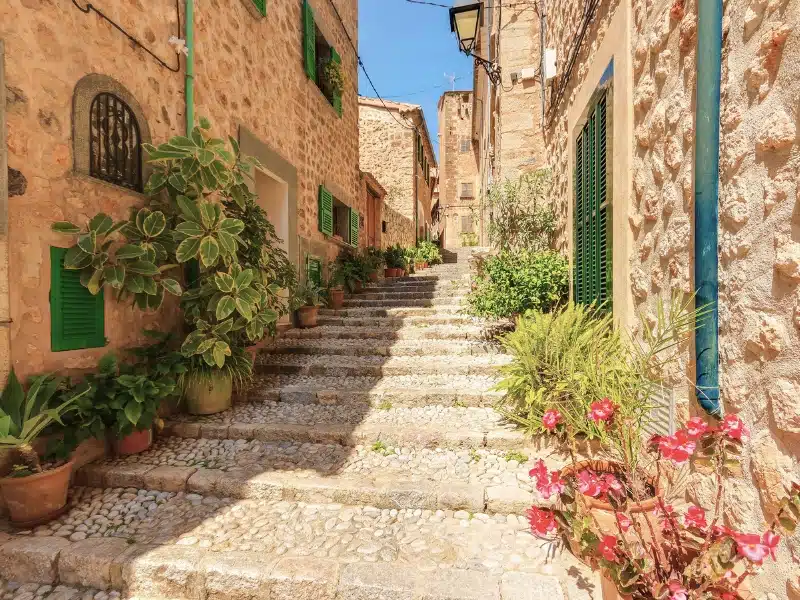
If Deià feels polished and busy, Fornalutx offers a calmer alternative. Often described as one of Spain’s prettiest villages, it sits on terraced slopes above Sóller with narrow stepped lanes and citrus trees in small gardens.
It works well as a late-afternoon detour between Deià and Sóller, especially if you are staying two nights in the Tramuntana and want a slower-paced village stop without tour bus energy.
Day 5: Sóller to Sa Calobra to Pollença – Mallorca’s headline road
Distance: 95 km
Driving time: 2 hours 45 minutes total driving, excluding stops
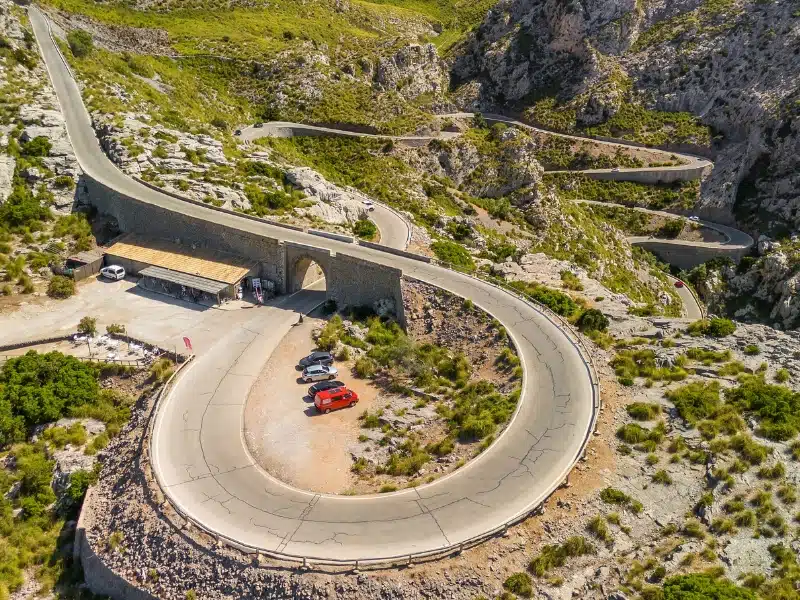
The descent to Sa Calobra is one of Mallorca’s most famous roads. It is narrow, tightly curved and often busy in summer, so an early start is essential.
The road coils down through hairpins to a dramatic coastal inlet. From the car park, walk through the short tunnel carved into the rock to reach the Torrent de Pareis gorge opening onto the sea. The scale of the cliffs here feels almost theatrical.
From Sa Calobra, begin crossing toward the north of the island. As the terrain softens, olive groves give way to flatter farmland. Pollença is a strong base for the next two days, calmer than some resort towns and well-positioned for both coastline and countryside.
Climb the Calvari Steps for sunset views across tiled rooftops and the surrounding hills.
More Spain Travel Inspiration
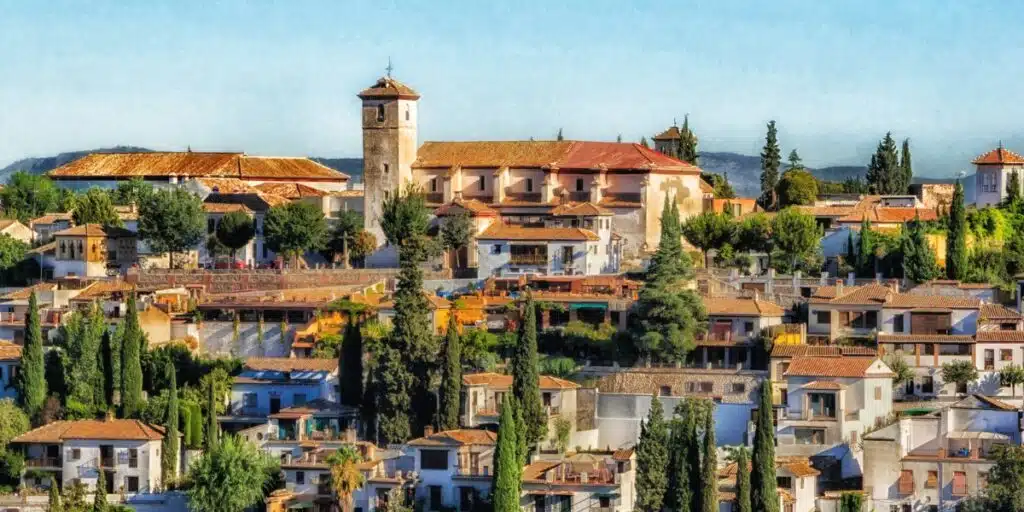
Day 6: Cap de Formentor – Edge-of-the-island views
Distance: 55 km round trip from Pollença
Driving time: Around 1 hour 40 minutes total, longer in summer traffic
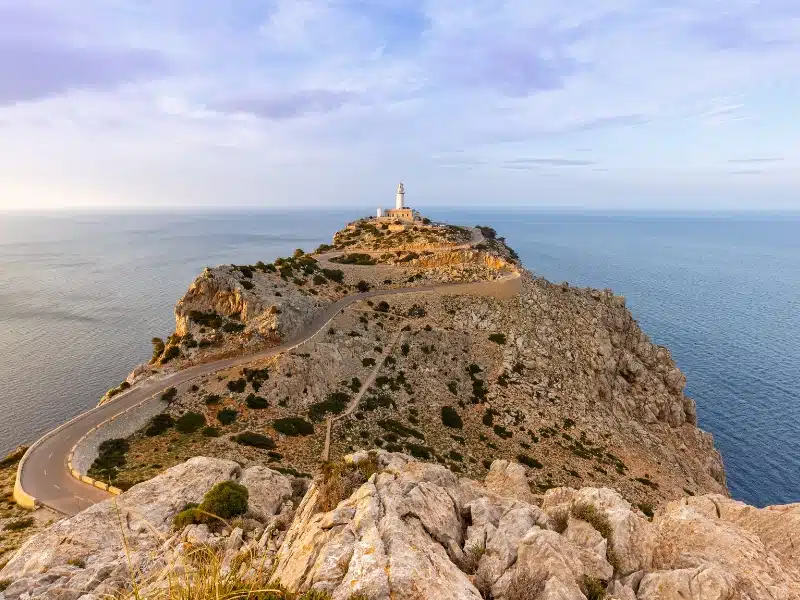
The road to Cap de Formentor runs along a narrow peninsula of cliffs and sea. It is slow, often congested in high season, and entirely worth it.
Stop at the Mirador Es Colomer for one of the island’s most recognisable viewpoints, where limestone cliffs drop sharply into blue water. Continue carefully along the winding road to the lighthouse at the tip of the peninsula.
Back in Pollença, spend the afternoon more slowly, perhaps at Cala Sant Vicenç, where small coves offer clear water and a gentler pace.
Day 7: Pollença to Alcúdia – Walled town and Roman traces
Distance: 12 km
Driving time: 20 minutes
Alcúdia’s old town is compact and atmospheric, enclosed within well-preserved medieval walls. Walk along the ramparts for elevated views over rooftops and countryside.
Nearby, you can visit the Roman ruins of Pollentia, which reveal the island’s much older history through excavated streets and a small amphitheatre.
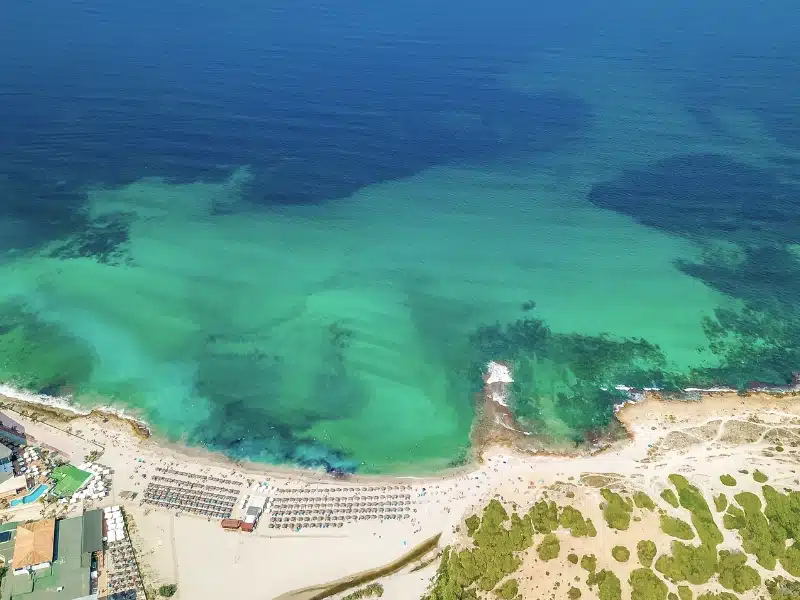
If you prefer the coast, the long sandy stretch of Playa de Muro offers easy swimming and open space.
In the 7-night version, continue south later in the day. In the 10-night version, an overnight here adds variety before the southeast.
Day 8: Alcúdia to Cala d’Or – Into the calmer southeast
Distance: 75 km
Driving time: Around 1 hour 20 minutes via Ma-12 and Ma-19
The southeast feels more relaxed and less rugged than the Tramuntana. The terrain is flatter, the coves are smaller and more intimate, and the pace naturally slows.
Cala d’Or works well as a base because it gives access to multiple small beaches within short driving distance. Spend the afternoon exploring a couple of calas, choosing one based on light and wind direction rather than reputation alone.
Optional Side Trip: Cabrera National Park
Distance: 30 km to Colònia de Sant Jordi
Driving time: 35–40 minutes via Ma-19 and local roads
From Cala d’Or, drive south to Colònia de Sant Jordi and take a boat to the Cabrera Archipelago Maritime-Terrestrial National Park, a protected archipelago just offshore. This feels like a different Mallorca entirely, raw, quiet and undeveloped.
The boat ride itself is part of the experience, skimming across clear water before reaching a tiny harbour watched over by a 14th-century castle. You can hike short marked trails for cliff views or swim in the Blue Cave when conditions allow.
This works particularly well in the 10-day version if you want one day that feels genuinely remote. Book ahead in summer as visitor numbers are controlled.
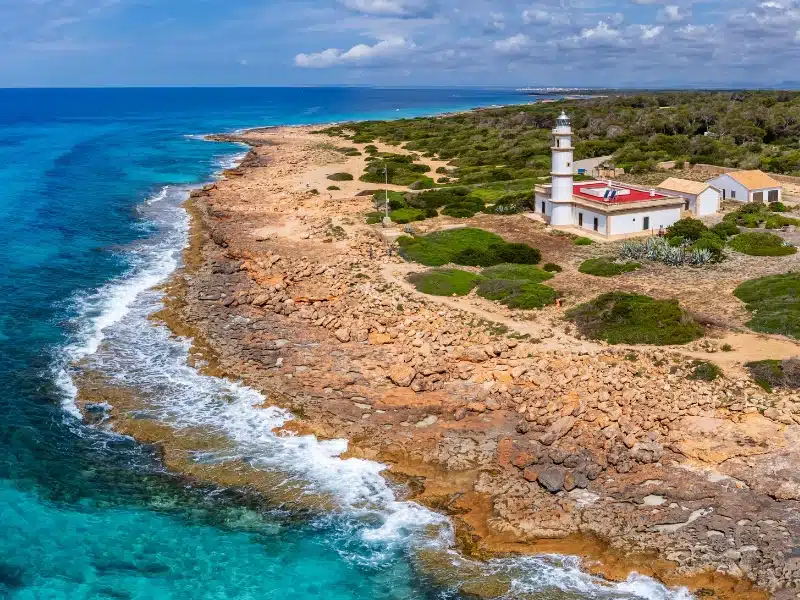
Day 9: Cala d’Or – Coves and coastal wandering
Distance: Minimal local driving
Driving time: Short hops between coves
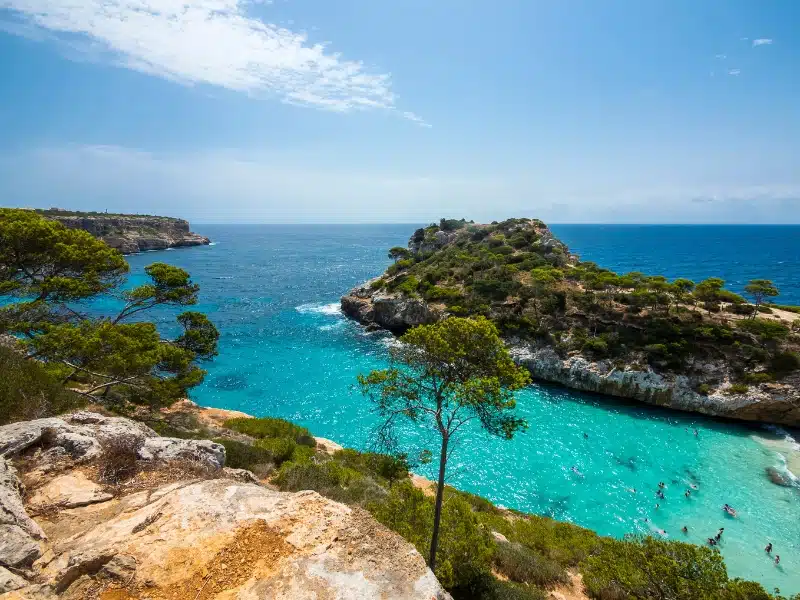
Use this day to enjoy Mallorca without a rigid plan. Cala Mondragó Natural Park offers easy walking trails and turquoise coves framed by pine forest. Cala Llombards is another strong option for clear water and dramatic rock formations.
This is the day that transforms the itinerary from a checklist into a holiday. Swim, linger, repeat.
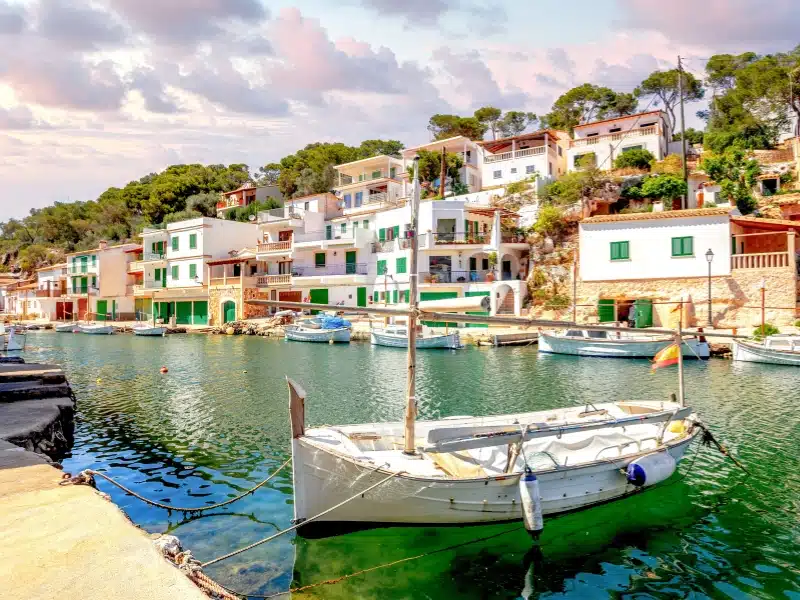
Day 10: Cala d’Or to Palma – A simple return
Distance: 60 km
Driving time: 55–65 minutes via Ma-19
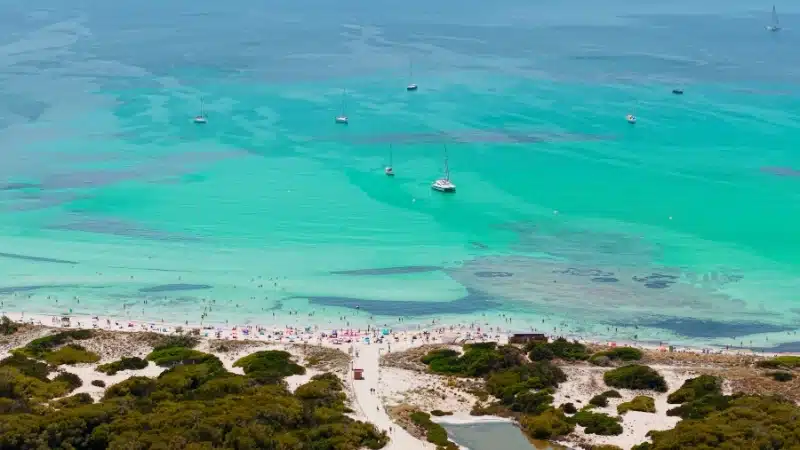
Return to Palma via the straightforward motorway. If time allows before departure, stop briefly at Es Trenc beach for one last stretch of white sand and shallow turquoise water.
Where to Stay on a Mallorca Road Trip
This Mallorca itinerary follows a circular route with a mix of longer city stays and well-placed coastal and mountain bases. The accommodation suggestions below are aligned to the natural flow of the drive, keeping daily distances realistic and avoiding unnecessary backtracking.
Where possible, properties have been chosen for ease of arrival and practical parking access, particularly in the Tramuntana and smaller towns where narrow streets can make logistics more complicated.
Palma (2 nights)
Starting with two nights in Palma allows you to explore the capital properly before heading into the mountains.
Luxury: Hotel Can Bordoy Grand House and Garden sits in the old town with a hidden courtyard garden and a calm, refined feel. Ideal for a relaxed first night on the island.
Mid-range: Hotel Almudaina offers a central location near the cathedral and marina, with easy access to restaurants and practical city parking options nearby.
Budget: Hotel Abelux is slightly outside the old town but works well for drivers, with easier parking and good access in and out of the city.
Valldemossa or Deià (1 night)
A mountain overnight adds depth to the Tramuntana section and avoids rushing through the prettiest part of the island.
Luxury: La Residencia in Deià is one of Mallorca’s most iconic stays, with terraced gardens and sweeping sea views. A true mountain retreat experience.
Mid-range: Hotel Es Molí in Deià has generous grounds, mountain views and parking, which is particularly valuable in this part of the island.
Budget: Hostal Miramar in Valldemossa is simple but well located in the centre of the village, and works well for a short scenic stop.
Sóller or Port de Sóller (1–2 nights)
This valley makes a strong base for exploring the Serra de Tramuntana at a slower pace.
Luxury: Gran Hotel Sóller combines traditional architecture with a rooftop pool and central location, making it easy to explore on foot.
Mid-range: Hotel Marina in Port de Sóller sits directly on the seafront promenade and is practical for drivers with good access and parking options.
Budget: Hostal Nadal in Sóller is a characterful townhouse option close to the centre, ideal for a simple mountain stay.
Pollença (2 nights)
A calmer and more characterful base for the north coast than some larger resort towns.
Luxury: Son Brull Hotel and Spa is set in a converted monastery just outside town, offering space, tranquillity and easy vehicle access.
Mid-range: Hotel Son Sant Jordi is located within the old town and combines traditional style with a peaceful courtyard atmosphere.
Budget: Hotel Eolo in nearby Port de Pollença works well for drivers and offers proximity to the seafront.
Alcúdia (1 night)
This optional overnight breaks up the north-to-southeast transition and adds variety.
Luxury: Can Mostatxins is a beautifully restored historic townhouse within the old walls, blending character with comfort.
Mid-range: Hotel Astoria Playa is adults-only and slightly outside the old centre, making access and parking easier.
Budget: Hotel Santa Anna near Alcúdia’s beaches offers straightforward accommodation and good access to main roads.
Cala d’Or (2 nights)
The southeast section works best with at least two nights to enjoy the coves properly.
Luxury: Inturotel Cala Esmeralda is set above a turquoise cove with direct sea views and easy access to multiple beaches.
Mid-range: Hotel Cala d’Or Gardens sits slightly back from the busiest areas and works well as a relaxed coastal base.
Budget: Hostal San Francisco in Cala d’Or offers simple rooms close to the marina and beaches without resort-scale pricing.
Optional Final Night in Palma
If you prefer a softer finish before flying home, add one more night in Palma at the end rather than driving straight to the airport.
This reduces stress on departure day and gives you one final evening in the city.
Mallorca Road Trip Resources
Getting to Mallorca and Starting Your Road Trip
Flying to Mallorca and Driving Locally
For most travellers, flying into Mallorca and picking up a vehicle on arrival is by far the simplest way to start this road trip.
Palma de Mallorca Airport is the island’s main gateway and has extensive connections across the UK and Europe, particularly from March through October. Flight frequency is high, which keeps fares competitive if you book early.
Using a comparison site such as Skyscanner makes it easier to compare airlines and timings, especially if your dates are flexible.
Because this itinerary begins with two nights in Palma, it often makes sense to delay collecting your rental car until the morning you leave the city. Palma is easy to explore on foot and by public transport, and parking within the historic centre can be expensive and complicated.
Collecting your car from the airport is straightforward and efficient. Comparison platforms such as Discovercars.com allow you to compare multiple suppliers in one place, which can be particularly useful in peak summer when availability tightens quickly.
Mallorca also works well by campervan for longer trips, although mountain roads in the Tramuntana can feel narrow in larger vehicles. If choosing this option, plan parking and campsite stops carefully in advance.
For most travellers on a 7–10 day itinerary, flying into Palma and driving locally offers the best balance of flexibility, simplicity and cost.
Driving to Mallorca from the UK
Driving to Mallorca is possible, but it becomes a two-stage journey: mainland Europe first, then a ferry to the island.
Most travellers drive through France into Spain, then take a ferry from Barcelona, Valencia or Denia to Palma or Alcúdia. From southern England to Barcelona is roughly 900–1,000 miles, depending on your route, typically split across two days with an overnight stop in France. Direct Ferries allows you to compare crossings, times, and prices for all the different routes.
This option works best if you’re travelling for several weeks, travelling in a motorhome or campervan, or the drive there is all part of the adventure.
RELATED POST: Driving from the UK to Spain: Best Routes & Tips
Mallorca Road Trip Tips
Best Time for a Mallorca Road Trip
March to May
Spring is one of the best times to drive Mallorca. Wildflowers brighten the Tramuntana, temperatures are comfortable for walking, and roads are noticeably quieter than in summer. Sea temperatures are cooler but manageable by late May. This is an ideal season for combining hiking and coastal exploration.
June to August
Summer brings guaranteed sunshine and warm, swimmable seas. Evenings are long and lively, particularly in Palma and along the coast. However, mountain roads and popular beaches become busy, and accommodation prices rise sharply. Early starts are essential during this period.
September to October
This is arguably the sweet spot. The sea remains warm from summer, crowds thin out, and driving conditions improve significantly. Light in the Tramuntana softens, making it especially photogenic. This is an excellent balance of atmosphere and space.
November to February
Winter is quieter and cooler. Palma remains active year-round, and the mountains can be beautiful for walking, but some coastal hotels and restaurants close for the season. The weather can be changeable, with occasional storms and cooler evenings. This period suits slower travel rather than a beach-focused itinerary.
Driving in Mallorca
Whether you’re driving your own vehicle or you’re in a rental car for your road trip in Mallorca, follow our tips for driving:
RELATED POST: Driving in Europe: Everything You Need to Know
More Spain Road Trips to Explore
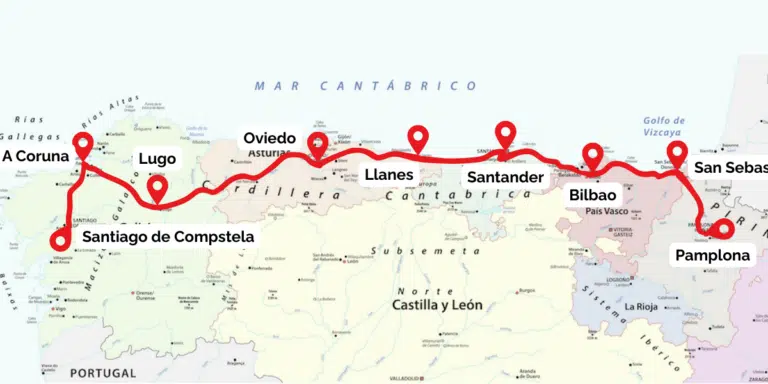
Northern Spain Road Trip: 7–10 Day Itinerary, Route and Tips
Pyrenees Road Trip & Hiking Itinerary: 7–9 Days with an Optional Spain Extension
Andalucia Road Trip: The Perfect 10-14 Day Itinerary
Catalonia Road Trip: 7–10 Day Costa Brava & Pyrenees Loop from Barcelona
The Perfect Spain 10 Day Itinerary for Bucket List Travelers
Fall in Love with Spain: 20 Unforgettable Experiences for a Dream Trip
Love it? Pin it!