This post may contain affiliate links, from which we earn an income. Click here to read our affiliate policy.
Ultimate Catalonia road trip guide
Catalonia is one of the most complete regions in Spain for a road trip. In a single loop, you move from bold urban architecture to pine-fringed Mediterranean coves, then climb into high Pyrenean valleys before descending back to Roman ruins and relaxed coastal towns.
We’ve driven this route more than once, and what stands out is how quickly the landscape changes. Within a few hours, the colour palette shifts from Barcelona’s honey-coloured stone to the deep blues of the Costa Brava, then to alpine greens and granite peaks in the mountains. It never feels repetitive.
What makes this route work particularly well is its balance. The driving days are manageable, the scenery is varied, and each stop has a distinct identity. You get Gaudí and Gothic quarters, wild coastal paths, UNESCO-listed Romanesque churches, mountain passes, and ancient amphitheatres overlooking the sea, all without covering huge distances.
This itinerary is designed as a 7–10 day clockwise loop starting and ending in Barcelona. A seven-day itinerary works if you keep stops focused and move with purpose. Ten days allows for beach mornings, short hikes in the Pyrenees, and time to linger when a place feels right.
Catalonia Road Trip Map
Catalonia Itinerary
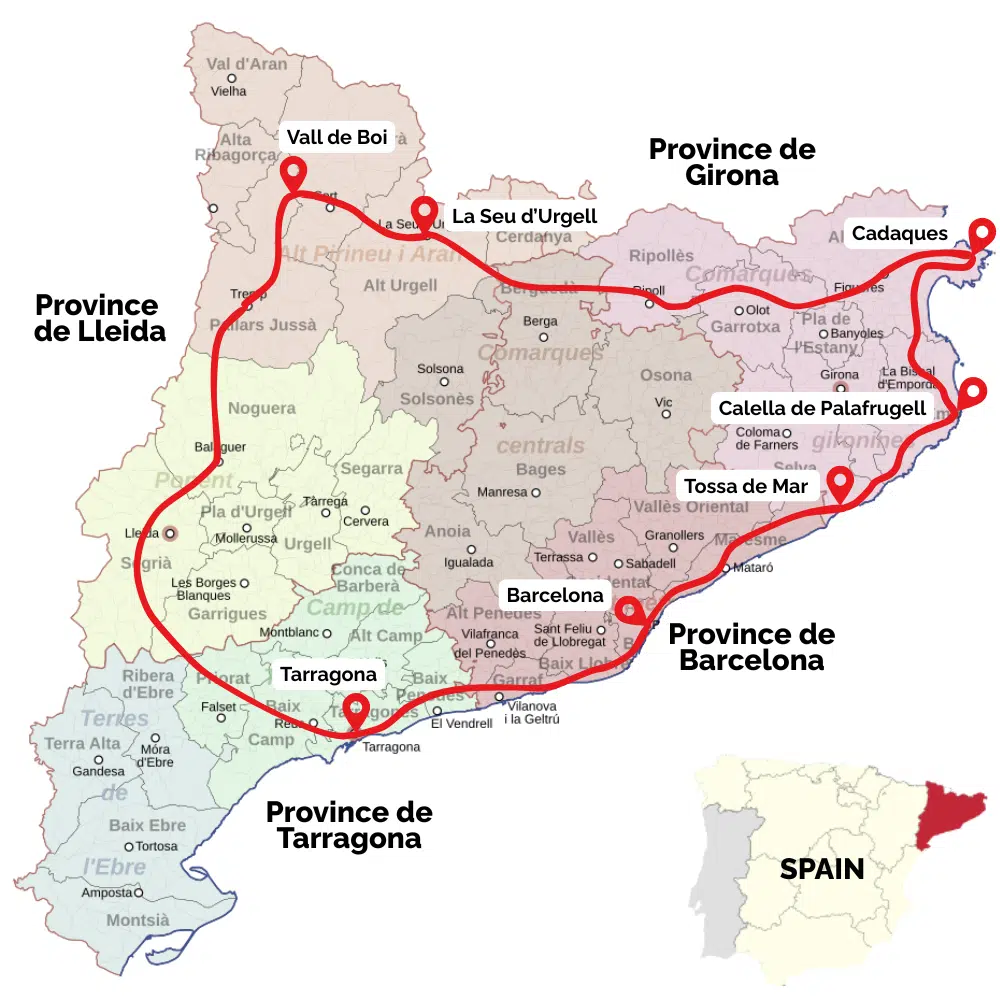
Route: Barcelona – Tossa de Mar – Calella de Palafrugell – Cadaqués – La Seu d’Urgell – Vall de Boí – Tarragona – Barcelona
Distance: ~950 km
Duration: 7-10 days
Best time to go: May–June and September–October
Best for: Mediterranean coves, Pyrenean mountain scenery, historic cities, and a balanced coast-meets-mountains itinerary
This map shows the main bases and driving route. You can save it to Google Maps for planning or offline use while driving.
Route and Stays: 7 Nights
Designed for a tighter schedule that keeps the loop intact while limiting one-night fatigue.
- Barcelona: 2 nights
- Tossa de Mar: 1 night
- Calella de Palafrugell: 1 night
- Cadaqués: 1 night
- La Seu d’Urgell or Vall de Boí: 1 night
- Tarragona: 1 night
This version keeps the coastal progression intact before heading into the Pyrenees, but compresses the mountain section into a single overnight.
Route and Stays: 10 Nights
A slower version that allows time for coastal swims, Pyrenean walks, and relaxed evenings in smaller towns.
- Barcelona: 2 nights
- Tossa de Mar: 1 night
- Calella de Palafrugell: 2 nights
- Cadaqués: 1 night
- La Seu d’Urgell: 1 night
- Vall de Boí: 2 nights
- Tarragona: 1 night
This pacing allows you to properly enjoy the Costa Brava coves, spend time in the mountains rather than simply driving through, and avoid rushed transitions between very different landscapes.
Detailed accommodation guidance for each stop, including recommended night counts and how they fit into the flow of the route, is included after the itinerary.
Planning tools we actually use for road trips in Spain
Days 1–2: Barcelona – Gaudí Architecture, Gothic Streets and Mediterranean Views
Spend your first two nights in Barcelona before beginning the coastal drive north. If possible, delay collecting your rental car until the morning you leave the city. Barcelona is far easier to explore on foot and by metro than by car.
Barcelona sets the tone for this road trip: bold architecture, strong regional identity, and the Mediterranean never far away.
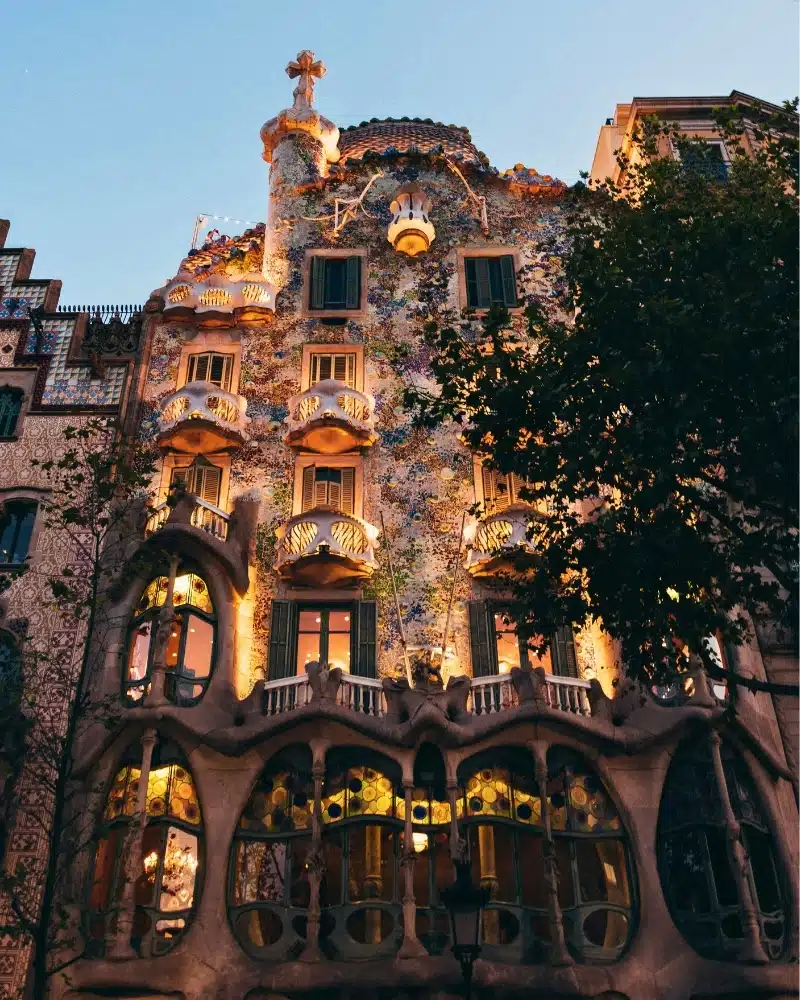
Start with Sagrada Família. Book a timed entry in advance, ideally late afternoon when the stained-glass light is at its best. From here, walk through Eixample along Passeig de Gràcia to see Casa Batlló and La Pedrera, even if only from the outside.
Spend time in the Gothic Quarter around Barcelona Cathedral, where medieval lanes contrast sharply with the city’s modern grid. El Born offers a slightly calmer feel, with independent shops and historic squares.
On your second day, head up to Park Güell for views across the city towards the sea. Later, walk along Barceloneta beach or up to Montjuïc for a ride on its famous cable car to grab a final panoramic perspective before leaving the city behind.
Two nights gives you enough time to experience Barcelona properly without exhausting yourself before the driving begins.
Optional Side Trip: Montserrat
Distance: 60 km
Driving time: 1 hour each way from Barcelona via A-2 or C-55. Straightforward motorway before a winding mountain ascent.
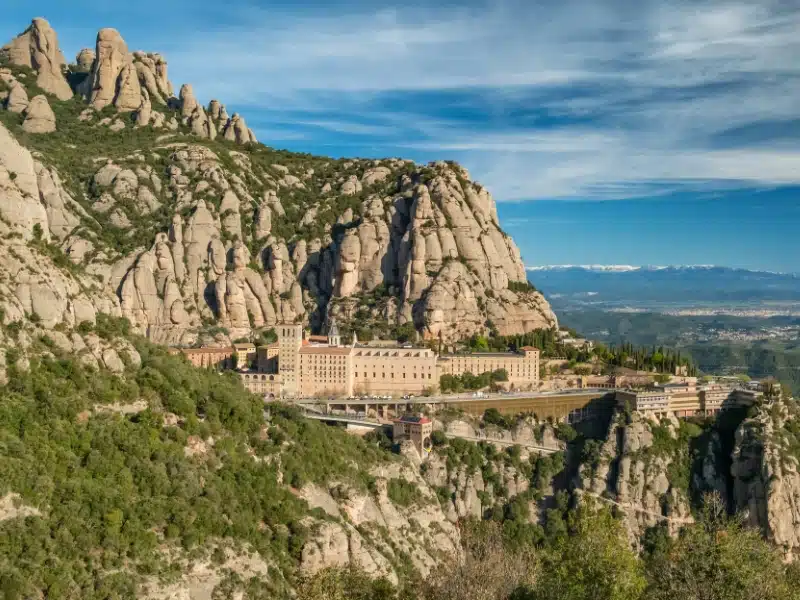
If you have extra time at the beginning or end of your Catalonia road trip, Montserrat makes a dramatic inland detour from Barcelona.
Rising abruptly from the plains west of the city, the serrated limestone peaks are visible from miles away. The final approach road climbs in tight curves, and the landscape shifts quickly from urban outskirts to exposed rock formations and panoramic views.
The Benedictine monastery, Santa Maria de Montserrat, sits beneath the rock faces and has been an important pilgrimage site for centuries. It houses the revered Black Madonna, La Moreneta, and remains an active religious community. Even without entering the basilica, the setting alone makes the visit worthwhile.
Beyond the monastery complex, well-marked trails lead higher into the rock formations. Short hikes reward you with wide views across Catalonia, and on clear days you can see as far as the Pyrenees.
Allow at least half a day, start early to avoid crowds, and be aware that parking fills quickly on weekends and public holidays.
Montserrat adds vertical drama and a very different atmosphere to the loop without requiring an overnight stay, making it one of the strongest optional additions to this Catalonia road trip.
Day 3: Barcelona to Tossa de Mar – Clifftop Roads and a Walled Old Town
Distance: 100 km
Driving time: 1 hour 30 minutes via AP-7 and C-65. Straightforward motorway and inland roads, then a slower coastal approach.
This is where the road trip properly begins. Leave Barcelona in the morning and aim to arrive in Tossa by early afternoon so you have time to explore on foot.
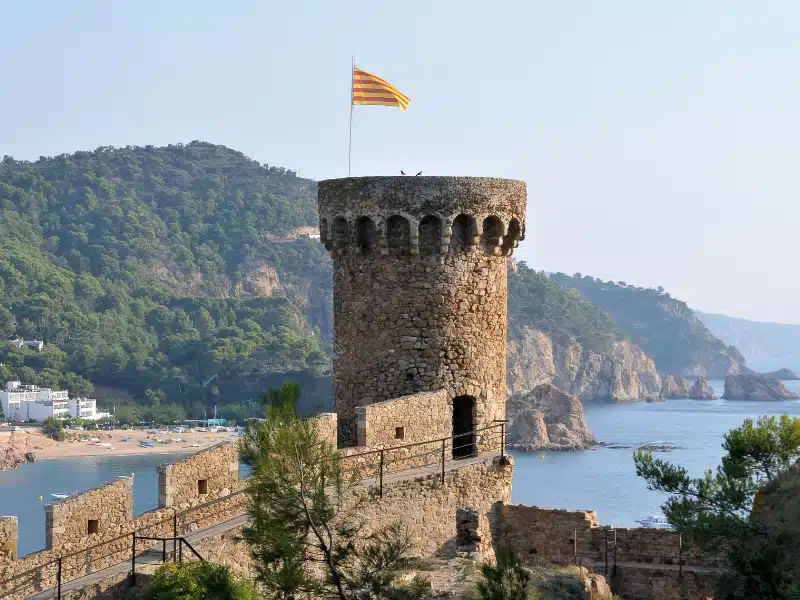
Tossa de Mar is one of the Costa Brava’s most atmospheric towns, largely because its medieval old town, Vila Vella, rises directly above the sea. Start with a walk up into the walled section, where narrow lanes lead to viewpoints along the ramparts. The views at golden hour are the payoff, with the coastline stretching away in both directions.
If you want a simple, low-effort beach break after the drive, Platja Gran sits right below the old town and is easy to access without trekking.
Overnight in Tossa, ideally just outside the tightest old town streets, so parking does not become a late-afternoon headache.
Day 4: Tossa de Mar to Calella de Palafrugell – The Costa Brava at Its Prettiest
Distance: 55 km
Driving time: 1 hour 15 minutes on the GI-682 coastal road. Short distance, slow driving, lots of curves and viewpoints.
This is a short drive, but it is one of the most scenic days of the loop. The GI-682 hugs the coastline with repeated sea views and cliff-edge bends, so plan to go slowly and stop often.
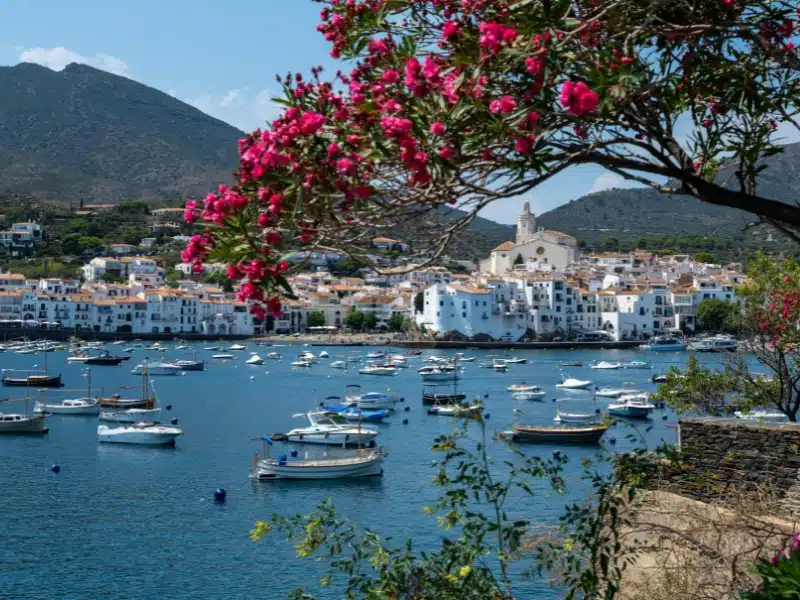
Calella de Palafrugell is all low-rise white buildings, small coves, and an old fishing village feel that the larger resorts never quite manage. Spend the afternoon on foot. The Camí de Ronda coastal path is the best way to experience this section of the Costa Brava. Even a short stretch gives you cliffs, pine shade, and access to quieter swimming coves.
Calella works well as a place to slow down. If you’re following the 10-day version, this is one of the best spots to add an extra night.

Day 5: Calella de Palafrugell to Cadaqués – Coastal Beauty and a Dramatic Arrival
Distance: 110 km
Driving time: 2 hours 15 minutes via Palafrugell, Figueres, then the final winding approach road into Cadaqués.
Leave the gentler coves of central Costa Brava and head north towards the wilder Cap de Creus peninsula. The final approach to Cadaqués is slow and winding, climbing over a ridge before dropping towards the sea. The first view of the town is one of the most memorable arrivals in Catalonia.
Cadaqués feels more remote than it should, which is part of the appeal. The old town is compact and whitewashed, with tight lanes, small squares, and a harbourfront promenade that suits an unhurried evening.
If you have daylight left, drive out into Cap de Creus Natural Park. The landscape is rocky and wind-shaped, with lookout points that feel more like an edge-of-the-world coastline than a beach destination.
Optional stop if you want a short cultural pause: Figueres works well for the Dalí Theatre-Museum, but only do it if you are genuinely interested; it can easily take up most of the day.
Optional Side Trip: Besalú
Distance: 95 km
Driving time: 1 hour 45 minutes from Cadaqués via GI-614 back over the ridge to Roses, then inland on the C-260 and N-260 toward Besalú.
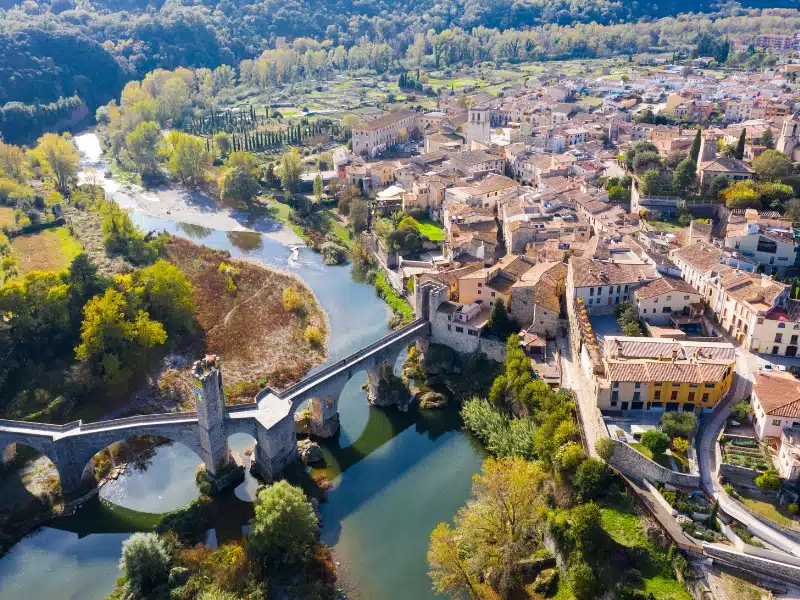
Besalú is one of the most photogenic medieval towns in Catalonia and an easy detour as you transition between the Costa Brava and the Pyrenees.
The town is famous for its fortified Romanesque bridge spanning the Fluvià River. Approaching on foot across the stone bridge is part of the experience, with the defensive tower framing the entrance into the old town.
Inside, narrow lanes lead to quiet squares, small artisan shops, and the remains of one of the best-preserved medieval Jewish quarters in Spain. The 12th-century miqvé (ritual bath) is a rare survival and gives insight into the town’s layered history.
Besalú works best as a short but impactful stop. Two hours is enough to walk the bridge, explore the historic centre, and pause for a coffee before continuing inland toward the mountains.
It’s particularly effective in the 7-day version of the route, where it adds medieval character without requiring an additional overnight stay.
Day 6: Cadaqués to La Seu d’Urgell – Leaving the Sea for the Pyrenees
Distance: 200 km
Driving time: 3 hours 15 minutes via Figueres and the N-260. Faster inland roads first, then a gradual mountain climb.
Today is the big shift from Mediterranean coast to mountain interior. Leave Cadaqués early, as the first hour is slow while you retrace the road back over the ridge.
Once you reach the N-260, the drive becomes one of the most satisfying inland routes in Catalonia. It climbs steadily through valleys and forested slopes, with long views and lighter traffic than you might expect.
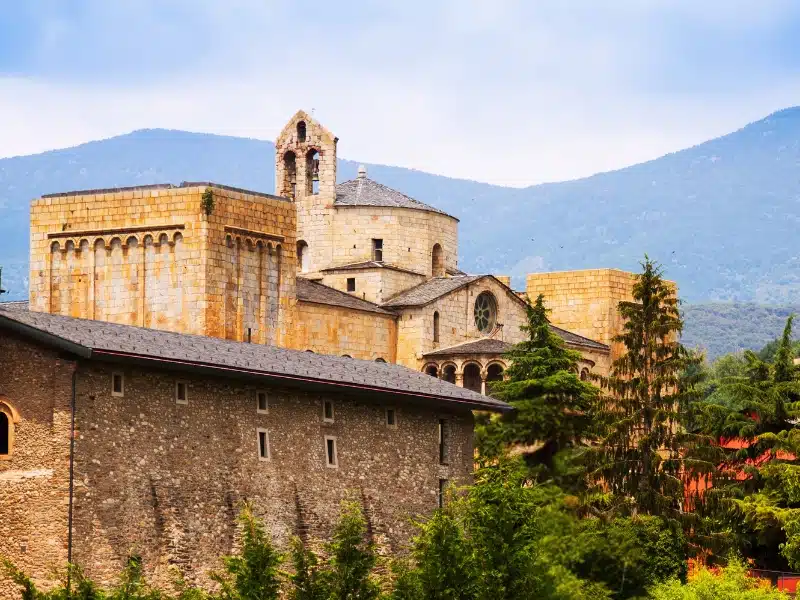
La Seu d’Urgell is a calm, practical Pyrenean base near the Andorran border. The town has a grounded, lived-in feel, and it is a good place to reset pace before heading deeper into the mountains. If you want one key sight, the Cathedral of Santa Maria is the centrepiece, and the old town streets around it are easy to explore in an hour or two.
More Spain Travel Inspiration








Day 7: La Seu d’Urgell to Vall de Boí – Alpine Valleys and Romanesque Villages
Distance: 120 km
Driving time: 2 hours 15 minutes on mountain roads. Winding, well-maintained, and generally quiet outside peak season.
This is a shorter drive, but the scenery is full-on Pyrenees. Valleys are narrow, peaks rise, and the air feels cooler and clearer.
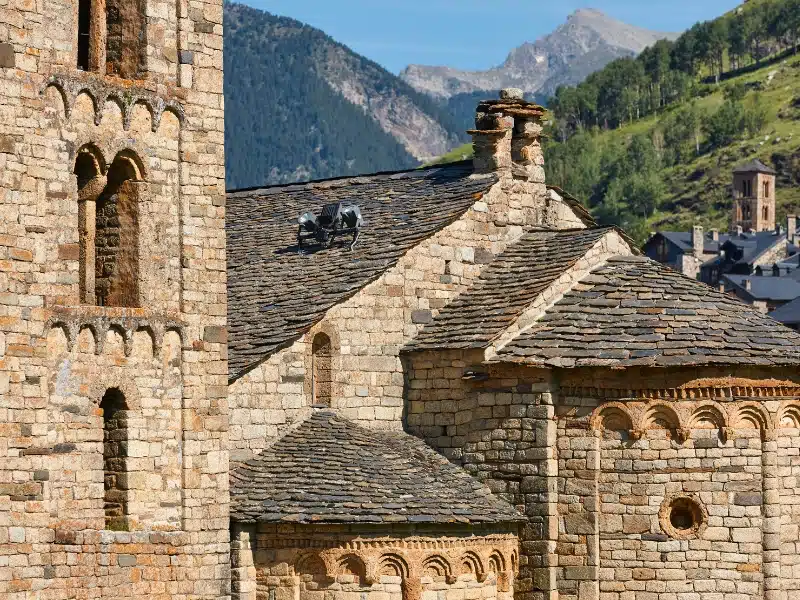
Vall de Boí is a UNESCO-listed valley known for its Romanesque churches scattered across small villages. Taüll is the must-stop, and Sant Climent de Taüll is the defining landmark, with its bell tower rising against the mountain backdrop.
Arrive with enough time to visit at least one or two villages on foot and settle into the slower rhythm of the valley. This is the point in the itinerary where an extra night makes a big difference, because the mountains reward time rather than speed.
Day 8: Vall de Boí – Aigüestortes National Park and a Proper Mountain Day
Distance: Minimal local driving
Driving time: Short valley transfers, plus regulated access into higher areas depending on the season.
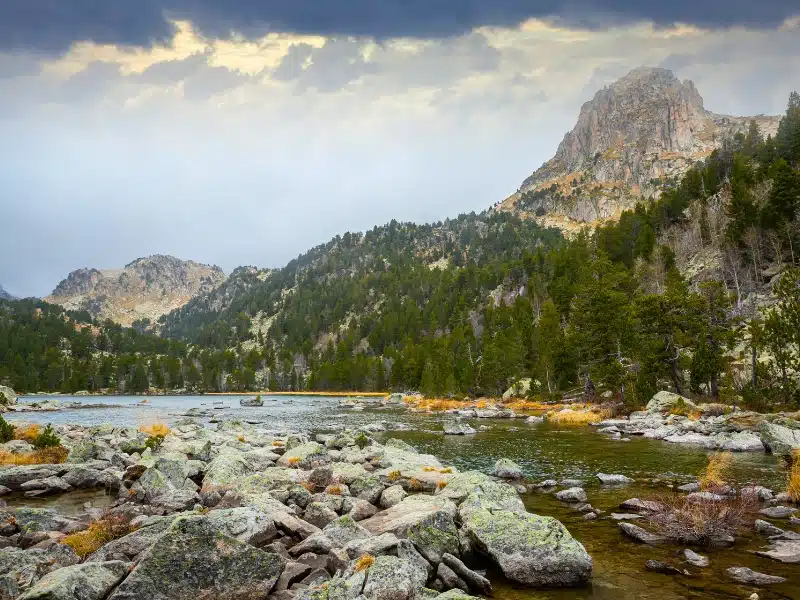
A full day here stops the Pyrenees from feeling like a quick pass-through. Use today for Aigüestortes i Estany de Sant Maurici National Park, Catalonia’s only national park.
Expect glacial landscapes, lakes, waterfalls, and high meadows. In peak months, access roads have restrictions, and you may need to use authorised 4×4 taxis from designated points. Even without a long hike, the scenery is the kind that makes you slow down naturally.
If you would rather keep it light, spend today visiting additional valley churches and taking shorter walks. The point is to enjoy the setting, not to cram in mileage.
Day 9: Vall de Boí to Tarragona – Two Dramatic Ways Back to the Mediterranean
Today is one of the most visually varied days of the entire Catalonia road trip. You descend from high Pyrenean valleys to Roman Tarragona on the Mediterranean coast.
There are two strong route options. Both are worthwhile, but they suit different travel styles.
Option 1: N-230 – The Efficient Mountain Descent
Distance: 260 km
Driving time: 3 hours 45 minutes via N-230 → A-22 → AP-2. Steady mountain descent followed by fast motorway.
This is the more direct and practical route.
Leave Vall de Boí and head south via Pont de Suert. The N-230 follows the Vall de Barravés and the Noguera Ribagorçana river, offering wide valley views and a steady, well-maintained descent.
It still feels alpine for the first hour, but the road is broader and faster than deeper mountain alternatives. Traffic is generally light outside peak weekends.
A short detour leads to Congost de Mont-rebei, one of Catalonia’s most impressive natural landscapes. Limestone cliffs rise sharply above the river, with a narrow walking path carved into the rock face.
You do not need to hike far. Even 30–45 minutes on the trail gives scale and perspective. This stop works especially well in spring and autumn when temperatures are manageable.
Continue south toward Lleida and join the A-22/AP-2 for a faster motorway run into Tarragona.
This option is best for travellers on the 7-day version or anyone who prefers a more straightforward drive.
Option 2: C-13 – The Scenic Reservoir and Gorge Route
Distance: 285 km
Driving time: 4 hours 30 minutes via Coll de Perves → C-13 through Tremp and the Terradets Gorge.
This is the more dramatic and immersive mountain option.
Instead of descending via the N-230, head southeast over the Coll de Perves and join the C-13. This road threads through the Pallars Jussà region, skirting reservoirs and cutting through narrow gorges.
The section near the Terradets Gorge is particularly striking, with sheer rock walls rising beside the road and water reflecting the cliffs below.
It is slower and more winding than the N-230, and it adds roughly 45–60 minutes to the day. However, it feels more remote and varied.
This route works best if you are following the 10-day version and love the drive!
Arrival in Tarragona
Whichever route you choose, arriving in Tarragona feels like a true contrast after the mountains.
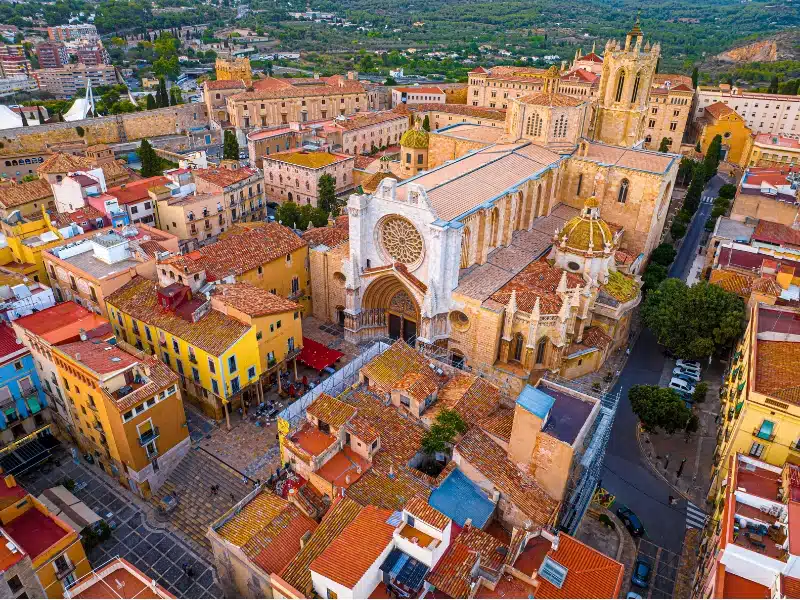
Start at the Roman amphitheatre overlooking the Mediterranean, then walk uphill into the old town. The cathedral crowns the city’s highest point, and the Balcó del Mediterrani viewpoint is a fitting place to end the day.
Day 10: Tarragona to Sitges to Barcelona – A Soft Landing Back Into City Life
Distance: 95 km
Driving time: 1 hour 30 minutes total driving. Fast coastal roads and motorway.
Break up the return to Barcelona with a few hours in Sitges. It is an easy stop, and it gives you one last coastal promenade before city logistics return.
Sitges is compact and walkable. Spend time in the old town streets around the church, then walk the seafront. If the weather is good, it is an easy final swim; the beaches are central and accessible.
From Sitges, it’s a short drive back into Barcelona to close the loop and return the car.
Where to Stay on a Catalonia Road Trip
This Catalonia itinerary follows an anti-clockwise loop from Barcelona along the Costa Brava, into the Pyrenees, and back down the Mediterranean coast before returning to Barcelona.
Overnight stops are positioned to keep driving days realistic and avoid unnecessary backtracking. Along the Costa Brava and in the Pyrenees, priority is given to properties with accessible parking, as historic centres can be tight and pedestrianised.
Day 1–2: Barcelona (2 Nights)
Delay collecting your rental car until departure day if possible.
Luxury: Hotel Casa Fuster offers refined modernist architecture on Passeig de Gràcia with strong transport links and a rooftop terrace.
Mid-range: Room Mate Gerard is well positioned between Eixample and El Born, practical for walking and manageable for drivers.
Budget: Hotel Praktik Bakery provides simple but stylish rooms in a quieter Eixample street, ideal before picking up the car.
Day 3: Tossa de Mar (1 Night)
Stay just outside the medieval Vila Vella walls for easier arrival and parking.
Luxury: Gran Hotel Reymar sits slightly outside the old town with sea views and on-site parking.
Mid-range: Hotel Diana is a characterful seafront stay directly opposite the beach, within walking distance of the old town.
Budget: Hotel Windsor offers straightforward rooms in a central but accessible location.
Day 4: Calella de Palafrugell (1–2 Nights)
Choose accommodation slightly uphill or just outside the tightest coves for smoother vehicle access.
Luxury: Hotel Sant Roc sits above the coastline with sweeping views and reliable parking.
Mid-range: Hotel Garbí offers sea views and a relaxed garden setting within walking distance of town.
Budget: Hotel Mediterrani is a simple, well-located seafront option.
Day 5: Cadaqués (1 Night)
Confirm parking before arrival, as access roads are narrow and central streets are restricted.
Luxury: Hotel Playa Sol sits directly on the waterfront with private parking and harbour views.
Mid-range: Hotel Calina overlooks Portlligat and offers a quieter setting slightly outside the centre.
Budget: Hostal Marina Cadaqués provides simple rooms close to the harbour.
Day 6: La Seu d’Urgell (1 Night)
A practical Pyrenean base with easier access than deeper mountain villages.
Luxury: El Castell de Ciutat offers a restored castle setting with valley views and spa facilities.
Mid-range: Hotel Andria provides traditional character and a central location with convenient parking nearby.
Budget: Hotel Avenida offers simple rooms and easy access from the main road.
Day 7–8: Vall de Boí (1–2 Nights)
Mountain villages are compact; choose accommodation with confirmed parking.
Luxury: Hotel Manantial in Caldes de Boí offers comfort and easy access to Aigüestortes National Park.
Mid-range: Hotel Taüll provides a traditional mountain setting with strong valley views.
Budget: Hostal Fondevila in Boí is simple, friendly, and well-positioned within the valley.
Day 9: Tarragona (1 Night)
Stay close enough to walk into the Roman old town without navigating the tightest streets.
Luxury: Hotel Mas La Boella sits just outside the city in a restored estate with secure parking.
Mid-range: H10 Imperial Tarraco faces the sea near the amphitheatre, combining location and accessibility.
Budget: Hotel SB Ciutat de Tarragona offers modern rooms and straightforward access from the AP-7.
Optional Final Night: Barcelona (If Required)
If you have an early flight, consider staying near the airport or outside the central low-emission zone.
Luxury: Hyatt Regency Barcelona Tower provides easy airport access and secure parking.
Mid-range: Hotel Barcelona Aeropuerto is reliable and practical for early departures.
Budget: Ibis Barcelona Aeropuerto Viladecans offers affordable, no-frills convenience.
Catalonia Road Trip Resources
Getting to Catalonia and Starting Your Road Trip
Flying to Catalonia and Driving Locally
For most travellers, flying into Catalonia and picking up a vehicle on arrival is the simplest way to begin this road trip.
If you are starting the loop in Barcelona, Barcelona–El Prat Airport is the obvious entry point. It offers extensive international connections across Europe, North America, and beyond, along with strong competition between car hire providers.
Booking through a comparison site such as Skyscanner makes it easier to compare airlines, routes, and prices, particularly if your dates are flexible.
Because this itinerary begins with two nights in Barcelona, it often makes sense to delay collecting your rental car until the morning you leave for Tossa de Mar. Barcelona is far easier to explore on foot and by metro than by car, and parking can be expensive within the city.
Picking up a rental car directly from the airport is straightforward. Comparison platforms such as Discovercars.com provide access to multiple suppliers and are often more competitive during peak travel months.
Catalonia also works well by campervan or motorhome, especially for travellers who enjoy scenic overnight stops in the Pyrenees. Motorhome Republic aggregates vehicles from multiple rental agencies, making it easier to compare availability and pricing. Apps such as Park4Night are useful for locating campsites and overnight options along the route.
For most travellers on a 7–10 day itinerary, flying into Barcelona and driving locally offers the best balance of flexibility and efficiency.
Driving to Catalonia from the UK
Driving from the UK is entirely feasible and can turn the journey into part of the adventure.
The most common route involves crossing into France via ferry or the Channel Tunnel, then driving south through France before entering Spain via the eastern Pyrenees near Perpignan or via the AP-7 coastal corridor. From southern England to Barcelona is roughly 900–1,000 miles, depending on your starting point, typically split over two days with an overnight stop in France.
Unlike northern Spain, there is no direct ferry from Portsmouth to Barcelona. Travellers choosing the ferry option usually sail to Santander or Bilbao and then drive across northern Spain to Catalonia, which adds significant mileage.
Driving through France is generally quicker overall. However, French motorway tolls can add up, so factor that into your budget.
Once in Spain, the AP-7 motorway along the Mediterranean coast is fast, well-maintained, and largely toll-free. It provides easy access to Barcelona and onward toward Girona and the Costa Brava.
RELATED POST: Driving from the UK to Spain: Best Routes & Tips
Catalonia Road Trip Tips
Best Time for a Catalonia Road Trip
March to May
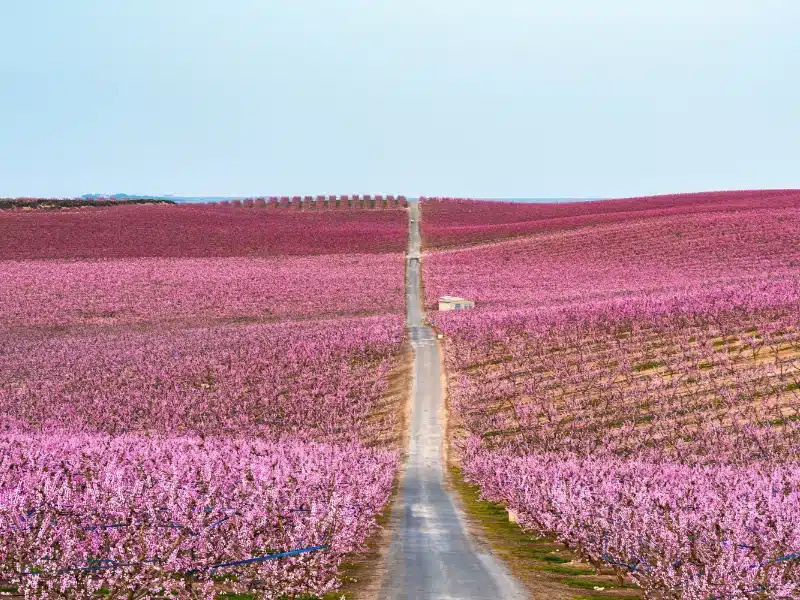
Spring is one of the best times to drive this route. Wildflowers appear along the coast and in the foothills, temperatures are comfortable for walking, and the Pyrenees are lush from winter snowmelt. Crowds are lower than in summer, though occasional rain showers are possible.
June to August
Summer brings reliable sunshine and warm sea temperatures along the Costa Brava. It is ideal for swimming and long evenings outdoors. However, coastal towns are busier, and accommodation should be booked well in advance. Inland and mountain areas remain cooler and provide welcome relief from coastal heat.
September to November
Autumn offers warm seas, quieter beaches, and comfortable hiking conditions in the Pyrenees. Vineyards and forests begin to change colour, and roads are noticeably calmer than in peak summer.
December to February
Winter is quieter and cooler. The Costa Brava is peaceful but less lively, and some smaller hotels close. The Pyrenees can experience snow, particularly around Vall de Boí, and driving conditions may be affected at higher elevations. This is better suited to travellers combining the route with winter sports rather than a classic coastal road trip.
Driving in Catalonia
Whether you’re driving your own vehicle or you’re in a rental car for your road trip in Catalonia, follow our driving in Spain tips:
RELATED POST: Driving in Europe: Everything You Need to Know
More Spain Road Trips to Explore
Northern Spain Road Trip: 7–10 Day Itinerary, Route and Tips
Pyrenees Road Trip & Hiking Itinerary: 7–9 Days with an Optional Spain Extension
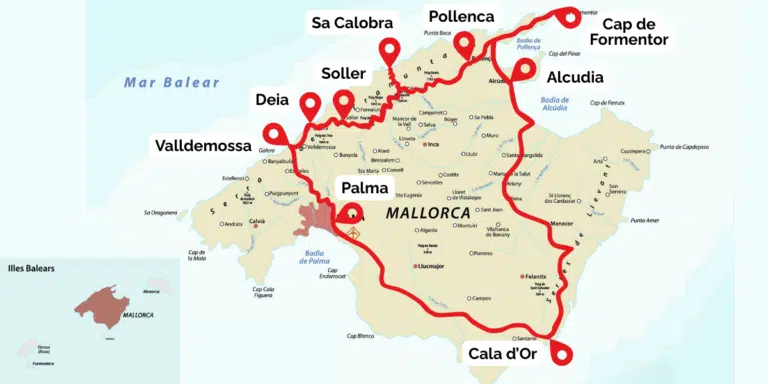
Mallorca Road Trip: 7–10 Day Island Loop from Palma
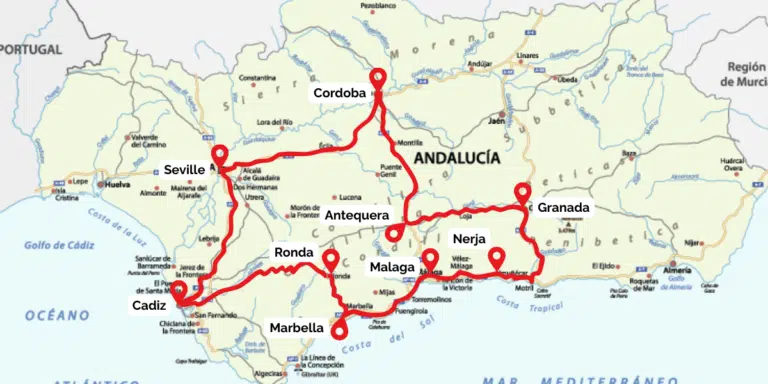
Andalucia Road Trip: The Perfect 10-14 Day Itinerary

The Perfect Spain 10 Day Itinerary for Bucket List Travelers

Fall in Love with Spain: 20 Unforgettable Experiences for a Dream Trip
Love it? Pin it!