
This post may contain affiliate links, from which we earn an income. Click here to read our affiliate policy.
Driving to Morocco from the UK is an adventure that starts long before you reach Africa. There’s France to cross, the length of Spain to explore and, finally, a ferry journey across the Strait of Gibraltar before your Moroccan road trip begins.
We’ve spent eight winters exploring Morocco, driving from its northern ports to the Atlantic coast, mountains and desert. Taking your own vehicle gives you the freedom to travel at your own pace, but choosing the right route south makes a big difference to the journey.
In this guide, we compare the main routes through France and Spain, explain the alternative of sailing directly to northern Spain and help you choose your ferry to Morocco. We also cover the documents, insurance and border formalities you need before driving off the ship.
Driving to Morocco from the UK Key Facts
Routes: Routes: The Gap Decaders compares the fastest, cheapest, Mediterranean and Portuguese scenic routes from the UK to Morocco, alongside ferries to northern Spain and onward vehicle crossings to Morocco.
Start & finish: Routes connect the UK with Algeciras or Tarifa in southern Spain, followed by a ferry to Tanger Med or Tangier Ville in northern Morocco.
Best for: Travellers driving from the UK to Morocco in their own car, campervan, motorhome or motorbike.
First-hand experience: Phil and Izzy of The Gap Decaders draw on repeated journeys through France and Spain and seven winters exploring Morocco, from the Atlantic coast to the Atlas Mountains and Sahara Desert.
Enjoy The Gap Decaders? Add us as a preferred source on Google.

Summary of the Best Routes to Morocco from the UK
The fastest route: Drive through western France via Rouen and Bordeaux, cross into Spain at Irun, then continue through Burgos and Salamanca towards Seville and Algeciras.
The cheapest route: Follow the western corridor through France using toll-free alternatives via Chartres, Poitiers and Angoulême, then cross at Irun and continue south through western Spain to Algeciras.
The Mediterranean route: Travel through central France and over the Millau Viaduct before crossing into Catalonia, then follow Spain’s Mediterranean side south towards Málaga and the Strait of Gibraltar.
The Portuguese scenic route: Cross western France and northern Spain before entering Portugal near Vilar Formoso, then explore the Atlantic coast, Lisbon, the Alentejo and Algarve before returning to Spain for the Morocco ferry.
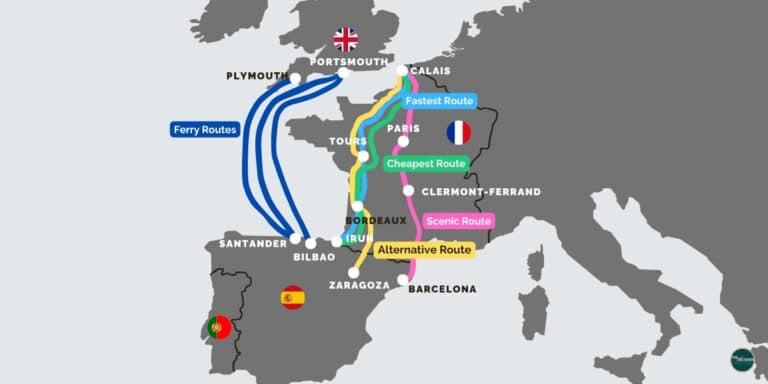
The ferry route: Sail from Portsmouth or Plymouth to northern Spain, then drive south through Spain to Algeciras or Tarifa, avoiding the drive through France.
Getting to France or Spain
Crossing the Channel
If you’re driving through France, the short Channel crossings give you plenty of flexibility. LeShuttle connects Folkestone with Calais, while ferries from Dover arrive in Calais or Dunkirk.
Calais is a useful starting point for comparing routes, but it won’t suit everyone. A longer ferry to Caen or Cherbourg may save driving if you live further west in the UK.
Our Driving to Spain from the UK guide compares the main crossings and routes through France in more detail.
Taking the Ferry Directly to Spain
Brittany Ferries operates services from Portsmouth to Santander and Bilbao, and from Plymouth to Santander. These crossings let you skip France and begin the driving part of your journey in northern Spain. Sailing schedules and journey times vary, so compare the actual departure and arrival times for your dates.
You’ll still have a substantial drive to reach the Strait of Gibraltar, but this option removes a large part of the mileage and can work particularly well for longer Moroccan trips.
We use Direct Ferries to book our Channel crossings because we can compare routes, sailing times and prices in one place, making it easy to find the best option for our trip.
Distances, driving times and estimated costs are for one-way journeys to Algeciras, excluding ferry crossings, breaks and overnight stops. Driving times are estimates for a car; larger motorhomes may take longer. Toll and fuel costs vary with your vehicle, route and fuel prices.
1. The Fastest Route Through France and Spain
Route: Calais → Rouen → Le Mans → Tours → Bordeaux → Irun → Burgos → Valladolid → Salamanca → Cáceres → Seville → Algeciras
Distance: 2,197 km
Driving Time: 21 hours 30 minutes
Toll Costs: €135
Fuel Costs: €283
For a straightforward journey towards Morocco, we’d start by comparing this western route with the direct ferry to northern Spain.
From Calais, head towards Rouen before continuing through western France towards Tours and Bordeaux. This avoids Paris and keeps you on a natural line towards the Atlantic end of the Pyrenees.
South of Bordeaux, continue towards Bayonne and cross into Spain at Irun. From here, head towards Burgos, then Valladolid and Salamanca before joining the A-66 south through western Spain.
The route continues towards Cáceres, Mérida and Seville. From Seville, head towards Jerez and the Bay of Algeciras, where you can choose between sailing from Algeciras or continuing to Tarifa.
Why Choose This Route?
This is a sensible option if reaching Morocco is your main priority. It avoids the long sweep around Spain’s Mediterranean coast and gives you useful places to break the journey without large diversions.
Burgos, Salamanca, Cáceres and Mérida all make worthwhile stops if you want to spend a little time exploring Spain on the way.
Much of the journey uses major roads, but motorway driving still requires concentration. Plan manageable days and leave some flexibility before your Morocco crossing.
Things to Consider
French motorway tolls can add significantly to the cost, particularly for taller or heavier vehicles. Check the applicable vehicle class rather than using a passenger-car estimate for a motorhome.
Winter travellers should also remember that inland Spain includes high ground. The weather around Burgos and Salamanca can be very different from conditions on the Andalucian coast, so check the forecast along the whole route.
2. The Cheapest Route
Route: Calais → Rouen → Chartres → Tours → Poitiers → Angoulême → Bordeaux → Irun → Burgos → Salamanca → Seville → Algeciras
Distance: 2,172 km
Driving Time: 26 hours 15 minutes
Toll Costs: €0
Fuel Costs: €284
If you have more time, reducing your use of French autoroutes can make the drive south less expensive.
This route follows the same broad western corridor but uses alternative roads through Chartres, Poitiers and Angoulême. The N10 corridor south of Poitiers is particularly useful when planning a journey towards Bordeaux.
Once you reach Spain, continue towards Burgos, Salamanca and Seville before heading for your chosen ferry port.
Is Avoiding Tolls Worth It?
There’s a balance to strike. Saving on tolls is appealing, but slower roads mean more roundabouts, villages, junctions and time behind the wheel. Another overnight stop can also eat into the saving.
We’d compare a completely toll-avoiding route with a mixed option, paying for sections where the motorway saves a worthwhile amount of time.
Check any suggested diversion before following it, especially in a large motorhome. A route that works well for a car may be tiring or awkward in a longer, heavier vehicle.
3. The Mediterranean Route
Route: Calais → Orléans → Clermont-Ferrand → Millau → Béziers → Perpignan → Barcelona → Valencia → Alicante → Málaga → Algeciras or Tarifa
Distance: 2,428km
Driving Time: 24 hours 45 minutes
Toll Costs: €112
Fuel Costs: €311
If you want to make the journey part of your holiday, the route through central France and along Spain’s Mediterranean side offers plenty of opportunities to stop.
Head towards Orléans and Clermont-Ferrand, then continue south through the Massif Central towards Millau and Béziers. Cross into Spain near the Mediterranean coast and continue towards Barcelona and Valencia.
From here, you can build your journey around the coast, taking time in places such as Alicante, Almería and Málaga before continuing towards the Strait.
Why Choose This Route?
This is a good choice if there are places along the Mediterranean you already want to visit. It also gives you the option of spending time on Spain’s coast before crossing to Morocco.
However, it’s a longer journey than the western route and coastal traffic can slow progress. Choose it because you want to explore along the way, and give yourself enough time to enjoy those stops.
Things to Consider
The A75 crosses high ground in France, where winter conditions can affect travel. A route ending on the Mediterranean coast isn’t necessarily a warm-weather drive from start to finish.
Check local access and low-emission-zone rules before entering cities, particularly if you’re planning an overnight stop with your vehicle.
4. The Scenic Route Through Portugal
Route: Calais → Rouen → Bordeaux → Irun → Burgos → Salamanca → Ciudad Rodrigo → Aveiro → Nazaré → Lisbon → Alentejo Coast → Algarve → Seville → Algeciras or Tarifa
Distance: From Calais 2,705 km / From Santander 1,514 km
Driving Time: From Calais 28 hours 30 minutes / From Santander 17 hours
Toll Costs: From Calais €143 / From Santander €31
Fuel Costs: From Calais €429 / From Santander €160
If you have time to turn the journey to Morocco into a road trip, this route adds Portugal’s Atlantic coastline, historic towns and beaches before bringing you back into Spain for the ferry.
Follow the western route through France to Bordeaux and cross into Spain at Irun. Continue towards Burgos and Salamanca, then head west past Ciudad Rodrigo to enter Portugal at Vilar Formoso. Alternatively, take the ferry from the UK to Santander or Bilbao and drive towards Salamanca to join this route.
From here, travel towards Aveiro before working your way south. You can combine faster inland roads with coastal detours, stopping in Nazaré, exploring Lisbon and continuing along the Alentejo coast towards the Algarve.
South of Lisbon, places such as Porto Covo and Vila Nova de Milfontes give you a reason to leave the motorway and spend some time beside the sea. Continue towards Aljezur and the western Algarve, then head east towards Tavira and cross back into Spain near Vila Real de Santo António and Ayamonte.
From the border, continue towards Huelva and Seville before heading south to Algeciras or Tarifa for your Morocco crossing.
Why Choose This Route?
This route suits travellers who want to explore on the way south. You can spend time in Portuguese towns, walk along Atlantic beaches and enjoy the Alentejo coast before continuing into Africa.
We’d allow at least an extra week to make the detour worthwhile, with longer giving you more freedom to linger. Choose a handful of stops rather than trying to visit everywhere along the route.
Things to Consider
This is a substantial detour compared with driving directly through Spain. Coastal roads can also be slow, so use the motorway between the places you want to explore rather than expecting uninterrupted sea views all the way south.
Portugal has both conventional and electronic toll systems. Check which apply to your chosen roads and arrange an appropriate payment method for your foreign-registered vehicle before using electronic-only sections.
If you’re travelling in a motorhome, check access and parking before entering historic centres or following minor roads towards beaches. Staying outside the busiest areas and exploring on foot often makes for a more enjoyable stop.
5. Taking the Ferry to Northern Spain
Route: Santander or Bilbao → Burgos or Palencia → Valladolid → Salamanca → Cáceres → Seville → Algeciras
Distance: 1,069km
Driving Time: 11 hours 30 minutes
Toll Costs: €88
Fuel Costs: €181
Sailing directly to Spain is worth considering if you want to reduce mileage, avoid French tolls or spend fewer days driving.
From Santander or Bilbao, plan your onward journey towards the western Spanish corridor through Salamanca and Cáceres, then continue south to Seville and the Strait.
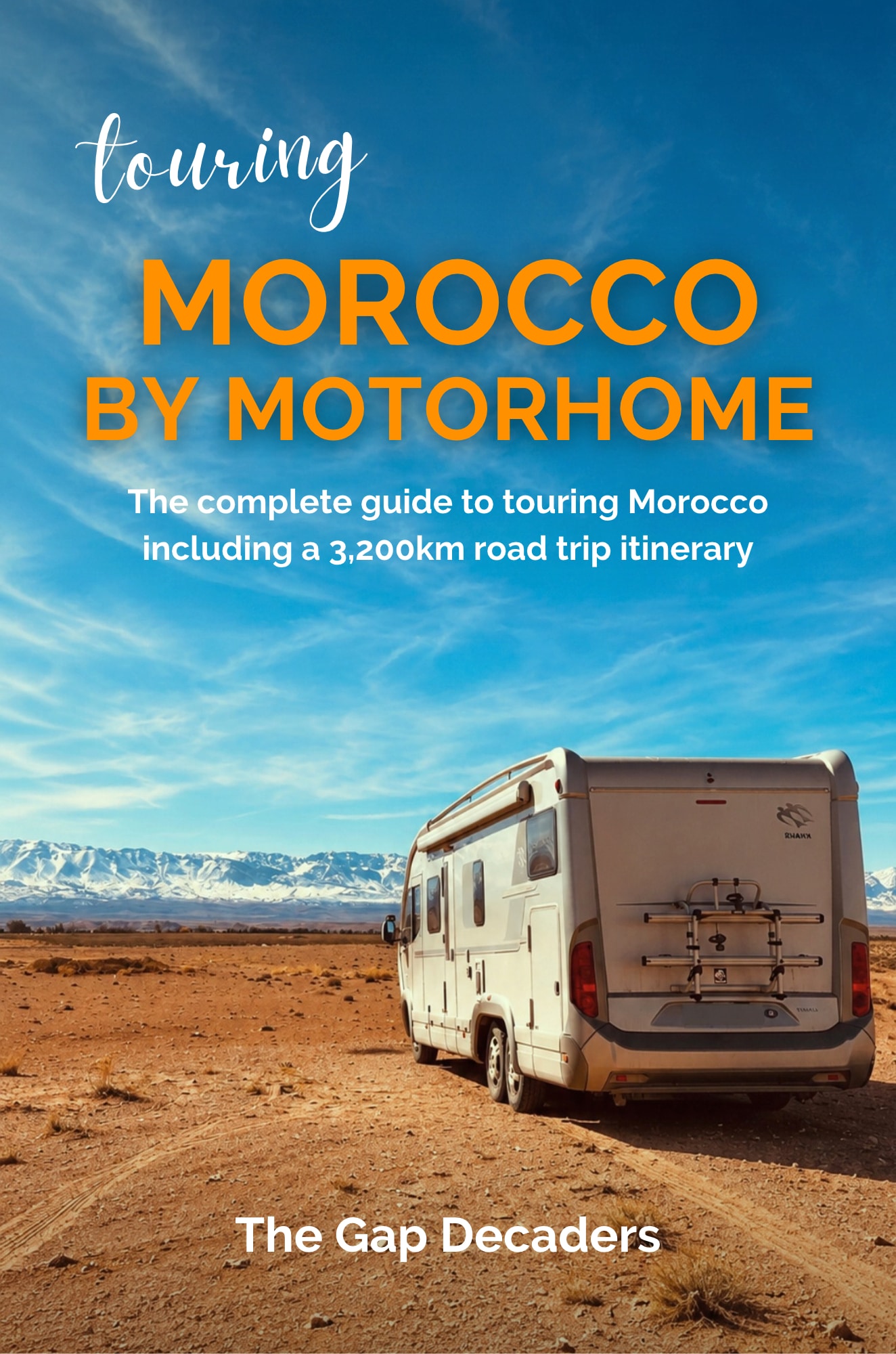
Planning a motorhome trip to Morocco?
Our book, Motorhoming in Morocco, brings everything we’ve learned from seven trips and around two years of travelling in Morocco together in one practical guide.
From ferries, insurance and driving to campsites, gas, water and money, it covers the things you actually need to know before you go. You’ll also get our complete Morocco motorhome itinerary, based on the routes and places we know and love.
Is the Ferry to Spain Worth the Cost?
The ticket price can look expensive beside a short Channel crossing, especially when you add a cabin and a larger vehicle. Compare it with the fuel, tolls and accommodation you would otherwise need for the journey through France.
Your UK starting point matters too. Travelling to Plymouth or Portsmouth may be much more convenient than reaching Dover or Folkestone.
Look carefully at arrival times. A sailing that reaches Spain late in the day may require a nearby overnight stop before you begin driving south.
How Long Should You Allow to Drive to Morocco?
Separate driving time from total travelling time. A route planner’s estimate won’t include meal breaks, overnight stops, ferry check-in or Moroccan border formalities.
Allow around three days for the direct drive through France and Spain, with more time if you prefer shorter driving days or want to explore along the way. Your route planner’s driving estimate excludes breaks, traffic delays, overnight stops and both ferry crossings. Taking the ferry to northern Spain reduces the mileage but adds a longer sea crossing.
We’d aim to reach the Algeciras or Tarifa area the day before sailing to Morocco. That gives you time to organise documents, check the crossing and begin the next stage without a long drive hanging over you.
Taking the Ferry from Spain to Morocco
For these routes, the main decision is between Algeciras to Tanger Med and Tarifa to Tangier Ville.
The names are easy to confuse, but the Moroccan arrival ports are in different locations.
Algeciras to Tanger Med
Tanger Med is a huge port to the east of Tangier, with direct connections to motorways west and south. We’d favour this arrival point if the plan is to continue into Morocco rather than begin with a stay in Tangier.
DFDS advertises a crossing time of around 90 minutes and carries vehicles on this route. Treat that as the sailing time, allowing additional time for check-in, loading, unloading and border procedures.
Tarifa to Tangier Ville
Tangier Ville brings you into the city of Tangier itself, making it a useful choice if visiting the city is part of your plan.
Baleària currently operates this route and advertises a crossing of approximately one hour, with vehicle carriage available. When booking a campervan or motorhome, confirm acceptance of your vehicle’s exact dimensions.
Arriving in the city means planning your onward drive and parking before you disembark, especially with a larger vehicle.
What About Sailing to Ceuta?
Algeciras to Ceuta is another option. Ceuta is Spanish territory on the North African coast, so you then cross a land border into Morocco. DFDS lists this among its Strait routes.
Compare the complete journey, including the land crossing, rather than choosing solely on the ferry’s sailing time.
You can find information on these routes plus many others in our guide to the best ferries from Spain to Morocco.
Booking Your Morocco Ferry
Use the full travelling dimensions of your vehicle, including any rear rack, bikes, roof equipment or trailer. Check the booking conditions if your vehicle falls outside standard categories.
We’ve booked directly with ferry operators online and through Viajes Normandie, better known as Carlos, at Centro Comercial Los Barrios just outside Algeciras. We usually arrive mid-afternoon and spend the night in one of the quieter car parks around the commercial centre, checking the signs and current parking arrangements before settling in, then make the roughly 15-minute drive to the port the following morning.
Compare both options, as prices and ticket conditions vary. We’ve previously paid between €240 and €340 for an open return covering our 9m motorhome and two passengers, although these are examples from our own trips rather than current quotes. Check how much flexibility an open return offers and whether it costs more than a fixed-date ticket.
Before buying your ticket, confirm:
Schedules can change and bad weather can disrupt crossings. Leave room in your itinerary for a delay rather than tying your arrival to an ambitious onward drive. We usually try and get an early ferry so we have time on the other side to get to our destination.
Documents for Driving to Morocco from the UK
Organise your paperwork before leaving Britain, keeping the originals accessible for check-in and border controls.
For UK drivers, the essentials include:
Current FCDO advice says UK drivers need their UK licence and the 1968 IDP in Morocco. It also says to obtain a green card from your insurer. Arrange these before travelling and confirm the extent of your Moroccan insurance cover, or plan to buy third party insurance at the port when you arrive.
If you don’t own the vehicle, check the authorisation requirements carefully. Ferry operator guidance includes additional documentation for borrowed and hired vehicles.
RELATED POST: Driving a Motorhome in Morocco: Road Rules & Practical Tips
Passport and Visa Requirements
British citizens can normally visit Morocco visa-free for tourism for up to 90 days. Your passport must expire at least three months after your arrival date, and you should check that it receives an entry stamp.
You must also meet the entry requirements for France and Spain on both the outward and return journeys.
Temporarily Importing Your Vehicle
Taking your vehicle into Morocco involves temporary import formalities. Keep the documentation issued by customs safe and check the vehicle details before leaving the border area.
Your vehicle’s permitted stay and your own immigration permission are separate matters. Check both deadlines and resolve any customs issue before attempting to leave without the vehicle. Moroccan customs operates a temporary admission system, while FCDO advice highlights the importance of leaving with the vehicle recorded on entry.
Morocco and Your Schengen Allowance
For British visitors travelling under the usual visa-free arrangements, time in France, Spain and Portugal counts towards the Schengen limit of 90 days in any rolling 180-day period.
Morocco is outside Schengen, so days spent there don’t use that allowance. However, crossing to Morocco doesn’t reset it.
Calculate your position for the return journey before you travel. You need enough allowance remaining to re-enter Spain and drive back through Europe.
Taking a Dog to Morocco
If you’re travelling with a dog, organise the whole round trip with your vet before booking.
Returning to Spain from Morocco requires a successful rabies antibody blood test as well as the appropriate identification, vaccination and travel documents. Arrange this with your vet well before departure: leaving the test until you’re in Morocco can trigger a three-month wait before your dog can enter Spain.
Arriving in Morocco
Allow time to complete immigration and customs formalities before beginning your road trip. Follow the instructions given by port staff and keep passports, vehicle documents and insurance together.
For your first stop, choose somewhere easy to reach in daylight: Asilah or Tétouan can make practical first stops, while Chefchaouen is another option if you clear the port early enough for the mountain drive in daylight. You’ll be adjusting to different traffic conditions and may have spent several hours travelling before you leave the port.
Check access to the campsite or parking area in advance. Navigating narrow streets while looking for somewhere to stay is an avoidable complication on your first afternoon.
Onward Travel in Morocco
Once you’ve completed the border formalities, your onward route depends on where you want to begin exploring. Morocco is a big country, so give yourself time to settle into the driving rather than planning a long journey straight off the ferry.
From Tanger Med, you can head towards the Atlantic motorway corridor for travel south, or turn towards Tétouan and the Rif Mountains. Arriving at Tangier Ville puts you in the city itself, making it convenient if you want to spend a night or two exploring Tangier before continuing.
Towards Asilah and the Atlantic Coast
For a gentle start, head towards Asilah, a small coastal town south of Tangier with a whitewashed medina, colourful murals and Atlantic beaches. It makes an appealing first stop before continuing towards Moulay Bousselham, Rabat and the coast further south.
If your destination is Essaouira or Agadir, you can combine motorway stretches with coastal stops along the way. Allow extra time when leaving the main roads, as progress through towns and villages is often slower than the map suggests.
Towards Chefchaouen and Fes
For mountain scenery and historic cities, head towards Tétouan and Chefchaouen before continuing towards Fes. This is a rewarding introduction to northern Morocco, but the winding roads require more time and concentration than the motorway.
Chefchaouen’s hillside setting also means you should check access to your accommodation or campsite carefully, particularly in a larger motorhome. Park outside the medina and explore its narrow streets on foot.
Towards Marrakech and Southern Morocco
If you’re heading for Marrakech, the main motorway corridor runs south towards Rabat and Casablanca before continuing inland. Break the journey rather than treating Marrakech as an easy first-day destination from the ferry.
From Marrakech, you can continue towards Essaouira and Agadir or plan a journey across the High Atlas towards Ouarzazate. Mountain routes need their own weather and road-condition checks, particularly in winter, and deserve more time than a motorway journey of the same distance.
Towards the Sahara Desert
If the dunes around Merzouga are your priority, an inland route through Fes, Midelt and the Ziz Valley lets you build the journey around changing landscapes and worthwhile overnight stops.
Reaching the desert from northern Morocco is a substantial journey. Give yourself several days to enjoy it, with flexibility for mountain weather and slower roads.




Driving in Morocco
Once you’ve arrived, your driving pace will depend heavily on the roads you choose. Major routes, busy towns, mountain roads and rural lanes each demand a different approach.
Leave generous journey times, stay alert for pedestrians and animals, and avoid planning long drives after dark. FCDO advice highlights poor lighting and additional hazards on secondary and mountain roads, particularly in bad weather.
For road conditions, navigation, police checkpoints and everyday driving advice, read our complete guide to driving in Morocco.
Getting there takes some planning, but it’s a rewarding journey in its own right. Give yourself time for the drive south, arrive at the ferry with your paperwork ready and leave enough freedom in your Moroccan itinerary to follow the places that interest you.
More Road Trip Resources to Explore

Driving a Motorhome in Morocco: Road Rules & Practical Tips

Driving to Türkiye from the UK: Routes and Practical Tips
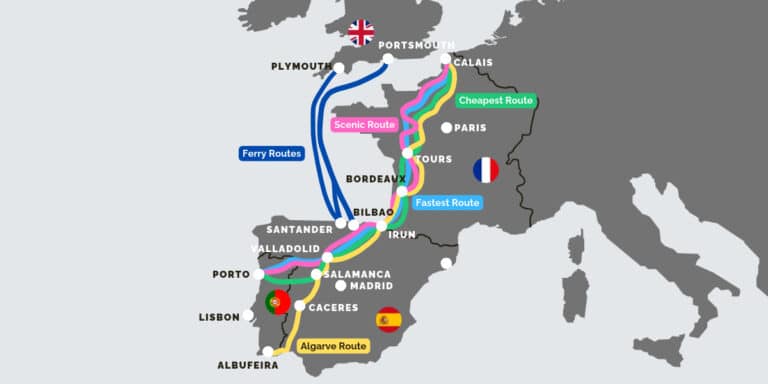
Driving to Portugal from the UK: Best Routes, Ferries and Driving Tips
Heart 200 Road Trip? 5 Reasons to Check Tyres in Stirling Before Going
Driving to Spain from the UK: Best Routes & Driving Tips
Driving to Italy from the UK: Best Routes & Driving Tips
Love it? Pin it!


