This post may contain affiliate links, from which we earn an income. Click here to read our affiliate policy.
Autumn is one of our favourite times to travel in Italy. The intense heat and crowds of summer begin to ease, the vineyards and forests change colour, and harvest season brings some of the best food and wine of the year.
We’ve travelled extensively through Italy by road, and September, October and November can each offer a completely different experience. September often still feels like summer, particularly in southern Italy, while October brings the best autumn colour to Tuscany, Umbria, the Italian Lakes and the mountains. By November, much of northern and central Italy is firmly into low season, while Sicily and Puglia can still be surprisingly mild.
There are trade-offs. Mountain weather can change quickly, daylight hours shorten, some seasonal attractions and campsites begin to close, and rain becomes more likely as autumn progresses. But plan around those things and autumn is a brilliant time for an Italian road trip.
In this guide, we share where to go in Italy in autumn, what weather to expect, the best seasonal events and food, and our practical tips for travelling in September, October and November.
Autumn in Italy Key Facts
What it is: The Gap Decaders’ guide to visiting Italy in autumn, covering the best places to go, seasonal weather, things to do and autumn events.
When to go: September, October and November, with each month offering very different weather, landscapes and travel experiences.
Where to go: Destinations across northern, central and southern Italy, including Tuscany, Umbria, the Dolomites, Venice, Sicily and Puglia.
What’s included: Autumn weather, month-by-month destination ideas, seasonal food and festivals, what to pack and practical travel tips.
Best for: Road trips, city breaks, food and wine, autumn colour and exploring Italy outside the busy summer season.
First-hand experience: The Gap Decaders have travelled extensively throughout Italy by road, including many of the destinations covered in this guide.
Enjoy The Gap Decaders? Add us as a preferred source on Google.
Autumn Weather in Italy
Italy’s autumn weather varies considerably from north to south, and altitude can make just as much difference as latitude. September is generally warm and sunny across much of the country, October brings cooler temperatures and more unsettled weather, and by November northern Italy can feel distinctly wintry while the south remains relatively mild.
Northern Italy
In northern Italy, including Milan, Venice and the Italian Lakes, average daytime temperatures are around 23–25°C in September, falling to roughly 17–19°C in October and 10–13°C in November.
September typically brings around six to seven hours of sunshine a day, dropping to four or five hours in October and two to four hours by November. Rain is possible throughout autumn, with October and November generally wetter and cloudier.
The Dolomites and Italian Alps
The Dolomites and other mountain areas are considerably cooler. September can still bring pleasant sunny days, but temperatures drop quickly after sunset and conditions become much more changeable through October.
By November, freezing temperatures and snow are increasingly likely at altitude. Early snowfall can arrive sooner, so always check mountain forecasts and road conditions before travelling.
Central Italy
Central Italy, including Tuscany, Umbria and Rome, enjoys a longer and generally milder autumn. Daytime temperatures are typically around 25–27°C in September, 20–22°C in October and 15–18°C in November.
You can expect roughly seven to eight hours of daily sunshine in September, around six in October and four to five in November, although wet spells become more frequent as the season progresses.
Southern Italy and Sicily
Southern Italy and Sicily stay warmer for longer. September often feels like an extension of summer, with daytime temperatures commonly around 27–29°C and seven to nine hours of sunshine a day.
October remains pleasantly warm at around 22–25°C with six to seven hours of sunshine, while November temperatures are often still around 18–21°C with approximately five to six hours of sunshine.
These are averages rather than a forecast, and autumn weather in Italy can be unpredictable. We’ve experienced wonderfully warm autumn days followed by a sudden change in conditions, particularly in mountainous areas. Pack layers and waterproofs, and if you’re road tripping, keep an eye on local forecasts as you travel.
Make sure you have travel insurance you can trust when travelling in Italy. We recommend True Traveller for their 5-star TrustPilot reviews, variety of cover options, best activities cover as standard, great prices, and excellent service.
Autumn in Italy: Where to Go and Why
Where you should go in Italy in autumn depends as much on when you’re travelling as what you want to see. September still works well for the coast and islands, October is prime time for autumn colour and harvest season, and by November the warmer regions of southern Italy become increasingly appealing.
We’ve broken our favourite autumn destinations down by month, although there’s plenty of crossover, particularly between late September and early October.
September in Italy
September is one of the best months to travel in Italy. Summer doesn’t disappear when August ends, particularly in the south, but the peak holiday season begins to wind down and temperatures become much more comfortable for sightseeing and road trips.
It’s a month that gives you plenty of choice. The sea is still warm enough for swimming, the grape harvest gets underway in Italy’s wine regions, mountain areas remain accessible and most seasonal attractions, restaurants and campsites are still open.
Tuscany & Umbria
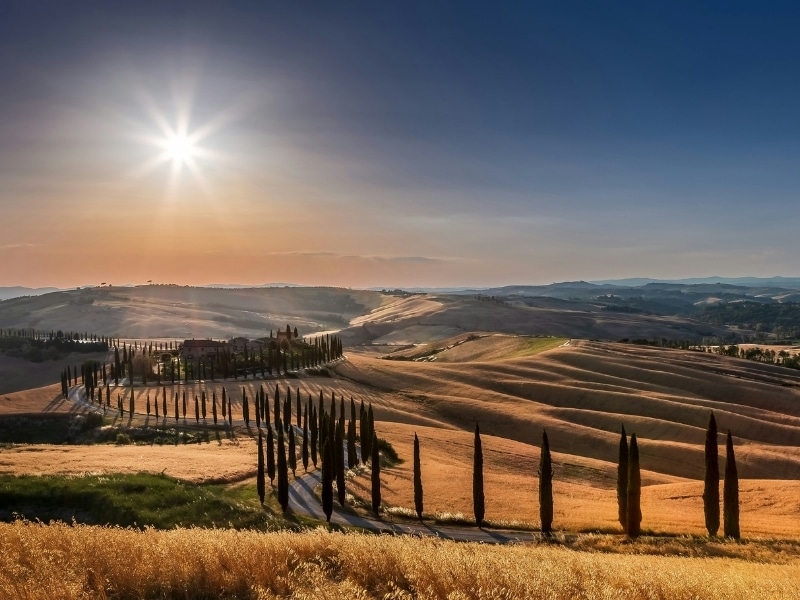
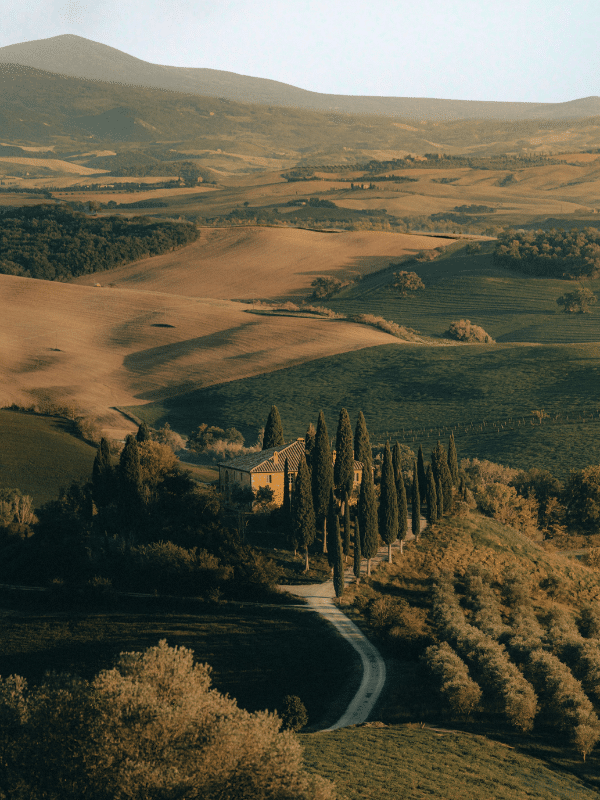
September is harvest season in Tuscany and Umbria, making this a particularly rewarding time to explore the countryside. The grape harvest usually begins during the month, depending on the variety, location and weather that year, and vineyards across both regions are at their busiest.
Days can still be warm, but conditions become increasingly comfortable for exploring hill towns such as Montepulciano, Pienza, Montalcino, Assisi and Spello. The Val d’Orcia and Chianti are particularly good for a September road trip, combining vineyards, medieval towns and some of central Italy’s best driving landscapes.
The countryside won’t yet have the deeper autumn colours of October, but late-summer golds and the activity surrounding the harvest give September a character of its own.
The Italian Lakes
September is a great month for the Italian Lakes. Lake Como, Lake Garda and Lake Maggiore are still lively, ferries and visitor attractions are operating, and daytime temperatures are generally warm enough for spending plenty of time outdoors.
The summer crowds begin to ease after August, making lakeside towns and ferry trips more enjoyable, particularly later in the month.
Lake Garda is a good choice if you want to combine the lake with walking, cycling or a wider road trip, while Lake Como offers historic villas, gardens and easy ferry connections between its lakeside towns. Evenings become cooler as September progresses, especially around the northern ends of the lakes and closer to the mountains.
Sicily
September is one of our favourite times to visit Sicily. Daytime temperatures are often still in the high 20s, the sea is warm enough for swimming and the intense heat of July and August has usually started to ease.
It’s a great month for combining beaches with Palermo, Syracuse, the Val di Noto and Mount Etna, all of which are easier to explore once temperatures begin to fall.
September also marks the start of the grape harvest in many parts of Sicily, adding another reason to head inland and explore the island’s wine-growing regions.
Sardinia
Sardinia holds onto summer well into September. The sea remains warm, beach weather is still very possible and the island becomes noticeably quieter once the Italian August holidays are over.
This is a particularly good time for a Sardinia road trip because you can combine the coast with hiking and inland exploring without the extreme temperatures of midsummer.
Most tourist businesses are still operating, although smaller coastal resorts begin to quieten towards the end of the month.
The Italian Riviera and Cinque Terre
September brings more comfortable temperatures to the Ligurian coast and the Cinque Terre, while the sea is still warm from summer.
It’s a much better time for walking the Cinque Terre trails than July or August, although this remains an extremely popular part of Italy and you shouldn’t expect the villages or trains to be quiet.
Elsewhere along the Italian Riviera, September is ideal for combining coastal towns with walking and sightseeing without the intensity of the peak summer heat.
Heavy rain can occasionally affect walking trails later in the month, so check local conditions before setting out.
Le Marche
Le Marche is a great September choice if you want somewhere less visited than neighbouring Tuscany and Umbria. The region stretches from the Apennines to the Adriatic, so it’s possible to combine hill towns, countryside, mountains and coast in one road trip.
September is particularly useful here because the coast remains warm enough to enjoy while inland temperatures become much more comfortable for exploring.
Urbino, Ascoli Piceno and the hill towns of the interior are worth including, while the Sibillini Mountains offer walking and dramatic scenery further inland.
September Events in Italy
September is harvest season across much of Italy, so many of the month’s best events revolve around wine, food and local produce.
Expo Chianti Classico, Greve in Chianti: Held from 10–13 September 2026, this major wine festival brings Chianti Classico producers from across the region into Greve’s Piazza Matteotti for tastings and events. It’s a particularly good addition to a September Tuscany road trip.
Festa del Cacio, Pienza: Pienza’s traditional cheese festival celebrates the town’s famous pecorino with tastings and the wonderfully eccentric cacio al fuso, a cheese-rolling competition played in Piazza Pio II. If you’re travelling through the Val d’Orcia in early September, it’s one to look out for.
You’ll also find smaller grape harvests, wine festivals and food sagre across Tuscany, Umbria and other wine-producing regions throughout September. These are often very local events, so check tourism information for the towns and regions on your route.
What to Eat in Italy in September
September is when Italy’s autumn produce begins to appear alongside the last of the summer harvest. Grapes and figs are plentiful, mushrooms start appearing on menus and the grape harvest brings plenty of activity to the country’s wine regions.
Porcini mushrooms: Fresh porcini begin appearing in markets and restaurants, particularly in northern and central Italy. Look for them with pasta and risotto, grilled simply or served alongside meat.
Fresh figs: September is prime fig season, and you’ll find them eaten fresh, paired with cheese and cured meats or used in desserts.
Grapes: The vendemmia, or grape harvest, takes place across many Italian wine regions during September. Tuscany, Umbria, Piedmont and Sicily are particularly good places to experience harvest season.
Wild boar: In Tuscany and Umbria, wild boar features heavily on autumn menus. Look for pappardelle al cinghiale, wide ribbons of pasta served with a rich, slow-cooked wild boar ragù.
Pecorino: If you’re travelling through Tuscany, particularly around Pienza and the Val d’Orcia, try the local pecorino. It’s often served simply with honey, preserves or local cured meats.
October in Italy
October is when autumn really takes hold in Italy. Vineyards and forests change colour, temperatures become much more comfortable for exploring, and seasonal ingredients such as truffles, chestnuts and mushrooms start appearing everywhere from local markets to restaurant menus.
It’s also a month of contrasts. Early October in central Italy can still bring warm, sunny days, while conditions in the Dolomites may already be cold enough for snow.
Tuscany
October is one of the best months for a Tuscany road trip. Vineyards and wooded hills begin turning shades of yellow, orange and red, while cooler temperatures make exploring the region’s hill towns and countryside much more comfortable than during summer.
The Val d’Orcia, Chianti and the countryside around Siena are particularly rewarding at this time of year. The grape harvest may still be underway in some areas, while olive harvesting begins later in autumn and seasonal menus fill with mushrooms, chestnuts and truffles.
Towns such as Montepulciano, Montalcino and Pienza are also easier to explore once the peak summer crowds have gone.
Umbria
Neighbouring Umbria offers many of the same autumn pleasures as Tuscany but generally sees fewer international visitors.
October is a great month for exploring Assisi, Spello, Orvieto and Perugia, with cooler sightseeing temperatures and autumn colour spreading across the surrounding hills and forests.
Food is a major reason to visit at this time of year. Truffles, mushrooms, chestnuts and new-season olive oil begin appearing across markets, restaurants and local festivals as the harvest season progresses.
The Dolomites
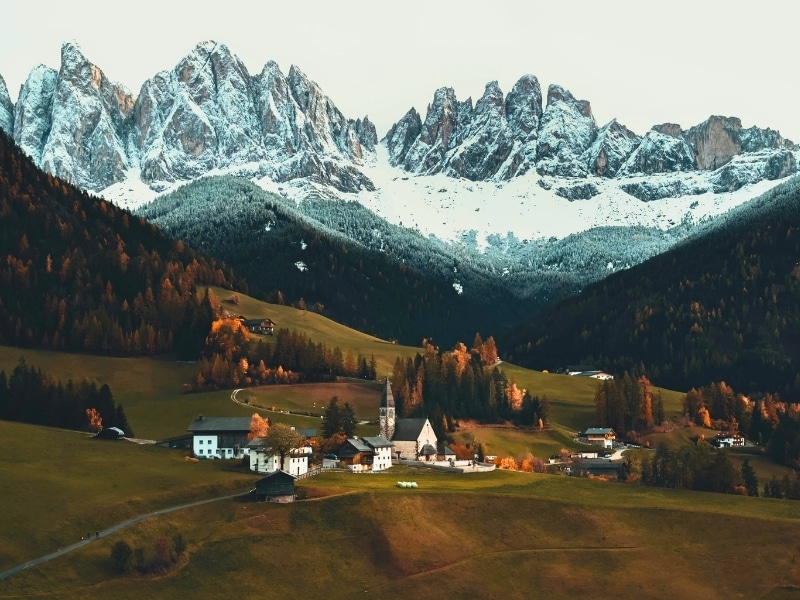
October in the Dolomites can be spectacular, particularly when the larch trees turn brilliant shades of yellow and gold.
Early to mid-October generally offers the best chance of seeing autumn colour, but conditions in the mountains can change very quickly. Temperatures drop sharply after sunset and snow is possible during the month, particularly at higher elevations.
October also sits between the main summer hiking and winter ski seasons. Some cable cars, mountain huts, hotels and restaurants close temporarily, so check opening dates carefully before planning your route.
Venice
October is a good time to visit Venice if you want cooler temperatures and fewer visitors than during the height of summer.
Days can still be pleasantly mild, particularly earlier in the month, making it much more comfortable to explore the city on foot. Evenings become cooler and rain is increasingly likely as October progresses.
Autumn also brings an increasing possibility of acqua alta, exceptionally high tides that can temporarily flood the lowest parts of Venice. Check the local tide forecast during your stay if high water is predicted.
Scanno and Abruzzo
For somewhere less obvious, head into Abruzzo and the mountain village of Scanno. Surrounded by the Apennines and close to Lago di Scanno, this part of central Italy is particularly beautiful when the forests change colour in October.
The wider Abruzzo region is a great choice for an autumn road trip, combining mountains, medieval towns and national parks without the visitor numbers you’ll find in Tuscany or the better-known regions of northern Italy.
Temperatures can fall quickly at altitude, particularly later in October, so expect much cooler mornings and evenings than you might experience elsewhere in central Italy.
October Events in Italy
October is one of Italy’s busiest months for food and harvest festivals, with truffles, wine and seasonal produce taking centre stage.
Alba White Truffle Fair: Piedmont’s famous truffle fair is one of Italy’s major autumn food events, with the White Truffle World Market, tastings, cooking events and plenty of opportunities to try the region’s prized white truffles. The fair continues through October and November and into early December in 2026.
Sagra dell’Uva di Marino: This historic grape festival near Rome celebrates the wine harvest with processions, food, music and the famous tradition of wine flowing from the town’s fountains. In 2026, events take place on 26–27 September and 3–5 October, making the main festival weekend an early October event.
Lucca Comics & Games: Something completely different from the harvest festivals, Lucca’s huge comics, gaming, fantasy and cosplay festival takes over the historic Tuscan city each autumn. The 2026 festival runs from 28 October to 1 November and marks the event’s 60th anniversary.
What to Eat in Italy in October
October is one of the best months of the year for eating in Italy. Autumn produce is in full swing, with truffles, porcini mushrooms, chestnuts, pumpkin and game appearing on menus across the country.
White truffles: Piedmont’s prized white truffles are at the heart of autumn cooking around Alba and the Langhe. They’re usually shaved raw over simple dishes such as tajarin pasta, risotto or eggs so their flavour isn’t overwhelmed.
Porcini mushrooms: Porcini remain a seasonal favourite across northern and central Italy. Look for fresh porcini in risotto and pasta dishes or simply grilled with olive oil and herbs.
Chestnuts: October is chestnut season in many mountainous and rural regions. You’ll find roasted chestnuts sold in towns and at autumn festivals, as well as chestnut flour used in dishes such as Tuscan castagnaccio.
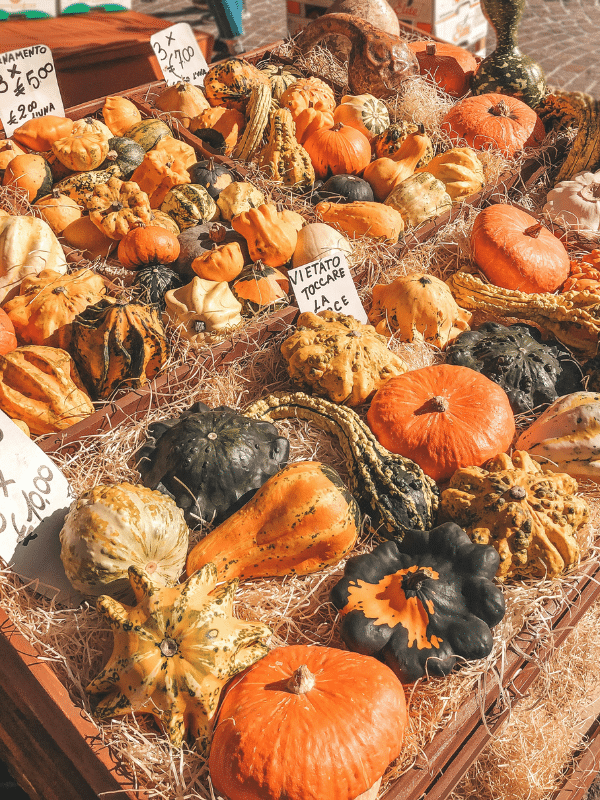
Pumpkin: Pumpkin becomes a major autumn ingredient in northern Italy. Mantua is particularly famous for tortelli di zucca, pasta parcels filled with pumpkin and traditionally flavoured with amaretti and mostarda.
Game: Wild boar, venison and other game become increasingly common on autumn menus, particularly in Tuscany, Umbria and mountainous regions, usually appearing in slow-cooked ragùs and hearty stews.
November in Italy
November is firmly low season across much of Italy. Days are shorter, rain is more likely and temperatures have dropped considerably, particularly in the north. But there are advantages too: fewer visitors, lower accommodation prices in many destinations and some of the best seasonal food of the year.
Choosing the right destination matters more in November than earlier in autumn. Head south for a better chance of mild weather, choose Italy’s cities for quieter sightseeing, or embrace the season in the country’s great food and wine regions.
Rome
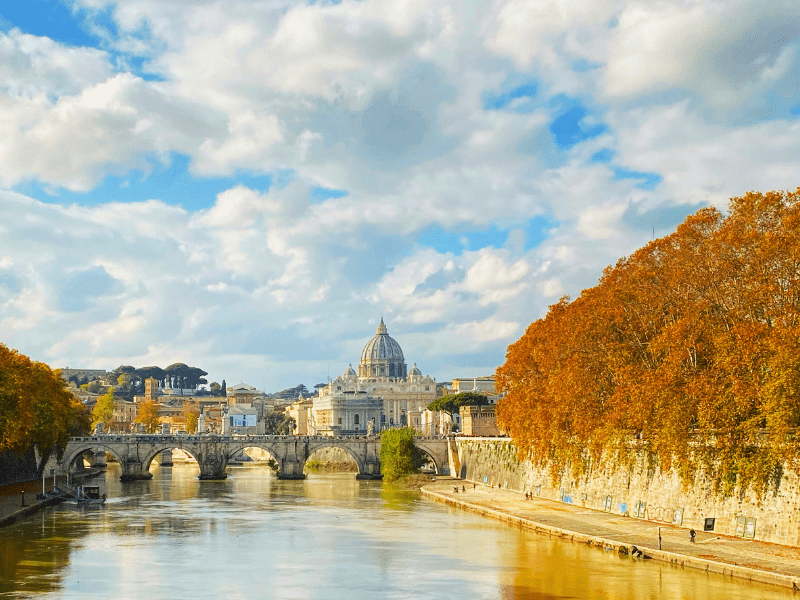
November is a good month for exploring Rome if sightseeing matters more to you than guaranteed sunshine. Temperatures are much more comfortable for walking than during summer and the city’s major sights are generally less crowded.
Expect mild days mixed with cooler, wetter spells, and plan outdoor sights for earlier in the day when there’s more daylight. Museums, churches, galleries and long lunches give you plenty of options when the weather turns.
Florence
Florence works particularly well as a November city break. The Uffizi, Accademia, Duomo and other major sights remain open year-round, but you’ll be visiting well outside the busiest summer period.
The weather can be cool and wet, but that’s easier to manage in a city with so much to see indoors. November is also a great time for Tuscan food, with truffles, mushrooms, chestnuts and new-season olive oil on autumn menus.
Bologna
Bologna is one of our favourite Italian cities and a great choice for November, when cooler or wetter weather matters far less than it does in more outdoor-focused destinations.
Much of the historic centre is lined with porticoes, so you can explore a surprising amount of the city under cover if the weather turns. Piazza Maggiore, the medieval centre and the Quadrilatero food market are all easy to explore on foot.
November also suits Bologna’s food particularly well. This is the heart of Emilia-Romagna, with tagliatelle al ragù, tortellini in brodo and mortadella among the regional specialities to look out for.
Piedmont
November is one of the most interesting months to visit Piedmont if food and wine are a priority.
The Langhe hills around Alba and Barolo are at the heart of one of Italy’s great gastronomic regions, and November falls right in the middle of white truffle season.
By now the landscape is quieter and more subdued than in October, with misty mornings and increasingly bare vineyards, but that’s very much part of the appeal of visiting Piedmont this late in the year.
Naples
Naples is a strong choice for November because southern Italy remains considerably milder than the north and the city works well whatever the weather.
This is a great month for exploring the historic centre, archaeological museum, markets and extraordinary food scene without summer temperatures or peak visitor numbers.
Pompeii and Herculaneum are also much more comfortable to explore on cooler days, although November rain means it’s worth keeping your plans flexible.
Puglia
Puglia is another good option if you’re looking for milder weather later in autumn. Daytime temperatures can still be comfortable for exploring, although evenings are cooler and wet spells become more likely.
Lecce, Ostuni, Alberobello and the Valle d’Itria are far quieter than during summer, making November well suited to a slow road trip through the region’s towns and countryside.
Some coastal businesses close outside the main season, so come for sightseeing, food and road tripping rather than a traditional beach holiday.
Sicily
Sicily is one of the best choices in Italy for a late-autumn trip. November can still bring mild, sunny days, particularly around the coast, although rain and cooler spells become increasingly likely.
Palermo, Catania, Syracuse and the Baroque towns of south-east Sicily all work well at this time of year, and sightseeing is much more comfortable without the intense summer heat.
Sicily’s size also means you’re less affected by seasonal closures than in smaller coastal resorts. If the weather changes, there are plenty of historic towns, markets, archaeological sites and restaurants around which to build your trip.
November Events in Italy
November is quieter than September and October, but food remains at the heart of many of Italy’s autumn events, with chocolate, truffles, chestnuts and new wine featuring heavily.
Eurochocolate, Perugia: One of Italy’s biggest chocolate festivals returns to Perugia from 13–22 November 2026. The event brings chocolate producers, tastings, demonstrations and installations to the Umbrian capital, making it an easy addition to an autumn trip through central Italy.
Alba White Truffle Fair: The International Alba White Truffle Fair continues through November, making this one of the best times to visit Piedmont if food is a major part of your trip. Expect truffle markets, tastings and events throughout Alba and the surrounding Langhe region.
Festa di San Martino: St Martin’s Day falls on 11 November and is traditionally associated with the year’s new wine, roasted chestnuts and seasonal food. Celebrations vary enormously between regions and towns, with local festivals and events held across Italy around this date.
All Saints’ Day: 1 November is a national public holiday in Italy. All Saints’ Day, or Ognissanti, is widely observed and some shops, businesses and attractions may operate reduced hours, so it’s worth taking into account when planning your trip.
What to Eat in Italy in November
November is the month for hearty regional cooking, new-season olive oil and some of Italy’s most prized autumn ingredients.
White truffles: November is prime white truffle season in Piedmont, particularly around Alba. They’re traditionally shaved over simple dishes such as tajarin pasta, risotto and eggs.
Olio nuovo: The year’s freshly pressed olive oil begins appearing after the autumn olive harvest. In Tuscany, Umbria, Puglia and other olive-growing regions, look out for olio nuovo served simply over toasted or grilled bread so you can taste the fresh, peppery oil.
Tortellini in brodo: Bologna and Emilia-Romagna come into their own as temperatures fall. Tortellini served in a rich broth is exactly the sort of warming dish that makes a November visit worthwhile.
Polenta: Across northern Italy, polenta becomes increasingly common as the weather cools, served with mushrooms, cheese, sausages, game or slow-cooked meat.
Chestnuts: Roasted chestnuts remain a familiar sight at markets and autumn festivals, while chestnut flour is used in regional cakes, breads and other traditional dishes.
Pan dei Santi: Around Siena, look out for this traditional Tuscan bread made with raisins, walnuts and spices. Its name means ‘bread of the saints’, and it’s closely associated with All Saints’ Day and the beginning of November.
What to Pack for Italy in Autumn
Packing for an autumn trip to Italy is all about layers. Conditions can range from warm, sunny days in Sicily or Puglia to cold evenings and even snow in the mountains, particularly later in the season.
For September, lightweight clothing will still be useful across much of Italy, but bring a light jacket or warmer layer for evenings and cooler northern regions. By October, you’ll want a mix of short and long sleeves, a warm layer and a waterproof jacket.
If you’re travelling in November, especially in northern Italy or the mountains, pack as you would for a cool European winter, with warmer layers, a proper coat and suitable footwear.
A few useful things to pack include:
If you’re road tripping, it’s worth keeping waterproofs and an extra warm layer somewhere easily accessible rather than buried in your luggage. Conditions can change surprisingly quickly as you gain altitude or travel between regions.
Italian Travel Tips for Autumn
Autumn is a great time to travel around Italy, but conditions and opening hours can change quickly as the country moves from the busy summer season into winter.
Check Seasonal Opening Times
September still operates much like summer in many destinations, but by October and November seasonal businesses begin reducing their hours or closing altogether.
This is particularly important in the Dolomites and other mountain areas, where cable cars, mountain huts and some hotels close between the summer hiking and winter ski seasons. Smaller coastal resorts can also become very quiet from late October onwards.
Always check opening times directly before making a significant detour for a restaurant, attraction or cable car.
Be Prepared for Shorter Days
Daylight disappears surprisingly quickly through autumn. At the beginning of September you’ll have plenty of time for long sightseeing days, but by November sunset is around late afternoon across much of Italy.
If you’re road tripping, plan scenic drives, hikes and mountain routes earlier in the day and try to reach unfamiliar overnight stops before dark.
Watch the Weather in the Mountains
Conditions in the Dolomites, Alps and Apennines can be completely different from those at lower elevations.
Snow and freezing temperatures are possible at altitude during autumn, sometimes well before winter officially arrives. Check local weather and road conditions before heading into the mountains and don’t assume that a route will be clear simply because conditions are warm and sunny elsewhere.
Expect More Rain as Autumn Progresses
Rain becomes increasingly likely during October and November, although conditions vary considerably between regions.
Periods of heavy rain can affect hiking trails and mountain roads, and autumn storms can occasionally disrupt ferries and other coastal transport. If you’re travelling with a flexible itinerary, build in some room to change your plans when the forecast turns.
Driving in Italy in Autumn
Autumn is generally a good time for an Italian road trip. Roads are quieter than during the peak summer holiday period and temperatures are much more comfortable for sightseeing.
Be aware of wet leaves, heavy rain, fog and early frost on higher roads later in the season. If you’re heading into mountainous regions, check winter tyre and snow-chain requirements for your route and dates before travelling.
If you’re travelling by motorhome or campervan, some seasonal campsites close during autumn, particularly in northern Italy and coastal resorts. Aires and year-round motorhome stops can become increasingly useful as the season progresses.
Book Less, But Check Ahead
One of the advantages of autumn is that you generally don’t need to plan every night months in advance. Outside major events and popular weekends, accommodation is often easier to find than during summer.
There are exceptions. Major festivals such as the Alba White Truffle Fair and Lucca Comics & Games can make accommodation scarce and expensive locally, so book ahead if one of these events forms part of your itinerary.
Look Out for Local Sagre
Some of the best autumn events aren’t major festivals at all. Small towns and villages hold sagre celebrating everything from chestnuts and mushrooms to truffles, grapes, pumpkins and new-season olive oil.
Many are primarily local events and aren’t heavily promoted internationally. Look for posters as you travel, check local tourism websites and ask at your accommodation or tourist information office to find out what’s happening nearby.
More Italian Travel to Explore
25 Sun-Drenched Destinations for a Dreamy Italian Summer

The Ultimate Bucket List Italy Road Trip
One Day in Venice: Best Itinerary, Map, Tips & Guide
14 Best Places to Visit in Italy for an Unforgettable Experience
20 Best Cities in Italy to Visit & Fall in Love With!

Southern Italy: Discover the Best 33 Places To Visit
Love it? Pin it!