
This post may contain affiliate links, from which we earn an income. Click here to read our affiliate policy.
Best Places to Visit in Scotland in Autumn
Autumn is one of our favourite times to explore Scotland. The summer crowds begin to disappear, the glens and forests turn shades of gold and copper, and cooler days make walking and road tripping much more enjoyable.
September, October and November each offer something different, but October is the standout month if autumn colour is the reason for your trip. Highland Perthshire is particularly spectacular, while the Cairngorms, Loch Lomond and the Trossachs, and the wider Scottish Highlands offer some of the best autumn landscapes in the country.
We’ve travelled extensively through Scotland by road, exploring its cities, islands, Highlands and national parks, and autumn brings a completely different feel to places we know well. In this guide, we’re sharing the best places to visit in Scotland in autumn, when to see the colours at their peak, what weather to expect and the practical things you need to know before you go.
Scotland in Autumn: Key Facts
Best time: October is the best month to see Scotland’s autumn colours at their peak, although September brings milder weather and longer days, while November feels noticeably more wintry.
Best places: Highland Perthshire, the Cairngorms, Loch Lomond and the Trossachs, Glen Coe and the wider Scottish Highlands are among the best places to experience autumn colour.
Weather: Autumn weather in Scotland is changeable, with cooler temperatures, regular rain and increasingly short daylight hours as the season progresses.
Best for: Autumn foliage, scenic road trips, hiking, wildlife, photography and visiting popular landscapes after the busiest summer period.
Road trip friendly: The Gap Decaders have included some of Scotland’s best autumn driving areas, including the Highlands, Cairngorms, Perthshire, Loch Lomond and Skye.
First-hand experience: The Gap Decaders have travelled extensively through Scotland by road, and this guide is based on those journeys and the places they know well.
Enjoy The Gap Decaders? Add us as a preferred source on Google.
Scotland Autumn Colours Map
Use our interactive map to find the best places to see autumn colours in Scotland. Click the markers for more information, or open the index in the top left to see all the locations. Click the star next to the map title to save it to your own Google Maps.
Make sure you have travel insurance you can trust for Scotland. We recommend True Traveller for their 5-star TrustPilot reviews, variety of cover options, best activities cover as standard, great prices, and excellent service.
Scottish Highlands
The Scottish Highlands are spectacular at any time of year, but autumn brings a completely different character to the landscape. Bracken turns copper and gold, woodland changes colour, the hills take on deeper shades of russet and brown, and the first dusting of snow can appear on the highest peaks later in the season.
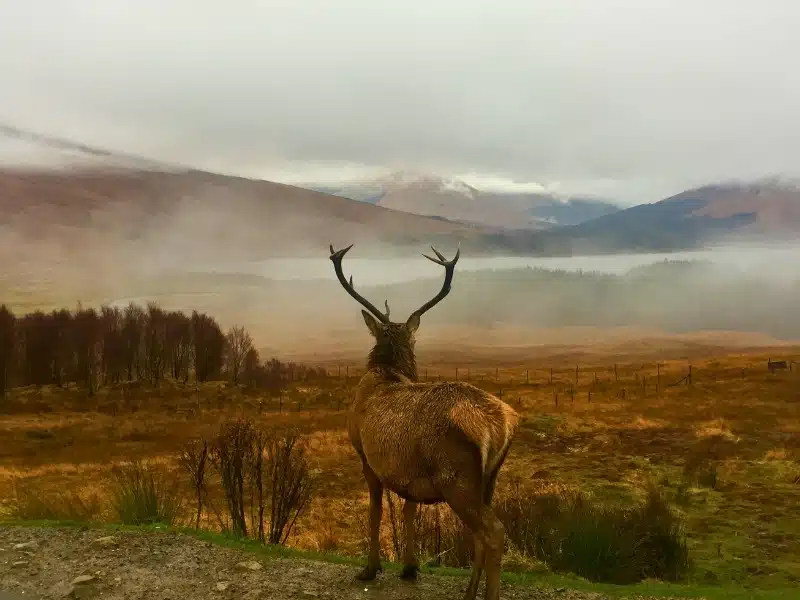
October is also the red deer rut, when the sound of stags roaring carries across the glens. Add misty mornings, rapidly changing light and fewer visitors than in summer, and this is one of our favourite times to road trip through the Highlands.
Glen Coe and Rannoch Moor
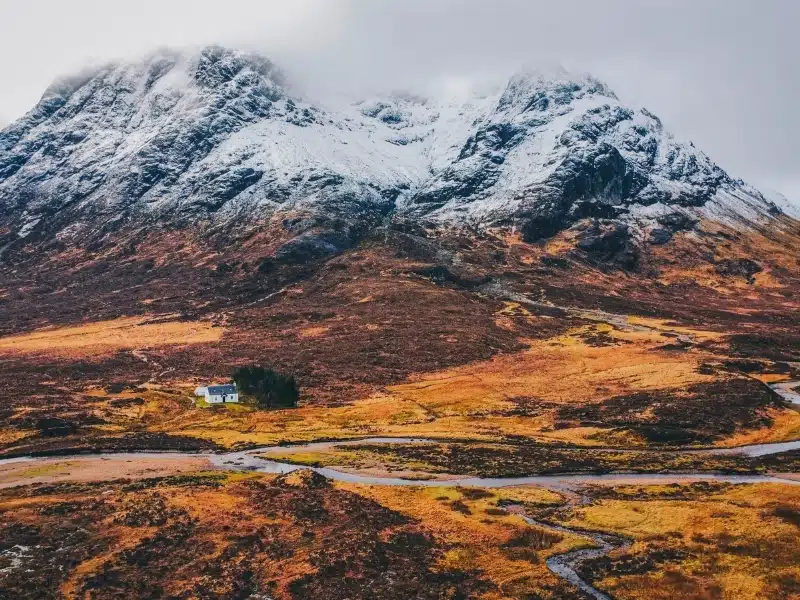
Glen Coe is one of the most dramatic places to experience autumn in the Scottish Highlands. The slopes turn shades of rust, ochre and gold, waterfalls gather pace after autumn rain, and low cloud around the mountains can make the glen feel wonderfully atmospheric.
The A82 across Rannoch Moor and through Glen Coe is also one of Scotland’s great autumn drives. There are plenty of places to stop for views and walks along the way, but allow more time than the distance suggests, particularly as daylight hours shorten later in the season.
Keep an eye out for red deer around Glen Coe and nearby Bridge of Orchy. We’ve seen magnificent stags here ourselves and autumn is one of the best times to experience them as the rut gets underway.
Fort William, Ben Nevis and Glen Shiel
Fort William is a useful base for exploring the western Highlands in autumn, sitting between Glen Coe, Glenfinnan and the Great Glen. The surrounding hillsides take on rich autumn colours, while Ben Nevis can have its first dusting of snow as the season progresses.
If you’re planning to climb Ben Nevis, autumn needs considerably more preparation than a summer ascent. Daylight hours shorten quickly, and conditions on the summit can be very different from those in Fort William, with low cloud, strong winds, ice and snow all possible later in the season.
North of Fort William, follow the A82 alongside Loch Lochy before turning onto the A87 towards Glen Shiel. This is one of our favourite Highland drives, passing through huge mountain scenery as the road winds towards the west coast.
Glen Shiel is particularly striking in autumn, when the bracken and moorland turn shades of gold and russet beneath the surrounding mountains. Continue west and you’ll reach Eilean Donan Castle, sitting at the meeting point of Loch Duich, Loch Long and Loch Alsh.
The castle is one of Scotland’s most photographed landmarks, but the surrounding landscape is just as much a reason to stop. Autumn brings changing colour to the hillsides and woodland around the lochs, and from here you can continue towards Kyle of Lochalsh and the Isle of Skye.
Torridon and Wester Ross
For wilder landscapes and fewer people, head north-west to Torridon and Wester Ross. This part of the Highlands isn’t heavily wooded, so autumn here is less about forests of colourful leaves and more about golden bracken, russet moorland and huge mountains under constantly changing skies.
The roads are part of the experience. The route through Glen Torridon towards Shieldaig and the coast is spectacular, with plenty of opportunities to stop for short walks and viewpoints. Nearby Plockton offers a completely different landscape, with a sheltered waterfront and woodland that brings more traditional autumn colour.
This is also an area where the weather can change very quickly, particularly later in autumn, so keep plans flexible and make the most of clear spells when you get them.
Glenfinnan
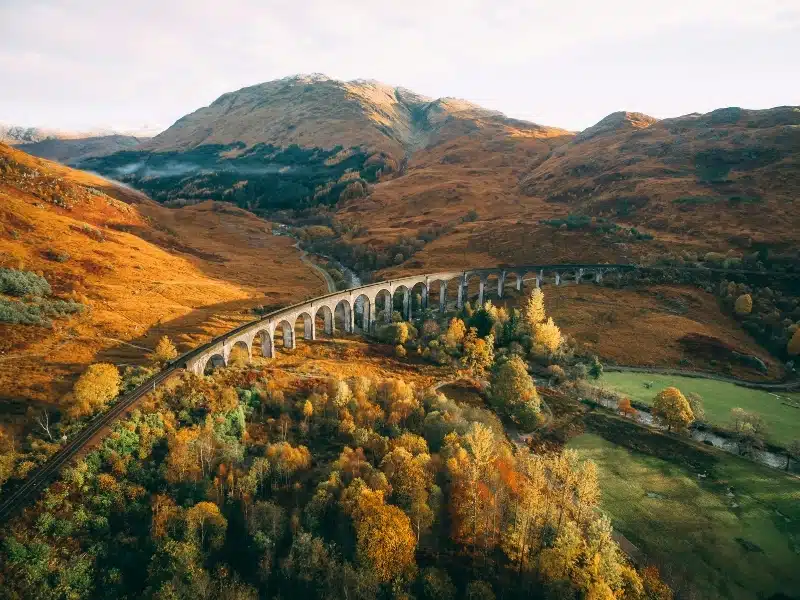
Glenfinnan is particularly beautiful in autumn, when the surrounding hills turn gold and russet and the summer crowds begin to thin out. The famous Glenfinnan Viaduct is the obvious draw, but take time to explore beyond the main viewpoint for views across Loch Shiel and the surrounding mountains.
If seeing a steam train crossing the viaduct is part of your plans, check the Jacobite timetable before travelling. Services are seasonal and don’t operate throughout the whole of autumn.
The A830 between Fort William and Mallaig is worth driving for the scenery alone, passing lochs, mountains and some of the most dramatic landscapes in the western Highlands.
Loch Ness and Glen Strathfarrar
Loch Ness makes an easy addition to an autumn Highlands road trip, particularly if you’re following the A82 north towards Inverness. Woodland around the loch begins to change colour through the season, and quieter mornings can bring mist hanging over the water.
For somewhere considerably less visited, Glen Strathfarrar offers a much wilder Highland experience. The narrow glen contains native woodland, mountains and waterfalls, and autumn brings rich colour to the trees and bracken.
Access into Glen Strathfarrar by vehicle is controlled at a private gate and is subject to seasonal opening arrangements, so check the current access information before setting out.
Culloden and Clava Cairns
Just outside Inverness, Culloden Battlefield and Clava Cairns are easy to combine in a single autumn day. They offer something different from the mountain scenery elsewhere in the Highlands and are particularly atmospheric once the busy summer season has passed.
Culloden Battlefield is the site of the final Jacobite Rising battle in 1746, with paths crossing the open moor and a visitor centre explaining the events that led to the battle and its aftermath. Autumn can bring wet and windy conditions here, so waterproofs are useful even if you’re only planning a short visit.
A few miles away, Clava Cairns is a remarkably well-preserved prehistoric burial site surrounded by woodland. The Bronze Age passage graves, standing stones and changing autumn leaves make this a worthwhile stop, particularly if you’re already travelling through Inverness or following the A9 north.
Cairngorms National Park
The Cairngorms is one of the best places in Scotland to experience autumn, particularly if you want to combine colourful woodland with mountains, lochs and wildlife. Scots pine, birch and larch bring shades of yellow, orange and gold to the forests, while the surrounding hills and moorland take on deeper autumn colours.
Aviemore makes a convenient base for exploring the western side of the national park, while Braemar is well placed for Deeside and the eastern Cairngorms. The drive between the two takes you around rather than across the mountains, so don’t underestimate distances when planning your days.
October is particularly rewarding, with autumn colour and the red deer rut in full swing. By November, conditions on the higher mountains can be much more wintry, even when it’s relatively mild in the glens.
Walking and Hiking
There are walks for pretty much every ability in the Cairngorms, but you don’t need to climb a Munro to enjoy the best of autumn.
Loch an Eilein, near Aviemore, is one of our favourites for an easier walk, with forest surrounding the loch and the ruins of a small island castle reflected in the water. The nearby Ryvoan Pass is another good option, while Meall a’ Bhuachaille offers a more challenging hike with wide views across the Cairngorms.
Experienced hillwalkers have plenty of bigger objectives, including Cairn Gorm and Ben Macdui, but autumn conditions on the high tops need to be taken seriously. Shorter daylight hours, strong winds, poor visibility, ice and early snow can all arrive surprisingly quickly.
Autumn Wildlife
Autumn is one of the most exciting times for wildlife in the Cairngorms. The red deer rut usually takes place through the autumn, with the roar of competing stags carrying across the glens.
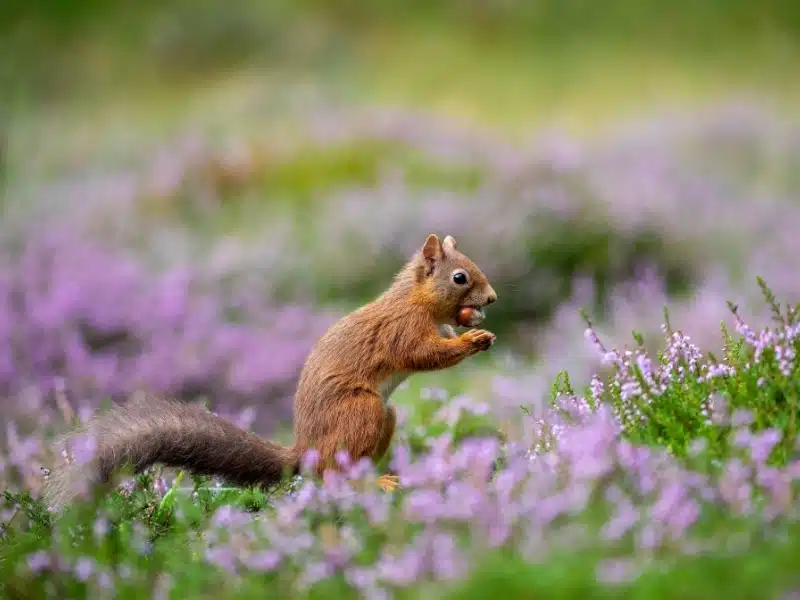
Red squirrels are another highlight, particularly in the pine forests around Rothiemurchus and Glenmore, while golden eagles, mountain hares and a wide variety of woodland and migrating birds can also be spotted across the national park.
For something completely different, the Cairngorm Reindeer Herd lives in the mountains near Glenmore. Guided hill trips offer the chance to see the free-ranging herd in its mountain environment, although trips are weather dependent and should be booked in advance.
Autumn Evenings in the Cairngorms
One of the advantages of those increasingly long autumn nights is the opportunity for stargazing. Away from Aviemore and the larger villages, there’s very little artificial light, and clear nights can produce spectacular skies.
You’ll also find plenty of good places to retreat to when the weather closes in. Aviemore, Braemar, Boat of Garten and Kingussie all make useful bases, and a distillery visit is a very Scottish solution to a wet autumn afternoon. Dalwhinnie Distillery, on the western edge of the national park, is particularly easy to combine with a Cairngorms road trip.
Edinburgh
Edinburgh is a great choice for an autumn city break, with colourful parks and gardens, fewer visitors than during the busy summer festival season, and plenty to do indoors when the weather turns.
September can still bring relatively mild days and plenty of daylight for exploring, while October brings stronger autumn colour to the city’s parks and tree-lined streets. By November, the days are much shorter and Edinburgh begins to feel distinctly wintry.
Princes Street Gardens and the Royal Botanic Garden
Princes Street Gardens is one of the easiest places to enjoy autumn colour in the centre of Edinburgh, with mature trees framing views of Edinburgh Castle and the Old Town.
For a longer walk, head to the Royal Botanic Garden Edinburgh, where the huge collection of trees and plants provides plenty of seasonal colour. The Water of Leith Walkway is another good option, following the river through some surprisingly leafy parts of the city, including Dean Village and Stockbridge.
Arthur’s Seat and Calton Hill
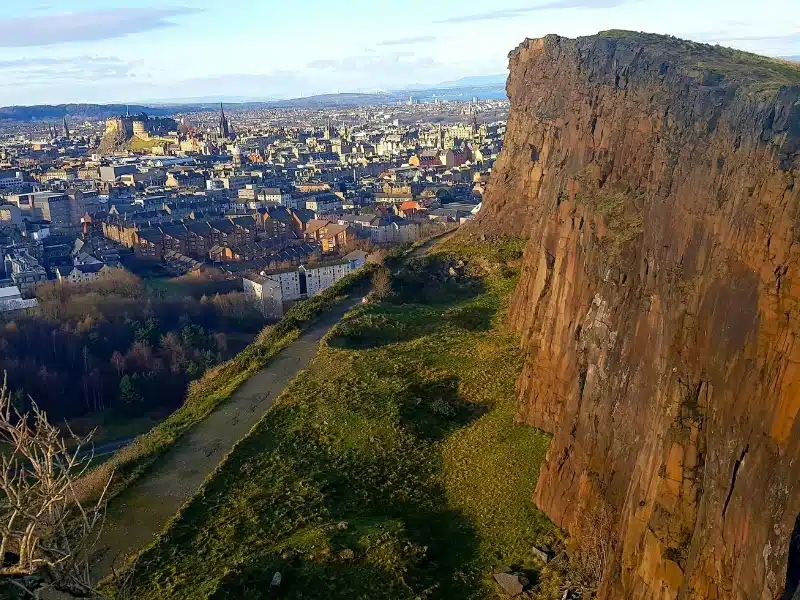
For views across Edinburgh, climb Arthur’s Seat in Holyrood Park. On a clear autumn day, you can see across the city towards the Firth of Forth, with the changing colours of the park below.
The paths can become muddy and slippery after rain, so walking shoes with a decent grip are a better choice than everyday trainers.
For an easier viewpoint, Calton Hill is just a short climb from the city centre and is particularly good around sunrise or sunset as the autumn days become shorter.
Rainy Days in Edinburgh
One of Edinburgh’s big advantages in autumn is that bad weather doesn’t have to derail your day. The National Museum of Scotland, Scottish National Gallery and Edinburgh Castle are obvious choices when the rain sets in, while the Old Town has plenty of historic closes, cafés and traditional pubs to retreat to.
Autumn is also a good time to explore Edinburgh after dark. October brings Halloween events and ghost tours to the Old Town, while the Samhuinn Fire Festival traditionally marks the transition from summer to winter at the end of the month.
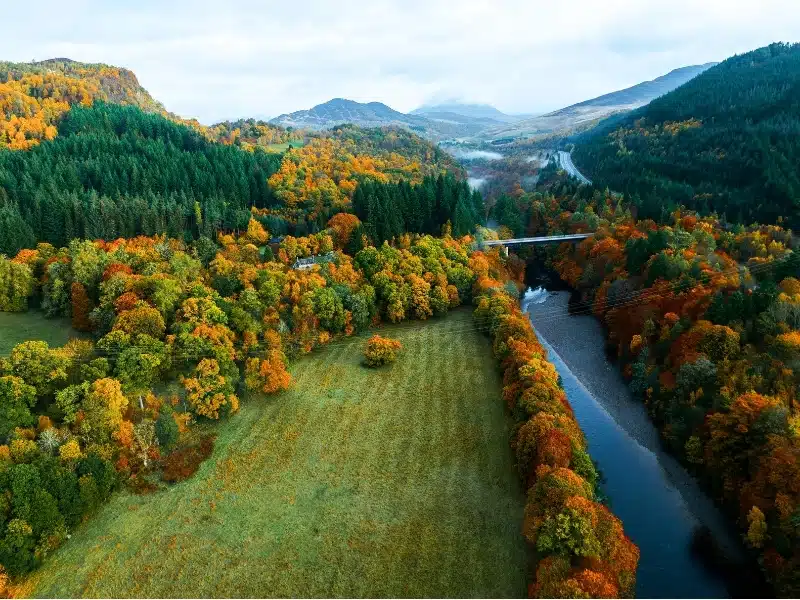
Perthshire
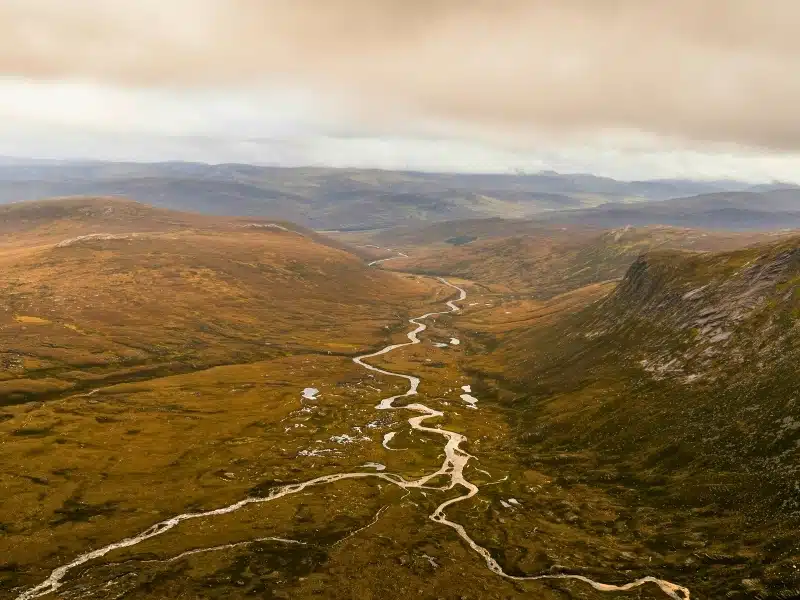
Perthshire is one of the best places in Scotland for autumn colour. Often known as Big Tree Country, its forests, wooded glens and loch shores put on a spectacular display, with beech, birch, oak and larch turning shades of yellow, orange and deep red.
October is the month we’d choose for an autumn road trip here. Pitlochry and Dunkeld make excellent bases, with some of the area’s best woodland walks and scenic drives within easy reach.
Pitlochry, Faskally Forest and Killiecrankie
Pitlochry sits right in the heart of some of Perthshire’s best autumn scenery. Just north of town, Faskally Forest surrounds a small loch with woodland trails that are particularly beautiful as the leaves change.
The forest is also home to the Enchanted Forest, an annual sound and light event that usually runs through October and into early November. It’s extremely popular, so book well ahead if you want to include it in your trip.
A little further north, the wooded gorge at Killiecrankie is another favourite autumn stop. Paths follow the River Garry beneath a canopy of changing leaves, with viewpoints over the gorge and river below.
For a longer walk, Ben Vrackie rises behind Pitlochry. At 841 metres, the summit gives you sweeping views across the surrounding hills and glens, although autumn weather and shorter daylight hours need to be factored into any higher-level walk.
Dunkeld and The Hermitage
Dunkeld is another of Perthshire’s standout autumn destinations. The village sits beside the River Tay and is surrounded by mature woodland, making it an easy place to combine a scenic walk with cafés, pubs and a wander around the historic centre.
Nearby, The Hermitage is one of Scotland’s classic autumn walks. The trail passes beneath towering Douglas firs to Ossian’s Hall, which overlooks the dramatic Black Linn Falls on the River Braan.
After heavy autumn rain, the falls can be particularly impressive, while the surrounding woodland provides some of the richest colour in the area.
Loch Tummel and Loch Rannoch
West of Pitlochry, the road towards Loch Tummel and Loch Rannoch takes you into quieter Perthshire countryside where wooded hillsides meet long stretches of open water.
Queen’s View is the best-known stop, with a panoramic view along Loch Tummel towards the mountains around Glen Coe. It’s particularly impressive when the surrounding woodland is changing colour, although it’s worth arriving early if you’re visiting during peak autumn weekends.
Continue west for Loch Rannoch, where the landscape becomes progressively wilder and quieter. The road around the loch makes a lovely autumn drive, with woodland, beaches and mountain views along the way.
Drummond Castle Gardens
For something completely different, Drummond Castle Gardens near Crieff combines autumn colour with one of Scotland’s most striking formal gardens.
The terraces and carefully clipped planting are viewed from above as you approach from the castle, with the surrounding trees adding another layer of colour in autumn. Opening days and hours vary seasonally, so check before making a special journey later in the year.
Walking and Perthshire
If you want to turn an autumn visit into a longer walking trip, the Cateran Trail is a 64-mile circular route through eastern Perthshire and the Angus glens.
The trail follows old drove roads and paths through farmland, woodland and open countryside, passing places including Blairgowrie, Kirkmichael and Spittal of Glenshee. You don’t need to walk the entire circuit, as individual sections make excellent autumn day walks.
Isle of Skye
Autumn is a fantastic time to visit the Isle of Skye if you prefer quieter roads and walking trails. The island’s moorland and bracken turn shades of rust and gold, while changing light, low cloud and dramatic skies suit Skye’s rugged landscape perfectly.
September offers the best chance of longer days and milder weather, while October brings stronger autumn colours and fewer visitors. By November, daylight is limited, the weather can be much more challenging and some seasonal businesses and attractions have reduced opening hours or close altogether.
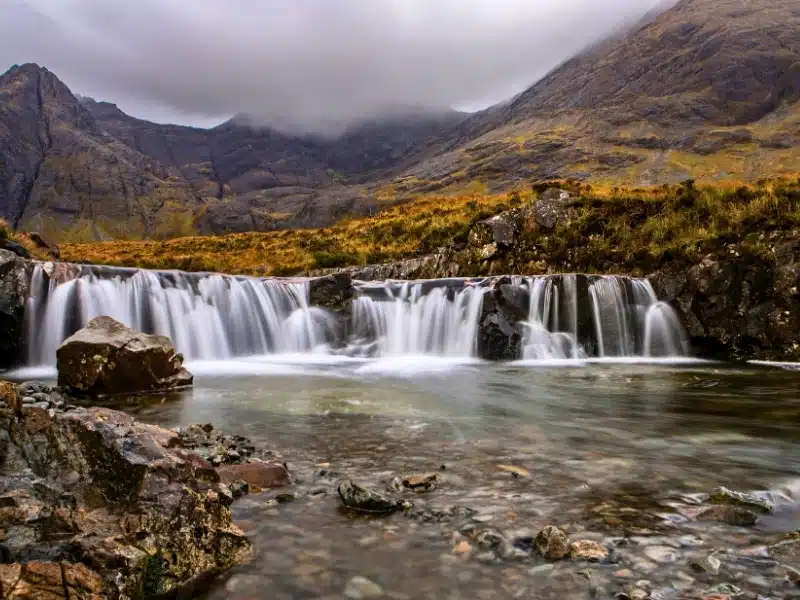
The Fairy Pools
The Fairy Pools at Glen Brittle are one of Skye’s most popular attractions, and autumn is a good time to experience them without peak summer crowds.
The surrounding bracken turns rich shades of copper and gold, while increased rainfall can make the waterfalls and pools particularly impressive. The downside is that the path can become wet and muddy, so waterproof footwear is a good idea.
Conditions here can change quickly and there is little shelter once you’re on the walk, so check the forecast before setting off.
The Quiraing and Old Man of Storr
The Quiraing and Old Man of Storr are two of Skye’s classic landscapes and both look spectacular in autumn, when russet moorland and bracken add colour to the surrounding hills.
The Quiraing can be enjoyed from viewpoints along the road between Staffin and Uig, or you can follow the walking route through the landscape itself. The Old Man of Storr requires a steady climb, rewarded with one of the most recognisable views on the island.
Autumn weather can make both walks considerably more challenging. Strong winds, rain, low cloud and slippery ground are common, and daylight disappears surprisingly quickly later in the season.
Portree
Portree makes a convenient base for exploring Skye, particularly in autumn when staying somewhere with shops, pubs and restaurants gives you options if the weather closes in.
The colourful harbour is worth exploring, but Portree’s biggest advantage is its central location. From here you can easily reach the Trotternish Peninsula, including the Old Man of Storr and Quiraing, while still being within striking distance of western Skye and the Cuillin.
If you’re travelling later in autumn, check accommodation and restaurant opening dates before you arrive as some businesses operate seasonally.
Autumn Driving on Skye
One of the pleasures of visiting Skye outside summer is having quieter roads, but don’t be tempted to pack too much into a day. Many of the island’s most scenic roads are narrow and single-track, and shorter daylight hours reduce how much ground you can realistically cover.
The Trotternish Peninsula makes an excellent autumn drive, taking in the Old Man of Storr, Kilt Rock, Staffin and the Quiraing. The west of the island around Dunvegan and the road towards Neist Point offers a different landscape of open moorland, sea cliffs and distant island views.
Give yourself time to stop rather than treating Skye as a checklist of sights. The weather changes constantly here, and some of our favourite moments on the island have come from simply being in the right place when the cloud lifts or the light changes.
Island Hopping from Skye
If you have more time, early autumn can also be a good opportunity to combine Skye with some of Scotland’s other western islands.
From Uig on Skye, ferries connect with the Outer Hebrides, or Na h-Eileanan an Iar, where huge beaches, peat moorland and mountains take on a wilder feel once summer ends. September is the better choice for an autumn island-hopping trip, with longer daylight hours and more seasonal businesses still open.
The Isle of Mull is another option, although you’ll need to route via the mainland rather than travel directly from Skye. Mull is particularly good for wildlife and dramatic coastal scenery, with colourful Tobermory providing a useful base for exploring the island.
Later in autumn, shorter days and more unsettled weather make island travel less predictable, so build some flexibility into your plans and always check ferry schedules and conditions before travelling.
Glasgow
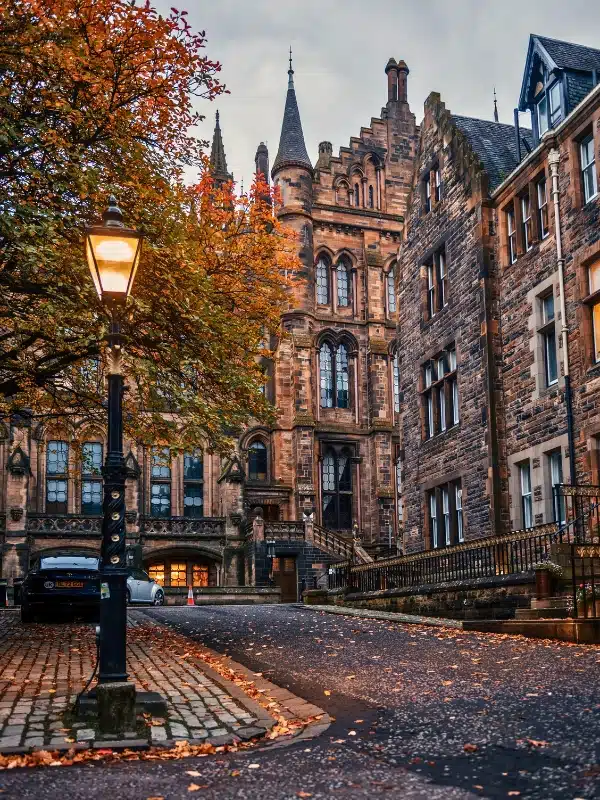
Glasgow is sometimes overlooked in favour of Edinburgh, but it’s a great city to visit in autumn. Its many parks and green spaces put on a colourful display, while an excellent choice of museums, galleries, restaurants and pubs means there’s plenty to do when the Scottish weather doesn’t cooperate.
September is generally the best choice if you want longer days for exploring the city, while October brings the strongest autumn colour to Glasgow’s parks and tree-lined neighbourhoods.
Glasgow’s Parks
Kelvingrove Park is one of the easiest places to enjoy autumn in the city, with mature trees lining the River Kelvin and views towards the University of Glasgow. You can combine a walk here with a visit to the nearby Kelvingrove Art Gallery and Museum.
Pollok Country Park offers a more rural feel without leaving Glasgow. Its woodland and riverside trails are particularly attractive as the leaves change, and you can also visit the Burrell Collection while you’re there.
Glasgow Green, the city’s oldest public park, is another easy option if you’re staying in the centre.
Museums and Galleries
Glasgow is particularly good for those inevitable wet autumn days. Kelvingrove Art Gallery and Museum and the Riverside Museum are both free to visit, while the Burrell Collection combines an excellent indoor attraction with the autumn scenery of Pollok Country Park.
In the city centre, the Gallery of Modern Art is another easy option and puts you close to Glasgow’s shops, cafés and restaurants if the rain settles in for the day.
Exploring Glasgow in Autumn
Autumn is a good season for exploring Glasgow’s neighbourhoods on foot. The West End combines handsome Victorian architecture with leafy streets, independent shops, cafés and traditional pubs, while the paths along the River Kelvin provide an easy escape from the busier streets.
Glasgow also works well as the starting or finishing point for a longer autumn road trip. Loch Lomond is less than an hour from the city, making it easy to swap Glasgow’s museums and restaurants for lochs, forests and mountains as you head north.
Loch Lomond and the Trossachs
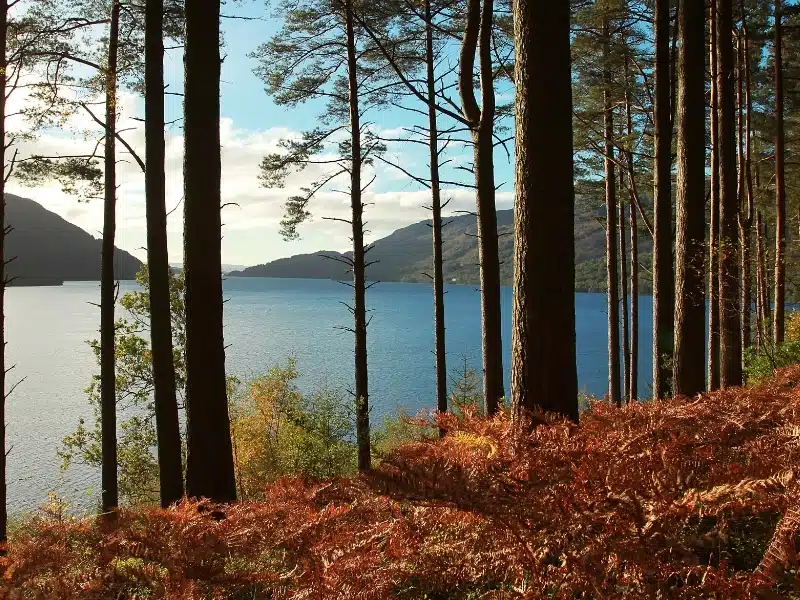
Loch Lomond and the Trossachs National Park is one of the easiest places to experience Scotland’s autumn colours, particularly if you’re travelling from Glasgow or beginning a road trip into the Highlands.
The combination of wooded loch shores, mountains and small villages makes October particularly beautiful here. The southern and eastern sides of Loch Lomond offer some of the richest woodland colour, while further north the landscape becomes increasingly rugged as the A82 heads towards Crianlarich and Glen Coe.
Loch Lomond
For classic autumn views, explore the eastern shore of Loch Lomond around Balmaha and Rowardennan. The woodland along this side of the loch turns shades of gold, copper and orange, with plenty of opportunities for short walks beside the water.
Balmaha is also the starting point for Conic Hill, a relatively short but steep climb with fantastic views across Loch Lomond and its islands. On a clear autumn day, the combination of colourful woodland, blue water and surrounding hills makes this one of the best viewpoints in the national park.
On the western side, the A82 follows Loch Lomond north through increasingly dramatic scenery. It’s a beautiful drive, but parts of the road are narrow and winding, so allow plenty of time, particularly later in autumn when daylight hours are shorter.
The Trossachs
East of Loch Lomond, the Trossachs offer a more intimate landscape of forests, lochs and wooded hills. Loch Katrine is a particularly good autumn destination, with walking and cycling routes along the loch and boat trips offering another way to enjoy the scenery.
Nearby Aberfoyle makes a useful base for exploring the area, while the scenic Duke’s Pass winds through the heart of the Trossachs between Aberfoyle and Loch Achray. In autumn, the surrounding woodland makes this one of the most colourful drives in central Scotland.
Queen Elizabeth Forest Park is another excellent place for an autumn walk, with miles of forest trails and viewpoints across the surrounding lochs and hills.
Falls of Falloch
If you’re continuing north towards the Highlands, stop at the Falls of Falloch near Crianlarich. Autumn rainfall can make the waterfall particularly impressive, and it’s only a short walk from the parking area.
From here, the A82 continues towards Bridge of Orchy and Rannoch Moor, providing a natural link between the autumn landscapes of Loch Lomond and the much wilder scenery of Glen Coe.
Scottish Borders
The Scottish Borders are easily overlooked on the rush north to Edinburgh and the Highlands, but autumn is a great reason to slow down and explore. The Tweed Valley is particularly beautiful, with wooded hillsides, riverside walks and quiet country roads taking on shades of gold, copper and red.
It’s also an easy area to include at the beginning or end of a Scotland road trip if you’re travelling from England, with much of the best autumn scenery centred around Peebles and the River Tweed.
Peebles and the Tweed Valley
Peebles makes a good base for exploring the Tweed Valley, with walks following the River Tweed and plenty of woodland nearby.
Just outside town, Glentress Forest has a network of walking and mountain biking trails through the hills above the valley. Although it’s best known as a mountain biking destination, you don’t need to get on a bike to enjoy it, with several waymarked walking routes and viewpoints across the surrounding countryside.
Further along the Tweed, the countryside around Innerleithen and Traquair offers more woodland, riverside scenery and quiet roads that are particularly attractive as the leaves change.
Dawyck Botanic Garden
Dawyck Botanic Garden, around eight miles from Peebles, is one of the best places in the Borders for autumn colour. Its collection includes trees from around the world, with maples, rowans and other deciduous species producing a particularly impressive seasonal display.
The garden sits on the hillside above the River Tweed and has several miles of paths to explore. Opening hours change through the season, so check before visiting later in autumn.
An Autumn Borders Road Trip
The Borders are ideal for slow, scenic driving rather than ticking off major attractions. Follow the Tweed between Peebles, Innerleithen and Melrose, stopping for woodland walks, historic villages and viewpoints along the way.
Melrose makes a good final stop, with the ruins of Melrose Abbey and the Eildon Hills providing a very different backdrop to the forests and river scenery further west.
If you’re heading north afterwards, Edinburgh is around an hour from the central Borders, making this an easy addition to a longer autumn trip through Scotland.
Other Low Season Trip Ideas





Scottish Autumn Foods
Autumn is a great time to eat your way around Scotland, with game, root vegetables, orchard fruits and wild berries all coming into season. Look out for venison, grouse, pheasant and duck on restaurant menus, often served with seasonal vegetables and fruit sauces.
Apples, pears, damsons and brambles, the Scottish name for blackberries, are plentiful at this time of year, while pumpkins, parsnips, turnips and other root vegetables find their way into warming soups and stews.
This is also the season for some of Scotland’s best comfort food. Cullen skink, a thick soup made with smoked haddock, potatoes and onions, is perfect after a cold day outdoors, as are traditional pies, hearty stews and anything involving a generous helping of mashed potato.
And, of course, there’s whisky. Autumn is an excellent time to visit a distillery, particularly when rain puts paid to your walking plans. Speyside, Perthshire and the Highlands all have distilleries that are easy to incorporate into an autumn road trip.

Autumn Festivals and Events in Scotland
Autumn brings some of Scotland’s most distinctive events, from Highland Games and traditional music to celebrations marking the changing seasons.
The Braemar Gathering takes place on the first Saturday in September and is one of Scotland’s best-known Highland Games. Expect traditional events including caber tossing, hammer throwing, Highland dancing and pipe bands, all in the mountain setting of the Cairngorms.
October brings the Braemar Folk Festival, with concerts and traditional Scottish music taking over venues around the village. In Edinburgh, the Samhuinn Fire Festival marks the transition from summer into winter with a dramatic celebration inspired by Celtic traditions.
Perthshire’s Enchanted Forest is another major autumn event, transforming Faskally Wood near Pitlochry with an outdoor sound and light show during the height of the autumn colour season.
By November, Scotland is beginning to look towards winter. The Oban Winter Festival brings lights, music and seasonal events to the west coast, while St Andrew’s Day on 30 November is celebrated around Scotland with music, food and cultural events.
Dates and programmes change each year, and some of these events sell out well in advance, so check the official event websites before planning your trip around one.
Wildlife in Scotland in Autumn
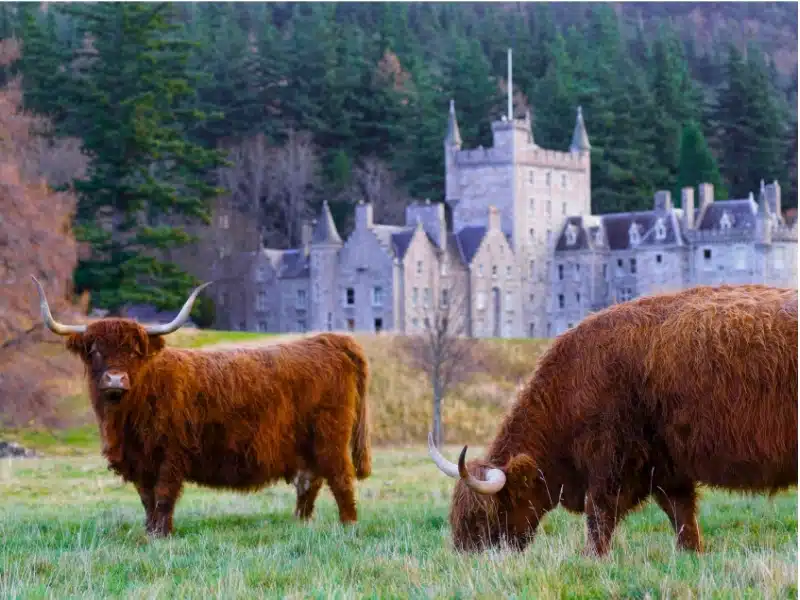
Autumn is one of the best seasons for wildlife watching in Scotland, with the red deer rut, busy red squirrels and activity around the coast all giving you reasons to keep binoculars close at hand.
Red Deer
The red deer rut is one of Scotland’s great autumn wildlife spectacles. Stags compete for females, roaring across the glens and occasionally clashing antlers with rivals.
Glen Coe, Torridon and the Cairngorms are all excellent places to look and listen for red deer. We’ve encountered some magnificent stags around Bridge of Orchy and the western Highlands ourselves.
Always give deer plenty of space, particularly during the rut, and never approach or attempt to feed them.
Red Squirrels
Autumn is also a particularly good time to spot red squirrels as they spend more time gathering and storing food for winter.
The pine forests of the Cairngorms are one of their strongholds, while Killiecrankie in Perthshire is another good place to keep watch for them among the trees and on the woodland floor.
Seals and Coastal Wildlife
Head to the coast and you may see grey seals and their pups during autumn. Scotland’s islands and remote coastline offer plenty of opportunities for seal watching, including around the Hebrides.
Keep your distance from seals on land, particularly mothers with pups. Watching quietly from well back gives them the space they need and usually results in a much better wildlife encounter anyway.
Birds of Prey
Golden eagles and white-tailed eagles can be seen year-round, but the quieter autumn months are a fantastic time to spend a day scanning the skies.
The Highlands and islands offer the best opportunities, with Mull particularly well known for its white-tailed eagles. Even if you don’t find an eagle, autumn days in these areas can bring plenty of other birdlife as migrating species move through Scotland.
When is the Best Time to See Autumn Colours in Scotland?
October is the best month to see autumn colours in Scotland, with forests, glens and parks turning shades of gold, orange, copper and red. Highland Perthshire is particularly spectacular at this time of year, with places such as Pitlochry, Faskally Forest and The Hermitage among the best places to see the seasonal display.
The change begins during September, but early in the month much of Scotland can still feel more like late summer. As September progresses, the first autumn colours start appearing, while the relatively long days make this a good time for road trips and walking if seeing peak foliage isn’t your only priority.
By October, autumn is well underway. Woodland areas such as Perthshire, the Cairngorms, Loch Lomond and the Trossachs and the Scottish Borders are particularly rewarding, while bracken and moorland bring rich russet and gold tones to the Highlands and Isle of Skye.
November is much less predictable if autumn colour is the main purpose of your trip. Many trees will have lost their leaves, particularly after periods of strong wind or heavy rain, and the landscape gradually takes on a more wintry character. VisitScotland describes November as the point at which autumn begins to give way to winter.
There isn’t a single date when Scotland’s autumn colours peak. The timing varies from year to year and between regions, depending on temperatures, rainfall, wind and local conditions. If we were planning a trip specifically to see Scotland’s autumn colours, we’d choose October and keep the itinerary flexible enough to follow the best conditions.
Which Month Should You Choose?
September is best for longer days, generally milder conditions and the beginning of the autumn colour.
October is our pick for the best overall autumn experience and your best chance of seeing Scotland’s forests and woodlands at their most colourful.
November is better for quiet trips, atmospheric landscapes and city breaks than for a holiday specifically planned around autumn foliage.
Driving in Scotland in Autumn
Autumn is one of our favourite times for a Scotland road trip. The roads are generally quieter than during the summer holidays, the scenery is spectacular and driving gives you the flexibility to make the most of good weather when it arrives.
There are a few seasonal challenges, though. Daylight disappears surprisingly quickly as autumn progresses, particularly in the north, and rain, strong winds, fog and eventually ice or snow can all affect driving conditions.
Plan Around the Daylight
Don’t underestimate the impact of shorter days, especially in October and November. Some of Scotland’s most scenic roads are narrow and winding, and we’d much rather drive them in daylight than arrive at our destination after dark.
Keep daily distances realistic and allow plenty of time for viewpoints, walks and unexpected stops. In the Highlands and islands, a relatively short distance on the map can take much longer than you expect.
Watch for Deer
Deer are a particular consideration in autumn. Red deer are rutting, and shorter daylight hours also mean you’re more likely to be driving at the times when deer are active.
Be particularly alert around dawn and dusk and on roads through woodland and open Highland countryside. If you see one deer beside the road, slow down and expect there may be others following.
Be Ready for Changing Weather
Scottish autumn weather can change quickly, and conditions can be very different over relatively short distances. Heavy rain can leave standing water on roads, strong winds can affect exposed routes and bridges, and later in the season ice and snow are possible, particularly on higher ground.
Before a longer journey, check the weather forecast and Traffic Scotland for road closures, weather warnings and other disruption. If conditions deteriorate, changing your route or plans is often the sensible option.
Make sure your vehicle is ready too. Good tyres, working lights and effective windscreen wipers matter when you’re dealing with wet roads, spray, darkness and poor visibility.
Take Your Time on Single-Track Roads
If you’re heading into the Highlands, islands or more remote parts of Scotland, you’ll encounter plenty of single-track roads with passing places.
Use passing places to allow approaching vehicles through and let faster traffic behind you pass when it’s safe. Don’t park in passing places, even if the view is tempting.
Most importantly, don’t rush. Some of the best autumn drives in Scotland are about the journey rather than getting from one attraction to the next, so leave enough time to stop and enjoy them.
Scotland Autumn Weather by Month
Scotland’s autumn weather changes considerably between September and November. September can still bring mild, settled days, while November is much closer to winter, with colder temperatures, much shorter days and an increasing chance of frost and snow.
There’s also a big regional difference. Western Scotland and the Highlands are generally wetter than the east, and conditions in the mountains can be very different from those at lower levels. Whatever month you visit, expect changeable weather and come prepared for rain.
Scotland in September
September is the mildest of the autumn months and a great choice if you want to combine outdoor activities with longer daylight hours.
Across Scotland, average daytime highs are around 15°C (59°F), falling to around 8°C (46°F) overnight. Rainfall averages around 123mm during the month, although this varies considerably depending on where you are.
Early September can still feel quite summery on a good day, but temperatures become noticeably cooler as the month progresses. Autumn colour also begins to appear later in the month, particularly in woodland and at higher elevations.
Snow is unusual at lower levels in September, although wintry conditions are possible on Scotland’s highest mountains.
Scotland in October
October is cooler, wetter and much more autumnal, and it’s our pick if seeing Scotland’s autumn colours is the main reason for your trip.
Average daytime highs are around 11°C (52°F), with overnight temperatures around 5°C (41°F). Scotland averages about 168mm of rain during October, making waterproof clothing essential if you’re planning to spend much time outdoors.
Daylight also reduces quickly during the month, which is particularly important if you’re road tripping or hiking. Frost becomes more likely, and the highest Highland summits may see snow.
The upside is that this is peak autumn colour season in places such as Highland Perthshire, making October arguably the best month for the full Scottish autumn experience.
Scotland in November
By November, Scotland is beginning to feel much more wintry. Average daytime highs fall to around 8°C (46°F), with overnight temperatures averaging around 2–3°C (36–37°F).
Average rainfall remains high at around 165mm, while frost becomes considerably more common. Snow is increasingly possible in the Highlands and on higher ground, although you shouldn’t assume Scotland will be covered in snow in November.
The biggest difference you’ll notice is the lack of daylight. Days are much shorter than in September, so sightseeing, walking and driving need a little more planning.
November isn’t the month we’d choose specifically for autumn foliage, but it can be a good time for a quieter Scotland trip, particularly if you’re happy to mix outdoor exploring with museums, distilleries, cosy pubs and other indoor stops.
What to Pack for Scotland in Autumn
Packing for Scotland in autumn is all about layers and waterproofs. You can experience sunshine, wind and heavy rain in the same day, while temperatures can feel very different between sheltered towns, exposed coastlines and the mountains.
Rather than packing one very heavy outfit, take layers you can add or remove as conditions change.
What Changes by Month?
September: Pack lighter layers alongside your waterproofs. A fleece or lightweight insulated jacket will usually be more useful than a heavy winter coat.
October: Add warmer layers, gloves and a hat, particularly if you’re heading into the Highlands or planning to spend long periods outdoors.
November: Pack for potentially wintry conditions, with warmer base layers, an insulated coat and proper waterproof footwear. A headtorch becomes particularly useful as daylight hours shorten.
Whatever month you’re visiting, don’t rely too heavily on the forecast when you pack. Scotland’s weather can change quickly, and having an extra warm layer and decent waterproofs with you can make the difference between abandoning a day out and carrying on exploring.

Things to Know Before Visiting Scotland in Autumn
A little planning goes a long way when visiting Scotland in autumn. The weather, daylight and availability of seasonal services can all affect your trip, particularly as you move from September into November.
More UK Travel to Explore

15 Best Cities to Visit in the UK & Fall in Love With!

Road Trips from London: The 6 Best Routes to Explore

Atlantic Highway: An Epic Devon & Cornwall Road Trip
UK Road Trip – 18 Unmissable Routes

The 21 Best Motorhome Routes in the UK for an Amazing Adventure!

Scottish Highlands: 15 Most Gorgeous Places to Visit
Love it? Pin it!


