
This post may contain affiliate links, from which we earn an income. Click here to read our affiliate policy.
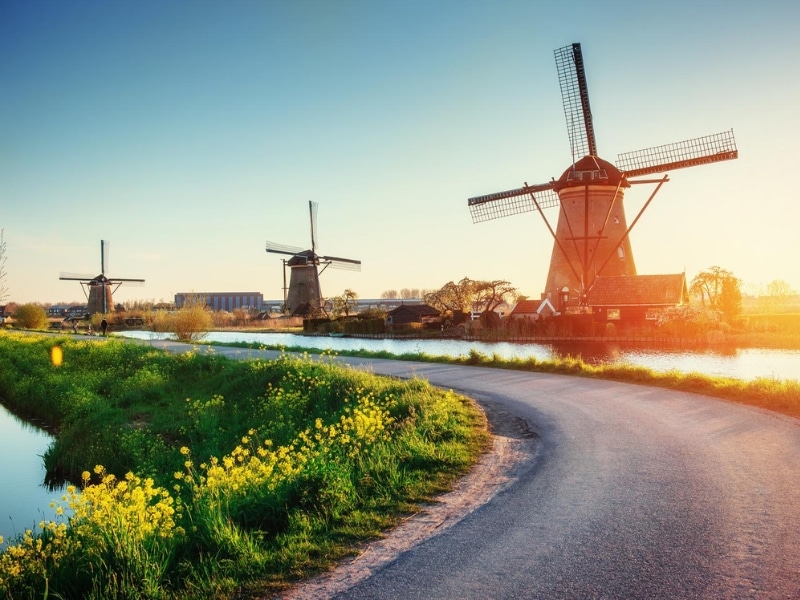
The Netherlands is made for road trips. It’s compact, easy to get around and packed with places worth stopping for, from historic canal cities and traditional fishing villages to huge sandy beaches, colourful bulb fields and the country’s famous windmills.
But there’s much more to the Netherlands than Amsterdam and tulips. Head beyond the best-known sights and you’ll find national parks, handsome Hanseatic towns, impressive engineering projects and a coastline that feels surprisingly wild in places.
This Netherlands road trip guide brings together the best places to visit, a suggested route and all the practical information you need to plan your trip, including driving, parking and getting around.
Enjoy The Gap Decaders? Add us as a preferred source on Google.
Planning tools we actually use for Netherlands road trips
Netherlands Road Trip Map & Route
This 7 day road trip from Amsterdam to Haarlem visits vibrant cities, picturesque towns and some of the Netherland’s big hitting landmarks. Try Dutch cuisine, explore iconic windmills, take a boat trip (you must!) and soak up the open minded and progressive environment.
Route: Amsterdam – Leiden – The Hague – Gouda – Rotterdam – Eindhoven – Maastrict – Nijmegen – Zwolle – Groningen – Leeuwarden – Haarlem
Optional Side Trip: Delft, Kinderdijk, Geiethoorn and Zaanse Schans
Distance: ~897 km (557 miles)
Duration: 7 days (allow 10 days optional side trips)
Best time to go: April to June for spring flowers, longer days and generally mild weather, or September for fewer crowds
Best for: Historic cities, canals, windmills, cycling, Dutch culture and varied city-and-countryside stops
Day 1: Amsterdam
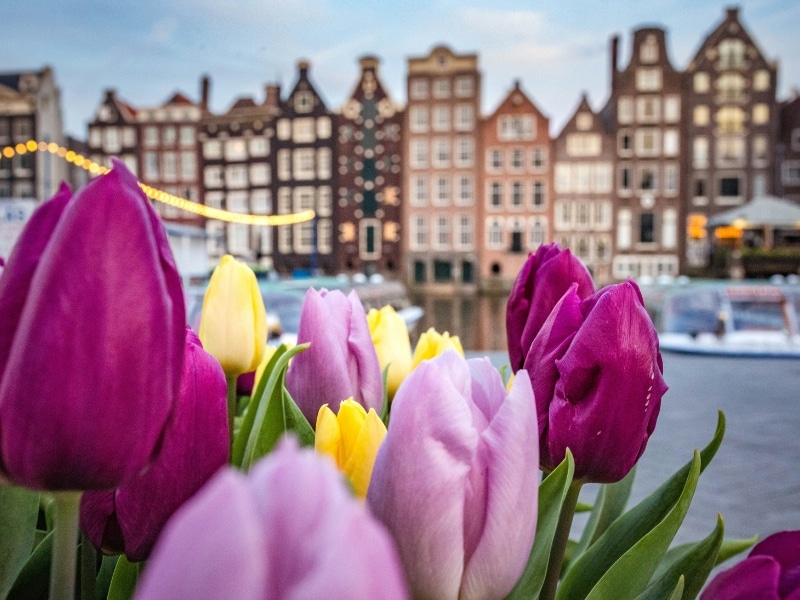
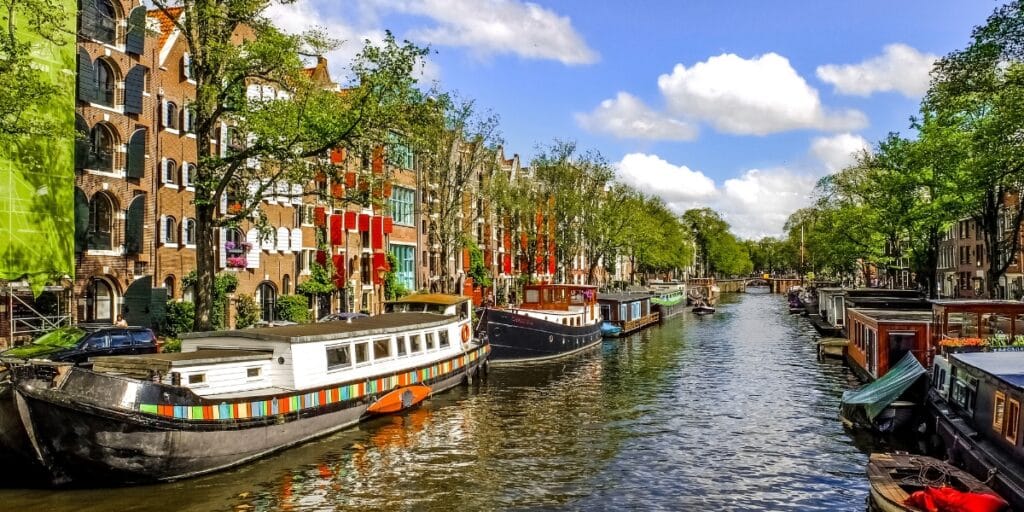
Amsterdam is the vibrant capital of the Netherlands, famous for its beautiful canals, narrow gabled houses, world-class museums and, of course, thousands of bicycles. It’s a great place to start your Netherlands road trip, and you’ll want at least a full day to explore.
One of Amsterdam’s must-see attractions is the Van Gogh Museum, home to the world’s largest collection of works by Vincent van Gogh, including Sunflowers and The Bedroom.
Another essential stop is the Anne Frank House, where Anne Frank and her family hid from Nazi persecution during the Second World War. Tickets are in high demand, so book well ahead if you want to visit.
Around a 20-minute walk away, the Rijksmuseum houses an extraordinary collection of Dutch art and history, including masterpieces by Rembrandt and Vermeer.
Away from the museums, one of the best ways to experience Amsterdam is from the water. Take a canal cruise through the historic canal ring, a UNESCO World Heritage Site, for a completely different view of the city’s architecture and neighbourhoods.
Or do as the locals do and explore on two wheels. You can rent a bike and use the city’s extensive network of cycle paths to get around, although Amsterdam’s busy cycling culture can take a little getting used to if it’s your first visit.
Before leaving the city, wander through the lively Albert Cuyp Market in De Pijp. Stretching along Albert Cuypstraat, it’s one of Amsterdam’s best-known markets, with stalls selling clothes, flowers, souvenirs and plenty of Dutch specialities.
Where to Stay in Amsterdam
Luxury: Staying at the Pulitzer Amsterdam combines historic charm with modern luxury. Set in 25 interlinked 17th-century canal houses, the boutique hotel offers impeccable service, elegant rooms, canal views, and exceptional dining, all close to top attractions.
Mid-Range: Hotel The Craftsmen uniquely blends history and artisanal charm. Housed in a series of historic buildings along the Singel Canal, the boutique hotel features individually designed rooms inspired by various crafts. Its central location and personalized service make it ideal for an authentic Amsterdam experience.
Budget: Hotel Des Arts has a charming blend of artistic ambience and comfort. Located in a historic building near the city centre, the boutique hotel features uniquely decorated rooms inspired by different art styles. With its cosy atmosphere and attentive service, Hotel des Arts is our favourite place to stay in the city.
Hostel: The Bee Hostel offers a vibrant and budget-friendly experience. Situated in a lively neighbourhood, this hostel offers comfortable dormitories and private rooms. With its friendly atmosphere and communal spaces, this is the ideal choice for travellers looking to explore Amsterdam on a budget.
RELATED POST: Amsterdam One Day Itinerary + Map, Tips & Guide
Day 2: Amsterdam to The Hague
Leiden
Amsterdam to Leiden: 45 km (28 miles) | 40-50 minutes
Leiden is a compact and historic university city, with a beautiful old centre of canals, narrow streets, traditional Dutch houses and handsome 17th-century buildings. It’s an easy first stop after leaving Amsterdam and small enough to explore on foot.
The city has several excellent museums, including the Rijksmuseum van Oudheden, the Netherlands’ National Museum of Antiquities. Its collections span ancient Egypt, Greece, Rome and the Netherlands, with everything from Egyptian mummies and sarcophagi to Roman artefacts.
Another highlight is Museum De Lakenhal, housed in the former cloth hall that once stood at the heart of Leiden’s thriving textile industry. Today, the museum combines the story of the city with a collection of art that includes works by Rembrandt, who was born in Leiden in 1606.
Don’t miss the Pieterskerk, a striking late-Gothic church that has stood at the heart of the city for centuries. Its history is closely connected with the Pilgrims, who lived in Leiden before sailing to North America aboard the Mayflower.
Make time for the Hortus Botanicus, founded in 1590 and one of the oldest botanical gardens in the world. Part of Leiden University, its gardens and glasshouses are home to plants from around the globe and make a peaceful break from exploring the city streets.
The Hague
Leiden to The Hague: 22 km (14 miles) | 25-30 minutes
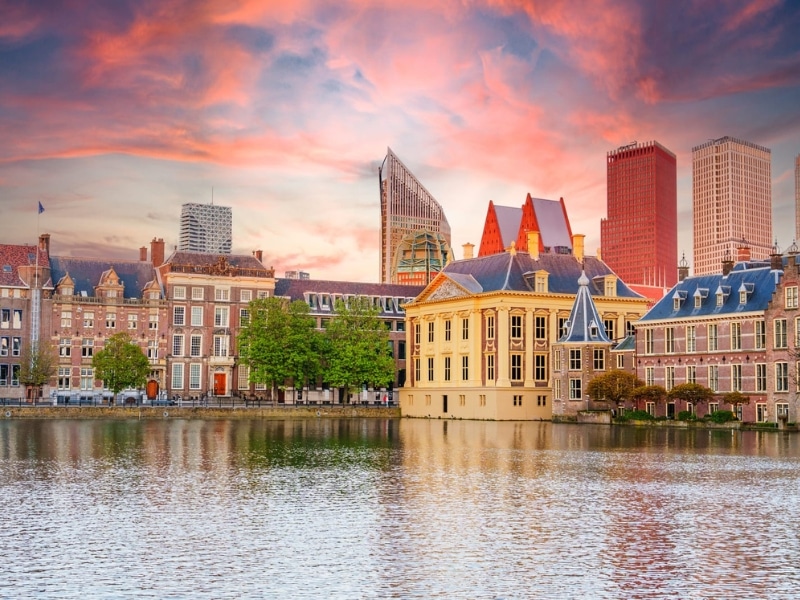
The Hague, known in Dutch as Den Haag, is the seat of the Dutch government and home to the royal family, giving it a very different character from Amsterdam and Leiden. Grand avenues, palaces and international institutions sit alongside excellent museums and a lively historic centre.
Start at the Mauritshuis, home to one of the finest collections of Dutch and Flemish paintings in the country. Its relatively small collection includes masterpieces by Rembrandt and Vermeer, including Vermeer’s famous Girl with a Pearl Earring.
For more art, visit the Kunstmuseum Den Haag, which holds the world’s largest collection of works by Piet Mondrian, alongside pieces by artists including Picasso and Degas. The museum also has extensive collections covering fashion and decorative arts.
The Hague is also internationally known as a centre for peace and justice. The Peace Palace is home to the International Court of Justice, the principal judicial organ of the United Nations, as well as several other international legal institutions.
From here, head back towards the centre and the Palace Garden, a green space beside Noordeinde Palace. It’s a lovely spot for a stroll before exploring more of the surrounding historic streets and squares.
If you have extra time, head out to Scheveningen on the North Sea coast. Its long sandy beach, pier and seafront are just a few kilometres from central The Hague and provide a complete change of scenery before continuing your Netherlands road trip.
Where to Stay in The Hague
Luxury: Hotel Des Indes The Hague offers a luxurious experience steeped in history. Set in a grand 19th-century building, the hotel features elegant interiors and opulent furnishings. It is located centrally and offers convenient access to The Hague’s cultural sights and government offices.
Mid-Range: ‘t Goude Hooft is housed in a beautifully restored 17th-century building with a charming mix of history and comfort. Located centrally, it provides convenient access to The Hague’s attractions, making it an ideal choice for a memorable stay in the heart of the city.
Budget: Stadsvilla Hotel Den Haag offers a blend of elegance and comfort in tastefully designed rooms. Located centrally, it allows easy exploration of The Hague’s cultural sites, making it a great spot to rest after a day’s sightseeing.
Hostel: Will and Tate City Stay provides well-appointed rooms and dormitories in a central location with easy access to The Hague’s attractions, making it the ideal choice for travellers within the Netherlands on a budget.
RELATED POST: Best Cities in the Netherlands for an Amazing Visit
Delft Side Trip
Detour from The Hague: 13 km (8 miles) each way | around 20-25 minutes’ drive
Time needed: Allow 3-4 hours to explore Delft, or half a day at a more relaxed pace
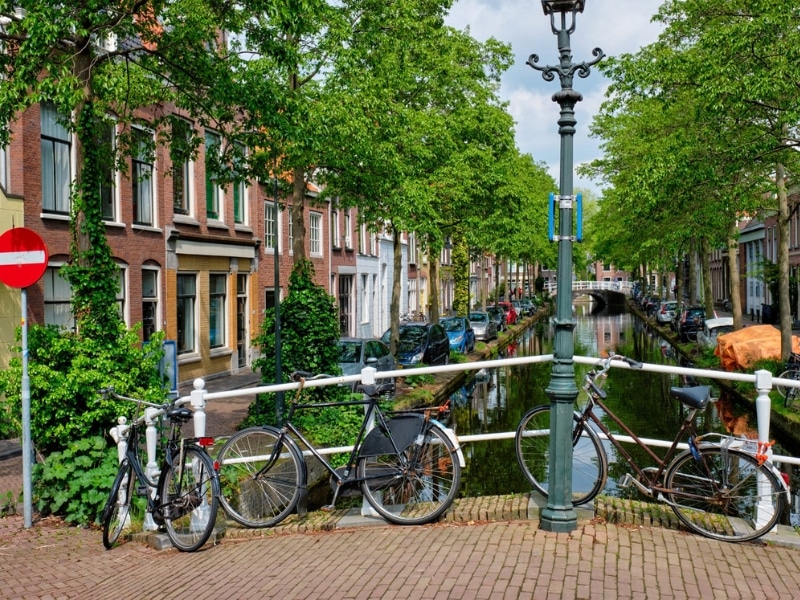
Delft is an easy side trip from The Hague and one of the prettiest small cities in the Netherlands. Its compact historic centre is filled with canals, cobbled streets, handsome merchant houses and medieval architecture, making it easy to explore on foot.
The city has strong connections with the Dutch royal family. William of Orange lived in Delft during the 16th century and was buried in the Nieuwe Kerk after his assassination in 1584. Since then, the church has become the traditional burial place of members of the Dutch royal family.
Delft was also the birthplace and lifelong home of Johannes Vermeer. Although relatively few of his paintings survive, his work offers glimpses of life in 17th-century Delft, most famously in View of Delft and The Little Street.
The city is equally famous for Delftware, the distinctive blue-and-white pottery that developed here during the 17th century, influenced by imported Chinese porcelain. A visit to the Royal Delft Factory and Museum is a great way to learn how the pottery is made and see traditional Delft Blue painters at work.
Back in the historic centre, wander around Markt square, visit the Nieuwe Kerk and Oude Kerk, and explore the lanes and canals surrounding them. Delft is small enough that you don’t need a long list of sights. Much of its appeal comes from simply walking through the old centre and enjoying one of the most attractive cityscapes on this Netherlands road trip.!
Day 3: The Hague to Rotterdam
Gouda
The Hague to Gouda: 33 km (21 miles) | around 35-40 minutes
Gouda is best known for the cheese that bears its name, but its compact historic centre, impressive churches and attractive market square make it well worth a stop on your Netherlands road trip.
If you’re interested in gaming, you can break the journey in Zoetermeer to visit the Nationaal Videogame Museum, with a large collection of playable arcade machines, consoles and games spanning several decades.
In Gouda, start at Markt, the historic main square dominated by the striking Gothic Stadhuis and the Goudse Waag. During the warmer months, the traditional Gouda Cheese Market takes place here on selected Thursday mornings, recreating the historic trading of cheese in the square.
If your visit doesn’t coincide with market day, you can still learn about the city’s cheese-making heritage at De Goudsche Waag, the former weighing house that now contains a cheese and crafts museum.
Continue to Museum Gouda, which explores the history and art of the city, before visiting nearby Sint-Janskerk. At 123 metres long, it is the longest church in the Netherlands and is particularly famous for its remarkable collection of historic stained-glass windows.
Leave some time simply to explore the old centre, where canals, narrow streets and historic buildings surround Markt and the imposing Stadhuis.
Rotterdam
Gouda to Rotterdam: 25 km (16 miles) | around 30 minutes
Rotterdam feels very different from the historic Dutch cities earlier on this route. Much of the centre was destroyed during the Second World War, and its reconstruction produced a city known for bold contemporary architecture, an impressive skyline and one of Europe’s most important ports.
For a bird’s-eye view, head to the Euromast, where the observation deck provides panoramic views across Rotterdam, the Nieuwe Maas and the vast port beyond.
The scale of that port is best appreciated from the water. A harbour tour takes you past container terminals, shipyards and enormous cargo vessels while giving you an insight into the workings and history of the Port of Rotterdam.
Back in the centre, don’t miss the Cube Houses, designed by Dutch architect Piet Blom in the 1980s. Each brightly coloured house is tilted at an angle of 45 degrees, creating one of Rotterdam’s most recognisable architectural landmarks. One of the houses is open to visitors, so you can see how the unusual design works as a living space.
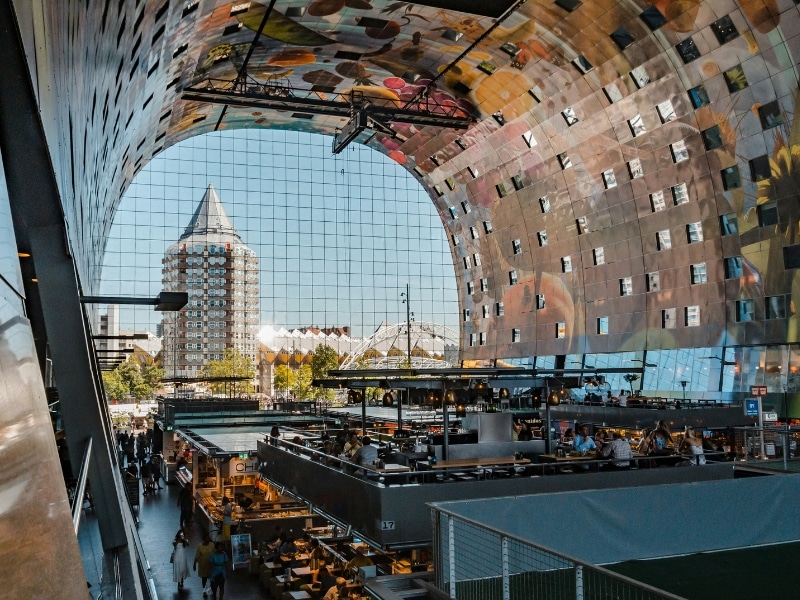
Nearby is the Markthal, another of the city’s standout modern buildings, with its enormous arched structure and colourful artwork covering the interior ceiling.
Art lovers should know that the main Museum Boijmans Van Beuningen building is closed for a major renovation. However, much of its extraordinary collection is housed nearby at Depot Boijmans Van Beuningen, the world’s first publicly accessible art storage facility and an architectural attraction in its own right.
Finish with a walk through Museumpark and towards the Nieuwe Maas, where the Erasmus Bridge stretches across the river to Rotterdam-Zuid. The 802 metre cable-stayed bridge has become a symbol of modern Rotterdam and is particularly impressive when viewed from the waterfront.
Where to Stay in Rotterdam
Luxury: The Hilton Rotterdam is a luxurious experience, perfect for a special occasion. Located in a landmark building, this upscale hotel features elegantly designed rooms with modern amenities. Its central location provides easy access to Rotterdam’s attractions, including museums, shopping districts, and dining options.
Mid-Range: Motel One Rotterdam is modern and features well-designed rooms with sleek, minimalist decor. Its central location makes it easy to explore Rotterdam’s cultural sites, shopping districts, and vibrant nightlife.
Budget: citizenM Rotterdam is located in the heart of the city. This innovative hotel offers stylishly designed rooms with cutting-edge technology and creative decor. With its unique blend of comfort and convenience, citizenM Rotterdam ensures a memorable stay.
Hostel: Hostel Ani & Haakien is located in a charming neighbourhood and provides budget-friendly dormitories and shared spaces for socializing and relaxing. Its central location allows easy access to Rotterdam’s attractions, making it an ideal choice for travellers looking to explore Rotterdam on a budget.
RELATED POST: 32 of the Very Best Things to Do in the Netherlands
Kinderdijk Side Trip
Detour from Rotterdam: 25 km (16 miles) each way | around 30 minutes’ drive
Time needed: Allow 2-3 hours to explore Kinderdijk
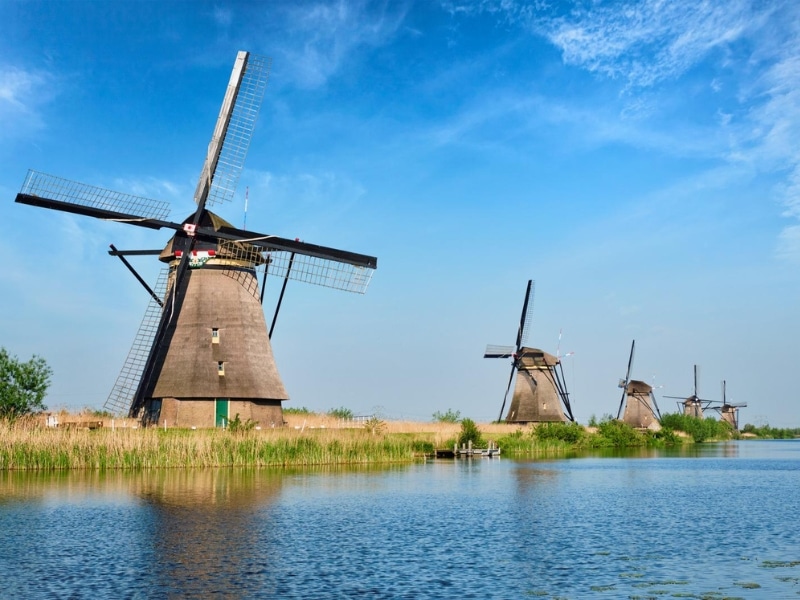
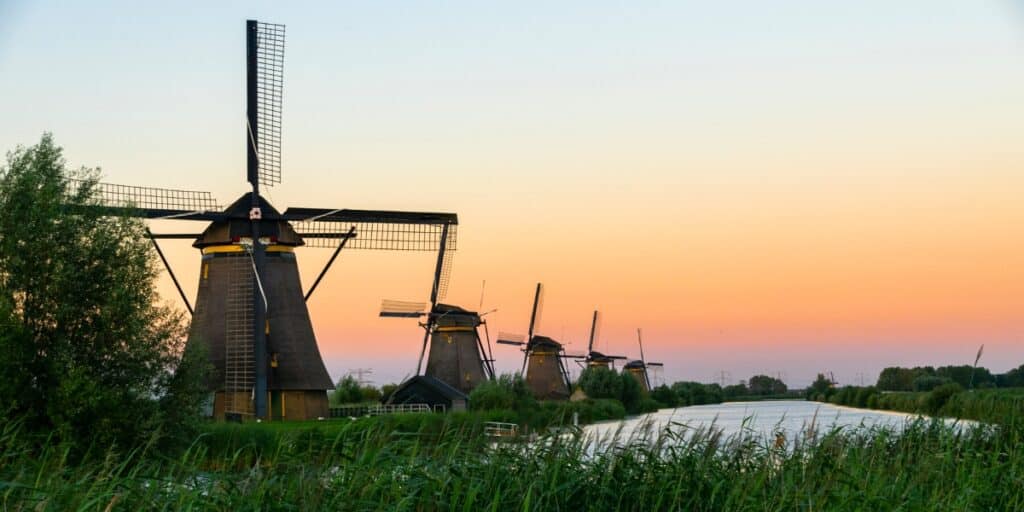
Just east of Rotterdam, Kinderdijk is home to one of the most famous landscapes in the Netherlands. Its 19 historic windmills, built around 1740, form part of an ingenious water-management system designed to keep the low-lying Alblasserwaard region dry.
The windmills, waterways, dykes and pumping stations of Kinderdijk were recognised as a UNESCO World Heritage Site in 1997 and tell the story of how the Dutch have managed water in this vulnerable landscape for centuries.
A visit to Kinderdijk allows you to explore the network of waterways on foot, by bike or from the water. You can also visit inside some of the historic windmills to discover how the millers and their families once lived and worked.
Even if you don’t visit the museum mills, it’s worth allowing time to walk or cycle along the paths beside the water. With rows of windmills stretching across the flat landscape, Kinderdijk is one of the best places on this road trip to understand just how closely the history of the Netherlands is connected to water.
Day 4: Rotterdam to Maastricht
Eindhoven
Rotterdam to Eindhoven: 110 km (68 miles) | around 1 hour 20 minutes
Eindhoven brings a completely different feel to this Netherlands road trip. Long associated with technology, industry and design, the city has reinvented many of its former industrial areas as creative neighbourhoods filled with striking architecture, galleries and cultural spaces.
Start at the Philips Museum, housed in the building where Gerard Philips produced the company’s first light bulbs in the 1890s. The museum traces the development of Philips from a small light bulb manufacturer into an international technology company and explores innovations that have shaped everyday life.
For modern and contemporary art, visit the Van Abbemuseum, which has an extensive collection featuring artists including Picasso, Chagall and Mondrian.
Another interesting stop is PreHistorisch Dorp, an open-air heritage museum where reconstructed buildings and demonstrations bring different periods of Dutch history to life, from prehistoric settlements to the Middle Ages.
Later, head to Strijp-S, the former Philips industrial complex that has been transformed into one of Eindhoven’s most distinctive neighbourhoods. The old factories and warehouses are now home to independent shops, studios and creative spaces, and the area is a great example of how Eindhoven has repurposed its industrial heritage.
Maastricht
Eindhoven to Maastricht: 90 km (56 miles) | around 1 hour 10 minutes
Maastricht sits close to the Belgian border at the southern tip of the Netherlands and feels noticeably different from the cities further north. With cobbled streets, historic squares, medieval churches and buildings influenced by its location at the crossroads of several European cultures, it makes an atmospheric stop on this route.
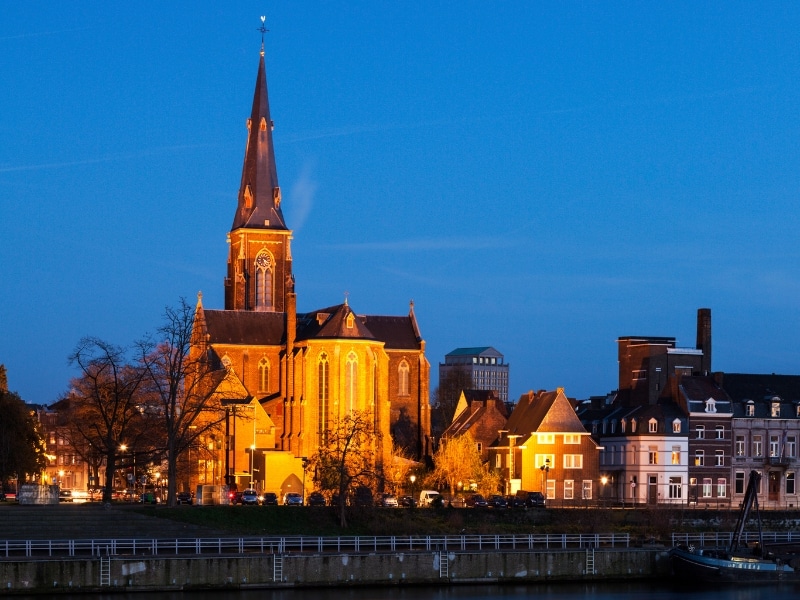
Start at Vrijthof, Maastricht’s best-known square, where you’ll find two of the city’s most important churches. The Basilica of Saint Servatius is one of the oldest surviving churches in the Netherlands, while neighbouring St John’s Church is instantly recognisable by its tall red tower.
One of Maastricht’s most unusual attractions lies beneath the city. Join a Maastricht Underground tour to explore sections of the extensive network of tunnels, caves and fortifications beneath and around Maastricht. Different tours cover the North Caves, Zonneberg Caves and the underground passages of Fort Sint Pieter, revealing how these spaces were used over the centuries, including as shelters during wartime.
For art, visit the Bonnefanten, housed in a distinctive building beside the River Maas. Its collection combines Old Masters with modern and contemporary art.
If natural history is more your thing, the Natural History Museum Maastricht explores the geology and wildlife of Limburg and is particularly known for its fossils from the Cretaceous period, when the region lay beneath a tropical sea.
Leave some time to explore Maastricht on foot. Wander through the old centre, cross the Maas over the medieval Sint Servaasbrug and explore the narrow streets around the Jekerkwartier before continuing your road trip north.
Where to Stay in Maastricht
Luxury: Kruisherenhotel Maastricht is housed in a former 15th-century monastery and blends historic architecture with modern design. Located in the heart of Maastricht, it features elegantly appointed rooms and exceptional hospitality.
Mid-Range: Maison Haas Hustinx & Spa offers luxury and indulgence in a historic 19th-century townhouse. Located in Maastricht’s historic centre, the hotel is on the doorstep of the city’s cultural landmarks, boutique shops, and gourmet restaurants, making it a great option for a stay in this charming Dutch city.
Budget: easyHotel Maastricht City Centre offers simple, comfortable rooms in an excellent central location beside the River Maas, within easy walking distance of Vrijthof and the historic centre.
Hostel: Stayokay Hostel Maastricht offers a comfortable and affordable accommodation option in the heart of the city. Situated in a historic building, this hostel provides modern dormitories and private rooms, catering to both budget-conscious travellers and families.
More Netherlands Travel Ideas


Day 5: Maastricht to Zwolle
Nijmegen
Maastricht to Nijmegen: 145 km (90 miles) | around 1 hour 45 minutes
Nijmegen sits on the River Waal close to the German border and is widely regarded as the oldest city in the Netherlands, with a history stretching back more than 2,000 years. Its Roman past, riverside setting and lively historic centre make it a worthwhile stop on the journey north.
Nijmegen’s archaeological collections include thousands of objects from the Roman period, when the city was an important settlement on the northern frontier of the Roman Empire. The former Museum Het Valkhof has undergone major redevelopment, with its collections and exhibitions now presented under the new Valkhof Museum identity.
Nearby, take a walk through Valkhofpark, which occupies a historic site overlooking the River Waal. Among the remains here are the medieval St Nicholas Chapel and the ruins of St Martin’s Chapel, known as the Barbarossa Ruin.
From the park, continue towards the riverfront and the distinctive Waalbrug, which carries traffic across the River Waal. For some of the best views back towards Nijmegen, cross the river or follow the riverside paths around the Waal.
Leave some time for the historic centre too, particularly the streets around Grote Markt and the impressive Stevenskerk, Nijmegen’s oldest and largest church.
Zwolle
Nijmegen to Zwolle: 75 km (47 miles) | around 1 hour
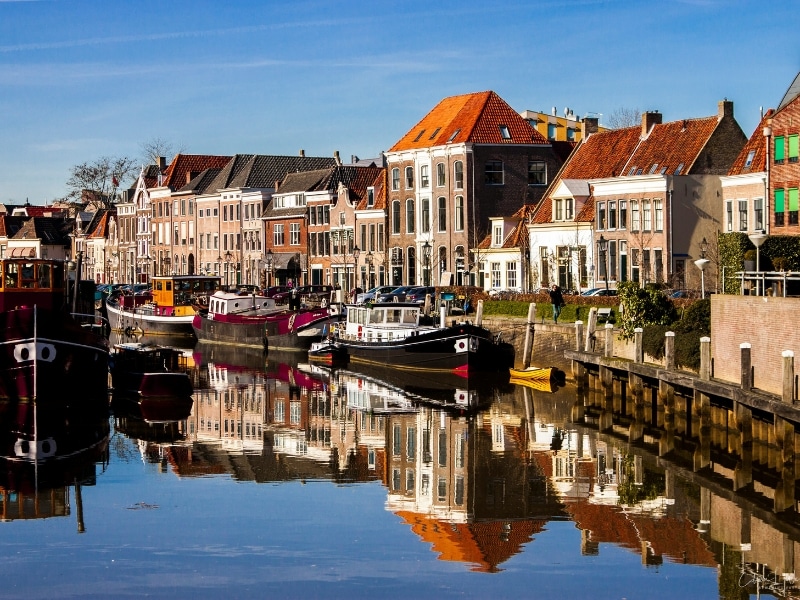
Zwolle is a handsome Hanseatic city with a well-preserved medieval centre surrounded by a star-shaped canal. It’s compact, easy to explore on foot and makes a good overnight stop before continuing towards the north of the Netherlands.
Start at Sassenpoort, the city’s magnificent medieval gate. Built around 1409 as part of Zwolle’s fortifications, its towers and decorative brickwork make it one of the most recognisable buildings in the city.
From here, head into the historic centre to visit the Grote Kerk, also known as the Sint-Michaëlskerk. The vast Gothic church dominates the Grote Markt and is particularly known for its impressive 18th-century Schnitger organ.
Another highlight is Museum de Fundatie, housed in the former Palace of Justice beneath a striking modern rooftop extension. Its collection ranges from historic works to modern and contemporary art, alongside regularly changing exhibitions.
The rest of Zwolle is best explored on foot. Wander through the old streets and squares, follow sections of the canal surrounding the centre and look out for reminders of the city’s prosperous past as a member of the medieval Hanseatic League.
Book lovers should also seek out Waanders In de Broeren, where a 15th-century church has been transformed into a spectacular bookshop while retaining much of the building’s original architecture.
Luxury: Pillows Grand Boutique Hotel Ter Borch offers an exquisitely refined experience. Nestled in a historic building near the city centre, the hotel features elegantly designed rooms and suites with luxurious amenities, and its prime location allows easy access to Zwolle’s charming streets and scenic canals.
Mid-Range: Librije’s Hotel promises an exclusive and luxurious experience in a beautifully restored 15th-century building, offering uniquely designed rooms. Located in the historic centre of Zwolle, it’s an ideal spot from which to explore the city’s cultural attractions and picturesque canals.
Budget: Hanze Hotel Zwolle is located in a historic building along the scenic Thorbeckegracht canal and features cosy rooms with modern amenities, making it an ideal base for exploring Zwolle.
Hostel: Hostel het Archief is budget-friendly and offers comfortable dormitories and private rooms in a vintage atmosphere. Guests can enjoy communal spaces for socializing and a friendly, welcoming environment in a central location.
Giethoorn Side Trip
Detour from Zwolle: 32 km (20 miles) each way | around 35 minutes’ drive
Time needed: Allow 3-4 hours, including time for a boat trip
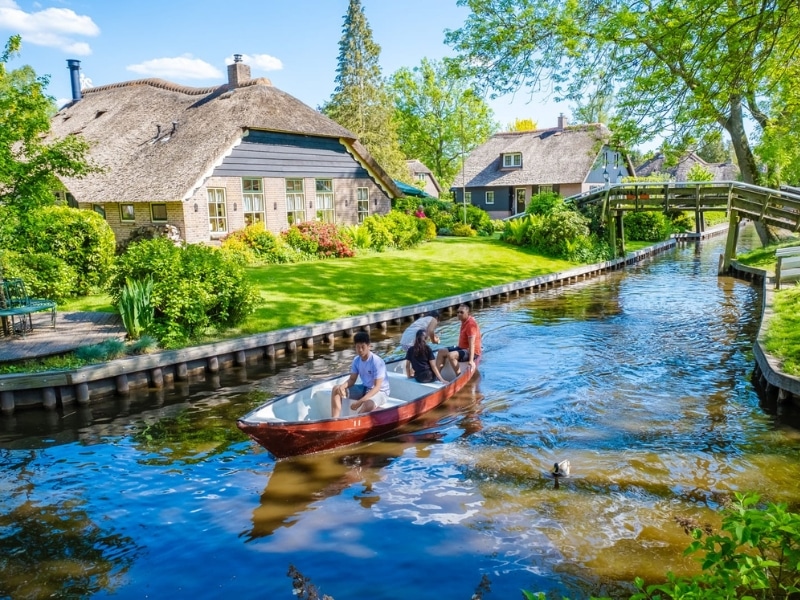
Giethoorn is a small village in the province of Overijssel, known for its canals, thatched-roof farmhouses, wooden bridges and waterside gardens. Often called the ‘Venice of the North’, it’s one of the most photographed villages in the Netherlands.
Although Giethoorn is often described as having no roads, this isn’t entirely accurate. The historic centre is largely car-free, with canals, footpaths and bridges connecting many of the traditional houses, while roads and parking areas surround the village.
The best way to experience Giethoorn is from the water. You can hire a small electric boat to explore independently or join a sightseeing boat trip through the canals and out onto the surrounding lakes.
For an insight into traditional village life, visit Museum Giethoorn ’t Olde Maat Uus, housed in a historic farmhouse and covering the history of Giethoorn and the people who lived and worked in this watery landscape.
It’s also worth exploring on foot, following the paths beside the canals and crossing the little wooden bridges between the old farmhouses.
Giethoorn is extremely popular, though, and the reality can be quite different from the peaceful images you’ll see online. During summer, particularly in July and August, the narrow canals and paths can become very busy. Visit early in the morning or later in the afternoon if you can, or come in the shoulder season for a quieter experience.
Day 6: Zwolle to Leeuwarden
Groningen
Zwolle to Groningen: 105 km (65 miles) | around 1 hour 15 minutes
Groningen is a lively university city and the largest urban centre in the north of the Netherlands. Its youthful atmosphere, historic streets and strong cycling culture make it feel quite different from the smaller towns and cities along this route.
Start in the historic centre around Grote Markt, the main square at the heart of the city. From here, climb the Martinitoren, Groningen’s landmark medieval tower. At 97 metres high, it dominates the skyline and rewards the climb with far-reaching views across the city and surrounding countryside.
Art and architecture fans should make time for the Groninger Museum, which sits on an island opposite the railway station. The colourful postmodern building is an attraction in itself, while inside you’ll find changing exhibitions alongside collections of modern and contemporary art, design and regional history.
Back in the centre, wander through the streets around Grote Markt and Vismarkt, where markets are held several days a week. Groningen has a compact centre, so most of its main sights are easily reached on foot.
For a quieter stop, head to the Prinsentuin, a Renaissance-style garden behind the Prinsenhof. Its formal hedges, rose garden and leafy paths provide a peaceful contrast to the busy city centre.
Leeuwarden
Groningen to Leeuwarden: 65 km (40 miles) | around 50 minutes
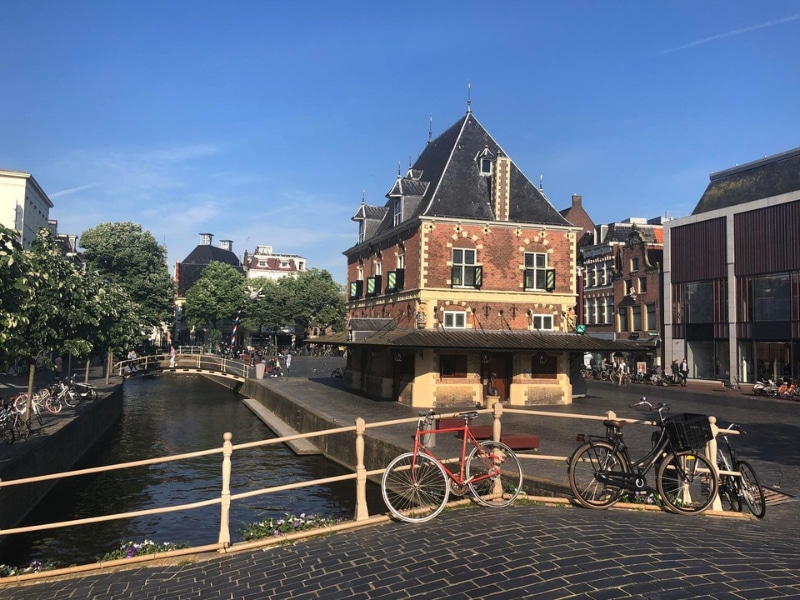
Leeuwarden is the capital of Friesland, a province with its own distinct identity, traditions and language. The compact city centre is threaded with canals and filled with historic buildings, making it easy to explore on foot or, in true Dutch style, by bicycle.
For one of the best views across the city, climb the Oldehove, Leeuwarden’s famously leaning and unfinished church tower. Construction began in the 16th century, but the tower started to lean before it was completed, leaving the city with one of its most distinctive landmarks.
The Fries Museum is the place to learn more about Friesland and its people. Its collections cover everything from art and archaeology to regional traditions and the story of Mata Hari, who was born in Leeuwarden in 1876.
From here, explore the canals and streets of the historic centre, including the area around Nieuwestad and the former weigh house, Waag.
If you have a little more time, rent a bicycle and head beyond the city centre. Friesland’s flat landscape, extensive network of cycle paths, waterways and small villages makes this an excellent place to experience rural Netherlands away from the larger cities.
Where to Stay in Leeuwarden
Luxury: Notiz Hotel is a contemporary hotel near the city centre featuring chic, well-appointed rooms with state-of-the-art amenities and sleek design. With its blend of comfort, elegance, and convenience, Notiz Hotel is a perfect spot for a special occasion or celebration.
Mid-Range: Post-Plaza Hotel and Grand Café is housed in a beautifully restored 19th-century post office, combining elegant design with modern comfort. The stylish and well-appointed rooms are well-appointed, and the hotel’s central location provides easy access to Leeuwarden’s cultural attractions.
Budget: Bastion Hotel Leeuwarden is a modern hotel with well-appointed rooms, an on-site restaurant and fitness facilities. Located just outside the city centre, the hotel offers easy access to Leeuwarden’s city centre by bike or on foot.
Day 7: Leeuwarden to Haarlem
Haarlem
Leeuwarden to Haarlem: 140 km (87 miles) | around 1 hour 40 minutes
The drive from Leeuwarden to Haarlem takes you across the Afsluitdijk, the remarkable 32 km (20 mile) barrier separating the Wadden Sea from the IJsselmeer. Completed in 1932 as part of the Netherlands’ vast water-management system, it’s an impressive piece of engineering and a fitting final drive on a road trip through a country shaped by its relationship with water.
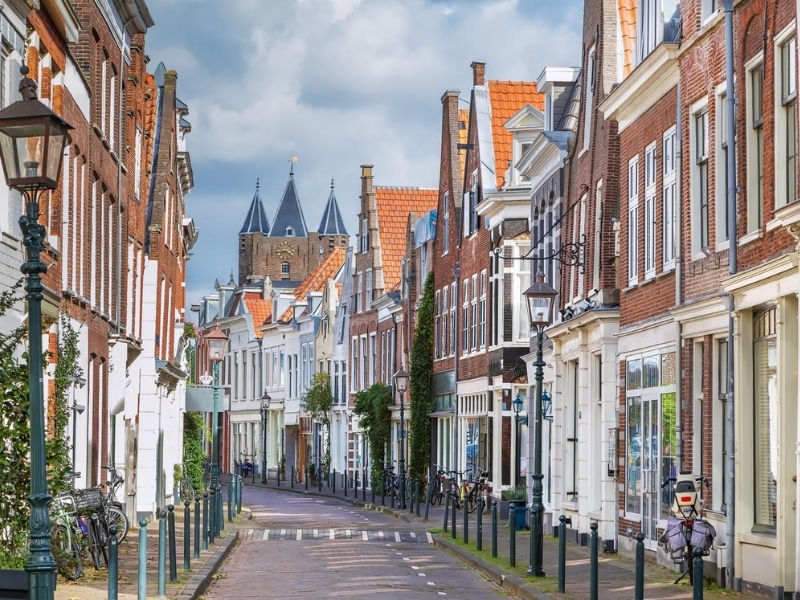
Haarlem makes a great final stop before returning to Amsterdam. Smaller and more compact than the capital, it has a beautiful historic centre, excellent museums and canals that are easy to explore on foot or from the water.
Start at Grote Markt, Haarlem’s impressive central square, surrounded by historic buildings and dominated by the Grote or St Bavokerk. The huge Gothic church dates largely from the 15th and 16th centuries and contains a famous Müller organ once played by a young Mozart.
Nearby, the Frans Hals Museum has an important collection of Dutch art, including works by Frans Hals, who lived and worked in Haarlem for most of his life.
Another highlight is the Teylers Museum, founded in the 18th century and the oldest museum in the Netherlands. Its wonderfully atmospheric galleries contain an eclectic collection of art, fossils, minerals, scientific instruments, books and drawings.
Haarlem’s canals and narrow streets are worth exploring without a fixed itinerary. You can also take a canal cruise for a different perspective on the historic centre and its waterside architecture.
If you have more time, head to Haarlemmerhout, a large historic woodland park just south of the centre. Alternatively, the North Sea coast and the wide sandy beaches at Zandvoort and Bloemendaal aan Zee are only a short drive away.
From Haarlem, it’s around 20 km (12 miles) back to Amsterdam, making it easy to complete the loop or continue to Schiphol Airport for your journey home.
Where to Stay in Haarlem
Luxury: Hotel 1635 is a unique and stylish hotel in the heart of Haarlem. The hotel features individually designed rooms that blend historic charm with contemporary luxury. Guests can enjoy personalized service and a cosy atmosphere, making this a top spot for your stay in Haarlem.
Mid-Range: Boutiquehotel Staats is located in a beautifully restored historic building that offers stylishly decorated rooms with a mix of vintage and modern elements. Located near the city centre, it offers walking access to cultural attractions, shopping, and dining.
Budget: Hello I’m Local is a centrally located boutique hostel featuring individually designed rooms with a charming, local flair and a welcoming atmosphere. Guests can relax in the communal areas, enjoy the outdoor courtyard, and partake in the friendly, social environment.
Hostel: Stayokay Hostel Haarlem offers comfortable and affordable accommodation in a location that provides good access to the city and beach. Situated in a modern building, this hostel provides dormitories and private rooms, catering to budget-conscious travellers and families.
Zaanse Schans Side Trip
Detour from Haarlem: 30 km (19 miles) | around 30 minutes’ drive
Time needed: Allow 2-3 hours to explore Zaanse Schans
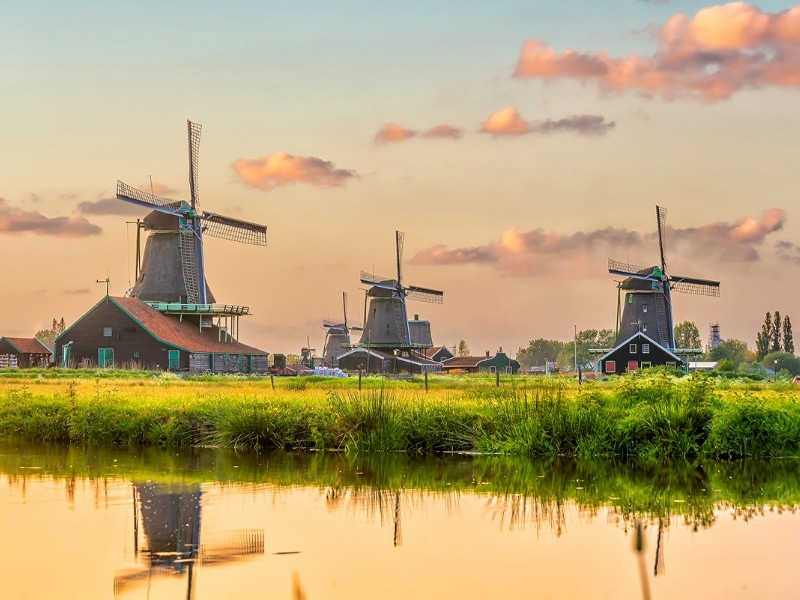
Just north of Haarlem, Zaanse Schans brings together historic windmills, traditional green wooden houses and workshops beside the River Zaan. It’s one of the easiest places on this route to see several classic elements of Dutch heritage in one place.
The buildings at Zaanse Schans were relocated here from across the region during the 20th century to preserve examples of the area’s traditional architecture and crafts. Today, you can visit historic houses and workshops demonstrating skills including weaving, clog making and cheese making.
One of the highlights is the collection of working windmills along the river. During the 17th and 18th centuries, the Zaan region was one of Europe’s most important industrial areas, with hundreds of windmills powering sawmills and producing everything from oil and flour to paper and pigments.
Several of the surviving mills are open to visitors. De Kat is particularly interesting and is the world’s only remaining working windmill producing paint and pigments using traditional methods.
The Zaans Museum provides more background on the region’s industrial history and includes the Verkade Experience, housed around original machinery from the famous Dutch chocolate and biscuit manufacturer.
Zaanse Schans is extremely popular and can become crowded, particularly during summer and when tour groups arrive from Amsterdam. If you can, visit early in the morning or later in the afternoon for a quieter experience before completing your Netherlands road trip.
Netherlands Road Trip Planning Resources
Is it Holland or the Netherlands?
The Netherlands is the official name of the country. Holland actually refers to just two of its twelve provinces: North Holland and South Holland, although the name has long been used informally to describe the whole country.
You’ll still hear ‘Holland’ used in everyday conversation and tourism, but if you’re referring to the country as a whole, the Netherlands is the correct name.
In 2020, the Dutch government officially moved away from using ‘Holland’ in its international branding, adopting the Netherlands as part of a new national identity and tourism strategy.
Getting to the Netherlands
The Netherlands is an easy country to explore by car, motorcycle, campervan or motorhome. Its compact size means driving distances are relatively short, giving you plenty of time to stop along the way and explore beyond the main cities.
Our seven-day Netherlands road trip itinerary is designed as a flexible route rather than a rigid schedule, so you can add extra stops, stay longer somewhere you love or adapt the trip as you go.
If you’re flying in, Amsterdam Airport Schiphol is the Netherlands’ main international airport, with direct connections to destinations across Europe, the UK and further afield. We use Skyscanner to compare routes and fares.
If you’re planning to hire a car, Discovercars.com compares vehicles and prices from a wide range of rental companies, making it easy to find a suitable car for your road trip.
For more freedom, you could hire a campervan or motorhome and combine your transport and accommodation. Motorhome Republic compares rental options from multiple suppliers and is a useful starting point for finding a vehicle that suits your route and budget.
Travelling from the UK in your own vehicle is also straightforward. Direct ferry routes connect the UK with the Netherlands, or you can take the Eurotunnel or a ferry to France and continue north through Belgium.
Best Time to Road Trip the Netherlands
The best time for a Netherlands road trip is generally from April to June or during September, when you have a good balance of daylight, milder weather and manageable visitor numbers.
Spring is the obvious choice if you want to see the famous bulb fields, while early autumn is a good option if you’d prefer fewer crowds. July and August bring the warmest weather and longest days, but this is also peak season at many of the destinations on this route.
Spring
Spring is one of the best times to visit the Netherlands, particularly if you want to see the country’s famous flower displays. The main tulip season usually runs from late March into early May, although the exact timing varies each year according to the weather.
April and May are also excellent months for a road trip, with longer daylight hours and generally mild temperatures. Conditions can change quickly, though, so pack waterproofs and layers.
King’s Day, or Koningsdag, is one of the biggest celebrations of the year. It is normally held on 27 April, when towns and cities across the country fill with street markets, live music and crowds dressed in orange. It’s great fun, but roads, public transport and city centres can be extremely busy, so plan ahead and book accommodation early if your trip coincides with it.
Summer
June to August brings the longest days and generally the warmest weather, making summer a good time for cycling, canal trips, beaches and spending more time outdoors.
It’s also the busiest period of the year. Popular places on this itinerary, particularly Amsterdam, Giethoorn, Kinderdijk and Zaanse Schans, can become crowded, while accommodation and campsites are likely to be more expensive.
If you’re travelling during July or August, booking accommodation and major attractions ahead is sensible. Starting early in the day can also help you avoid the largest crowds at popular stops.
Autumn
September is an excellent month for a Netherlands road trip. The summer crowds begin to ease, temperatures can still be pleasantly mild and there is enough daylight to fit plenty into each day.
As autumn progresses, the landscape changes colour and popular cities and attractions become quieter. It’s a particularly good time for walking and cycling in the countryside and exploring places such as the Hoge Veluwe National Park.
Rain becomes more likely later in the season, so waterproof clothing is useful, particularly if you’re planning plenty of outdoor activities.
Winter
A winter road trip is perfectly possible, but it offers a very different experience. Days are short, temperatures are colder and the weather can be wet and windy, so you’ll have less time for sightseeing outdoors.
December brings festive lights, Christmas markets and seasonal events to many Dutch towns and cities, while museums and other indoor attractions provide plenty to do when the weather turns.
Periods of frost do occur, but don’t plan a trip around skating on frozen canals. Sustained cold conditions needed for natural ice have become increasingly uncommon and are impossible to predict far in advance.
If you’re driving in winter, allow more flexibility in your itinerary for poor weather and reduced daylight, and check conditions before setting off each day.
RELATED POST: Winter Destinations Europe: 23 Amazing Wintry Places
More Road Trips to Explore
Best UK Road Trips: 18 Scenic Routes to Explore

Portugal Road Trip: The Ultimate 10 Day Itinerary

Europe Road Trip: 28 Epic Routes You Can Actually Drive

European Road Trip: Six Countries in 90 Days
Germany Road Trip: 12 Unmissable Routes
France Road Trip: 13 Amazing Itineraries
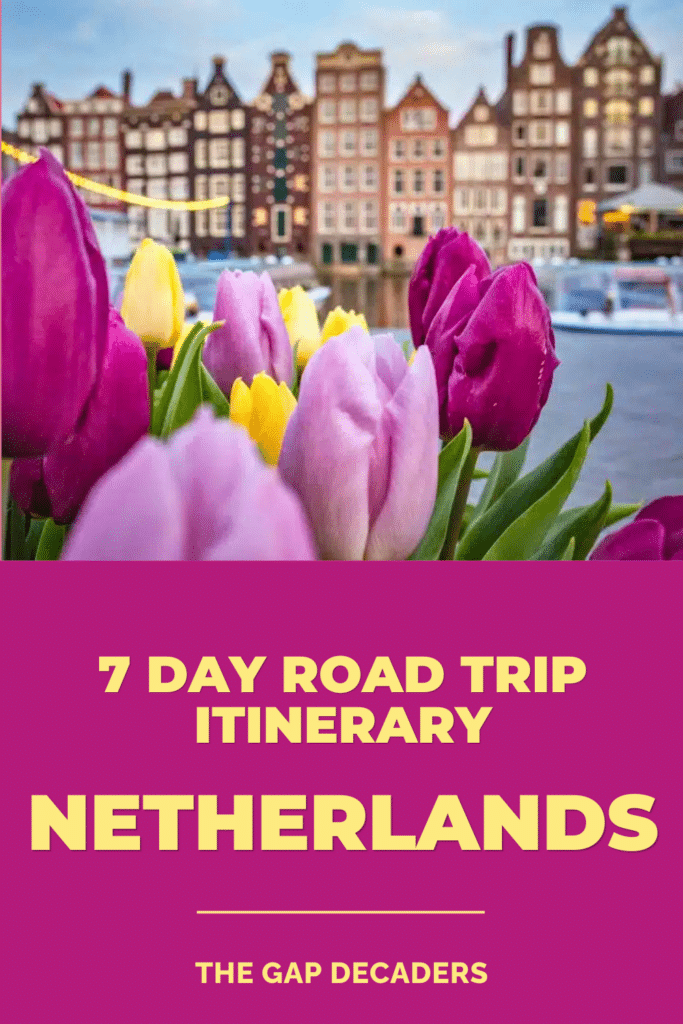
Love it? Pin it!

travelguru101, totally found a couple of gems thanks to izzy’s recommendations. there’s this quaint little cafe in leiden, almost missed it if it wasn’t for a local pointing it out. And Giethoorn? Absolutely stunning, like something out of a fairy tale. You gotta check it out!
Mitchy98, did you manage to find any must-visit hidden gems on your trip? Always on the hunt for lesser-known spots to add to my travel list.
Hey I just checked out your Netherlands road trip map & route. I always dreamed of exploring the Netherlands, especially on a road trip and your day-to-day breakdown seems super helpful Cheers!