This post may contain affiliate links, from which we earn an income. Click here to read our affiliate policy.
Georgia is one of the most exciting emerging destinations for campervan and motorhome travel. Compact, wildly varied and still refreshingly uncrowded, this small Caucasus country packs in Black Sea beaches, wine valleys, alpine meadows, high mountain passes, ancient monasteries and some of the warmest hospitality you’ll find anywhere.
Motorhome travel in Georgia is still developing, which is part of the appeal. You won’t find the same campsite network as France, Spain or Portugal, but you will find freedom, big landscapes, family wineries, mountain rivers, dramatic roads and plenty of places where travelling by camper feels like a proper adventure.
In this guide, we share everything you need to know about motorhoming in Georgia, including where to go, driving tips, wild camping, campsites, motorhome services, rental options and the best campervan routes through the country.
Enjoy The Gap Decaders? Add us as a preferred source on Google.
Why Georgia is Perfect for Motorhome Travel
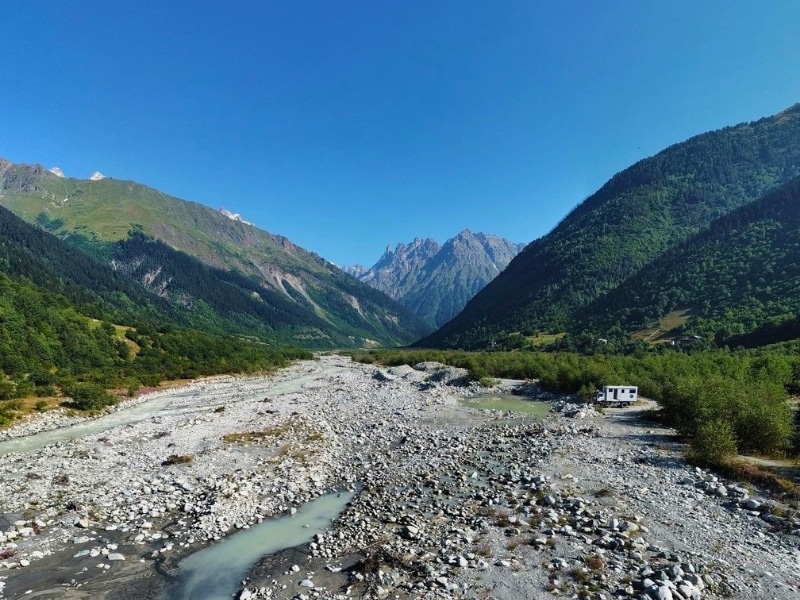
Georgia’s biggest advantage is its compact size. In one day, you can travel from the subtropical Black Sea coast to the foothills of the Greater Caucasus, or from a wine region to a high mountain valley.
Within a few hundred kilometres, you’ll find seaside resorts, ancient monasteries, wine villages, alpine meadows, waterfalls, canyons, fortresses and national parks. For motorhomers, that means short driving days and a constant change of scenery.
Motorhoming in Georgia is still in its early stages. The country now has emerging campsites, camper rental services and a growing vanlife community, but it remains far less developed than mainstream European motorhome destinations. That makes it ideal for travellers who prefer quieter routes and a bit of adventure.
Getting to Georgia
Taking Your Own Motorhome
Driving your own motorhome to Georgia is absolutely possible, but it’s not a quick trip. From the UK or Central Europe, you’re looking at a journey of around 3,000 to 4,000 km, depending on your route, which turns this into a proper overland adventure rather than just a road trip.
There are a few main route options, each with its own pros and complications.
The most common overland route is through Eastern Europe and Türkiye. This typically means travelling through countries such as Germany, Austria, Hungary, Romania or Bulgaria, then entering Türkiye and crossing into Georgia via the Sarpi border near Batumi. Roads are generally good on this route, and it avoids more complex border regions.
If you want to cut down on driving time, taking a ferry from Italy to Greece is a smart option, with routes from Bari, Brindisi and Ancona. Arriving in Igoumenitsa sets you up for a straightforward 10-hour drive across northern Greece to the Ipsala border crossing.
Another option is via the Balkans and Türkiye, heading through countries like Croatia, Serbia and Bulgaria before continuing east. This can be a more scenic route, but border crossings can take longer, especially in peak travel seasons.
Border crossings into Georgia are usually straightforward, but you should expect delays, particularly in summer. Make sure you have all your vehicle documents, insurance and passport details ready. You may also need to arrange additional vehicle insurance valid for Georgia if your existing policy doesn’t cover it.
If you’re planning to travel onward into Armenia, check entry requirements in advance, as border crossings and vehicle paperwork can differ.
This is a route best suited to those with plenty of time, flexible plans and a sense of adventure. If you enjoy the journey as much as the destination, taking your own motorhome to Georgia can be incredibly rewarding.
Do You Need a Motorhome with 4WD in Georgia?
The short answer is no, you don’t need a 4×4 to travel Georgia by motorhome, but it depends on where you want to go.
Most of the country’s main routes are accessible with a standard campervan or motorhome. Popular drives like Tbilisi to Stepantsminda along the Georgian Military Highway, the wine region of Kakheti, Mestia and the Black Sea coast are all manageable on normal roads.
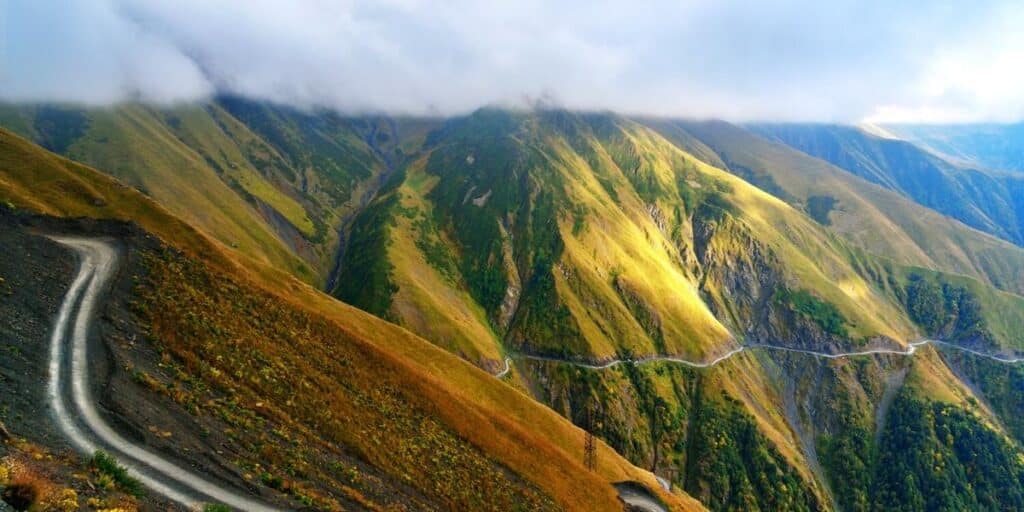
If your plan is to stick to main routes and well-known destinations, a standard motorhome is absolutely fine. If you want to explore more remote areas, take on mountain tracks or travel off-grid for longer periods, good ground clearance will open up a lot of options. If you truly want to get off grid into more remote areas like Tusheti and Vashlovani, you will need a 4×4 vehicle.
Hiring a Motorhome
For most travellers, flying to Georgia and hiring a motorhome locally is by far the easiest and most time-efficient option.
Flights from the UK and Europe take around four to five hours, with regular services into Tbilisi, Kutaisi and Batumi. From there, you can collect your campervan and start your trip straight away, without spending days driving across Europe.
Motorhome rental in Georgia is growing quickly, with companies offering a range of vehicles from compact campervans to larger family motorhomes and 4×4 expedition vehicles for mountain routes.
RVrent Georgia is one of the main providers, offering fully equipped vehicles with insurance and no mileage limits. Many rental companies will deliver your motorhome directly to the airport or your accommodation, making the start of your trip very straightforward.
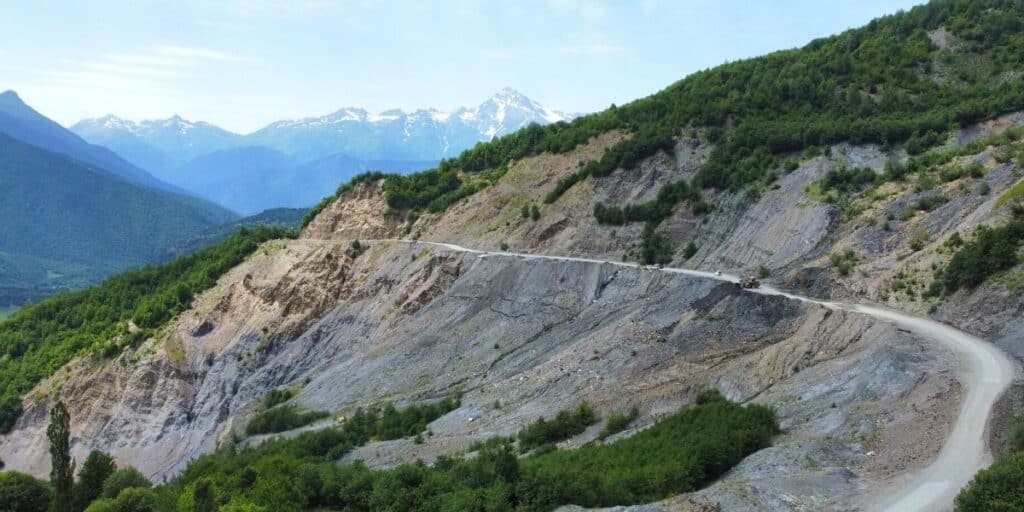
Hiring locally also means you can choose a vehicle better suited to Georgia’s terrain. Smaller campervans or off-road capable vehicles are often a better fit for mountain regions like Svaneti, where roads can be narrow and uneven.
If you plan to explore Georgia in depth, rather than spend time getting there, renting a motorhome is the clear winner.
Is this your first time visiting Georgia? Get all the information you need in our Georgia Travel Guide, including what to pack, the best time of year to go, getting there and practical tips to help you have the best trip!
Documents You Need to Drive & Travel in Georgia
UK citizens can visit Georgia visa-free for up to one year, according to the UK Foreign, Commonwealth & Development Office. Longer stays, work, business activity or remote work may require different permissions, so check the latest rules before travelling. You must carry:
How Long Can You Stay in Georgia with a Motorhome?
For most vehicles entering Georgia, the permitted stay is up to 90 days. This applies to light vehicles, including motorhomes under 3.5 tonnes and motorcycles.
For vehicles over 3.5 tonnes, the standard limit is 60 days. In some cases, larger camper trucks are classified as light vehicles and may still be granted the full 90 days, but this is not guaranteed. If you’re travelling in a heavier motorhome, it’s best to confirm your allowed stay at the border when you enter. The customs officer will decide based on how your vehicle is categorised.
Overstaying Penalties
If your vehicle remains in Georgia beyond the permitted period, you’ll be fined by customs. The penalty is 50 GEL per day, capped at a maximum of 1000 GEL.
The fine is applied when you leave the country, and payment is usually required at the border. You’ll typically need to pay at a bank office on-site, so carrying cash is a good idea, as card payments are not always available.
A common misunderstanding is that your vehicle can stay as long as you can personally remain in Georgia, which is often up to one year for visitors. This is not the case. The vehicle and the traveller are treated separately, and the vehicle must leave within its own permitted timeframe.
Crossing the Border into Georgia
Crossing into Georgia with a motorhome is usually straightforward, but it can take time. Borders are well set up for overland travellers, and Georgia is used to seeing campervans and larger vehicles arriving by road.
That said, this isn’t like driving between Schengen countries. You will be stopping, queuing and going through formal checks, so it’s worth knowing what to expect.
Main Border Crossings
Most motorhome travellers enter Georgia overland from Türkiye, especially via the Sarpi border near Batumi, which is the busiest and most straightforward crossing on the Black Sea coast.
Other common entry points include crossings from Armenia and Azerbaijan, although note that land borders with Azerbaijan can be subject to restrictions, so always check current conditions before planning that route.
What to Expect at the Border
Border crossings into Georgia are generally efficient but can be slow depending on traffic, time of day and season. In summer, queues can build up, especially at Sarpi. The process usually involves the following stages: passport control, followed by vehicle registration and insurance checks, and then customs. Finally, a TIP (temporary import certificate for your motorhome) is issued, and you’re free to go.
Tips for a Smooth Crossing
Can You Take a Dog to Georgia in Your Motorhome?
Yes, you can take a dog to Georgia in your motorhome, and it’s generally a straightforward process compared to many European countries. That said, there are still a few important rules and bits of paperwork you’ll need to sort before you travel.
Entry Requirements for Dogs
To bring a dog into Georgia, you’ll typically need:
Georgia does not require quarantine for pets entering from most countries, as long as all documentation is in order.
If you’re travelling overland through countries like Türkiye or Eastern Europe, you’ll also need to meet each country’s pet entry requirements along the way, which can be more complex than Georgia itself. Always check transit rules carefully before setting off.
Dog-Friendly Travel in Georgia
Georgia is generally very dog-friendly, especially in rural areas. You’ll find plenty of space for walks in the mountains, valleys and countryside. Many guesthouses and rural stops are relaxed about pets, and outdoor dining is popular with dogs being welcome.
There are a couple of things to be aware of. Stray dogs, often called street dogs, are common across Georgia, from towns and cities to rural camping spots. Most are calm and used to people, and many have ear tags showing they’ve been treated, but it’s still best to avoid interaction and keep your own dog on a lead.
Rabies does exist, although the risk to travellers is low. Basic precautions are enough; avoid contact with unfamiliar animals and don’t feed or encourage strays.
In mountain regions, shepherd dogs can be very protective of livestock. If you’re hiking or wild camping in remote areas, stay alert and give flocks a wide berth.
Best Time to Visit Georgia by Motorhome
Spring is one of the loveliest times for a Georgia campervan trip. April and May bring blooming valleys, comfortable temperatures and greener landscapes, especially in Kakheti and the lowlands.
Summer is best for high mountain routes, including Kazbegi and Svaneti, although Tbilisi and the lower valleys can be very hot.
Autumn is one of the best seasons for motorhoming in Georgia. September and October bring warm days, grape harvests, food festivals and more comfortable travel conditions. The sea can still be warm enough for swimming, and many mountain passes remain open until late October.
Winter motorhome travel is possible, especially around the coast, Tbilisi and wine regions, but mountain roads can be affected by snow and ice. Regions like Tusheti and towns like Mestia are usually snowed in between November and April.
Make sure you have travel insurance you can trust as you motorhome Georgia. We recommend True Traveller for their 5-star TrustPilot reviews, variety of cover options, best activities cover as standard, great prices and excellent service.
Driving a Motorhome in Georgia
Georgia drives on the right, and road signs are generally based on international standards, with many signs shown in Georgian and English.
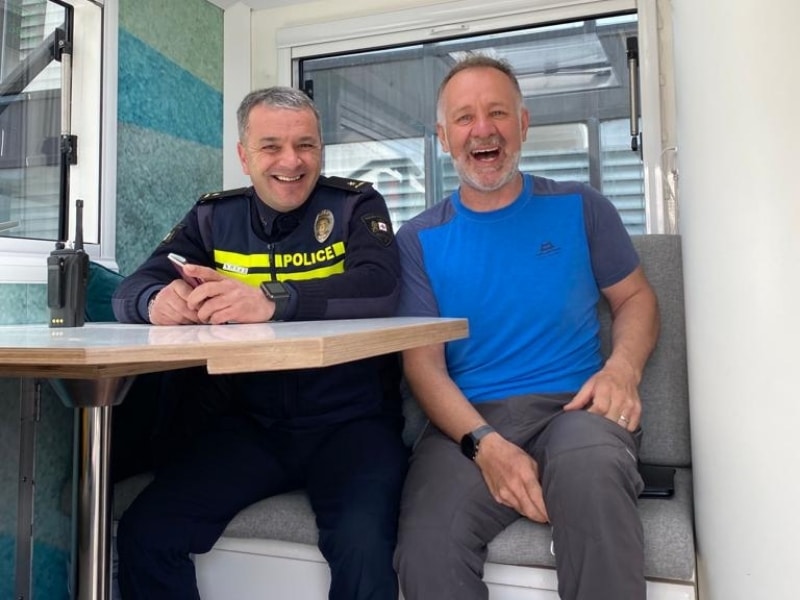
Georgia drivers vacillate between driving painfully slowly and overtaking you at speed on a blind bend. They will often not stop at pedestrian crossings or intersections, honk repeatedly even though it’s clear you can’t move, drive down the middle of the road, and park in the most inappropriate and thoughtless places.
In other words, they’re pretty rude and quite aggressive, which is at odds with the usual character of Georgian citizens. Expect the unexpected, pay attention, and understand that drivers in Georgia don’t know how to use their mirrors or indicators, and you’ll be fine!
Tips for Driving in Georgia
RELATED POST: Driving in Georgia – Your Ultimate Guide
Motorhome Services in Georgia
Motorhome service infrastructure is still limited, so don’t expect the dense aire and service-point network you might find in France, Spain or Portugal.
You’ll find that most campsites, guesthouses and overnight stops in Georgia offer fairly basic facilities. Dedicated motorhome service points, especially for grey and black waste, are still quite rare outside of a few newer sites.
In practice, this means you may need to be flexible. We often found ourselves emptying a portable toilet cassette or urine container into a regular toilet where permitted, and in many places, we were told to let grey water drain on-site.
If you’re planning to camp off-grid, use Park4Night to find places to fill up with fresh water.
It can feel a bit unusual if you’re used to more developed motorhome infrastructure, but this reflects the fact that motorhoming is still relatively new here. That said, it’s important to use common sense. Always ask first, avoid disposing of waste near water sources or in built-up areas, and be as low-impact as possible.
Georgian hosts are generally very relaxed and welcoming towards motorhome travellers, and tourism is genuinely appreciated. A bit of respect and care goes a long way in keeping that goodwill.
More Georgia Travel Guides
Campervan Stopovers in Georgia
Campsites
Georgia’s campsite network is growing, especially in tourist regions. Facilities are often simple but can include electricity, fresh water, showers, toilets and secure parking.
Guesthouses
Many guesthouses allow campervans to park in their yard or on private land. This can be a brilliant option in smaller towns and mountain regions, where you may also be able to use a shower, kitchen or laundry.
Wineries and Farms
Kakheti is especially good for winery stays. Many family wineries welcome travellers, offer tastings and may allow overnight parking by arrangement. It’s a memorable way to experience Georgian hospitality and qvevri wine.
Nature Spots
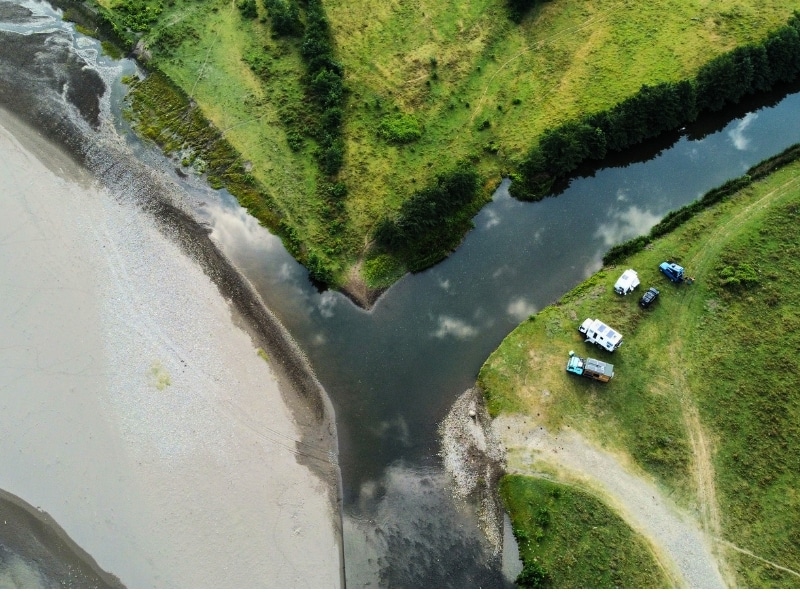
Away from private land and protected areas, travellers often overnight beside rivers, lakes, viewpoints and quiet rural tracks. Always check for signage, avoid blocking access and leave absolutely no trace.
Wild Camping in Georgia
Wild camping is widely practised in Georgia and is generally legal in many areas, but there are important limits. Georgia’s official tourism site says wild camping is legal, but camping in national parks and protected areas is only allowed in designated camping areas. Follow the usual rules:
Georgian Hospitality
Georgia’s hospitality is one of the great joys of travelling here. Winery owners, farmers and guesthouse hosts may invite you to taste wine, chacha, share food or park overnight. A Georgian supra, or feast, is not just dinner; it is a cultural experience built around wine, toasts and conversation.
For many motorhome travellers, the landscapes bring them to Georgia, but the people become the part they remember most.
Top Georgian Motorhome Destinations
Tbilisi to Kazbegi: The Georgian Military Highway
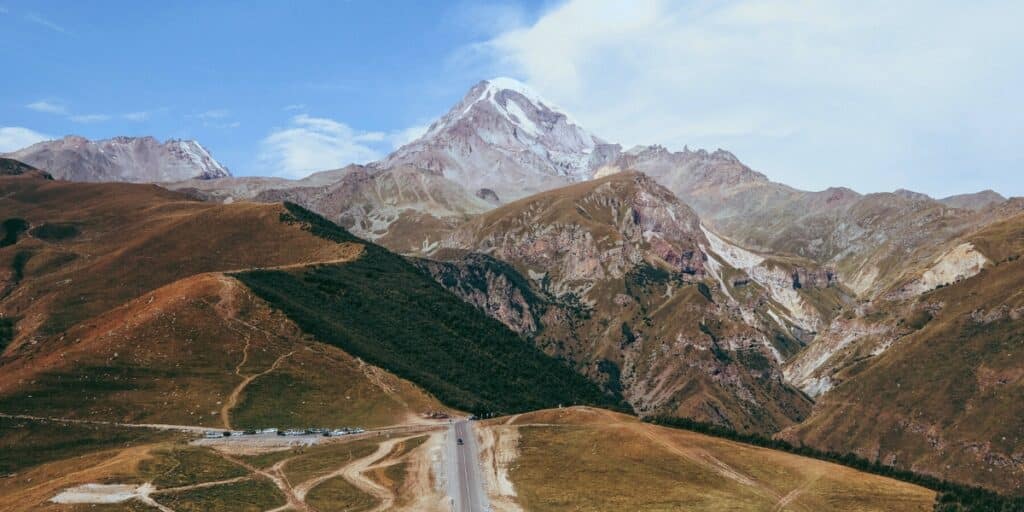
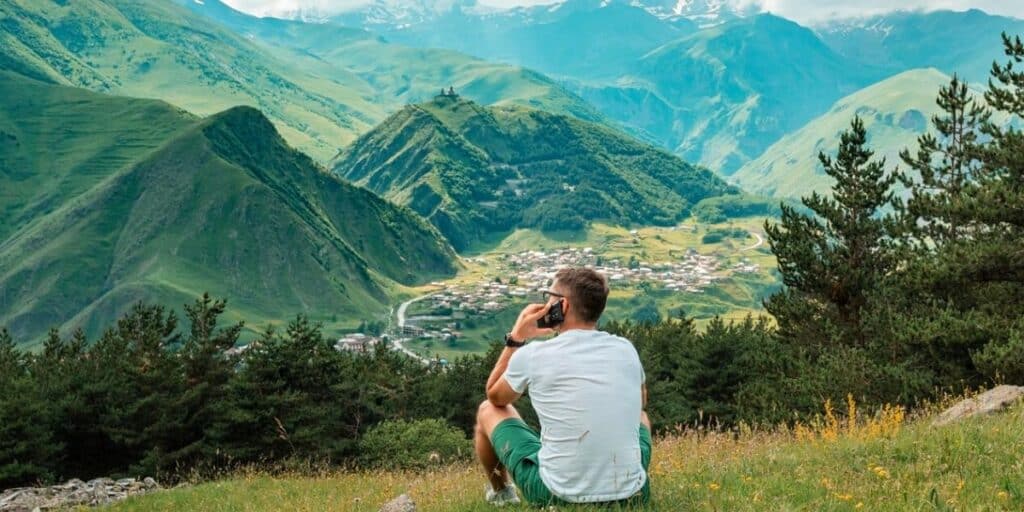
The Georgian Military Highway is one of the great road trips of the Caucasus, linking Tbilisi with Stepantsminda beneath Mount Kazbek.
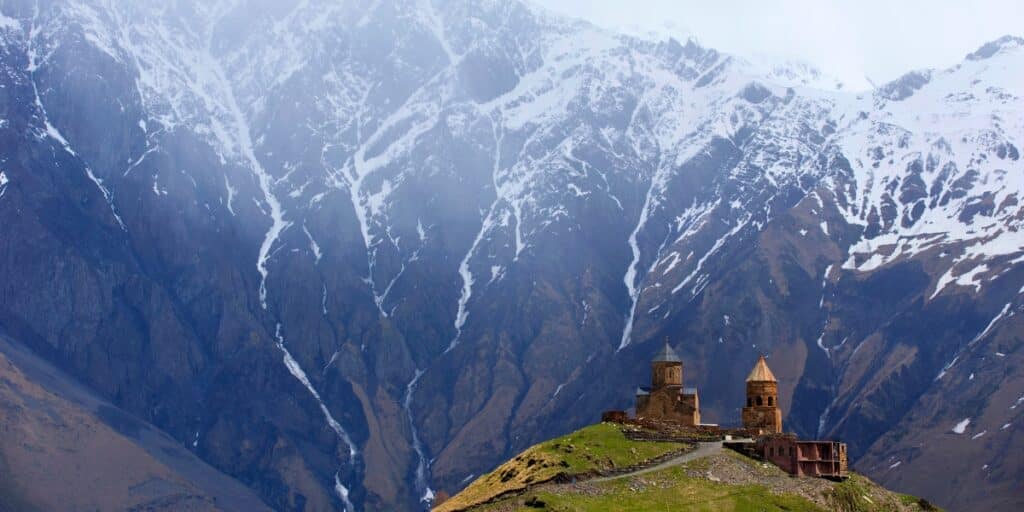
Main highlights include Zhinvali Reservoir, Ananuri Fortress, Cross Pass, mineral springs, travertine slopes and Gergeti Trinity Church.
This is a spectacular motorhome route, but it is mountainous, busy in places and weather-dependent. Take your time, avoid driving after dark and check conditions in winter and shoulder season.
Kakheti: Georgia’s Wine Region
Kakheti is the heart of Georgian winemaking. Archaeological evidence shows that Georgia’s wine culture dates back around 8,000 years, making it one of the world’s oldest wine regions.
Main stops include Sighnaghi, Bodbe Monastery, Telavi, the Alazani Valley and Alaverdi Monastery.
This is one of the best regions for campervan travel, with gentler roads, vineyard scenery and plenty of family wineries where you can taste traditional qvevri wine.
The Black Sea Coast
Georgia’s Black Sea coast stretches for around 300km, combining beaches, subtropical greenery and modern resort towns.
Batumi is the main hub, with a long promenade, striking modern architecture and easy access to Batumi Botanical Garden. Further along the coast, Kobuleti and Ureki offer a more relaxed seaside feel, while Petra Fortress makes a worthwhile historical stop.
Mountainous Adjara is a brilliant detour from the coast, with waterfalls, green valleys and old stone bridges associated with the era of Queen Tamar.
Svaneti
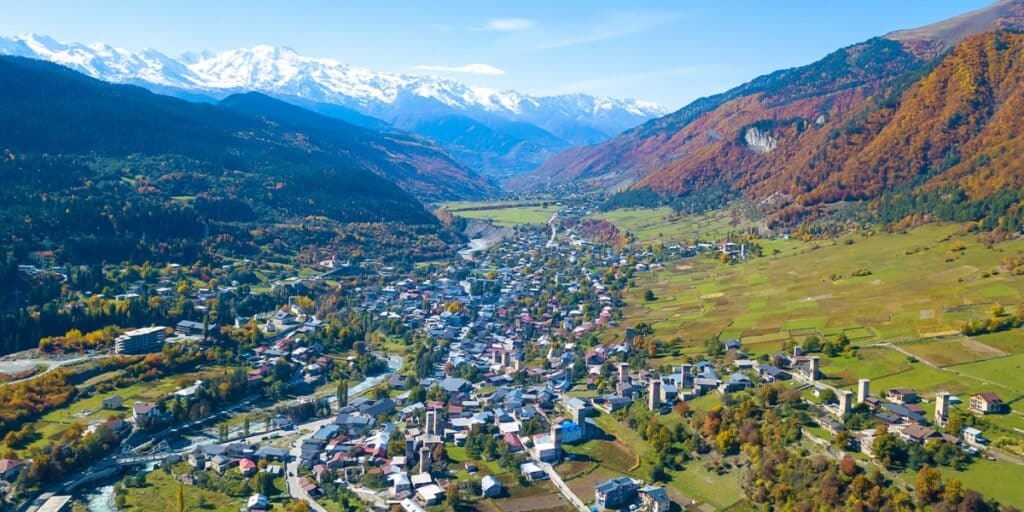
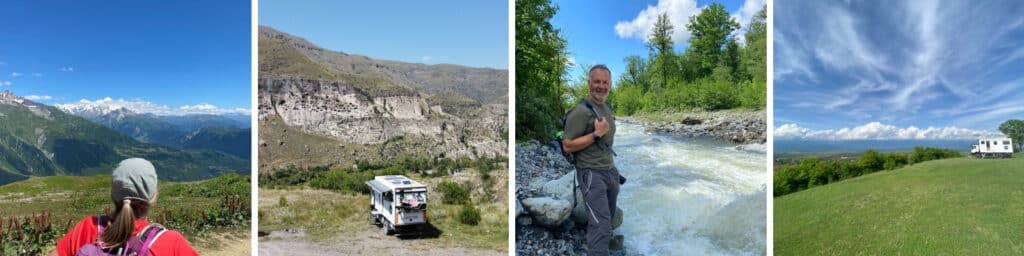
Svaneti is one of Georgia’s most extraordinary regions. Upper Svaneti is a UNESCO World Heritage Site, recognised for its medieval villages, mountain scenery and defensive tower-houses.
Main highlights include Mestia, Ushguli, and the Chalaadi Glacier and Koruldi Lakes hikes.
Although older articles might suggest this is not a good route for a large motorhome, we found the road to be in good condition and passable by all vehicles outside of the snowy season. Even the road to Ushgulia from Mestia is now paved the entire way, making this once hard-to-access village an easy drive.
More Motorhome Touring Guides to Explore
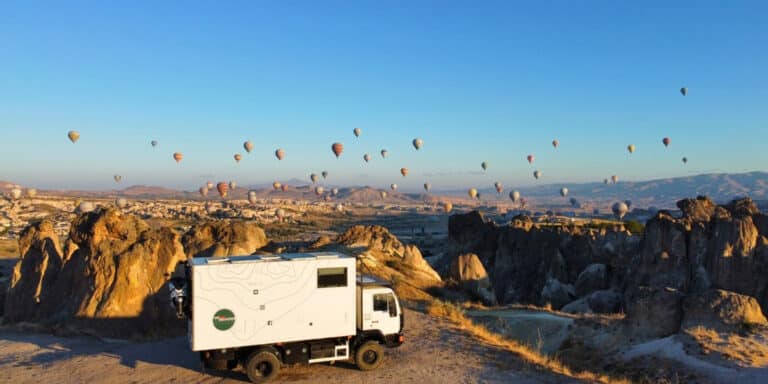
Motorhoming in Turkey: The Ultimate Guide to Planning Your Trip
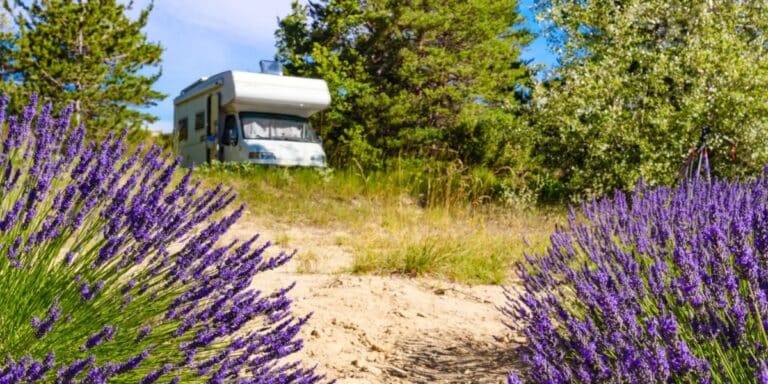
Motorhoming in France: Your Complete Touring Guide
Motorhoming in Italy: Your Complete Touring Guide
Motorhoming in Spain: Your Complete Touring Guide
Motorhoming in Germany: Your Complete Touring Guide
Planning Your Morocco Motorhome Adventure
Love it? Pin it!