This post may contain affiliate links, from which we earn an income. Click here to read our affiliate policy.
Nevada announces itself slowly. The state line arrives without ceremony, followed by long stretches of road where the horizon barely shifts. Driving east or west here is not about scenery changing every few miles, but about settling into repetition. The land does not rush to impress you. It waits.
Road trips through Nevada have a way of stripping travel back to its basics. Fuel, water, shade, distance. Towns appear just often enough to remind you that people still live out here, then disappear again. The car becomes a small moving room. The radio fades in and out. Time stretches.
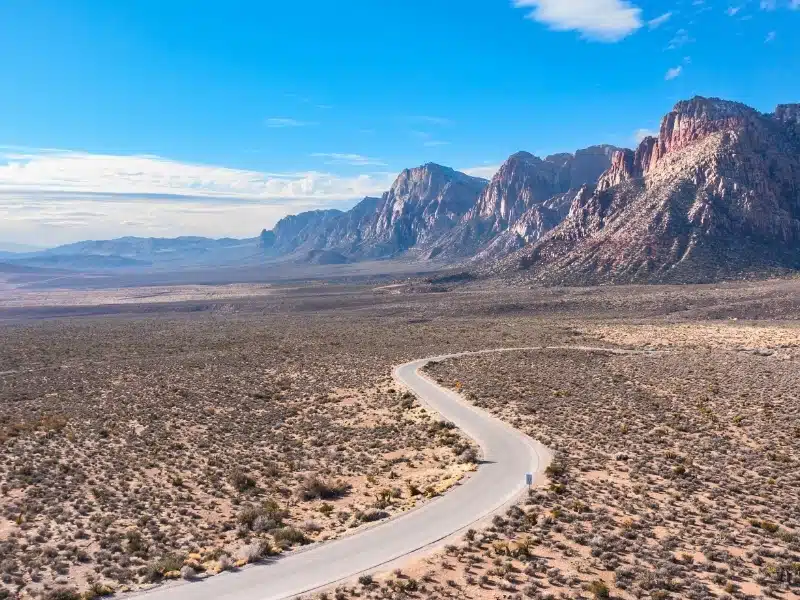
What surprises most first-time visitors is how quiet Nevada really is. The idea of the state is loud, neon and kinetic, but the reality beyond a handful of cities is empty and still. Silence here is not peaceful in the postcard sense. It is practical. It forces attention inward.
That contrast becomes clearest somewhere between Reno and Las Vegas when the road itself begins to feel like roulette online rather than a planned itinerary, with each mile rolling forward without asking what you expect from it.
There is a similar surrender involved. You can prepare the car, study the map, estimate your arrival, but the experience is ultimately shaped by variables you cannot fully control. Traffic thins unexpectedly, the weather drifts across the highway, and a fuel stop appears later than anticipated. Like watching a wheel turn, you learn to accept the forward motion without trying to predict precisely where the momentum will settle.
It is not a comparison rooted in drama but in rhythm. The drive carries a quiet anticipation, the same understated tension that comes from waiting to see what the next stretch will bring. Nothing about it feels reckless; instead, it encourages a calm attentiveness. You stay present, hands steady on the wheel, aware that progress is happening whether you analyse it or not.
There is also a certain neutrality to it. The road does not reward or punish; it simply continues. Much like digital tables that exist without the noise of a crowded floor, the experience is stripped back to essentials. You engage, you observe, and you move forward. In that space between Nevada’s two best-known cities, expectation gives way to acceptance, and the journey becomes less about directing the outcome and more about allowing it to unfold at its own measured pace.
Learning the Shape of the Drive
Nevada is a state you feel rather than photograph. The colours are muted, the drama understated. Brown hills, pale sky, straight roads that seem to ignore geography. It teaches patience by design.
You stop planning in detail after the first few hours. Instead, you start responding. When to pull over. When to push on. When to accept that the next town is further away than you thought. The rhythm of the drive replaces the schedule you arrived with.
There is something grounding about that. Without constant landmarks, the mind fills the space. Thoughts wander. Conversations stretch. Music repeats. Travel becomes less about movement and more about duration.
Where Noise Finally Breaks the Silence
Las Vegas is an interruption, arriving after hours of quiet on the long drive down the Nevada highway. The strip is a step up, a theatrical quality to everything. There is light in the night sky, sound bouncing off glass and concrete, and everything is designed with the intention of moving forward.
Stopping on the strip during a road trip is very different from arriving by plane. One travels already slow, already removed from the need for haste. Road trips need smart accommodations that every traveller must be acquainted with.
The casinos are no longer overwhelming but instead curious, an experiment in excess contained within walls.
Gambling in Las Vegas during a road trip is not temptation but observation, an example of how chance is sold, how waiting is sold as entertainment, and how time passes as quietly as possible inside, as much as it does outside, in the desert landscape.
By morning, the noise feels heavier. The road calls again.
Back Into the Space Between Places
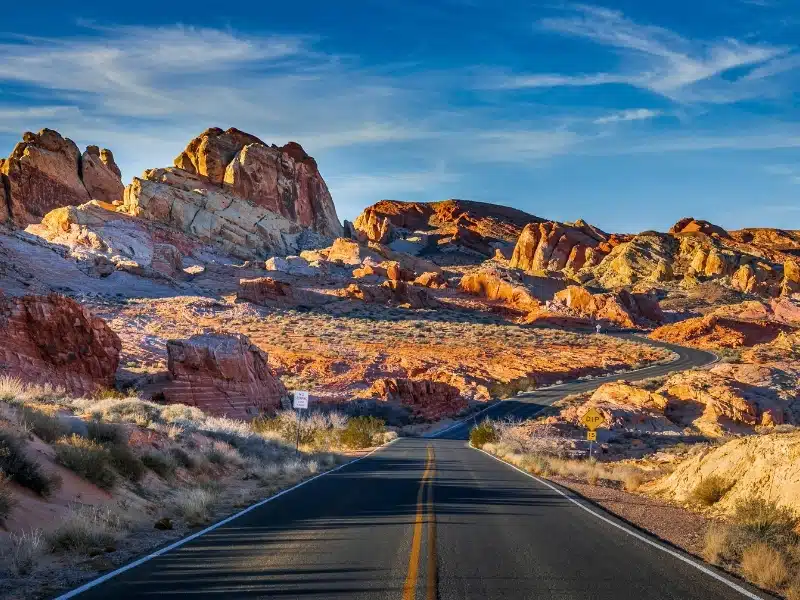
Leaving Las Vegas is almost a relief. Within minutes, the lights fade, and the desert reclaims its dominance. The transition is abrupt. One moment you are surrounded by spectacle, the next by nothing at all.
This is where Nevada does its real work. The contrast sharpens your senses. You notice the wind more. The way the sun moves. The sound of tyres on asphalt. The absence of distraction becomes a presence in itself.
On long drives like this, small rituals emerge. Coffee stops feel ceremonial. Fuel checks become moments of reassurance. Even stopping simply to stretch feels intentional. Travel slows to human speed again.
Why Nevada Suits Nomadic Travel
For those drawn to nomadic life, Nevada offers something rare. Space without performance. You are not required to consume it or interpret it. You simply move through.
Van travellers understand this instinctively. Nights parked under wide skies. Mornings without plans. Nevada supports that kind of movement without comment. It does not crowd you with expectations.
The road here encourages acceptance rather than ambition. You stop trying to optimise the journey. You let it happen.
The Value of the Quiet Miles
By the time the trip ends, the loud moments are not what linger. It is a quiet stretch between towns. The hours where nothing happened. The sense of being suspended between destinations without needing to justify it.
Nevada teaches that travel does not need constant stimulation to feel meaningful. Sometimes the absence of decision is the experience. The road rolls on. You follow it. And somewhere in that steady motion, the mind finally catches up with the body.
This is the gift of driving through Nevada. Not the spectacle at its centre, but the silence that surrounds it.