This post may contain affiliate links, from which we earn an income. Click here to read our affiliate policy.
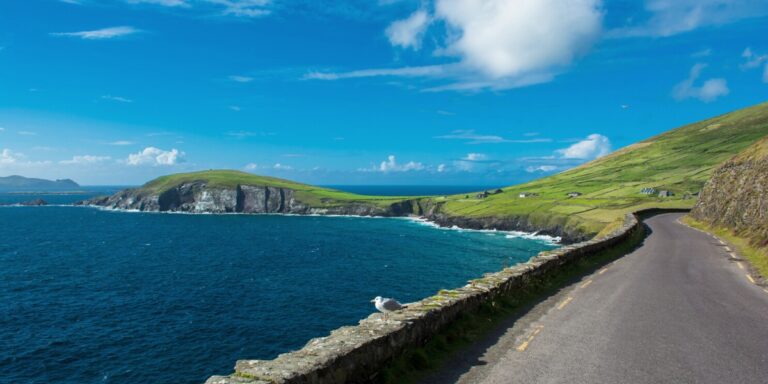
There is a very particular kind of silence you encounter on the back roads of Ireland, the kind that settles in somewhere between a deserted bog road in Connemara and a narrow lane winding down toward a coastal village in Kerry.
Full-time travellers who have spent any real time driving across the Emerald Isle will know it well. The roads demand your attention, yes, but the long stretches between destinations, the hours waiting out a rain shower in a motorhome bay, the quiet evenings in a village with one pub and no mobile signal, those are the moments that define whether a road trip truly works.
How you fill that time is everything. Today, with connectivity creeping into even the most remote corners of rural Ireland, seasoned road-trippers are finding a much broader menu of entertainment options than they had even five years ago.
Filling the Gap
From audiobooks and wilderness podcasts to online games and digital leisure, the way full-time travellers fill the gaps has shifted considerably. One notably popular option has emerged among travellers who enjoy casual gaming, particularly on evenings parked up at a coastal wild camp or a quiet aire with a decent data signal.
Ireland has a well-regulated and surprisingly accessible online gaming scene, and browsing a cross selection of PayPal casinos in Ireland has become a go-to for those who appreciate the convenience and security of PayPal payments while on the road. It is one of the cleaner ways to dip into casual entertainment without committing to a subscription or sharing card details over a potentially unreliable connection. That said, it is just one strand of a much richer tapestry of things road-trippers do to stay stimulated, connected, and genuinely entertained between stops.
Leaning Into the Drive Itself
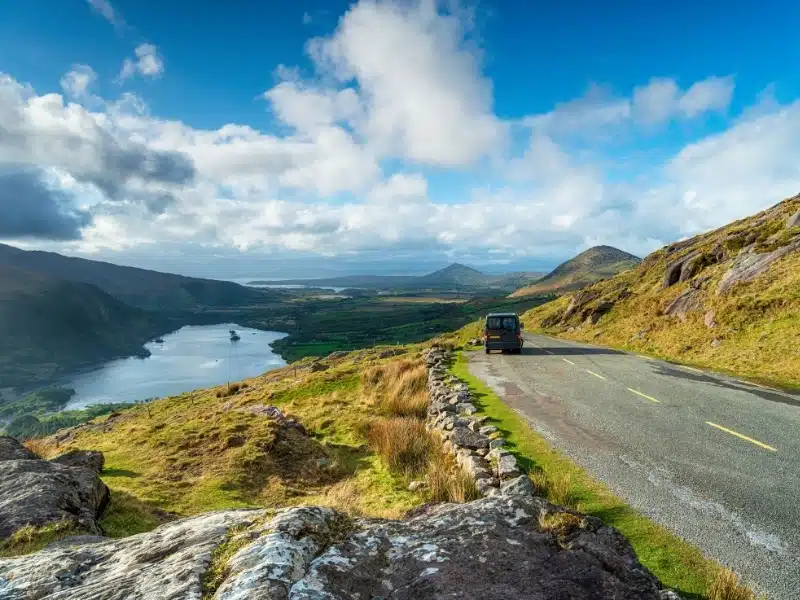
The most obvious, and most overlooked, form of entertainment on an Irish road trip is the drive itself. Ireland is not a country that rewards rushing. Its roads are a deliberate slowdown. You will encounter tractors on single-track roads in Donegal, sheep drifting across the tarmac in Mayo, and impromptu delays at level crossings that, it turns out, are not inconveniences but invitations. Full-time travellers who have cracked the code of Irish road tripping have stopped fighting the pace and started leaning into it.
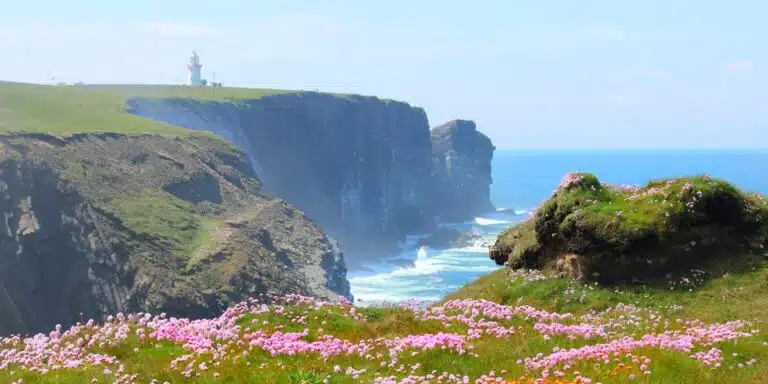
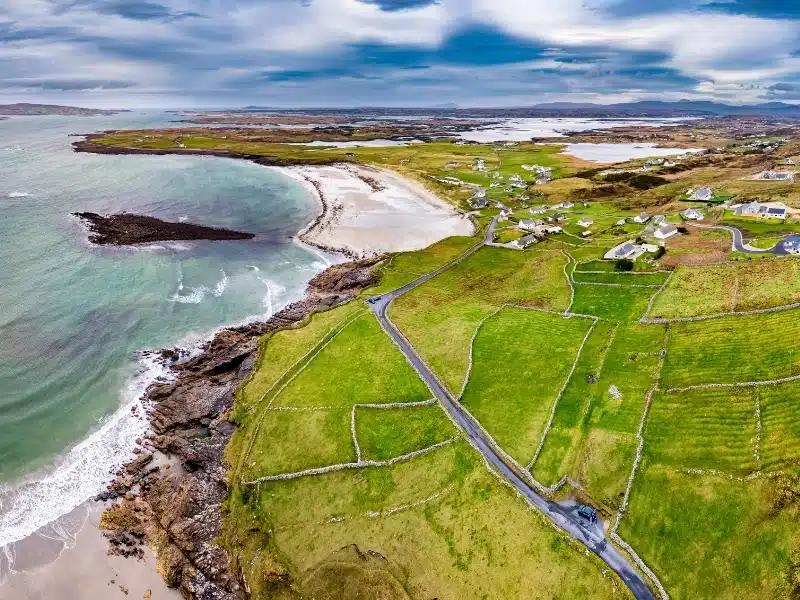
The Wild Atlantic Way, all 2,500 kilometres of it, is less a route than a philosophy. Stop at every brown sign you pass. Pull over for the viewpoints. If a village looks interesting from the road, go in. Some of the best moments we have had on Irish roads have come from a turn we almost did not take. Fáilte Ireland’s online discovery portal maps out hundreds of these points of interest, and it is worth bookmarking before you set off.
According to Tourism Ireland, the island attracted over 11 million overseas visitors in the most recent pre-pandemic peak year, a figure that has since rebounded strongly, with scenic driving routes consistently ranked among the top reasons people visit. The infrastructure for slow travel is genuinely there. You just have to slow down enough to use it.
What Full-Time Travellers Actually Do After Dark
Once the van or motorhome is parked and the kettle has boiled, the evening opens up. For full-time travellers, the routine of nightfall on the road becomes almost meditative, but you still need something to do. Here is what we have found works well across the board:
The Road Soundtrack: Podcasts, Playlists and Irish Radio
Anyone who has not listened to Irish national radio while driving through the Midlands is missing something that is genuinely difficult to explain. RTÉ Radio 1 has a particular quality, somewhere between local news, farming reports, and conversations so unhurried they feel almost transgressive to a British ear, that perfectly matches the Irish countryside. It is free, it is local, and it will tell you more about a place than a guidebook ever could.
Beyond radio, podcasts have become the full-time traveller’s companion of choice for long driving days. History podcasts pair well with Ireland specifically: the country is layered with stories, and having someone explain the significance of the landscape you are passing through turns an ordinary drive into something closer to living history. Series on Celtic mythology, the Famine, the War of Independence, and the geography of the west coast are all excellent choices for the road.
Music is less discussed but equally important. Build a playlist before you leave that includes some traditional Irish music; nothing affects your mood for a stretch of coast road quite like a well-timed reel, alongside whatever else you enjoy. The contrast alone is worth it.
The Stopovers That Become the Whole Point
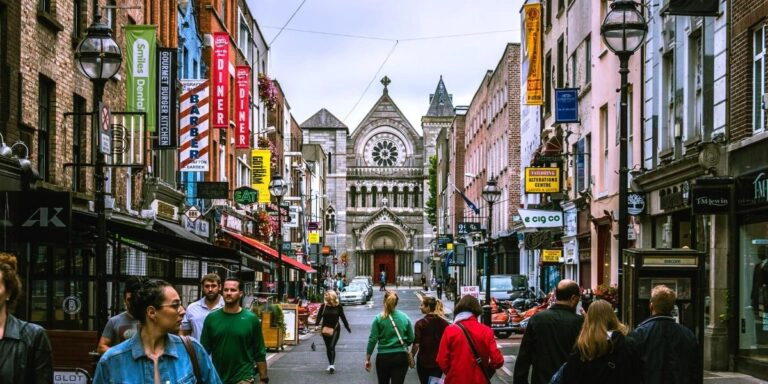
One of the quiet truths of full-time travel is that the planned destinations often matter less than the unplanned ones. Ireland is extraordinarily good at producing these moments. You stop because you need fuel. The petrol station is next to a harbour. The harbour has a fish-and-chip van. The fish is fresh off the boat that morning. You end up staying two nights.
This is not an accident of luck; it is a feature of slow travel done well. Full-time travellers tend to protect flexibility in their schedule precisely to allow this kind of thing to happen. Booking too far ahead, committing too firmly to arrival times, treating Ireland like a list to be ticked off, these are the mistakes that rob a trip of its best moments.
For more on how to approach Ireland by road with the right mindset, our full motorhoming in Ireland guide covers the practical and the philosophical in equal measure. The road really is the thing.
How Technology Has Changed the Road Trip Experience
Full-time travellers today have access to tools that would have seemed extraordinary even ten years ago. Real-time wild camping apps like Park4Night and iOverlander show you where to stop tonight, with reviews from people who were there last week. Google Maps offline mode means you are never truly lost. Weather apps give you 72-hour hyper-local forecasts that can completely change your route.
PayPal-backed payment systems have also made casual spending on the road safer and simpler. Whether it is booking a last-minute campsite, picking up gear from an online retailer for next-day delivery to an address you will be passing through, or, as noted earlier, spending an evening browsing Ireland’s online entertainment scene, the shift toward quick, secure digital payments has made the logistics of full-time travel considerably less stressful.
betinireland.ie is one of the review platforms that has tracked this shift in the Irish market, cataloguing which operators support PayPal and providing guidance on the regulatory frameworks that keep the market honest. It is a good example of the kind of practical resource that travellers, whether they are casino enthusiasts or merely curious, can use to navigate an unfamiliar digital landscape.
The Space Between the Destinations Is the Journey
Ireland does not reveal itself quickly or to the hurried. The travellers who come away with the richest memories are almost always the ones who allowed for delay, who lingered, who got bored enough to walk into a pub at 11am and ended up staying for lunch and leaving with three phone numbers and a standing invitation to a ceilidh. The time between destinations is not dead time. It is where the story actually happens.
Whether you fill it with a playlist, a podcast, a walk along a beach you found by accident, or an hour of casual gaming on a secure platform while the rain hammers the roof of your van, the trick is to simply be present enough to enjoy it. Ireland, for all its reputation for bad weather and narrow roads, is one of the most rewarding countries on earth for a traveller willing to slow down and pay attention.
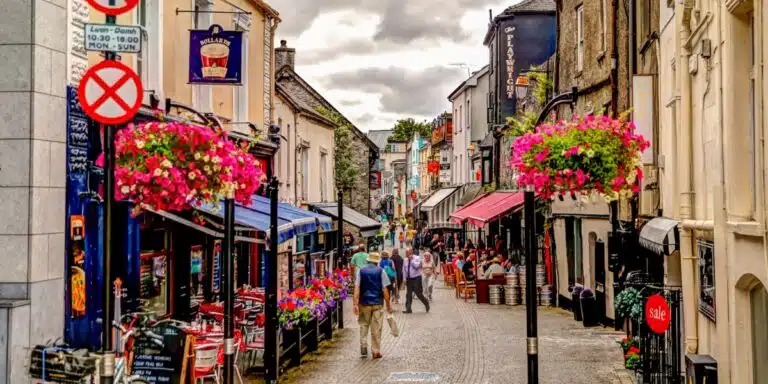
And when you finally do reach the next destination, the next cliff, the next bay, the next cobbled town, it will feel earned in a way that no amount of hurrying could have managed.