This post may contain affiliate links, from which we earn an income. Click here to read our affiliate policy.
7–10 days exploring medieval villages, river valleys, and classic French countryside
The Dordogne is one of France’s most rewarding regions for a slow, scenery-led road trip. Tucked into the heart of southwest France, it’s a landscape of limestone cliffs, meandering rivers, medieval villages, prehistoric sites, and food traditions that feel deeply rooted in place.
A Dordogne road trip by car lets you explore at an unhurried pace, dipping between river valleys, market towns, château viewpoints, and countryside back roads where the journey matters as much as the destination. Distances are short, driving is relaxed, and the rhythm of the region naturally encourages long lunches, short walks, and lingering stops.
This itinerary focuses on the Dordogne Valley and Périgord Noir, combining headline villages with quieter detours and practical bases. It’s designed to give you a full sense of the region without constant packing and unpacking, making it ideal for a week to ten days of classic French road travel.
Dordogne Road Trip Map
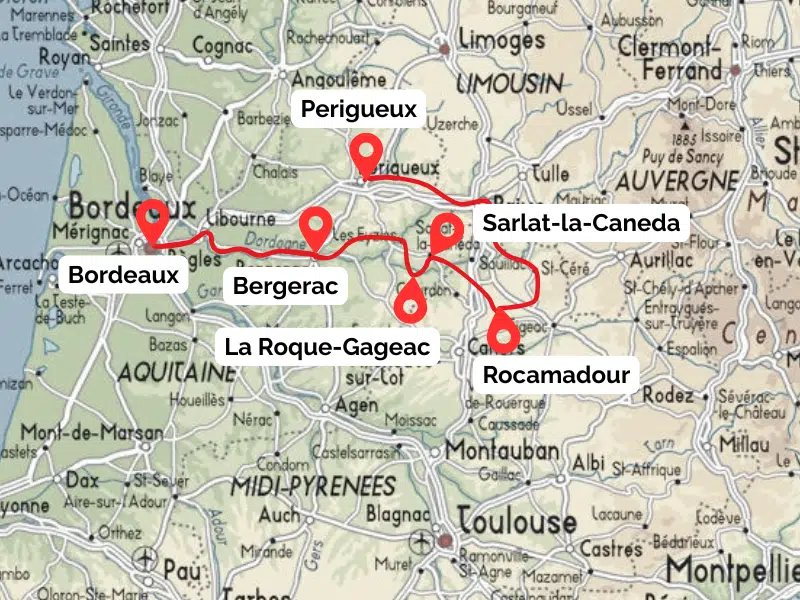
Route: Bordeaux – Bergerac – La Roque-Gageac – Sarlat-la-Canéda – Rocamadour – Périgueux
Distance: ~380 km (loop)
Duration: 7–10 days
Best time to go: May–September
Best for: Medieval villages, rivers, food and wine, slow travel, classic France
This map shows the full route and main bases for the trip. You can save it to Google Maps for planning or offline use while driving.
Planning tools we actually use for France road trips
Day 1: Bordeaux to Bergerac
Base: Bordeaux or Bergerac, depending on flight timings
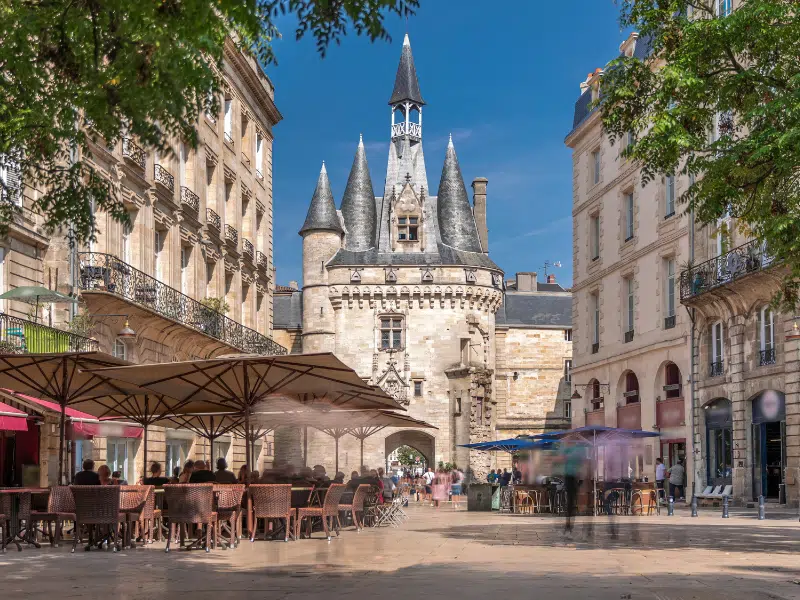
Begin your Dordogne road trip in Bordeaux, an easy arrival point with excellent road connections and plenty of options for picking up a hire car. If you’re starting early, a short walk along the Garonne or a coffee stop near the river makes a relaxed send-off before heading east.
The drive to Bergerac eases you gently into southwest France, trading city streets for vineyards, rolling farmland, and slower roads. Bergerac itself is compact and welcoming, with a historic centre that’s ideal for a first wander rather than a packed sightseeing schedule.
Spend the afternoon exploring the old town, riverside paths, and small squares, then settle into the local rhythm with dinner by the Dordogne. This is a day about arrival and adjustment, not rushing.
Day 2: Bergerac to La Roque-Gageac
Base: La Roque-Gageac or nearby village
Leave Bergerac heading east into the heart of the Dordogne Valley, where the landscape becomes more dramatic and the river begins to cut deeper into limestone cliffs. Vineyards gradually give way to wooded hills, stone villages, and prehistoric sites that define this part of the region.
The Bergerac area is one of the Dordogne’s main wine-producing regions. Vineyards stretch out on both sides of the river, producing easy-drinking reds, crisp whites, and dessert wines such as Monbazillac. Many small domaines welcome visitors for informal tastings, and it’s easy to combine a vineyard stop with a long lunch or riverside walk.
Your first major stop is Les Eyzies-de-Tayac-Sireuil, widely considered the prehistoric capital of France. Set beneath towering rock overhangs, the village is closely associated with Cro-Magnon discoveries and is home to the National Museum of Prehistory. Even if you don’t visit the museum, the setting alone is worth the stop, with cliffside dwellings, walking paths, and cafés along the Vézère River.
From Les Eyzies, continue south through classic Dordogne scenery toward La Roque-Gageac. This short stretch of road is particularly rewarding, following the river past cliffs, walnut groves, and castle-topped ridges.
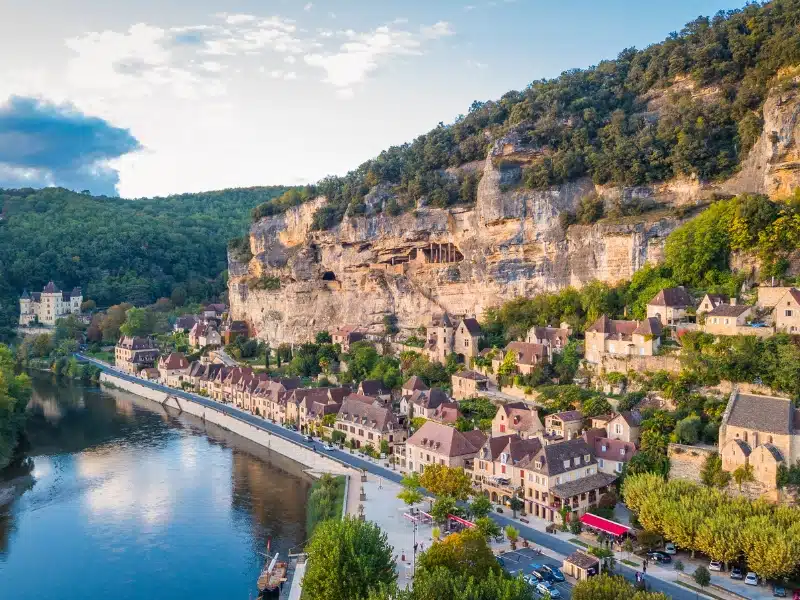
Arrive in La Roque-Gageac in the afternoon, when the light softens and the village is at its most atmospheric. Pressed between the Dordogne River and a sheer limestone cliff, it’s one of the most striking villages in the region. Wander the riverside, explore the narrow lanes, or or visit the magnificent Marqueyssac Gardens.
Day 3: Dordogne Valley Châteaux and Sarlat
Base: Sarlat-la-Canéda
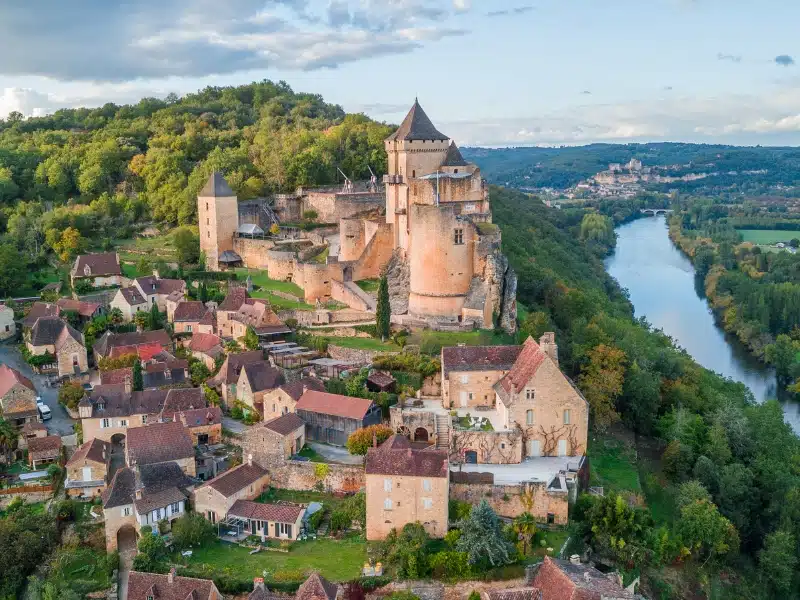
Today is about classic Dordogne scenery. The Valley of the Five Châteaux lies between La Roque-Gageac and Beynac, and even without entering every castle, the drive alone is rewarding.
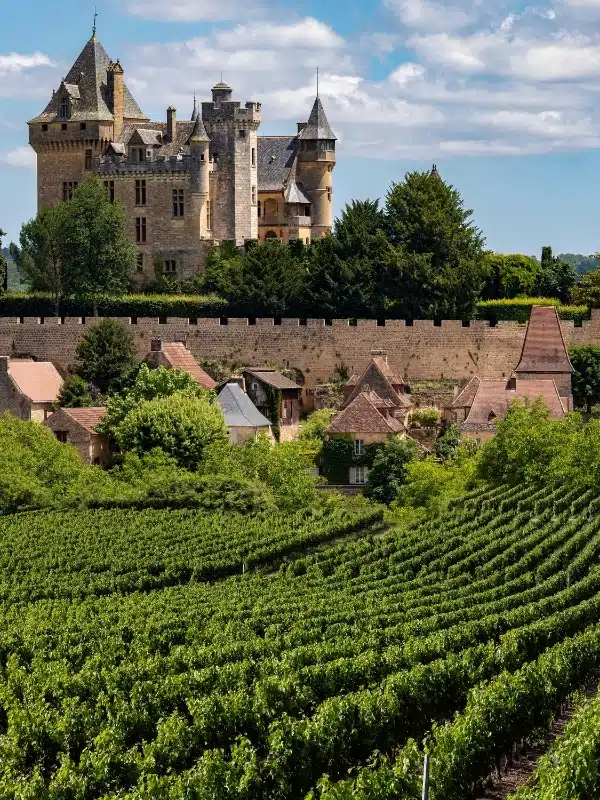
Château de Beynac and Château de Castelnaud dominate opposite sides of the river, their hilltop positions shaping the valley’s skyline. If you only visit one château in the Dordogne Valley, Château de Castelnaud is the most rewarding overall, with strong historical interpretation and wide views across the river. For a more dramatic setting and a tougher climb, Château de Beynac offers one of the most imposing silhouettes in the region.
Arrive in Sarlat by mid-afternoon to explore its beautifully preserved medieval centre. The town comes alive in the early evening as day-trippers leave and restaurants fill the squares. This is one of the best places in the Dordogne to slow down and stay put for a couple of nights.
Day 4: Sarlat and Surroundings
Base: Sarlat-la-Canéda
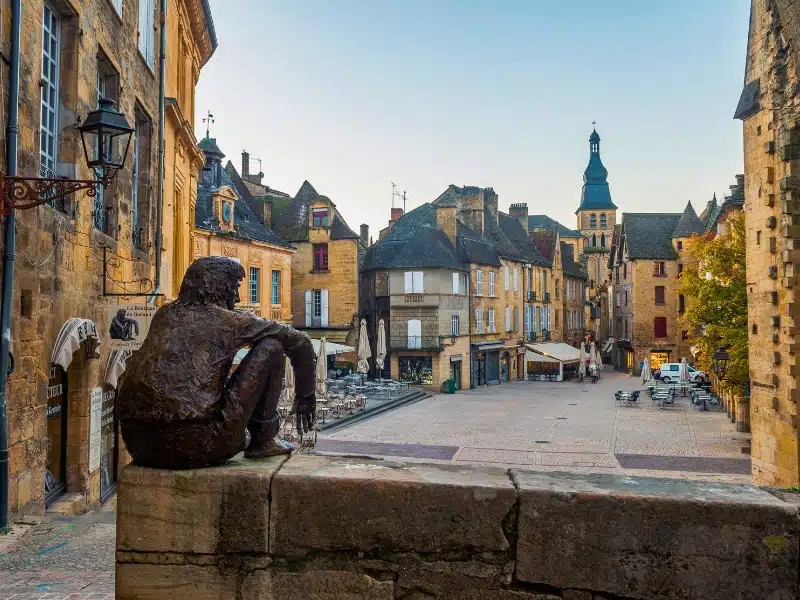
Give Sarlat a full day. The morning is ideal for wandering the old town before it gets busy, taking in the honey-coloured stone buildings, hidden courtyards, and cathedral square.
If your visit coincides with a market day, build the morning around it. The Dordogne’s food culture is one of its strongest draws, and Sarlat’s markets showcase local produce, cheeses, walnuts, and regional specialities.
In the afternoon, use Sarlat as a base for short excursions. Nearby villages like Domme or Beynac offer elevated views and a change of pace, while a quieter option is simply to enjoy a long lunch and let the day unfold naturally.
This day is intentionally unstructured, giving you breathing space before heading south toward Rocamadour.
Day 5: Rocamadour and the Lot Valley
Base: Rocamadour or southern Dordogne
Spend today exploring Rocamadour and its immediate surroundings, keeping driving to a minimum and allowing time to experience one of southwest France’s most extraordinary settings properly.
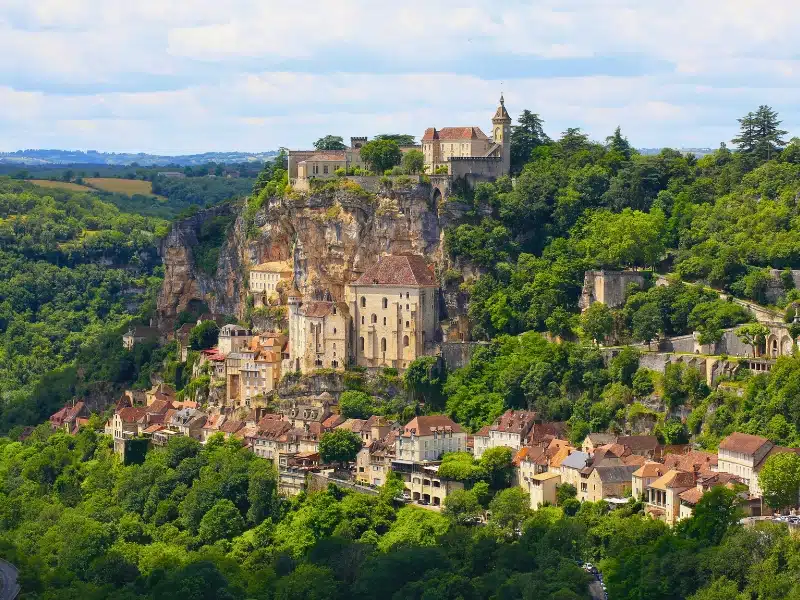
Arrive in Rocamadour early if possible. Built vertically into a sheer limestone cliff, the village unfolds in layers, from the lower street and pilgrim route to the sanctuary complex and château above. Walk the Grand Escalier, visit the chapels and basilica, and take time to absorb the scale and setting rather than rushing through the sights. Early morning and late afternoon are the quietest and most atmospheric times to explore.
Once you’ve explored Rocamadour itself, continue a short distance south to the Gouffre de Padirac. Visiting both in one day works well if you start early and keep the pace measured. The descent into the chasm and the quiet boat journey through the underground river offer a striking contrast to the vertical drama of Rocamadour above ground.
If time allows, finish the afternoon with a gentle detour into the Lot Valley. Villages such as Loubressac offer quiet streets, stone houses, and river views, providing a calmer counterpoint to the drama of Rocamadour and Padirac before returning to your base.
End the day back in Rocamadour or nearby, when the crowds thin and the village takes on a more contemplative feel. Staying overnight nearby allows you to experience the site after most visitors have left, which is when it feels most special.
If you prefer a slower pace, it’s easy to focus on Rocamadour alone and visit Padirac the following morning before continuing west.
Day 6: Rocamadour to Périgueux via the Lot and Dordogne Valleys
Base: Périgueux
Leave Rocamadour in the morning and head west toward Périgueux, following a quiet, scenic route through the Lot and Dordogne valleys. This is one of the most satisfying driving days of the trip, with layered landscapes, historic villages, and plenty of opportunities to stop without feeling rushed.
A worthwhile first stop is one of the villages of the Dordogne Valley such as Carennac or Autoire. Both are small and atmospheric, with stone houses, riverside walks, and a calm pace that makes them ideal for coffee or an early lunch before continuing west.
Further along the route, Collonges-la-Rouge offers a striking contrast to the pale limestone villages of the Lot. Built almost entirely from red sandstone, it’s instantly recognisable and compact enough for a short wander without derailing the day.
Arrive in Périgueux by mid to late afternoon. The historic centre around the Saint-Front Cathedral is easy to explore on foot, with Roman remains, medieval streets, and plenty of relaxed places to eat. After several days of villages and countryside, Périgueux feels like a gentle transition back into a larger town without losing the character of the Dordogne.
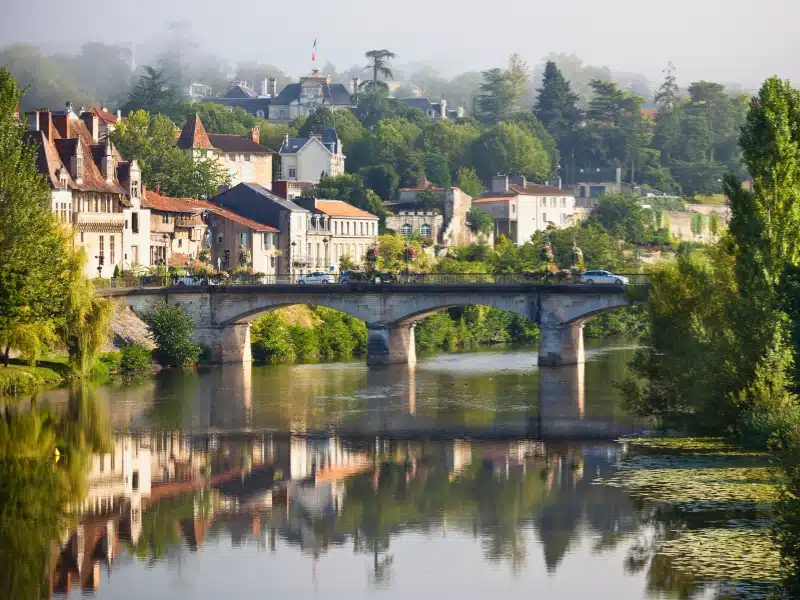
Day 7: Périgueux and the Upper Dordogne
Base: Périgueux
Today is a day for exploring Périgueux, where Roman and medieval history sit side by side. The Saint-Front Cathedral dominates the town, while the Vesunna Gallo-Roman Museum provides insight into the area’s ancient past.
Périgueux feels more lived-in and less polished than some Dordogne towns, which gives it a different, more local energy. The old town, river paths, and food markets and wine make it a fitting final stop.
Around Périgueux, local markets and wine shops showcase both Dordogne wines and neighbouring appellations, making it a good place to pick up bottles before the drive home.
If time allows, linger here or use Périgueux as a springboard for exploring the wider Périgord region before heading onward.
Where to Stay on a Dordogne Road Trip
For a 7–10 day Dordogne road trip, choosing two or three strong bases works far better than changing hotels every night. Distances are short, but winding roads mean fewer moves equals less time behind the wheel and more time exploring.
All locations below work well with a car and offer parking or easy parking options.
Bordeaux: start or end night (optional)
Luxury: InterContinental Bordeaux Le Grand Hôtel is a proper statement stay right in the centre, ideal if you want one glamorous city night before heading into the Dordogne.
Mid-range: Hôtel Burdigala by Inwood Hotels is a stylish, modern, and an easy “city hotel with car” option with practical access.
Budget: ibis budget Bordeaux Centre Gare Saint-Jean is simple, convenient for an early start, and easy if you’re arriving late.
Bergerac: first Dordogne base
Luxury: La Chartreuse du Bignac is a countryside-chic château-style stay just outside Bergerac, great if you want space, calm, and an “arrive and breathe” feel.
Mid-range: Brit Hotel Europ Bergerac is central and practical, a solid base with an easy-in, easy-out setup for road trippers.
Budget: ibis budget Bergerac offers a no-fuss vibe, is car-friendly, and good value for a short stop.
Sarlat-la-Canéda: best base for villages and food
Luxury: Plaza Madeleine & Spa is right in Sarlat with a pool and spa, perfect for a “treat ourselves” stay while still being walkable for dinner.
Mid-range: Hotel Bon Encontre is a relaxed, good-value option that’s well set up for drivers and handy for dipping in and out of town.
Budget: ibis Sarlat Centre is dependable, simple, and convenient for parking and access.
Rocamadour: one-night dramatic stop
Luxury: Le Bois d’Imbert is a smart countryside hotel that suits a special night near Rocamadour without being awkward to reach by car.
Mid-range: Hôtel Les Esclargies is peaceful, tucked into greenery, and makes a strong “quiet base near the action” option.
Budget: Hotel des Voyageurs is straightforward, well located for an efficient stopover.
Périgueux: final historic-town base
Luxury: Mercure Périgueux Centre is comfortable, central, and the easiest “nice hotel, no complications” option for a last night in town.
Mid-range: The Originals City, Hôtel Régina, Périgueux is good-value, practical, and well suited to travellers arriving by car.
Budget: ibis budget Périgueux offers a simple and reliable stay and is an easy base with quick road access.
Booking Tips for the Dordogne
Road Trip Tips for the Dordogne
If you want to continue your journey, this route links naturally with our France road trip guide, as well as itineraries through the Loire Valley, Provence, and the wider southwest.
More France Road Trips to Explore
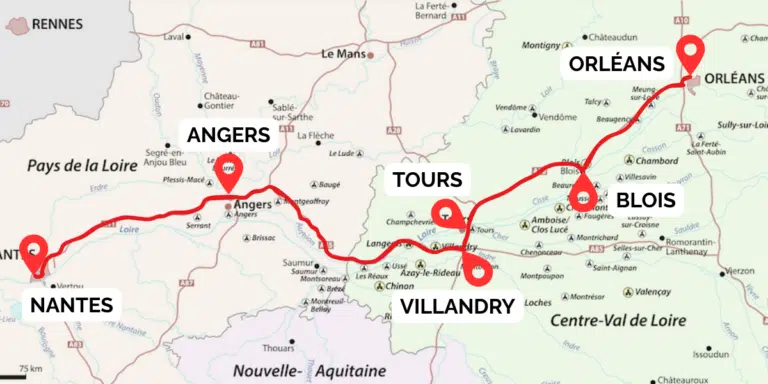
Loire Valley Châteaux Road Trip: The Best of Classic France by Car
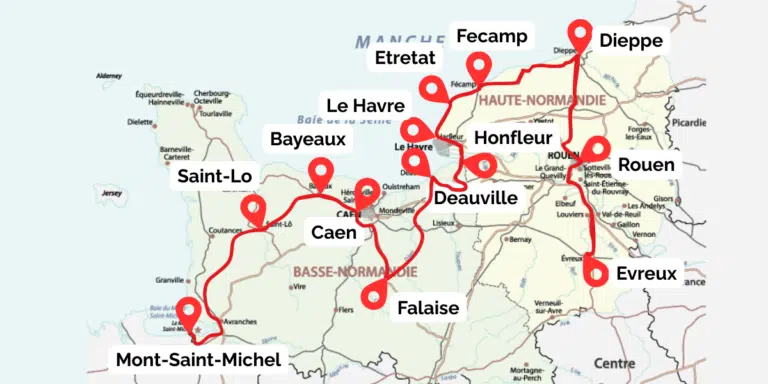
Normandy Road Trip: A Classic 7 Day Itinerary by Car
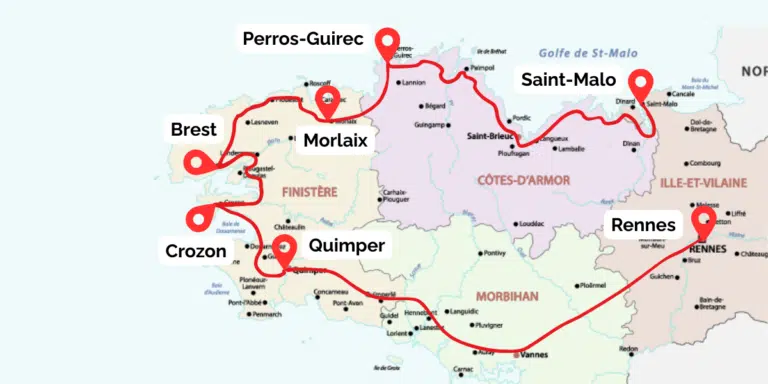
Brittany Road Trip: The Wild Coast and Historic Heart of Western France by Car
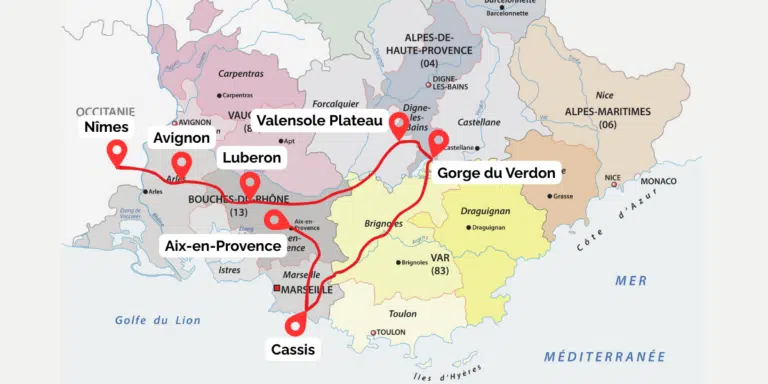
Provence Road Trip: The Best of Southern France by Car
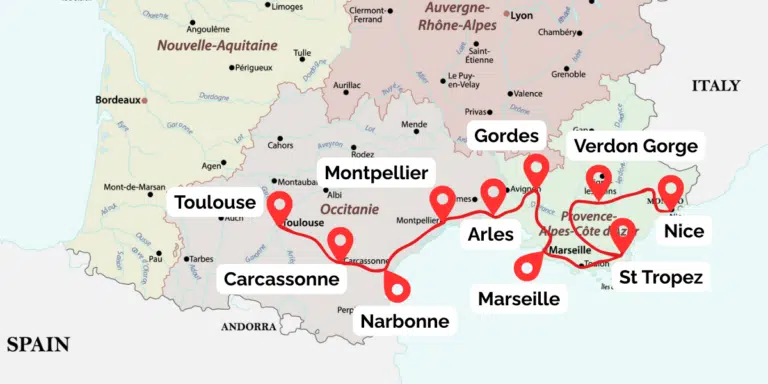
South of France Road Trip: The Ultimate 10 Day Driving Route

Route des Grandes Alpes: An Epic French Road Trip
Love it? Pin it!