
This post may contain affiliate links, from which we earn an income. Click here to read our affiliate policy.
Most people assume that living in Europe long-term means navigating visa requirements, dealing with paperwork, or having a significant amount of money.
We used to think the same, until we realised there’s another route that often gets overlooked, and for many people, it’s already sitting in their family history.
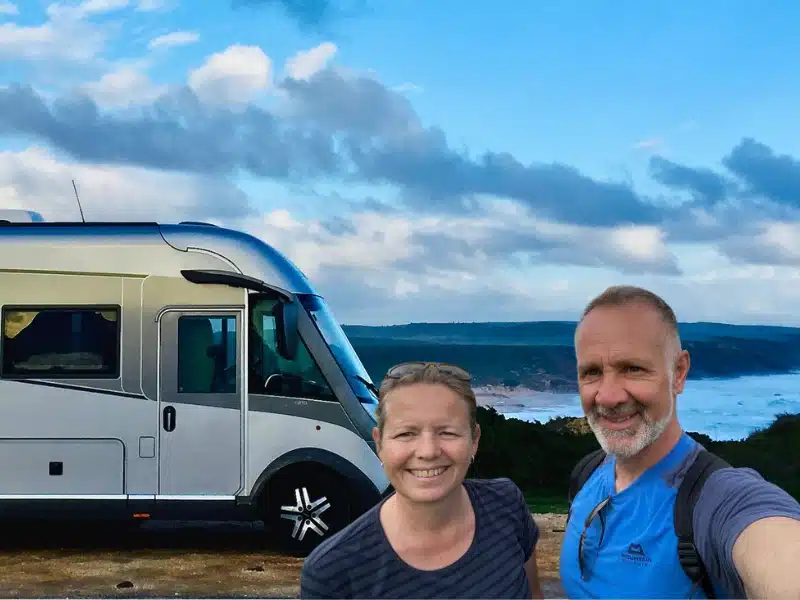
Phil has an Irish passport, and it has completely changed how we experience Europe. Instead of watching the Schengen clock or planning trips around visa limits, we have the freedom to stay longer, travel slower, and spend time in places in a way that feels much more like living than visiting.
It’s one of those advantages that makes a bigger difference than you expect, and it’s not something we had to buy into or apply for through complex residency schemes. If you have European roots, whether through a parent, grandparent, or sometimes even further back, you might already qualify for an EU passport.
And once you have it, Europe opens up in a completely different way.
Citizenship by Ancestry
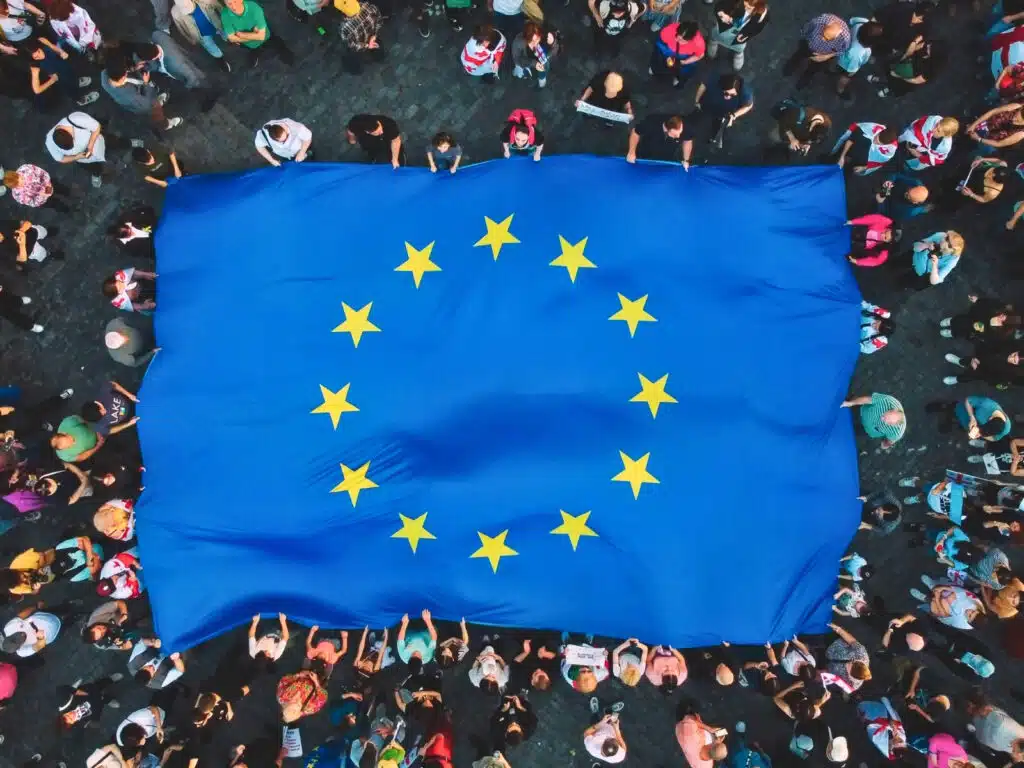
If you have parents, grandparents, or sometimes even great-grandparents from certain European countries, you could be eligible for an EU passport. That means the legal right to live, work, travel, and settle across 27 EU countries without time limits or paperwork every few months.
For us, this is one of those topics that shifts travel from short trips to something much bigger, a different way of living entirely.
And unlike golden visas or investment schemes, this route is often far more accessible. The real challenge is not money, it’s paperwork.
What an EU Passport Actually Gives You
An EU passport is not just a travel document; it is a complete lifestyle unlock.
You can live and work anywhere in the EU without needing a visa. You can move between countries freely within the Schengen Area. You can buy property, access healthcare systems, and often pay local tuition fees for education.
It also extends beyond just you. Under EU free movement rules, your spouse and dependent family members can usually join you and live in another EU country, even if they are not EU citizens themselves. This makes it a practical option for couples and families looking to spend longer in Europe together.
For long-term travellers, remote workers, or anyone considering a semi-permanent base in Europe, it removes almost every logistical barrier.
It turns Europe from a place you visit into a place you can actually build a life.
RELATED POST: EU Travel Made Easy: The Schengen Advantage of Your Irish Passport for Your British Spouse
13 European Countries Offering Citizenship by Ancestry
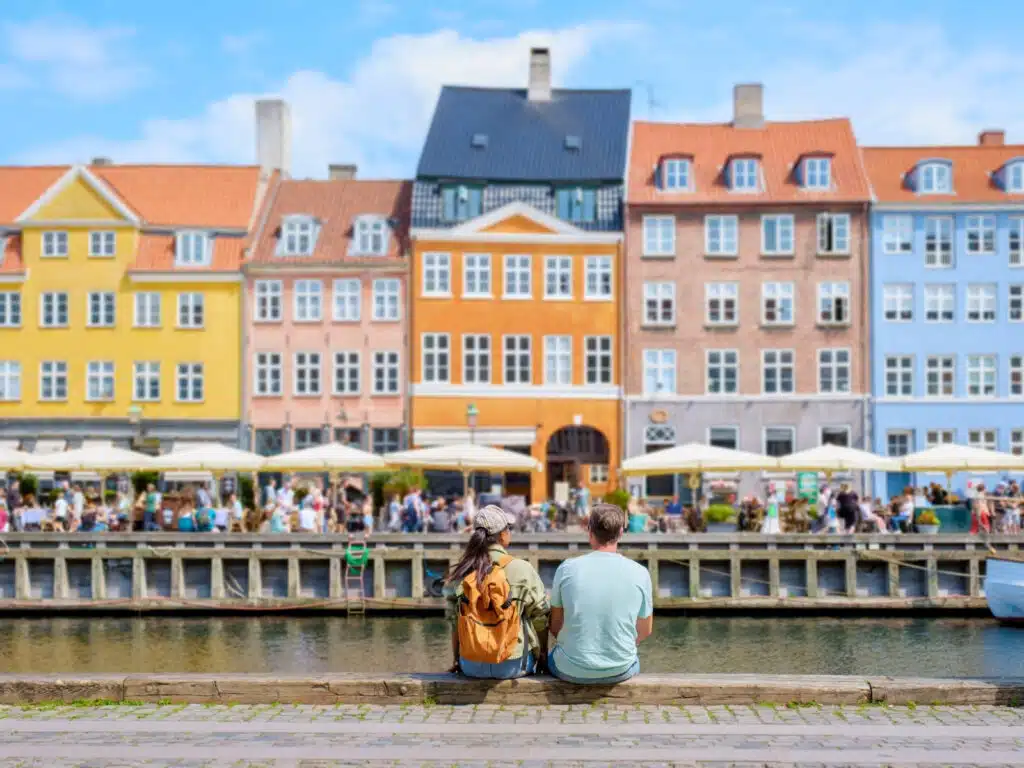
The rules vary by country, but these are some of the most accessible and commonly used routes.
Bulgaria
Bulgaria offers citizenship by ancestry, typically requiring proof of Bulgarian origin through a parent or grandparent.
Applicants usually need official certification of their heritage, which can involve working with Bulgarian authorities or historical archives. This step can take time, particularly if records are not digitised.
It is not always the fastest route, but it is a solid option for those with clear family ties, especially if your ancestry is recent and well documented.
Czech Republic
The Czech Republic allows citizenship by descent if you have a parent or grandparent who was Czech.
The main challenge tends to be documentation, particularly if records date back to periods of political change when borders shifted, and records were not consistently maintained.
If you can clearly prove your lineage, the process itself is relatively straightforward compared to some other European countries.
France
France has one of the stricter ancestry systems in Europe.
In most cases, you will need at least one French parent to qualify for citizenship by descent, which limits eligibility for those with more distant ancestry.
However, if you do meet the criteria, French citizenship provides full EU rights along with strong global mobility and access to one of Europe’s most established social systems.
Greece
Greece offers one of the broader ancestry pathways, sometimes allowing claims through great-grandparents.
The trade-off is the level of documentation required. Greek authorities often request detailed records, including birth, marriage, and municipal registration certificates, from within Greece.
Tracking these down can be time-consuming, particularly if records are held locally. For those with Greek heritage, though, it is a valuable route to full EU citizenship.
Hungary
Hungary is often considered one of the more accessible ancestry routes in Central Europe.
If you can prove Hungarian ancestry, often through parents or grandparents, you may be eligible to apply. One important requirement is demonstrating basic proficiency in the Hungarian language.
This can be a hurdle, but for applicants willing to invest the time, Hungary offers a relatively open pathway compared to many other countries.
Ireland
Ireland is one of the most popular and straightforward ancestry routes.
If one of your grandparents was born in Ireland, you can apply for citizenship through the Foreign Birth Registration process. Once approved, you are entitled to an Irish passport.
If you were born on the island of Ireland yourself, including Northern Ireland, you may already be entitled to Irish citizenship automatically, depending on your parents’ status at the time of your birth.
The process is well established, but it relies heavily on documentation. You will need official records linking you directly to your Irish-born grandparent, including birth and marriage certificates.
Italy
Italy’s jure sanguinis system has long been one of the most well-known citizenship by descent routes.
Recent changes mean you will usually need a parent or grandparent born in Italy, rather than going further back. Even so, it remains one of the most widely used pathways, especially for Americans.
Expect a detailed process involving multiple documents, often across different countries. Many applicants choose to apply within Italy to speed things up.
Malta
Malta offers ancestry-based citizenship, although it is more limited than in many other countries.
Eligibility generally depends on having a Maltese parent or, in some cases, grandparents, and may involve additional registration or residency requirements.
While more restrictive, it is still a viable option for those with strong and recent Maltese family connections.
Poland
Poland allows citizenship to be passed down through generations, provided it was not interrupted or lost.
This means applicants need to carefully trace their lineage and confirm that their ancestor retained Polish citizenship throughout their lifetime.
The process can be detailed, but for those who qualify, it is a well-established route to reclaim citizenship.
Portugal
Portugal’s ancestry pathway is relatively flexible, particularly for those with a Portuguese parent or grandparent.
You will need to demonstrate that your ancestor retained their citizenship and that your birth and family line are correctly recorded in official registries.
Portugal is especially appealing for those looking for a slower pace of life, coastal living, and an established expat and digital nomad community.
Romania
Romania offers citizenship restoration for descendants of former Romanian citizens.
This is particularly relevant for families from regions that were historically part of Romania but are now in neighbouring countries.
Applicants need to prove both their ancestors’ citizenship and their direct descent. It can be a powerful option for those with Eastern European heritage.
Slovakia
Slovakia allows citizenship by descent through parents or grandparents.
As with many Central European countries, the main requirement is proving that citizenship was passed down correctly, supported by official records.
Documentation is often the most time-consuming part, but the eligibility criteria themselves are relatively clear.
Spain
Spain offers citizenship by descent, although the rules can be more nuanced than in other countries.
Eligibility often depends on having a Spanish parent, and in some cases, grandparents, along with specific legal provisions. Recent laws have also allowed descendants of those who left Spain during certain historical periods to apply.
It is important to check current regulations carefully, as Spain updates its policies more frequently than some other countries.
How to Apply for an EU Passport Through Ancestry
Every country has its own process, but the overall steps tend to follow a similar pattern.
Start with your family history. Speak to relatives, look at old documents, and identify exactly where your ancestors were born.
Next, gather official records. This usually includes birth certificates, marriage certificates, and sometimes death records for each generation linking you back to your European ancestor.
You will then need to prove that citizenship passed down through the family line without interruption, which is where things can get technical.
Applications are typically submitted through a consulate or embassy in your home country, although some people choose to apply directly in Europe.
Timelines vary widely. Some applications take months, others can take several years, depending on the country and complexity of your case.

Common Mistakes to Avoid
The biggest mistake is assuming eligibility without checking the fine print.
Each country has very specific rules about how citizenship passes down, and small details can make a big difference. For example, in some cases, if an ancestor naturalised in another country before a certain date, citizenship may not transfer.
Another common issue is incomplete documentation. Missing or incorrect records can delay applications significantly, especially if documents need to be sourced from overseas archives.
People also underestimate how long the process can take. It is rarely quick, so it is worth starting early and being realistic about timelines.
Finally, some applicants overlook language or cultural requirements. Countries like Hungary may require basic language ability, which can catch people off guard.
Is It Worth It?
From our perspective, absolutely.
An EU passport changes how we travel as a couple. It removes time limits, opens up work opportunities, and gives you the freedom to move around Europe without restrictions.
It also creates options. You might not want to relocate right now, but having the ability to do so later is incredibly valuable.
And there is something quite grounding about reconnecting with your family history in the process. It adds a different layer to travel, one that feels personal rather than just exploratory.
Final Thoughts
If Europe has always felt just out of reach, this is the route worth exploring.
It is not always simple, and it does require effort, but for many people, the opportunity is already there, hidden in their family tree.
And once you have that passport in hand, Europe stops being a place you pass through.
It becomes somewhere you can truly belong.






Brits had all these advantages until we voted to throw it all away!