This post may contain affiliate links, from which we earn an income. Click here to read our affiliate policy.
Working on the road was never part of some grand plan. What started as a simple motorhome road trip adventure across Europe turned into a way of life, and eventually into a question we could not ignore: how do you keep earning money once the travel stops being temporary?
At first, working on the road involved laptops balanced on knees, internet that worked only when it felt like it, and days where choosing between work and going outside felt harder than it should. Over time, we learned that making money working on the road is about building work around the space you have, the time you want to protect, and the kind of life you actually want to live.
This post is not about quick wins or glossy success stories. But if you’re wondering how to work on the road, we share real ways people fund nomadic life, what has worked for us, what took longer than expected, and how you can shape work to fit around your lifestyle rather than the other way around.
Our Story (in brief!)
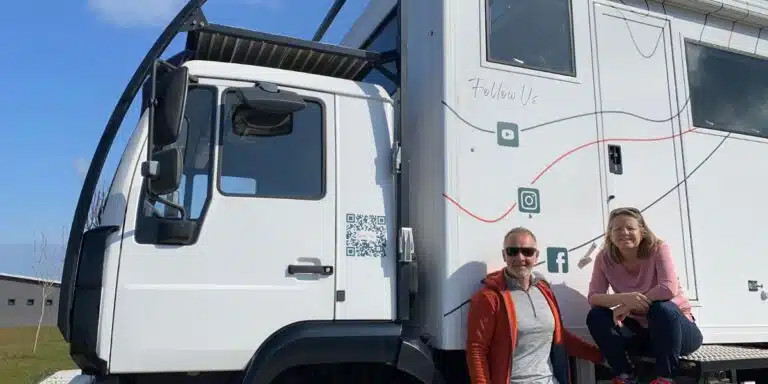
We quit work and sold our house in 2018 with a loose plan to spend a couple of years travelling around Europe in a motorhome. Six months in, it was obvious that going back to our old life was not really an option. At the same time, I realised I needed something beyond travelling itself, some sense of purpose that did not disappear once the novelty wore off.
I started a blog with absolutely no idea what I was doing! I learned everything from scratch, writing, building a website, SEO, photography, and the business side of things, and slowly figured out how to make money from it. That part took time. A lot of time. It was several years before it turned into anything meaningful, but it gave structure to life on the road and something to build alongside the travel.
From there, we added a YouTube channel, leaned into social media, and started to create motorhome-specific itineraries and ebooks. What started as a side project grew into a business that now supports our hybrid nomadic lifestyle, mixing time working from the road with periods of staying put.
That is just one route, though. There are plenty of ways to work on the road, and the best are the ones you design around the life you actually want. We were happy to put in long hours early on so we could ease off later. You might prefer fixed working hours or working at night in a different time zone.
The important thing is not to lose sight of why you chose life on the road in the first place, and to build work that still lets you enjoy the freedom that living and working in a motorhome brings.
1. Remote Working: Keeping Your Job, Changing Your Office
Remote working is often the simplest and most stable way to fund vanlife. You keep your existing job, your regular income, and your professional identity, but swap the office for your vehicle and the commute for a road trip. Many UK roles in marketing, tech, admin, finance, customer support, and project management already work fully online.
Some van lifers also rely on specialist remote work that values precision and structured documentation over physical location. Roles that involve focused writing can be carried out from a van as long as there is reliable connectivity and a quiet working setup. In this setting, children ehcp writer roles suit a mobile way of working, allowing income to be maintained without dependence on a fixed location.
The key is clarity. Employers need to know your working hours, availability, and internet setup. If expectations are agreed up front, working from a van is no different from working from home.
I really rate The Working From Home Hub, a free and useful UK resource for finding remote-friendly roles and understanding employer expectations. There are more real working on the road jobs here than on any of the scammy platforms you need to pay for!
2. Freelancing and Contract Work
Freelancing gives you control over your time, workload, and income, which suits vanlife well. You sell skills rather than hours in a location, which makes the road feel like an asset rather than a limitation. Writing, design, web development, SEO, marketing, bookkeeping, and consulting all translate cleanly to working from a vehicle.
The biggest challenge is boundaries. When your home, office, and vehicle are the same space, it is easy to let work bleed into everything. Clear working hours, realistic deadlines, and clients who respect your time make freelancing sustainable on the road.
We found it helpful to plan days working from co-working spaces and friendly coffee shops. For us, it just wasn’t fun sitting working all day and then segueing into dinner and some TV, all in the same seat!
3. Blogging
Blogging is slow to start but flexible once established. You can write offline, publish when you have a signal, and build content around travel, life, and work on the road. Income usually comes from ads, digital products, and affiliate links that earn a small commission when readers buy through your recommendations.
The biggest mistake people make is expecting fast money. Blogging rewards consistency over time and works best for people who enjoy writing, problem-solving, and building something gradually alongside travel.
4. Vlogging and Content Creation
Vlogging suits people who prefer talking to a camera and telling stories visually. YouTube, podcasts, and social platforms can generate income through ads, sponsorships, affiliate income, and audience support. Vanlife content performs well because it blends work, travel, and everyday life.
The trade-off is time and power. Filming, editing, and uploading are energy-intensive, both mentally and electrically. Enjoying the creative process and building routines around it makes content creation sustainable.
You will need to invest in a decent camera (depending on your style) – we use a GoPro for action filming and an iPhone for talking videos. There are other costs, like hard drives and a decent laptop able to run an editing suite.
I think you have to really love the process to be successful. For us, we found that all our travels were viewed through the lens of YouTube – exciting to start with, but over time we felt it had taken over our lives! We now film and edit as and when we want, rather than every week, and now have a healthy mix of talking heads and travelogue-style videos.
Get our take on full timing in Europe!
5. Affiliate Marketing
Affiliate marketing does not need to live on a blog or vlog. Email newsletters and social platforms can all generate affiliate income by recommending things you genuinely use on the road. Over time, small commission payments add up.
Trust matters more than traffic. People are far more likely to click affiliate links when recommendations come from real experience rather than sales language. Unless you already have a brand or a large number of personal followers, you’ll need to invest money in ads to attract people to your page and see your product, so there is some upfront cost to this option.
Find out everything you need to know about SIM cards for long-term travel in Europe, including portable WiFi devices, eSIM cards, local SIM cards and monthly contracts which don’t have a data cap!
6. Matched Betting
Matched betting remains popular with UK vanlifers because it is location independent and system-based. It uses free bet offers from bookmakers to generate guaranteed profit when done carefully and consistently.
It works best as a supplementary income rather than a long-term sole focus. Reliable internet matters, but speed is less important than accuracy and organisation. You will also need a bankroll of at least £200 to start with, although you can progress faster if you invest more.
If you want to give matched betting a try (and I have), I would recommend opening your accounts when you’re in the UK. You’ll also need a mix of good VPN’s if you’re planning on matched betting from outside the UK. Check out Outplayed, who offer tools and how-to videos, and a super-helpful Facebook group.
7. Online Teaching and Tutoring
Teaching online offers a predictable income and routine. English teaching, subject tutoring, and skills-based lessons all work well from a van if you have a quiet space and stable internet. Sessions can be scheduled around travel days.
This option suits people who enjoy interaction and clearly defined working hours, balancing flexibility with structure.
8. Coaching and Consulting
If you have experience others value, coaching and consulting can be run entirely online. Business coaching, career advice, fitness coaching, marketing strategy, and mindset work all translate well to video calls.
Working with fewer clients at higher value suits vanlife better than chasing volume. It keeps workdays focused and leaves space for life outside the vehicle.
9. E-Commerce and Digital Products
Digital products such as guides, templates, courses, presets, and planners work well because delivery is automated. Once created, they sell without storage or shipping, which matters in a small living space.
Physical products are possible, but logistics and space quickly become limiting. Digital-first keeps work lighter and more flexible.
For budding authors, Kindle Direct Publishing offers an accessible route to self-publishing and even provides free tools and software to help you create your Kindle-compatible book, before adding it to Amazon. Do your homework, though – it took me a week just to get my book ready because I didn’t research properly!
10. Remote Admin and Virtual Assistant Work
Virtual assistant and remote admin roles are always in demand. Tasks include email management, bookkeeping, scheduling, customer support, and basic operations. These roles often offer flexible hours and steady pay.
They suit people who are organised, reliable, and comfortable working quietly for long periods. Internet stability matters more than speed.
11. Stock Photography and Video
If you already take photos or shoot video while travelling, stock platforms can turn that content into long term background income. It is not fast money, but it rewards consistency and volume.
This works best as a secondary income stream alongside other work rather than as a primary focus.
12. Print on Demand
Print on demand allows you to sell designs on clothing, prints, posters and other merchandise without holding stock. Orders are printed and shipped by third parties, keeping your vehicle free of clutter.
This suits creative people with niche ideas and the patience to test what sells over time. Etsy and Not on the High Street are the best-known platforms for print on demand, but if you have a strong brand, you can set up your own online shop and market through social media.
13. Short-Term and Seasonal Work
Seasonal work provides cash injections and structure. Festivals, hospitality, events, tourism, and agricultural roles often include parking, facilities, and reliable power.
These jobs break up long periods on the road and reduce financial pressure while adding social variety.
14. Work Away and Work Exchange
Work exchange trades your time for accommodation and sometimes food. While not always paid, it reduces costs significantly and gives access to space, comfort, and routine when you need a reset.
Workaway and Worldpackers are two of the most established platforms for this type of travel, and works well alongside digital work that does not require constant internet access.
15. Pet and House Sitting
Pet and house sitting offers stability without rent. You get reliable power, strong WiFi, space, and a proper work environment in exchange for looking after animals and a home.
For vanlifers, this is a pressure release. It is ideal during bad weather, busy work periods, or when you need comfort to stay productive. Trusted Housesitters is the biggest name in pet and house sitting, but you do have to pay to register on their site. We know quite a few vanlifers who advertise their services through their own Facebook page, and because they always get great reviews, they are always in demand.
16. Van-Based and Local Services
Practical skills travel well. Photography, drone work, bike repair, dog walking, cleaning, social media help for small businesses, and odd jobs can all generate income on the road.
Your vehicle becomes part of your toolkit rather than just transport, adding flexibility and connection to the places you visit.
17. AI-Assisted Services and Automation
AI has quietly opened the door to a whole new category of remote work that suits vanlife extremely well. You do not need to be a developer or “techy” to use it. Many people are now offering AI-assisted services such as content drafting, editing, research, social media scheduling, customer support responses, data cleanup, and basic automation for small businesses.
AI-assisted work fits vanlife well because it is flexible, scalable, and largely asynchronous. You can work in focused bursts, automate repetitive tasks, and reduce the number of hours needed to earn the same income. Both Upwork and Fiverr are good places to start looking, but also check out UK-first PeoplePerHour, which I much prefer.
Travelling to Europe in your motorhome? Get our free country specific motorhome touring guides packed with European travel information to help you plan your trip!
Things You Need to Work on the Road
Funding
Do you need to invest money to work on the road? The honest answer is yes, sometimes, but not in the way people often fear. Most vanlife-friendly work does not require a huge upfront investment, but almost all of it benefits from small, intentional spending. Think tools rather than risks. Spending a little in the right places usually saves time, reduces stress, and makes work sustainable on the road.
Where you spend money depends entirely on how you choose to work. Some income streams are close to free to start, like blogging, while others work better if you are willing to invest modestly and treat them like a business rather than a hobby.
Internet
Internet is the backbone of vanlife work. A combination approach works best. Mobile data is essential, ideally with Starlink, dual SIMs or multiple networks so you can switch if coverage is poor. A dedicated WiFi router designed for motorhomes improves stability compared to hotspotting from a phone.
Public WiFi from coffee shops and libraries is useful, but it should be a backup, not your main plan. Coffee shops are great for a change of scenery, a proper coffee, and social energy, but they are unpredictable for calls and long work sessions.
A VPN is non-negotiable if you work online. We recommend Nord VPN for its large number of servers and technical options. It protects your data, especially on public networks, and helps with accessing services that may be restricted by location while you travel.
RELATED POST: An Easy Guide to Motorhome Internet & Wifi
Equipment
Your setup does not need to be fancy, but it does need to be reliable. A good laptop, noise-cancelling headphones, and a second screen make a huge difference. Power management matters more than brand names. You need enough battery capacity to work without constantly worrying about charging.
External hard drives, cloud backups, and cable organisation save time and frustration. In a small space, clutter builds fast and kills productivity.
Legalities
Working from a van does not remove your legal responsibilities. You still need to register income, pay tax, and comply with country-specific rules depending on your work type. Trip insurance matters too, both for your vehicle and your equipment.
If you work for clients, contracts and invoices protect you. If you sell digital products or use affiliate links, you need clear disclosures. Sorting this early gives peace of mind and keeps work from bleeding into stress.
Ergonomics
Your body notices working in a van before your brain does! Poor posture, working on a bed, or hunching over a table leads to aches fast. A supportive seat, a proper table height, and regular movement are essential.
We use supportive and shaped cushions for our backs when working from a bench seat, and I have a footrest because my feet don’t reach the floor!
Working outside when the weather allows helps. A fold-out chair, a solid table, and shade turn your camp site pitch into a comfortable workspace. Comfort is not a luxury. It is what lets you keep working day after day.
Power, Space, and Routine
Power dictates everything. Solar, DC to DC charging, and occasional electric hookups create flexibility. You need to know how long you can work before power becomes an issue and plan your days around that. It’s surprising how much power a laptop uses – running our MacBooks for 6 hours each day takes more power than the fridge/freezer!
Space is mental as much as physical. Even a small van works if you separate work time from rest time. Close the laptop. Put it away. Step outside. Routine creates balance, and balance keeps vanlife enjoyable long term.
Final Thoughts
Working from a van is not about escaping work. It is about reshaping it. The road gives you freedom, but it also demands planning, patience, and honesty about what you need to stay productive. Some days you will work from a quiet park up surrounded by nature. Other days, you will be wedged into a café nursing one coffee for hours. Both are part of nomadic life.
If you build systems that support your work, protect your time, and respect your comfort, vanlife stops being a compromise and starts being a sustainable way to live, work, and travel on your own terms.
Are you looking for more monadic life tips and tricks? Check out these top posts…

EU Passport Through Ancestry: 13 Countries That Could Make You Eligible
What to Sense-Check Before Making Irreversible Full-Time Travel Decisions

The Questions We’d Ask Before Starting Full-Time Travel Again

Our 60 Before 60 Travel Bucket List

The Best Countries for Digital Nomads in 2026
Travel Life: How to Make Your Dream a Reality
Love it? Pin it!