
This post may contain affiliate links, from which we earn an income. Click here to read our affiliate policy.
Most full-time travel decisions feel reversible at the start. Routes can change. Plans can adapt. You can always “figure it out as you go”.
That’s true to a point.
But there are certain decisions around full-time travel and nomadic life that quietly lock in cost, complexity, or constraints for years. They don’t always feel dramatic when you make them, but they’re much harder to unwind later.
This isn’t about being cautious for the sake of it. It’s about knowing where slowing down actually matters.
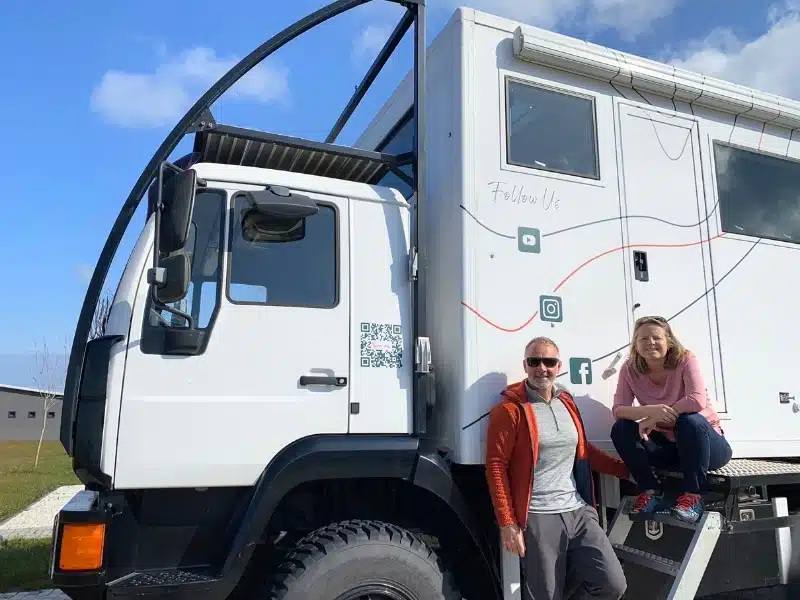
If you’re planning full-time travel or nomadic life and facing decisions that are hard to undo, this post looks at what’s worth common-sense checking before you commit.
It covers flexibility, money, assumptions, and how early choices can shape long-term travel in ways that aren’t always obvious at the start.
This isn’t about avoiding commitment; it’s about making the right decisions deliberately.
Which decisions are genuinely hard to undo?
Not all choices carry the same weight.
Buying a vehicle, committing to a build, selling property, or relying on a single income stream tend to create momentum that’s difficult to reverse once you’re on the road. Changing direction later is possible, but it’s usually expensive, disruptive, or emotionally draining.
A useful common sense-check is to ask not “Can we change this later?” but “What would it realistically cost us to change this later, in money, time, and energy?”
Selling our house and not investing in a rental property is a prime example of that.
How much flexibility are we giving up for certainty?
A lot of early decisions are driven by the desire for certainty. Locking in a setup, a route, or a financial structure can feel reassuring.
But certainty often comes at the expense of flexibility.
Bigger, more complex setups can reduce day-to-day friction while increasing long-term constraints. Simplifying later is rarely as straightforward as it seems. It’s worth being honest about how much adaptability you’re trading away, and whether that trade still makes sense a year or two down the line.
Are we committing to an idea of the lifestyle, or to how it will actually feel?
It’s easy to make decisions based on how full-time travel is imagined rather than how it’s lived.
Some choices optimise for comfort in one scenario while making everyday life more complicated in others. Others look efficient on paper but add mental or logistical load over time.
Before committing, it helps to step back and think about ordinary days, not highlights. How often you’ll move, how much you’ll manage, and how much complexity you want to carry with you.
What assumptions are we building into long-term plans?
Irreversible decisions often rely on assumptions that haven’t been tested yet.
That income will be consistent. That working on the road will be straightforward. That energy levels will stay the same. That certain compromises won’t bother you as much as they might.
You don’t need to eliminate uncertainty, but you do need to recognise where your plans depend heavily on things going “roughly as expected”.
Many of these assumptions only became obvious to us over time, and they’re the same kinds of things we reflect on in the questions we’d now ask ourselves before starting again.
What happens if our priorities change?
Very few people end up living a nomadic life exactly the way they imagined at the start.
Interests shift. Energy changes. Relationships evolve. What felt essential at the beginning may feel unnecessary, or even restrictive, later on.
Before making hard-to-reverse decisions, it’s worth asking how well they would hold up if your priorities changed. Would they still work, or would they box you in?
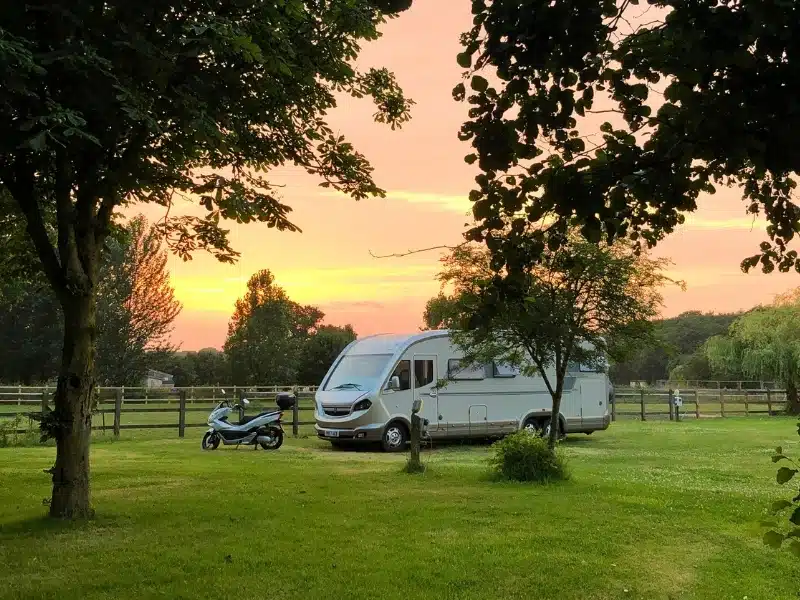
Are we moving forward because it’s the right time, or because it feels like the next step?
Momentum can be deceptive.
Sometimes decisions are made because they feel like progress rather than because they’re well-timed. Buying, building, or committing can feel decisive, even when a pause or a smaller step would create more clarity.
There’s nothing wrong with moving slowly where the consequences are long-lasting.
Why this kind of sense-checking matters
None of this means you should avoid commitment altogether. Full-time travel always involves trade-offs.
But the most sustainable versions of this life tend to come from decisions that were made deliberately, with an understanding of what they might limit as well as what they enable.
Often, the goal isn’t to find the “right” choice, but to avoid the ones that are hardest to undo.
If you’re at this stage
If you’re facing decisions that feel difficult to reverse and want to talk them through calmly before committing, we offer private, one-to-one strategy sessions.
They’re designed to help people sense-check plans, understand trade-offs, and think more clearly about what makes sense for their situation, based on lived experience rather than templates or hype.
If that feels useful, you can find more details and book a strategy session with us.