This post may contain affiliate links, from which we earn an income. Click here to read our affiliate policy.
Living and traveling full time in a van does not mean putting your career or income on hold. In fact, van life can open the door to a wide range of flexible, location independent jobs, as well as hands on work you can pick up on the road.
With lower living costs and fewer fixed commitments, many people find it easier to mix multiple income streams while traveling, balancing online work with seasonal or in person gigs.
From digital careers you can run with a laptop and decent internet to practical services that tap into real world skills, there are plenty of ways to earn money while exploring at your own pace.
Ways to Make Money on the Road
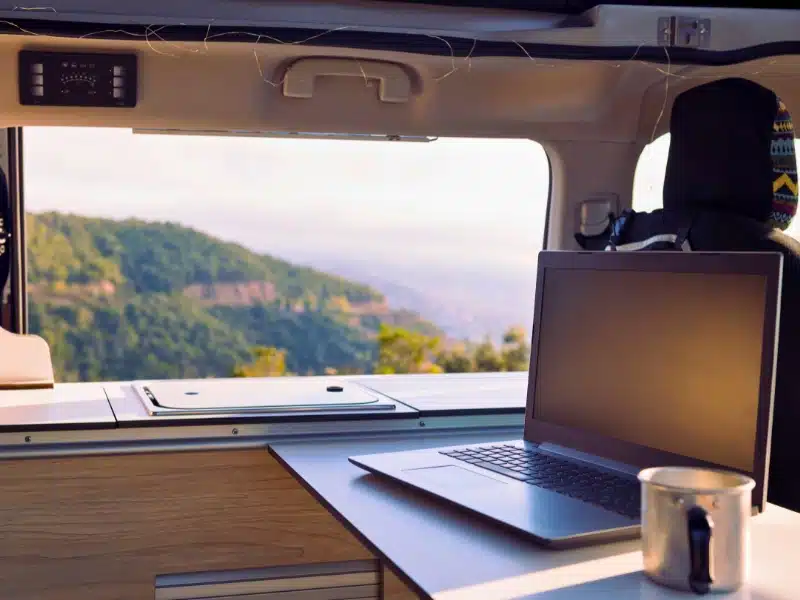
Working while traveling in a van looks different for everyone, and there is no single formula that works universally. Many van lifers combine multiple income streams, mixing online work with seasonal or location based opportunities.
Blogging
Blogging is one of the most popular ways to earn money from a van, especially for travelers who enjoy writing and storytelling. A blog can generate income through advertising, affiliate marketing, sponsored posts, digital products, and even coaching or consulting over time.
While it usually takes patience and consistency to build traffic, blogging works well with van life because you can write around your travel schedule and turn your experiences into valuable, searchable content that earns passively in the long run.
Vlogging
Vlogging suits van lifers who prefer video over writing and enjoy documenting daily life on the road. Platforms like YouTube allow you to earn through ad revenue, brand partnerships, affiliate links, and viewer support. Van builds, travel days, budget breakdowns, and honest behind the scenes content tend to perform particularly well.
While editing can be time consuming, vlogging offers strong income potential once an audience is established and pairs naturally with life in a van.
Matched Betting
Matched betting is a location independent option that appeals to those who like structured systems and numbers rather than creative work. It involves using bookmaker offers and free bets to generate profit while minimizing risk.
Since everything is done online, it can be managed from a van as long as you have reliable internet and VPN to get access to betting platforms that operate in whichever country you’re in. It is often used as a side income rather than a full time job, but it can help fund travel costs consistently.
Trading and Investing
Online trading can provide a flexible income stream for van lifers who are willing to put in the time to learn and manage risk carefully. Many people trade stocks, ETFs, forex, or cryptocurrencies, while others use more complex instruments such as CFDs.
Having a clear understanding of markets, position sizing, and basic concepts like CFD (see here for CFD meaning), leverage, and volatility is essential before risking real money. Trading works best for those with a structured approach and emotional discipline, and it is often used to supplement other income streams rather than replace them entirely.
Freelancing
Freelancing is one of the most reliable and accessible ways to earn from a van. Common remote work freelance roles include writing, graphic design, web development, SEO, social media management, virtual assistance, and customer support.
Freelancers can work with clients across time zones, set their own schedules, and scale their workload up or down depending on travel plans. With platforms like Upwork, Fiverr, and direct client outreach, freelancing offers steady income without being tied to one location.
Providing Services to Other Van Lifers
If you have practical, hands on skills, offering services to other van lifers can be surprisingly lucrative. Mechanics, electricians, carpenters, and DIY experts often earn money by helping with van repairs, solar installs, electrical fixes, water systems, and general maintenance.
These services are in high demand at meetups, campgrounds, and popular van life destinations, and they allow you to earn without needing constant internet access.
Short Term and Seasonal Gigs
Short term gigs are ideal for van lifers who enjoy working with their hands and staying in one place for a few weeks or months. Fruit picking, farm work, vineyard harvests, campground hosting, festival staffing, and tourism related jobs are common options.
These roles often come with flexible contracts and sometimes include free parking or hookups, making them a practical way to earn money while slowing down your travels.
Additional Income Ideas
Beyond the obvious options, many van lifers earn money through online teaching, tutoring, selling digital products, photography, stock video, print on demand shops, reselling vintage or thrifted items, or remote customer service roles. Some combine multiple smaller income streams rather than relying on a single job.
The key is flexibility, choosing work that fits your skills, internet access, and desired travel pace while allowing you to enjoy life on the road without constant financial stress.

Choosing the Right Van
Your van is not just transport, it is your home, your workspace, and often your biggest investment, so choosing the right one matters more than almost anything else. Comfort, reliability, and suitability for long hours of work all directly affect productivity and quality of life on the road. Before buying, take time to research layouts, fuel types, and running costs, not just the upfront price.
Think carefully about what you actually need rather than what looks good online. Desk space, headroom, ventilation, and insulation all play a role when your van doubles as an office. Some travelers opt for EV vans due to lower running costs and environmental benefits, while others prioritize tried and tested diesel models for ease of repair in remote areas.
Whatever you choose, factor in maintenance, insurance, fuel, and repair costs alongside purchase price. Seeking expert advice or using trusted online resources can help you avoid expensive mistakes and choose a van that genuinely supports working on the move.
Securing Reliable Internet
Reliable internet is the backbone of working from a van, especially if your income depends on video calls, uploads, or cloud based tools. Being mobile does not mean settling for poor connectivity, but it does require planning and redundancy.
Most van lifers rely on mobile data rather than public Wi-Fi. Using multiple SIM cards or network plans helps maintain coverage when one network drops out. Unlimited data plans are ideal, but coverage maps and real world performance matter more than marketing promises. Portable Wi-Fi routers with external antennas can significantly improve signal strength, particularly in rural areas.
Network congestion can be an issue in busy locations, so timing and location both matter. Working outside peak hours, running regular speed tests, and choosing quieter overnight spots often improves performance. With the right setup, working online from a van can be just as reliable as a fixed location.
Planning Your Travel Route
Successful van travel often comes down to good planning rather than spontaneity alone. Mapping routes in advance helps balance work commitments with sightseeing and rest days, and avoids unnecessary stress.
Popular routes like major ring roads or coastal drives are appealing for good reason, offering reliable infrastructure and scenic variety. However, alternative regions often provide quieter camps, better internet, and fewer crowds. Local rental companies, travel guides, and experienced van lifers are valuable sources of route planning advice, especially in unfamiliar countries.
Seasonality also matters. Weather, daylight hours, road conditions, and campsite availability can change dramatically throughout the year. Choosing the right season for your route helps ensure safer driving, easier parking, and a more enjoyable overall experience.
Van Maintenance Tips
Keeping your van in good condition is essential when it is both your transport and your livelihood. Age, mileage, and maintenance history all influence long term reliability and running costs.
If buying used, professional inspections are well worth the cost. A mechanic can identify potential issues that may not be obvious during a test drive, saving you from expensive repairs later. Insulation, ventilation, and an efficient electrical setup also reduce wear and tear over time, particularly for DIY builds.
Regular servicing, fluid checks, and basic mechanical awareness go a long way. Knowing how to handle simple repairs or troubleshooting issues can save money and prevent small problems from turning into trip ending breakdowns.
Arranging Living Practicalities
Day to day comfort in a van depends on smart decisions around cooking, sanitation, and storage. These practical details often make the difference between loving van life and finding it exhausting.
A simple but functional kitchen setup is usually enough. Compact dishware, a reliable stove, and an efficient water system cover most needs, especially when paired with solar power. Sanitation solutions like portable toilets and shower bags add flexibility, particularly when campsites are unavailable.
Storage is often underestimated. Under bed drawers, built in cupboards, foldable furniture, and wall mounted pegboards help keep essentials accessible without clutter. Every square inch matters, and thoughtful design makes long term living far more comfortable.

Managing Finances on the Road
Van life can reduce living costs, but financial discipline is still essential. Tracking spending helps you understand where money goes and adjust habits when travel expenses fluctuate.
Budgeting tools allow you to monitor monthly costs, plan ahead, and avoid surprises. Being able to see fuel, food, maintenance, and accommodation expenses clearly makes it easier to decide when to slow down or pick up extra work.
Managing credit responsibly is particularly important when income varies. Keeping track of interest charges, balances, and payment dates helps protect long term financial stability while traveling.
Van Life Safety Measures
Freedom on the road should always be balanced with safety. Taking sensible precautions protects both your belongings and your personal wellbeing.
Keeping your van secure starts with simple habits like locking doors, hiding valuables, and parking thoughtfully. Well lit areas with some activity are generally safer than isolated spots. Additional measures such as alarms, immobilizers, and GPS tracking add peace of mind.
Personal safety matters just as much. Trust instincts, avoid sharing precise locations publicly in real time, and keep emergency contacts accessible. Regular vehicle checks, adherence to traffic laws, and carrying essential emergency supplies help reduce risk on the road.
Embrace the Journey
Living, working, and traveling in a van requires planning, adaptability, and patience, but it is entirely achievable with the right preparation. Reliable internet, smart finances, regular maintenance, and flexible income streams all contribute to long term success.
With these foundations in place, van life becomes less about constant problem solving and more about enjoying the freedom, experiences, and balance that life on the road can offer.